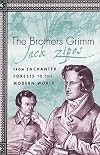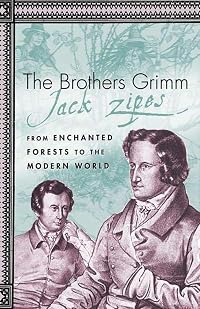
The Brothers Grimm: From Enchanted Forests to the Modern World
by Jack Zipes
On This Page
Description
Most of the fairy tales that we grew up with we know thanks to the Brothers Grimm. Jack Zipes, one of our surest guides through the world of fairy tales and their criticism, takes behind the romantics mythology of the wandering brothers. Bringing to bear his own critical expertise, as well as new biographical information, Zipes examines the interaction between the Grimms' lives and their work. He reveals the Grimms' personal struggle to overcome social prejudice and poverty, as well as their show more political efforts - as scholars and civil servant - toward unifying the German states. By deftly interweaving the social, political, and personal elements of the lives of the Brothers Grimm, Zipes rescues them from sentimental obscurity. No longer figures in fairy tale, the Brothers Grimm emerge as powerful creators, real men who established the fairy tale as one of our great literary institutions. Part biography, part critical assessment, part social history, the Brothers Grimm provides a complex and very real story about fairy tales and the modern world. show lessTags
Recommendations







Member Reviews
While documenting their abilities and importance, the author emphasizes the fact that Jacob and Wilhelm Grimm did not do what the sentimental "myth" about them says they did -- they did not preserve the folk tales/Volkstumlichkeit; instead, they substantially re-shaped them, to appeal to a bourgeois audience and reveal what they felt were profound truths about native culture and civilization. [104]
Born in 1785 and 1786, eldest of six siblings, die bruder were lawyers, and among the finest scholars in Germany. Middle class, they always suffered social slights and financial straits. They were eventually recognized for their accomplishments, moral integrity, and political courage in supporting the liberal Bildungsburgertum [3, 63].
It show more was a law professor, von Savigny, who got them interested in the customs and language of Die Volken as the Origin of Law.
Although very different personalities, the brothers were devoted to eachother and actually slept in same bed together while at the Lyceum and Marburg School of Law. The Family Motto was "Tute si recte vixeris" [2].
Their lives were academic -- contributing to folklore, history, ethnology, religion, music, jurisprudence, lexicography, and literature -- but they considered their work "as part of a social effort to foster a sense of justice among the German people" [9] who remained fractured and disenfranchised by useless but powerful Princes.
Jacob's last book -- he outlived his younger brother, but died before the ironically tragic unification -- was Deutsche Weistumer ("Precedents" - connoting the juristic wisdom of the ages maintained within the People's traditions).
The Grimm's primary method of collecting tales was to invite storytellers to their home. Most of the storytellers were the young educated but middle class women from the Wild family -- Wilhelm married Dortchen from this family, and their sister Lotte married into the Hassenpflugs (who were Huegenots), whose nursemaids, governesses, and servants told the tales they passed on to the Grimms. Women played major roles in the lives of these brave men.
Zipes emphasizes that "we tend to structure our lives according to fairy tales", and "once upon a time" keeps alive our longing for a better world that can be created out of our dreams and actions.[26] show less
Born in 1785 and 1786, eldest of six siblings, die bruder were lawyers, and among the finest scholars in Germany. Middle class, they always suffered social slights and financial straits. They were eventually recognized for their accomplishments, moral integrity, and political courage in supporting the liberal Bildungsburgertum [3, 63].
It show more was a law professor, von Savigny, who got them interested in the customs and language of Die Volken as the Origin of Law.
Although very different personalities, the brothers were devoted to eachother and actually slept in same bed together while at the Lyceum and Marburg School of Law. The Family Motto was "Tute si recte vixeris" [2].
Their lives were academic -- contributing to folklore, history, ethnology, religion, music, jurisprudence, lexicography, and literature -- but they considered their work "as part of a social effort to foster a sense of justice among the German people" [9] who remained fractured and disenfranchised by useless but powerful Princes.
Jacob's last book -- he outlived his younger brother, but died before the ironically tragic unification -- was Deutsche Weistumer ("Precedents" - connoting the juristic wisdom of the ages maintained within the People's traditions).
The Grimm's primary method of collecting tales was to invite storytellers to their home. Most of the storytellers were the young educated but middle class women from the Wild family -- Wilhelm married Dortchen from this family, and their sister Lotte married into the Hassenpflugs (who were Huegenots), whose nursemaids, governesses, and servants told the tales they passed on to the Grimms. Women played major roles in the lives of these brave men.
Zipes emphasizes that "we tend to structure our lives according to fairy tales", and "once upon a time" keeps alive our longing for a better world that can be created out of our dreams and actions.[26] show less
Ratings
Members
- Recently Added By
Author Information

Work Relationships
Reference guide/companion to
Common Knowledge
- Canonical title
- The Brothers Grimm: From Enchanted Forests to the Modern World
- Original publication date
- 1988-06-01
Classifications
- Genres
- Nonfiction, Literature Studies and Criticism, General Nonfiction, Biography & Memoir
- DDC/MDS
- 398.2 — Society, government, & culture Customs, etiquette & folklore Folklore & Folktales Folk literature
- LCC
- PD63 .Z57 — Language and Literature Germanic languages. Scandinavian languages Germanic General
- BISAC
Statistics
- Members
- 131
- Popularity
- 249,503
- Reviews
- 1
- Rating
- (3.75)
- Languages
- English
- Media
- Paper, Ebook
- ISBNs
- 9
- ASINs
- 3