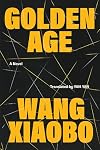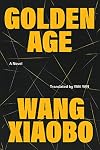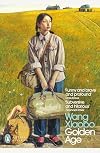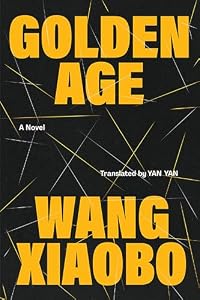
Golden Age
by Xiaobo Wang
On This Page
Description
Twenty-one-year-old Wang Er, stationed in a remote mountain commune, spends his days herding oxen, napping and dreaming of losing his virginity. His dreams come true in the shape of the beautiful doctor Cheng Qinyang. So begins the riotously funny story of their illicit love affair, the Party officials who enjoy their forced confessions a little too much, and Wang's life under the Communist regime: his misadventures as a biology lecturer in a Beijing university, and his entanglements with show more family, friends and lovers. Golden Age is an explosive, subversive, wild and hilarious satire, featuring one of literature's great protagonists, a sensation when it was published in the 1990s and beloved today. show lessTags
Recommendations




Member Reviews
What is a man at 20, 30, or 40? In three novella-length stories, Wang Xiaobo answers this question with the example of his hero, Wang Er, who is rather self-reflective for a tearaway youth. At 20, Wang Er is irrepressibly focused on his sexual satisfaction. Enough so as to risk a considerable amount of punishment during China’s Cultural Revolution to attain his goals. At 30, he is a teacher at a college but, yes, still rather focused on his nether regions. And at 40? At 40, death, his own and that of others, comes to fore, almost wining out against his need for sexual fulfillment.
The writing style is very direct, even when it is written obliquely. Confession, which was a mandated ritual during the Cultural Revolution, dominates the show more style of the first book. The latter two are less directly confessional though perhaps more searching after the real import of events in Wang Er’s life. The author is intimately familiar with both Chinese literature and the western canon, so the allusions are often writ large. But that should probably be read with caution. For example, Wang Er’s disquisition on Descartes’ cogito inference is slyly self-serving and by no means a proof of his erudition (despite his claims). This suggests that the novellas are all perhaps considerably more layered than might be guessed on first reading. At least I think so.
Definitely worth reading but it probably doesn’t bear the comparisons you might find in the blurbs on the cover. show less
The writing style is very direct, even when it is written obliquely. Confession, which was a mandated ritual during the Cultural Revolution, dominates the show more style of the first book. The latter two are less directly confessional though perhaps more searching after the real import of events in Wang Er’s life. The author is intimately familiar with both Chinese literature and the western canon, so the allusions are often writ large. But that should probably be read with caution. For example, Wang Er’s disquisition on Descartes’ cogito inference is slyly self-serving and by no means a proof of his erudition (despite his claims). This suggests that the novellas are all perhaps considerably more layered than might be guessed on first reading. At least I think so.
Definitely worth reading but it probably doesn’t bear the comparisons you might find in the blurbs on the cover. show less
Wang Xiaobo seems to be one of the most popular 20th century writers in China, but we had to wait for the 25th anniversary of his death to get an English translation of this breakthrough novel. It’s a black comedy in which the technical college lecturer Wang Er tells us about his struggle with petty authority and looks back on his alternately horrific and comic experiences during the Cultural Revolution.
The satire, with its condom jokes, frenetic sexual activity and the narrator’s work situation set against a background of real human suffering, is very reminiscent of a Tom Sharpe novel. This being China, we also get a lot of very strong, three-dimensional female characters, so there isn’t quite that feel of schoolboy sniggering show more that you might expect. Hiding behind all the sexual high-jinks is a perfectly serious novel about ordinary people coping with political catastrophe. Fascinating, and very entertaining, if a little gruesome at times. show less
The satire, with its condom jokes, frenetic sexual activity and the narrator’s work situation set against a background of real human suffering, is very reminiscent of a Tom Sharpe novel. This being China, we also get a lot of very strong, three-dimensional female characters, so there isn’t quite that feel of schoolboy sniggering show more that you might expect. Hiding behind all the sexual high-jinks is a perfectly serious novel about ordinary people coping with political catastrophe. Fascinating, and very entertaining, if a little gruesome at times. show less
Pity Wang Er. Sent to the countryside in Yunnan as an “educated youth”, his thoughts are not on planting rice sprouts or feeding pigs, but rather like so many other twenty-one year old males, he is fixated on sex. Wang Er has not had an opportunity with an actual partner as yet, so there is a certain desperation to his imaginings.
Enter Cheng Qinyang, a real doctor at the work unit, as opposed to the barefoot doctors who had been treating Wang Er for his sore back. Cheng’s worry was that people thought of her as an “old shoe”, an easy lay, since her husband was in prison. This was certainly not the case, but people do talk. The two decided to embark on a sexual relationship they would call an “epic friendship”.
Male /female show more friendships, platonic or not, are always questioned, especially if you are living under the eyes of army cadres in a reeducation camp. Wang Er must make a confession to the people. The cadre told him
Wang and Cheng separately wrote a series of nonsensical “confessions”. The more they wrote, the more that were demanded of them. Why punish them further when the readers of the confessions would then no longer be able to have access to such titillating reading?
Nine years later, “At thirty, a man”, it was 1983 and Wang Er was teaching microbiology at an agricultural university. “The fact of the matter was, society really was a grand melting pot, capable of transforming any kind of person, even a Wang Er.” Caught between stifling administrative duties, and the need to align everything with the current thought which has the college needing some entrepreneurial spirit, Wang Er is caught in a sort of purgatory, but one with no discernible means of escape. Wang Xiaobo’s humour in describing the situation has not disappeared however, and Wang Er becomes a more rounded person for the reader.
“Years as Water Flow”, the third section of this novel, sees Wang Er as a forty year old, one having reached his “doubtless” years, a time when people are accustomed to the world around them. Even though he said “I feel bottled up inside because nothing ever went my way. In fact, it feels more and more like everyone is just putting on a show.” he isn’t quite ready to give up yet. His mother had told him the forties was the most difficult decade to get through.
Despite the absurd humour of the earlier parts of the book, at the end, Wang Xiaobo and Wang Er seem to be seeking a reason for being. The tone suddenly changes in the last few pages; all humour is gone. For Wang Er, you can be a martyr or a silly c***, and he has known too many of both. For Wang Xiaobo, there was no future. He died of a heart attack in 1997, aged forty-four. show less
Enter Cheng Qinyang, a real doctor at the work unit, as opposed to the barefoot doctors who had been treating Wang Er for his sore back. Cheng’s worry was that people thought of her as an “old shoe”, an easy lay, since her husband was in prison. This was certainly not the case, but people do talk. The two decided to embark on a sexual relationship they would call an “epic friendship”.
Male /female show more friendships, platonic or not, are always questioned, especially if you are living under the eyes of army cadres in a reeducation camp. Wang Er must make a confession to the people. The cadre told him
having an affair was the kind of thing that would make the people angry. If I didn’t confess, it would be the people who would come after me. He added that I was a bad element and would require rehabilitation. I could have tried to prove that I was innocent; who could have proven that I had done the old shoe thing? But I just stared at him.
Wang and Cheng separately wrote a series of nonsensical “confessions”. The more they wrote, the more that were demanded of them. Why punish them further when the readers of the confessions would then no longer be able to have access to such titillating reading?
Nine years later, “At thirty, a man”, it was 1983 and Wang Er was teaching microbiology at an agricultural university. “The fact of the matter was, society really was a grand melting pot, capable of transforming any kind of person, even a Wang Er.” Caught between stifling administrative duties, and the need to align everything with the current thought which has the college needing some entrepreneurial spirit, Wang Er is caught in a sort of purgatory, but one with no discernible means of escape. Wang Xiaobo’s humour in describing the situation has not disappeared however, and Wang Er becomes a more rounded person for the reader.
“Years as Water Flow”, the third section of this novel, sees Wang Er as a forty year old, one having reached his “doubtless” years, a time when people are accustomed to the world around them. Even though he said “I feel bottled up inside because nothing ever went my way. In fact, it feels more and more like everyone is just putting on a show.” he isn’t quite ready to give up yet. His mother had told him the forties was the most difficult decade to get through.
Despite the absurd humour of the earlier parts of the book, at the end, Wang Xiaobo and Wang Er seem to be seeking a reason for being. The tone suddenly changes in the last few pages; all humour is gone. For Wang Er, you can be a martyr or a silly c***, and he has known too many of both. For Wang Xiaobo, there was no future. He died of a heart attack in 1997, aged forty-four. show less
This book was written in 1996, less than a year before the author died (in his 40's). It reflects a lot of his life during which - during the Great Cultural Revolution (1966-78) - he, along with millions of other young adults, were ordered to go into the countryside to work on farms, build roads & bridges, and do other work with their hands, which was supposed to imbue them with righteousness - or vigor as Communist youths. There were many sessions during which "cadres" - people being or who had become vigorous Communists - confessed their "crimes" to the public, at which times the gathered throng of hundreds or thousands of people harrarrased, beat & threw things at the confessor, which could have been anyone within the area & from show more which no one was exempt. The impact on the author's life riddled the remainder of his life with cynicism and bitterness, confusion and loss of relationships.
This is a tough, uncomfortable book to read. It is also very well done and believable. It has only recently been translated. show less
This is a tough, uncomfortable book to read. It is also very well done and believable. It has only recently been translated. show less
Ratings
Members
- Recently Added By
Author Information

83+ Works 321 Members
Common Knowledge
- Canonical title
- Golden Age
- Alternate titles
- The Golden Years
- Original publication date
- 1992
- People/Characters
- Wang Er; Cheng Qinyang; Old Mr Liu; Mr He
- Important events
- Great Proletarian Cultural Revolution; Tiananmen Square Protests and Massacre
- First words
- I was twenty-one years old, stationed at commune in Yunnan.
- Original language
- Chinese
Classifications
- Genres
- Fiction and Literature, General Fiction
- DDC/MDS
- 895.136 — Literature & rhetoric Asian Literature Literatures of East and Southeast Asia Chinese Chinese fiction 2010–
- LCC
- PL2919 .H8218 .H83413 — Language and Literature Languages and literatures of Eastern Asia, Africa, Oceania Languages of Eastern Asia, Africa, Oceania Chinese language and literature Chinese literature Individual authors and works
- BISAC
Statistics
- Members
- 92
- Popularity
- 347,953
- Reviews
- 4
- Rating
- (3.75)
- Languages
- Chinese, English
- Media
- Paper, Audiobook, Ebook
- ISBNs
- 20
- ASINs
- 2