The Twenties: From Notebooks and Diaries of the Period
by Edmund Wilson, Leon Edel (Introduction)
Wilson's Notebooks and Diaries (1)
On This Page
Description
In these pages, The Twenties: From Notebooks and Diaries of the Period, the preeminent literary critic Edmund Wilson gives us perhaps the largest authentic document of the time, the dazzling observations of one of the principal actors in the American twenties.Here is the raw side of the U.S.A., the mad side of Hollywood, the literary infighting in New York, the gossip and anecdotes of an astonishing cast of characters, the jokes, the profundities, the inanities. Here is the slim young man in show more Greenwich Village sallying forth to parties in matching ties and socks. Here is F. Scott Fitzgerald, Edna St. Vincent Millay, John Peale Bishop, H.L. Mencken, Dorothy Parker, e.e. cummings, John Dos Passos and Eugene O'Neill. show lessTags
Recommendations


















Member Reviews
What makes Edmund Wilson interesting to me is the insight he brings to such diverse bodies of literature as the Civil War, a two-thousand-year-old desert sect, Utopian and Communist movements, and the influence of the French Symbolists on the great works of the early twentieth century. Such versatility and acuity made me curious to read more.
The fact that he was part of several intersecting circles of intellectuals during the decade covered in this book added to my curiosity. There was his college classmate and friend Scott Fitzgerald; then Walter Lippmann and the rest of the New Republic staff; Dorothy Parker and the Algonquin Round Table crowd; Eugene O'Neill and the Provincetown Players; and the ethereal yet adventurous poetess who show more broke Wilson's heart, Edna St. Vincent Millay.
What I found when I read this was something other than what I expected. I thought the book would be a chronicle of great writers and their works. Instead, there was juicy gossip about how libatious and libidinous he and his friends were. And since he seems to have known “everyone,” it’s hard to keep track. Those with lasting fame are mixed indiscriminately with those I’m unfamiliar with. It’s more complicated than a Russian novel. There was only so much curiosity I could muster for the record of his many bedmates or the inordinate attention he and his friends paid to the question of where they would get the next drink. Was this latter the distortion of prohibition?
Generous chunks of the book are devoted to scenic depictions. Wilson’s notebooks are more sketchbook than diary. In the decade treated in this book, Wilson’s ambition as a writer shifted. In the beginning, writing for publications such as Vanity Fair and the New Republic, he is a master of the review, the essay: ephemeral literature. His friends, meanwhile, produced novels, volumes of poetry, history: works that threatened to have lasting value, so his attention turned to longer forms as well. As part of his preparation, the author is practicing his hand at description. Those treating scenes I know, such as the first glimpse of New Jersey when leaving the Holland Tunnel, recreate my mental image, so I expect his descriptions of places I know less well are equally accurate.
In the last third of the book, the accounts of Wilson’s sexual exploits became more graphic. I think this may well have been rooted in his hope to be known as a serious writer. In the course of the 1920s, writers were grappling with how to describe sex in a way that was both graphic and literary. Ninety years on, we’re wondering whether it’s possible to achieve both at the same time, but back then, skilled writers seemed to believe it was. Wilson’s sketches in this vein predate the furor of the Lady Chatterly trial, so he seems to have been slightly ahead of the curve. One could also make the case he succeeds better than Lawrence. Certainly better than Henry Miller.
The book contains some fascinating reflections on the art of writing and the nature of literature, though fewer than I had hoped to find. If you're interested in finding the eminent critic analyzing the achievements of literature, I'd suggest you look at books such as Patriotic Gore, To the Finland Station, and Axel’s Castle. I’m looking forward, meanwhile, to reading his novels, I Thought of Daisy and Hecate County, to see how Wilson succeeded when he turned his hand to fiction.
Somewhere in between comes this book, fascinating not only for its small revelations about famous writers but also for the chance to peek over the shoulder of a craftsman honing his art. Admittedly, aspects of the book reflect the attitudes of its time. The casual anti-semitism, a view of Afro-Americans most charitably described as paternalistic, and the woman as a disposable item cause more than a few winces along the way. And while the scenic descriptions are evocative, precise, and fresh, I’ll admit that I skimmed some of them. But all in all, a good read. show less
The fact that he was part of several intersecting circles of intellectuals during the decade covered in this book added to my curiosity. There was his college classmate and friend Scott Fitzgerald; then Walter Lippmann and the rest of the New Republic staff; Dorothy Parker and the Algonquin Round Table crowd; Eugene O'Neill and the Provincetown Players; and the ethereal yet adventurous poetess who show more broke Wilson's heart, Edna St. Vincent Millay.
What I found when I read this was something other than what I expected. I thought the book would be a chronicle of great writers and their works. Instead, there was juicy gossip about how libatious and libidinous he and his friends were. And since he seems to have known “everyone,” it’s hard to keep track. Those with lasting fame are mixed indiscriminately with those I’m unfamiliar with. It’s more complicated than a Russian novel. There was only so much curiosity I could muster for the record of his many bedmates or the inordinate attention he and his friends paid to the question of where they would get the next drink. Was this latter the distortion of prohibition?
Generous chunks of the book are devoted to scenic depictions. Wilson’s notebooks are more sketchbook than diary. In the decade treated in this book, Wilson’s ambition as a writer shifted. In the beginning, writing for publications such as Vanity Fair and the New Republic, he is a master of the review, the essay: ephemeral literature. His friends, meanwhile, produced novels, volumes of poetry, history: works that threatened to have lasting value, so his attention turned to longer forms as well. As part of his preparation, the author is practicing his hand at description. Those treating scenes I know, such as the first glimpse of New Jersey when leaving the Holland Tunnel, recreate my mental image, so I expect his descriptions of places I know less well are equally accurate.
In the last third of the book, the accounts of Wilson’s sexual exploits became more graphic. I think this may well have been rooted in his hope to be known as a serious writer. In the course of the 1920s, writers were grappling with how to describe sex in a way that was both graphic and literary. Ninety years on, we’re wondering whether it’s possible to achieve both at the same time, but back then, skilled writers seemed to believe it was. Wilson’s sketches in this vein predate the furor of the Lady Chatterly trial, so he seems to have been slightly ahead of the curve. One could also make the case he succeeds better than Lawrence. Certainly better than Henry Miller.
The book contains some fascinating reflections on the art of writing and the nature of literature, though fewer than I had hoped to find. If you're interested in finding the eminent critic analyzing the achievements of literature, I'd suggest you look at books such as Patriotic Gore, To the Finland Station, and Axel’s Castle. I’m looking forward, meanwhile, to reading his novels, I Thought of Daisy and Hecate County, to see how Wilson succeeded when he turned his hand to fiction.
Somewhere in between comes this book, fascinating not only for its small revelations about famous writers but also for the chance to peek over the shoulder of a craftsman honing his art. Admittedly, aspects of the book reflect the attitudes of its time. The casual anti-semitism, a view of Afro-Americans most charitably described as paternalistic, and the woman as a disposable item cause more than a few winces along the way. And while the scenic descriptions are evocative, precise, and fresh, I’ll admit that I skimmed some of them. But all in all, a good read. show less
A book that consists mostly of the author's notes and his passing observations makes for difficult reading. At a century's remove it is even more so as most of Wilson's contemporaries have faded into distant memory, if they have not already been forgotten.
That said, despite the names and the changed landscape, Wilson at his best provokes interest and wonder in his notes. He takes great pains to describe the everyday natural world; there are detailed "word paintings" of the sky, clouds, sea, snow etc. This graphic representation of natural phenomena is at its best in the Southern California episode and on honeymoon in mid-winter Connecticut.
But mostly, this record covers the social world of cheap booze, speakeasies, the plight of the show more novice writer and the grinding ugliness of the New York and New Jersey environment in the twenties.
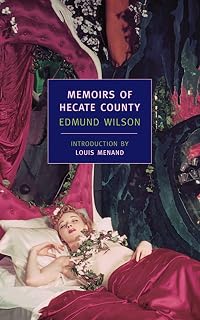
Wilson was early in his fictional stories explicit about sex. The accounts of his passionate sexual relationship with poor Anna, the beautiful, down-trodden Ukrainian waitress provide the basis for the story "The Princess with the Golden Hair", collected in "Memoirs of Hecate County".
Two quotes from Wilson:
Edmund Wilson was a grand critic - singular in his opinions and well-informed. I love his writing, because it reveals someone who derives his criticism by way of a seriously argued thesis.
"Literature is merely the result of rude collisions with reality, whose repercussions, when we have withdrawn into the shelter of ourselves, we try to explain, justify, harmonize, spin into an orderly pattern in the smooth resuming current of a thought..."
"Literature is a long process of neutralizing these shocks, mitigating the crude and barbarous, treachery, murder, unrequited love.... - the constant, never-forestalled outbreaks of our barbarous nature and the accidents of the internal maladjustments of our situation as a part of the universe - we lend them, in art, the logic of our reason and the harmony of our imagination - reason and imagination, like leucocytes accumulating themselves at the place where the infection...has occurred, they rush at once to the breach and, ingesting the alien elements, are discharged in the form of art-" show less
That said, despite the names and the changed landscape, Wilson at his best provokes interest and wonder in his notes. He takes great pains to describe the everyday natural world; there are detailed "word paintings" of the sky, clouds, sea, snow etc. This graphic representation of natural phenomena is at its best in the Southern California episode and on honeymoon in mid-winter Connecticut.
But mostly, this record covers the social world of cheap booze, speakeasies, the plight of the show more novice writer and the grinding ugliness of the New York and New Jersey environment in the twenties.
Wilson was early in his fictional stories explicit about sex. The accounts of his passionate sexual relationship with poor Anna, the beautiful, down-trodden Ukrainian waitress provide the basis for the story "The Princess with the Golden Hair", collected in "Memoirs of Hecate County".
Two quotes from Wilson:
Edmund Wilson was a grand critic - singular in his opinions and well-informed. I love his writing, because it reveals someone who derives his criticism by way of a seriously argued thesis.
"Literature is merely the result of rude collisions with reality, whose repercussions, when we have withdrawn into the shelter of ourselves, we try to explain, justify, harmonize, spin into an orderly pattern in the smooth resuming current of a thought..."
"Literature is a long process of neutralizing these shocks, mitigating the crude and barbarous, treachery, murder, unrequited love.... - the constant, never-forestalled outbreaks of our barbarous nature and the accidents of the internal maladjustments of our situation as a part of the universe - we lend them, in art, the logic of our reason and the harmony of our imagination - reason and imagination, like leucocytes accumulating themselves at the place where the infection...has occurred, they rush at once to the breach and, ingesting the alien elements, are discharged in the form of art-" show less
A trip through the 1920s, from New York through Europe and California and then back to New York, with someone rubbing shoulders with literary luminaries of the age. Tedious at times and lyrically beautiful at others.
dreadful. just a list of fucking. some name mentioning . i read to learn something about nyc in the 20s.
Ratings
Members
- Recently Added By
Author Information

94+ Works 8,913 Members
Wilson roamed the world and read widely in many languages. He was a journalist for leading literary periodicals: Vanity Fair, where he was briefly managing editor; The New Republic, where he was associate editor for five years; and the New Yorker, where he was book reviewer in the 1940s. These varied experiences were typical of Wilson's range of show more interests and ability. Eternally productive and endlessly readable, he conquered American literature in countless essays. If he is idiosyncratic and lacks a rigid mold, that probably contributes to his success as a literary critic, since he was not committed to interpretation in the straitjacket of some popular approach or dogma. His critical position suits his cosmopolitan background---historical and sociological considerations prevail. He went through a brief Marxist period and experimented with Freudian criticism. Axel's Castle (1931), a penetrating analysis of the symbolist writer, has exerted a great influence on contemporary literary criticism. Its dedication, to Christian Gauss of Princeton, reads:"It was principally from you that I acquired.. .my idea of what literary criticism ought to be---a history of man's ideas and imaginings in the setting of the conditions which have shaped them."His volume of satiric short stories, Memoirs of Hecate County (1946), with its frankly erotic passages, was the subject of court cases in a less tolerant decade than the present one. It was Wilson's own favorite among his writings, but he complained that those individuals who like his other work tend to disregard it. (Bowker Author Biography) show less

Joseph Leon Edel was born September 9, 1907 in Pittsburgh, Pennsylvania. He received a master's degree in English from McGill University in Montreal in 1928 and a doctorate in literature from the University of Paris in 1932. In 1932, he was an assistant professor of English at Sir George Williams University in Montreal. Between 1934 and 1943, he show more worked as a freelance writer and journalist and in broadcasting. During World War II, he served in the Army. He was a professor of English at New York University from 1953 to 1972 and at the University of Hawaii from 1972 to 1978. His five-volume biography of Henry James, published between 1953 and 1972, has been considered among the finest biographies by and about an American author. Two of the volumes won the National Book Award and the Pulitzer Prize in 1963. He also edited books on James's letters, plays, essays, criticism and stories and wrote introductions to new editions of James's novels. He also wrote critical biographies of Willa Cather and Henry David Thoreau, a book about the Bloomsbury circle entitled A House of Lions, and Wartime Memoir. He was the editor of four volumes of Edmund Wilson's papers. He died on September 5, 1997 at the age of 89. (Bowker Author Biography) show less
Series

Common Knowledge
- Canonical title
- The Twenties: From Notebooks and Diaries of the Period
- Original publication date
- 1975
- People/Characters
- Edmund Wilson; Edna St. Vincent Millay; Dorothy Parker; Scott Fitzgerald; Zelda Fitzgerald
- Important places
- New York, New York, USA; Louisiana, USA
- Important events
- World War I; Sacco-Vanzetti trial
Classifications
- Genres
- Nonfiction, Literature Studies and Criticism, Biography & Memoir
- DDC/MDS
- 818.5 — Literature & rhetoric American literature in English American miscellaneous writings in English 20th Century
- LCC
- PS3545 .I6245 .Z536 — Language and Literature American literature American literature Individual authors 1900-1960
Statistics
- Members
- 241
- Popularity
- 135,297
- Reviews
- 4
- Rating
- (3.59)
- Languages
- English, Portuguese
- Media
- Paper, Ebook
- ISBNs
- 6
- ASINs
- 5