On This Page
Description
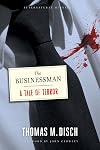
The Businessman presents the sinister tale of Bob Glandier, a morally repulsive Twin Cities executive who murders his estranged wife and attempts to go back to business as usual, until she returns sets about arranging his divine retribution. With help from her dead mother and the ghost of poet John Berryman-thoroughly bored of suburban séances and all too eager to lend a hand-Giselle undertakes the elaborate, righteous, and wickedly amusing haunting of her husband. There is justice in the show more afterlife after all-at least in Minnesota. show lessTags
Recommendations


















Member Recommendations

SomeGuyInVirginia Part of the Supernatural Minnesota series, and an effective thriller. Not sure why since it's a natural match, but it doesn't come up in LT recommendations.
Member Reviews
I was saving Tom Disch for the DeSantis administration, as I expect his books will match the mood then. But this book came to the top of a pile and, well...
One of his three "Supernatural Minnesota" novels, this 1984 title, while not Disch's best, rewards a read.
Giselle Glandier has problems - mainly, that she's dead, strangled by her husband Bob, the businessman of the title. Rather than going on to the afterlife, her spirit is confined, first to the cemetery, then to Bob's vicinity. She'd rather not haunt him, but seems to have no choice. There's also the matter of her spectral pregnancy with Bob's offspring, a demon baby who has a bad attitude toward everyone else, alive or dead.
Bob, the most relentlessly banal evil person you could show more imagine, is pleased to have gotten away with the murder (but the guy he bribed to supply an alibi is getting ideas). Bob is kind to Giselle's mother Joyce, in hopes of inheriting Joyce's house - hopes that are threatened when Giselle's brother Bing (who is gay, therefore of course estranged from the family) turns up.
Joyce dies early on (natural causes), and learns that heaven (or its lower levels anyway) is a lot like a shopping mall. Higher levels of the afterlife are reached by escalators; all very middle-class Midwestern USA.
Tom Disch (1940-2008) grew up gay in Minnesota and plainly had a great time settling some scores here. The (ghost of the) poet John Berryman is a major character, continually bleeding from the wounds from his suicide jump off a bridge and portrayed quite unsympathetically. Greedy, violent, stupid, trivial, obtuse - every character without exception is unsympathetic, a Disch specialty. The AIDS crisis would have been on the author's mind, but isn't mentioned. The bodies pile up quickly as the demon baby works to protect its father.
This novel lacks the razor-edged, bleak intelligence of Disch's best 1960s and 1970s books, but is worth picking up if you're feeling too much faith in your fellow humans. show less
One of his three "Supernatural Minnesota" novels, this 1984 title, while not Disch's best, rewards a read.
Giselle Glandier has problems - mainly, that she's dead, strangled by her husband Bob, the businessman of the title. Rather than going on to the afterlife, her spirit is confined, first to the cemetery, then to Bob's vicinity. She'd rather not haunt him, but seems to have no choice. There's also the matter of her spectral pregnancy with Bob's offspring, a demon baby who has a bad attitude toward everyone else, alive or dead.
Bob, the most relentlessly banal evil person you could show more imagine, is pleased to have gotten away with the murder (but the guy he bribed to supply an alibi is getting ideas). Bob is kind to Giselle's mother Joyce, in hopes of inheriting Joyce's house - hopes that are threatened when Giselle's brother Bing (who is gay, therefore of course estranged from the family) turns up.
Joyce dies early on (natural causes), and learns that heaven (or its lower levels anyway) is a lot like a shopping mall. Higher levels of the afterlife are reached by escalators; all very middle-class Midwestern USA.
Tom Disch (1940-2008) grew up gay in Minnesota and plainly had a great time settling some scores here. The (ghost of the) poet John Berryman is a major character, continually bleeding from the wounds from his suicide jump off a bridge and portrayed quite unsympathetically. Greedy, violent, stupid, trivial, obtuse - every character without exception is unsympathetic, a Disch specialty. The AIDS crisis would have been on the author's mind, but isn't mentioned. The bodies pile up quickly as the demon baby works to protect its father.
This novel lacks the razor-edged, bleak intelligence of Disch's best 1960s and 1970s books, but is worth picking up if you're feeling too much faith in your fellow humans. show less
It's really a 4.5 for me, but I'm rounding up because I'm surprise I liked it so well. Normally anything subtitled "a tale of terror" is probably not going to be my cup of tea, but this was definitely more The Good Place than Saw, to use TV/film analogies! Yes, there were some brutal murders, but when the victims show up in the next chapter complaining in the afterlife, it's hard to take it all too seriously.
So it reads more like a fantasy than a horror, with more attention being paid to events in the afterlife than on earth. We get to follow the ghosts, or spirits, or souls, what have you, and see how they feel about it all. It's funny, it's satirical, it's suspenseful, it's thought-provoking, and it wasn't at all what I was expecting. show more
(Now I want it to be a streaming miniseries, because I'm so looking forward to the episode with the ambulatory Virgin Mary statue!)
P.S. It only took this long to read because it was my read-while-at-work-waiting-for-microwave book. I have Very Specific times that I read books--I even have a read-when-eating-Chinese-takeout-from-CitySquareFoodCourt, believe it or not.
(Note: 5 stars = amazing, wonderful, 4 = very good book, 3 = decent read, 2 = disappointing, 1 = awful, just awful. I'm fairly good at picking for myself so end up with a lot of 4s). I feel a lot of readers automatically render any book they enjoy 5, but I grade on a curve! show less
So it reads more like a fantasy than a horror, with more attention being paid to events in the afterlife than on earth. We get to follow the ghosts, or spirits, or souls, what have you, and see how they feel about it all. It's funny, it's satirical, it's suspenseful, it's thought-provoking, and it wasn't at all what I was expecting. show more
(Now I want it to be a streaming miniseries, because I'm so looking forward to the episode with the ambulatory Virgin Mary statue!)
P.S. It only took this long to read because it was my read-while-at-work-waiting-for-microwave book. I have Very Specific times that I read books--I even have a read-when-eating-Chinese-takeout-from-CitySquareFoodCourt, believe it or not.
(Note: 5 stars = amazing, wonderful, 4 = very good book, 3 = decent read, 2 = disappointing, 1 = awful, just awful. I'm fairly good at picking for myself so end up with a lot of 4s). I feel a lot of readers automatically render any book they enjoy 5, but I grade on a curve! show less
While its subtitle is: A Tale of Terror, and it is, it is also a horror story in the truest sense and one of the funniest books you will ever read. Volume 1 of 4 of "Supernatural Minnesota" by Disch, it chronicles the story of Bob Glandier, failed businessman and wife murderer, as the afterlife, specifically his dead wife Giselle's ghost, tries to haunt him literally to death. The problem is it isn't really working out all that well for Giselle. Glandier willfully refuses to be haunted and fathers a helpful demon with the dead Giselle that is intent on "protecting" Glandier from his various real and dead tormentors. Along the way we will encounter mass murderers, possessed animate and inanimate objects, magnetic potholders, and a (real, show more not fictional) dead alcoholic suicidal poet who tries to help Giselle with her haunting. We also visit Dante's various rings of Paradise where heaven can be just like a Dayton's department store if that's what you want.
Almost everyone "gets it" in the end, which was pretty much what happened also in The M.D., volume 2 of Supernatural Minnesota. Only Giselle's gay brother survives the ordeal, inheriting everything from everybody and using it to promote gay rights and safety. Oh, and Jesus shows up in a blimp to rescue the saved.
While the suspense is mainly focused around whether Glandier is ever going to get his just desserts, Disch takes some pretty wide swings at everything from the Catholic Church to the concept of reincarnation (it rarely works out as planned, even by heaven's standards - there are a lot of detailed rules in heaven.).
The only criticism I have is Disch plays fast and loose with the metaphysical rules of the afterlife seeming to make it up as he goes and to take the plot where he needs it at the particular time. New rules pop up as needed. It's like one of those Moorcock sword and sorcery novels where you know he is just making the sorcery up as he goes along. Unlike Moorcock however, Disch knows where he wants to go, he just plays with not only his omniscience but his omnipotence as a narrator, but maybe that's part of the point.
The book, unlike The M.D., is a real page turner so the "suspense" in the loosest
sense is still there. There is a wonderful and scholarly foreword by author John Crowley (Little, Big) that is best read as an afterword; it gives too much away.
These trade paperbacks in the Supernatural Minnesota quartet are all beautifully produced by the University of Minnesota Press. show less
Almost everyone "gets it" in the end, which was pretty much what happened also in The M.D., volume 2 of Supernatural Minnesota. Only Giselle's gay brother survives the ordeal, inheriting everything from everybody and using it to promote gay rights and safety. Oh, and Jesus shows up in a blimp to rescue the saved.
While the suspense is mainly focused around whether Glandier is ever going to get his just desserts, Disch takes some pretty wide swings at everything from the Catholic Church to the concept of reincarnation (it rarely works out as planned, even by heaven's standards - there are a lot of detailed rules in heaven.).
The only criticism I have is Disch plays fast and loose with the metaphysical rules of the afterlife seeming to make it up as he goes and to take the plot where he needs it at the particular time. New rules pop up as needed. It's like one of those Moorcock sword and sorcery novels where you know he is just making the sorcery up as he goes along. Unlike Moorcock however, Disch knows where he wants to go, he just plays with not only his omniscience but his omnipotence as a narrator, but maybe that's part of the point.
The book, unlike The M.D., is a real page turner so the "suspense" in the loosest
sense is still there. There is a wonderful and scholarly foreword by author John Crowley (Little, Big) that is best read as an afterword; it gives too much away.
These trade paperbacks in the Supernatural Minnesota quartet are all beautifully produced by the University of Minnesota Press. show less
The afterlife is well-trodden literary territory, especially when it comes to the horror genre, so what often sets apart a novel that takes us into the spiritual realms of heaven and hell is a unique perspective or original approach to the concept of souls and divinity. Thomas Disch makes a valiant effort at this, and the results are more or less positive.
I wouldn't say that Disch's version of the afterlife is 100% original; heaven as a psychological construct is far from a new idea, and possession is old-hat at best. But how he gets us there is a mind-blowing trip into abstract existentialism and psychedelic metamorphosis, so by the time you get to the talking statues and alcoholic ghost poets, you've been impressed enough to roll with show more the more irreverent material. But for me, it's the less-serious aspects of the novel that keep it from descending into the mundane. While Marion Zimmer Bradley may disagree (her NYT review was less than flattering), it's the humor that actually elevates The Businessman into something palatable, injecting satire - and occasionally slapstick - into what would otherwise feel too weighty and biblical. This isn't What Dreams May Come, after all.
If I had to level one criticism, it would be that The Businessman never really reaches a level that I would consider "Horror," and definitely doesn't live up to the cover's promise of "A Tale of Terror." The businessman in Hubert Selby's The Demon was far more disturbing than this book's titular underachiever Bob ever manages. Then again, I'm a jaded reader with decades of gruesome entertainment already behind me, so perhaps an ethereal murderous fetuses don't disturb me as much as it might others. Not that this detracts from the novel as a whole, but I wouldn't dive into The Businessman expecting a grim psychological portrait of a tainted soul. Disch introduces us to the best and worst of both spirit and flesh, but he isn't afraid to have some fun with it as well. If you don't mind a little sarcasm in your theological horror, this is the book for you. show less
I wouldn't say that Disch's version of the afterlife is 100% original; heaven as a psychological construct is far from a new idea, and possession is old-hat at best. But how he gets us there is a mind-blowing trip into abstract existentialism and psychedelic metamorphosis, so by the time you get to the talking statues and alcoholic ghost poets, you've been impressed enough to roll with show more the more irreverent material. But for me, it's the less-serious aspects of the novel that keep it from descending into the mundane. While Marion Zimmer Bradley may disagree (her NYT review was less than flattering), it's the humor that actually elevates The Businessman into something palatable, injecting satire - and occasionally slapstick - into what would otherwise feel too weighty and biblical. This isn't What Dreams May Come, after all.
If I had to level one criticism, it would be that The Businessman never really reaches a level that I would consider "Horror," and definitely doesn't live up to the cover's promise of "A Tale of Terror." The businessman in Hubert Selby's The Demon was far more disturbing than this book's titular underachiever Bob ever manages. Then again, I'm a jaded reader with decades of gruesome entertainment already behind me, so perhaps an ethereal murderous fetuses don't disturb me as much as it might others. Not that this detracts from the novel as a whole, but I wouldn't dive into The Businessman expecting a grim psychological portrait of a tainted soul. Disch introduces us to the best and worst of both spirit and flesh, but he isn't afraid to have some fun with it as well. If you don't mind a little sarcasm in your theological horror, this is the book for you. show less
This was Disch's first foray into horror thrillers, and at first glance it looks like a familiar sort of thing (although unusually funny), but it's really remarkably weird and often beautiful. Violent mayhem does happen, but it's less interesting than the digressions about the afterlife, the spiritual ups and downs of an addled murder victim, and affectionately biting portraits of believable Midwesterners. The new Minnesota U.P. edition has a really nice intro by John Crowley.
(I put together some annotations I made during a recent reread here.)
(I put together some annotations I made during a recent reread here.)
Enchanting fantasy of the afterlife. A woman returns to haunt the husband who killed her. She is gets a little help from her mother and the ghostly friends she makes. The plot is rich and complex and, as in the other Disch books I’ve read, there are some really horrific elements.
Disch’s writing style is direct and unadorned and can seem deceptively simple. The startling invention he brings to the story he tells puts the lie to any idea that he’s not a master. This book will be more palatable to fantasy enthusiasts, while the M.D. is a straightforward horror story.
Disch’s writing style is direct and unadorned and can seem deceptively simple. The startling invention he brings to the story he tells puts the lie to any idea that he’s not a master. This book will be more palatable to fantasy enthusiasts, while the M.D. is a straightforward horror story.
Bob Glandier nunca ha pensado que su esposa Giselle le sea infiel, hasta que se va a Las Vegas, está convencido que otro hombre está envuelto en ese viaje y decide seguirla hasta encontrar la verdad. Una verdadera historia de terror.
Nov 9, 2022Spanish
Members
- Recently Added By
Published Reviews
ThingScore 25
I am no aficionado of the horror genre per se. I still think, as per Shaw's admonition, one should take it with the most tragic solemnity or let it alone altogether. Judging by ''The Businessman,'' Mr. Disch should have let it alone.
added by smichaelwilson
Lists

Cawthorn and Moorcock's Fantasy: The 100 Best Books
110 works; 7 members

David Pringle's Modern Fantasy: The 100 Best Novels
100 works; 5 members

Jones & Newman: Best Horror Books Further Recommended Reading
577 works; 4 members

Books I Read Before The Invention Of The Internet.
144 works; 1 member
Author Information

165+ Works 8,129 Members
Thomas Disch was a popular & prolific poet, playwright, essayist, & novelist. He is the author of many works of science fiction & the poetry collections "Dark verses & Light" & "Yes, Let's: New & Selected Poems". (Publisher Provided) Thomas M. Disch was born in Des Moines, Iowa on February 2, 1940. He dropped out of the architecture program at show more Cooper Union, and then left New York University after he sold a short story entitled The Double Timer. His first novel, The Genocides, was published in 1965. His other novels include The House That Fear Built, 334, The M.D., The Priest, The Word of God: Or, Holy Writ Rewritten, and Clara Reeve written under the pseudonym Leonie Hargreave. He won several awards including the 1969 Ditmar Award for Camp Concentration, the O. Henry Award in 1975 for Getting into Death and in 1977 for Xmas, the 1980 John W. Campbell, Jr. Memorial Award for On Wings of Song, and the 1981 British Science Fiction Award for The Brave Little Toaster: A Bedtime Story for Small Appliances. He was also wrote poetry, opera librettos, plays, and criticism of theater, films and art. His collections of poetry include Here I Am, There You Are, Where Are We; The Dark Old House; Yes, Let's: New and Selected Poetry; and Dark Verses and Light. He won the 1999 biennial Michael Braude Award for Light Poetry for A Child's Garden of Grammar, the Locus and Hugo Awards for 1999 for The Dreams Our Stuff is Made Of: How Science Fiction Conquered the World, and the Puschcart Prize for The First Annual Performance Art Festival at Slaughter Rock Battlefield. His criticism appeared in several publications including The Nation, The New York Daily News, and The New York Sun. In 1987, he wrote a script for the television series Miami Vice. He shot himself on July 4, 2008 at the age of 68. (Bowker Author Biography) show less
Some Editions
Awards and Honors
Series

Belongs to Publisher Series
Common Knowledge
- Canonical title
- The Businessman
- Original title
- The Businessman
- Original publication date
- 1983
- People/Characters
- John Berryman; Adah Isaacs Menken; Robert Glandier; Joy-Ann Anker; Giselle Glandier
- First words
- When she awoke she did not realize for some time where she was.
- Quotations*
- Würmer rein, Würmer raus, deine Knochen sind ihr Haus.
- Last words
- (Click to show. Warning: May contain spoilers.)But already she is gone.
- Original language*
- Englisch
*Some information comes from Common Knowledge in other languages. Click "Edit" for more information.
Classifications
Statistics
- Members
- 276
- Popularity
- 117,150
- Reviews
- 7
- Rating
- (3.55)
- Languages
- English, French, German, Spanish
- Media
- Paper
- ISBNs
- 11
- ASINs
- 7