On This Page
Description
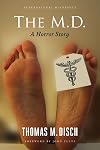
Exploring questions of guilt and responsibility, the second book in Thomas M. Disch's Supernatural Minnesota series, The M.D., is a satisfying mix of dark humor, biting social commentary, and terrifying horror. Given the power to heal or to harm by the Roman god Mercury through a magical staff, the caduceus, young Billy Michaels embarks on a lifelong journey of inflicting good and evil on those who cross his path. Wielding the caduceus, Billy, and later the grown-up, greedy physician show more William, can only cure in proportion to the amount of suffering he inflicts. From paralyzing his brother and mutilating schoolmates to wreaking a nationwide plague and running for-profit concentration camps for the sick, Michaels's powers spin quickly out of control. show lessTags
Recommendations


















Member Recommendations
ehines Rickman is quite different from Disch--he likes people better, and is more likely to combine horror with light-humorous observation, but in their common ability to make interesting observations about contemporary life and our hunger for meaning within this genre, they are akin.

SomeGuyInVirginia Part of the Supernatural Minnesota series, and an effective thriller. Not sure why since it's a natural match, but it doesn't come up in LT recommendations.
Member Reviews
Good in so many ways, and truly disturbing. It's not as stylishly written as The Businessman or as focused as The Priest - it's the most self-consciously Stephen King-like one in the series, and it could be read as just a nicely plotted deal-with-the-devil story. But on second reading, I got the same sense that John Clute did (in his fine foreword to the Minnesota U.P. edition), that Disch isn't just writing about one misguided kid who makes bad things happen, but a whole world riddled with fatal flaws; Billy isn't the first to go this way, it may be happening all the time (and that would explain a lot), and the supernatural evil isn't always the worst part. (Corruption in business and bureaucracy are vividly portrayed here; ironically, show more they didn't really figure in The Businessman.) Still, amid all the despair, Disch has some love for all of his characters - even when he's making very deadpan fun of them or putting them through hell - and his world isn't just dark but full of a kind of playful mystery, a feeling that even though both your body and your spirit may be vulnerable to all kinds of horrible things, they're both pretty amazing.
(I put together some annotations I made during a recent reread here.) show less
(I put together some annotations I made during a recent reread here.) show less
Five stars. A truly literate horror novel that is really a wide swipe at Christianity and religion in every form, from Santa Claus to the Pope to televangelists. The novel starts in the 1950s with little Billy Michaels getting the power from Mercury (the Greek god) to presumably make things right. All he has to do is believe in the god and say the rhyme to get what he wants. The first problem is you can't trust a child any more than you can an adult to make the best choices. Billy isn't evil any more than any other child. The second problem is things don't always work out as you intended unless you are very careful about how you wish for things. Oh, and that magic wand known as a caduceus it needs to be balanced to work. It has to do show more bad to recharge the good battery in it.
Anyway the novel stretches into the near future (or what the near future might be in 1991) with the now Dr. Billy Michaels curing AIDS (to get rich) but having to create another disease to balance things out, so to speak. But he's going to cure it eventually and make everything okay again. Right. Finally you realize that everyone is doomed. The universe will have its way no matter how you manipulate it. Disch does this in a sneaky way that makes you sympathize with each character even as he is telling you he is going to knock them off. Disch's god isn't an angry god just one that proves there isn't any god in the end.
The book is as funny as it is horrid. The entire thing takes place in the Twin Cities (Minneapolis/St. Paul) Minnesota metropolitan area. Volume two of four of the Supernatural Minnesota series. show less
Anyway the novel stretches into the near future (or what the near future might be in 1991) with the now Dr. Billy Michaels curing AIDS (to get rich) but having to create another disease to balance things out, so to speak. But he's going to cure it eventually and make everything okay again. Right. Finally you realize that everyone is doomed. The universe will have its way no matter how you manipulate it. Disch does this in a sneaky way that makes you sympathize with each character even as he is telling you he is going to knock them off. Disch's god isn't an angry god just one that proves there isn't any god in the end.
The book is as funny as it is horrid. The entire thing takes place in the Twin Cities (Minneapolis/St. Paul) Minnesota metropolitan area. Volume two of four of the Supernatural Minnesota series. show less
This is in many ways a powerfully written novel of dark humour mixed in with horror. A huge story is packed into 541 pages, covering among other things. inherited genetic disease, climate change (very prescient for something published in 1991), mass plague and tyrannical governmental response, corporate corruption, the tobacco industry, eating disorders, religious fanaticism and racism. All these themes are woven into the narrative with sometimes breathtaking virtuosity and the characters are for the most part strong and individual.
The story begins in the 1970s with six-year-old Billy, who lives with his dad and his dad's second wife, Madge, and her older son Ned, and elderly mother. Billy, who attends a Catholic kindergarten, refuses show more to accept the assertion by the overbearing nun in charge of his class that Santa Claus is an invented figure based on paganism. We learn that Billy actually sees Santa and converses with him - though before long, Santa is revealed to be another guise of a creature that introduces itself as the god Mercury. I wasn't quite sure if this was just one more persona it took on, although as it is fairly consistent throughout the book, maybe it actually is meant to be the god. Except this version of Mercury is rather malevolent. He transforms a 'poison stick' created by Billy's step-brother Ned from twisted twigs and a sparrow's skeleton, into a caduceus, Mercury's staff and traditional symbol of the medical profession, and imbues it with the ability to charge itself with power. This power can be dispensed for good, for example, to give Billy's family members good health. But there is a catch: to charge the caduceus Billy must dispense curses as well, and the power gained is in proportion to the awful nature of the curses. Being a six-year-old boy, Billy not only dishes out curses to people who have upset him in some way, he also bungles majorly on occasion,for example, condemning his step-brother to endure many years as a 'locked in' patient when Ned inadvertently receives one meant for boys who had beaten up Billy .
The book is divided into a number of parts which skip through the stages of Billy's life from the time of President Nixon's impeachment to an imagined 1999 (the book was published in 1991). The first four sections are an enjoyable page-turning read. In the first, Billy uses his newfound powers with tragic results. In the second, he is still living with his father and family and, undeterred by what he has already done, uses his powers for both good and for evil - with an outcome that although not directly due to his curses can be seen to stem from themwhen his father is killed in a traffic accident while rushing Billy to hospital after another boy injured him in revenge for what Billy has done .
In the third section, Billy is living with his mother and her second husband, Ben, plus Judith, Ben's daughter by his own first marriage. Judith is bright and engaging but suffers from anorexia. At her instigation, he begins calling himself William. This section focuses on Billy's 13th birthday and his birthday dinner to which an obnoxious spokesman for the tobacco industry, who indirectly funds Ben's work, invites himself, sparking a confrontation where Billy once again uses the caduceus with devastating results. William is now focused on becoming a doctor and is working hard at school to that end, with the intent of using the caduceus for finding cures for diseases, and curing Judith of anorexia. In part 4, he's older and is trying for accelerated entry to the program that will get him into university a few years early. He has become more adept at using the caduceus - as shown when he deals ruthlessly with a teacher who stands in his way. When his mother becomes pregnant, he uses the caduceus to grant good health to the unborn child despite a hint from Mercury that it can only work within the genetic limits of the recipient, with disastrous and tragic results.
In part 5, the book takes an odd turn with the introduction of Madge's long lost first husband and the father of Ned, who does some very bizarre things. Many years have passed since the ending of part 4, and William is now married with sons of his own. Although he is doing well and the supposedly non-profit organisation he runs has produced a vaccine against AIDS, society in generally is crumbling under the pressure of a new and highly contagious disease for which his organisation is trying to find a cure.
We gradually learn in retrospect that he has been using the caduceus, initially to come up with the AIDS vaccine but, in the last ten years, to sow the seeds for the new and devastating disease, for no real reason other than it presents a fantastic business opportunity. Despite this, William has a 'clear conscience' and has no problem at all with the nationwide devastation he has caused - he has been buying up property in a particular area since he was a young man, with the intent of turning it into a vast isolation 'camp' for the unfortunate victims of the disease he presumably was planning even then to unleash.
Ironically, it is in performing an unselfish action - and there is no explanation as to why someone so callous does so - he is hoist on his own petardwhen he tries to help a woman shot at a roadblock for trying to escape (she has the new disease) and is arrested and sent to a detention centre where people with the disease are imprisoned .
One of the issues some readers might have with this story is the huge number of characters including various second husbands and wives and step-children. Mostly I managed to keep them clear, helped by the strong characterisation, though this started to become more difficult in the final section. However, in my opinion there is a much greater flaw. Part 5 - comprising the book's final third - falls apart in a bloodbath unleashed by a newly introduced character, and the epilogue gives a spurious 'explanation' of that character's behaviour. It is almost as if the author wanted to kill off just about everyone in a unwarranted grand guignol finale, rather than work out the implications of everything that had gone before with the wider storylines of the plague etc. There is also the odd behaviour of Madge's first husband, which introduces further complications, and the dark humour surrounding his and Madge's fate. The main problem however is that in this section, after being the focus of the story, William is largely passive and is a victim at the mercy of others, eventually pushed off to the sidelines. This final section in my opinion constitutes a large flaw after the earlier absorbing story, which was heading for at least a 4-star rating, and therefore reduces the book's overall rating to 3-stars. show less
The story begins in the 1970s with six-year-old Billy, who lives with his dad and his dad's second wife, Madge, and her older son Ned, and elderly mother. Billy, who attends a Catholic kindergarten, refuses show more to accept the assertion by the overbearing nun in charge of his class that Santa Claus is an invented figure based on paganism. We learn that Billy actually sees Santa and converses with him - though before long, Santa is revealed to be another guise of a creature that introduces itself as the god Mercury. I wasn't quite sure if this was just one more persona it took on, although as it is fairly consistent throughout the book, maybe it actually is meant to be the god. Except this version of Mercury is rather malevolent. He transforms a 'poison stick' created by Billy's step-brother Ned from twisted twigs and a sparrow's skeleton, into a caduceus, Mercury's staff and traditional symbol of the medical profession, and imbues it with the ability to charge itself with power. This power can be dispensed for good, for example, to give Billy's family members good health. But there is a catch: to charge the caduceus Billy must dispense curses as well, and the power gained is in proportion to the awful nature of the curses. Being a six-year-old boy, Billy not only dishes out curses to people who have upset him in some way, he also bungles majorly on occasion,
The book is divided into a number of parts which skip through the stages of Billy's life from the time of President Nixon's impeachment to an imagined 1999 (the book was published in 1991). The first four sections are an enjoyable page-turning read. In the first, Billy uses his newfound powers with tragic results. In the second, he is still living with his father and family and, undeterred by what he has already done, uses his powers for both good and for evil - with an outcome that although not directly due to his curses can be seen to stem from them
In the third section, Billy is living with his mother and her second husband, Ben, plus Judith, Ben's daughter by his own first marriage. Judith is bright and engaging but suffers from anorexia. At her instigation, he begins calling himself William. This section focuses on Billy's 13th birthday and his birthday dinner to which an obnoxious spokesman for the tobacco industry, who indirectly funds Ben's work, invites himself, sparking a confrontation where Billy once again uses the caduceus with devastating results. William is now focused on becoming a doctor and is working hard at school to that end, with the intent of using the caduceus for finding cures for diseases, and curing Judith of anorexia. In part 4, he's older and is trying for accelerated entry to the program that will get him into university a few years early. He has become more adept at using the caduceus -
In part 5, the book takes an odd turn with the introduction of Madge's long lost first husband and the father of Ned, who does some very bizarre things. Many years have passed since the ending of part 4, and William is now married with sons of his own. Although he is doing well and the supposedly non-profit organisation he runs has produced a vaccine against AIDS, society in generally is crumbling under the pressure of a new and highly contagious disease for which his organisation is trying to find a cure.
Ironically, it is in performing an unselfish action - and there is no explanation as to why someone so callous does so - he is hoist on his own petard
One of the issues some readers might have with this story is the huge number of characters including various second husbands and wives and step-children. Mostly I managed to keep them clear, helped by the strong characterisation, though this started to become more difficult in the final section. However, in my opinion there is a much greater flaw. Part 5 - comprising the book's final third - falls apart in a bloodbath unleashed by a newly introduced character, and the epilogue gives a spurious 'explanation' of that character's behaviour. It is almost as if the author wanted to kill off just about everyone in a unwarranted grand guignol finale, rather than work out the implications of everything that had gone before with the wider storylines of the plague etc. There is also the odd behaviour of Madge's first husband, which introduces further complications, and the dark humour surrounding his and Madge's fate. The main problem however is that in this section, after being the focus of the story, William is largely passive and is a victim at the mercy of others, eventually pushed off to the sidelines. This final section in my opinion constitutes a large flaw after the earlier absorbing story, which was heading for at least a 4-star rating, and therefore reduces the book's overall rating to 3-stars. show less
The book started off on a promising premise - a Greek god come to life and a 5 year old boy with the power to play God himself - but the middle of the book became tangled with complex character relationships and unfocused thematic issues. It seems as though Disch was unable to decide what was most important to the story, so rather than cut certain elements out, he combined everything and hoped that it would turn out okay.
It was also hard to find a character to sympathize with, and the writing style, which jumped from character to character so frequently that it gave me literary whiplash, did nothing to help me invest in the story. Perhaps the book would have been better if Disch had limited his writing to just a few select points of show more view, but the point is moot.
Thankfully, the book came together better than I expected, and the book did have a few truly horrifying moments, mainly in the beginning. But I wouldn't bother reading this one...Stephen King may have given it a good review, but for the life of me, I can't figure out why. show less
It was also hard to find a character to sympathize with, and the writing style, which jumped from character to character so frequently that it gave me literary whiplash, did nothing to help me invest in the story. Perhaps the book would have been better if Disch had limited his writing to just a few select points of show more view, but the point is moot.
Thankfully, the book came together better than I expected, and the book did have a few truly horrifying moments, mainly in the beginning. But I wouldn't bother reading this one...Stephen King may have given it a good review, but for the life of me, I can't figure out why. show less
The M.D. offers an intriguing premise: what if the ancient Greek gods were real? In mythology they often actively intervened in the lives of mortals. In this novel, the god Mercury offers godlike powers to young Billy Michaels in exchange for his worship. Billy receives the caduceus, the ancient symbol of medicine consisting of twisted sticks topped with the dessicated carcass of a bird, and with it can cast spells to heal and protect anything. However, much like anything so powerful, there is a catch. In order to keep the caduceus charged with its magical power, Billy must perform an equal amount of damaging spells with it. Hence, for ever person he saves, he must injure another. When he grows up to become a doctor, he truly plays show more god.
Thomas Disch offers many prescient insights of the "future", including a degraded environment, catastrophic plagues, climate change and worldwide economic meltdown. Impressive, considering this novel was published in 1991 and divides its setting between the 1970s and 1999.
What comes across loud and clear is Disch's dislike of religion, both the organized and fundamentalist flavors. Readers of the same persuasion may find themselves knowingly chuckling along with his sly observations. And the character of Judge perfectly illustrates blind, fundamentalist devotion to dogma and demagoguery.
While the story itself is interesting and I was excited to find out what became of the characters, the pace is uneven, flagging in the middle before picking up again at the end. The mix of politics, science, medicine, religion and family drama (almost all of the adults are remarried divorcees which makes keeping tracks of all of the family combinations a bit tedious) overwhelms the plot at times.
Recommended for fans of science-based horror, such as the novels of Robin Cook, though this is much more far-fetched and requires a great deal of suspension of disbelief. show less
Thomas Disch offers many prescient insights of the "future", including a degraded environment, catastrophic plagues, climate change and worldwide economic meltdown. Impressive, considering this novel was published in 1991 and divides its setting between the 1970s and 1999.
What comes across loud and clear is Disch's dislike of religion, both the organized and fundamentalist flavors. Readers of the same persuasion may find themselves knowingly chuckling along with his sly observations. And the character of Judge perfectly illustrates blind, fundamentalist devotion to dogma and demagoguery.
While the story itself is interesting and I was excited to find out what became of the characters, the pace is uneven, flagging in the middle before picking up again at the end. The mix of politics, science, medicine, religion and family drama (almost all of the adults are remarried divorcees which makes keeping tracks of all of the family combinations a bit tedious) overwhelms the plot at times.
Recommended for fans of science-based horror, such as the novels of Robin Cook, though this is much more far-fetched and requires a great deal of suspension of disbelief. show less
The story is OK, but the writing is ... well, boring. I am not the kind of reader who requires a lot of action, but I do need the language to speak to me. Otherwise, why not just read the plot summary? Disch seems to think that his personal distaste for his characters (Catholics, racists, facists, and self-serving people of all stripes) is by itself adequate to captivate the reader, but he doesn't write with a style that connects with me emotionally. He has a kind of deadpan approach that doesn't work well for subtlety or understatement in the context of this novel. His sense of evil is sincere, but lacks drama. I am sorry I spent the time with this book, and recommend that you don't bother with it.
Back in my Stephen King days I was always trying to find a writer like him. Well Thomas M. Disch is not like him but in his own way, just as good.
It ha been so long since I've read this book (Read it in Dutch and still have a Dutch copy) but i do remember I loved this book.
So If you like King, try this book. Very good blend mixing horror and fantasy.
It ha been so long since I've read this book (Read it in Dutch and still have a Dutch copy) but i do remember I loved this book.
So If you like King, try this book. Very good blend mixing horror and fantasy.
Members
- Recently Added By
Lists

Best Horror Books
281 works; 85 members

Scary October reads
58 works; 3 members

Cheesy pleasures and odd lots!
119 works; 7 members

Jones & Newman: Best Horror Books Further Recommended Reading
577 works; 4 members
Author Information

165+ Works 8,122 Members
Thomas Disch was a popular & prolific poet, playwright, essayist, & novelist. He is the author of many works of science fiction & the poetry collections "Dark verses & Light" & "Yes, Let's: New & Selected Poems". (Publisher Provided) Thomas M. Disch was born in Des Moines, Iowa on February 2, 1940. He dropped out of the architecture program at show more Cooper Union, and then left New York University after he sold a short story entitled The Double Timer. His first novel, The Genocides, was published in 1965. His other novels include The House That Fear Built, 334, The M.D., The Priest, The Word of God: Or, Holy Writ Rewritten, and Clara Reeve written under the pseudonym Leonie Hargreave. He won several awards including the 1969 Ditmar Award for Camp Concentration, the O. Henry Award in 1975 for Getting into Death and in 1977 for Xmas, the 1980 John W. Campbell, Jr. Memorial Award for On Wings of Song, and the 1981 British Science Fiction Award for The Brave Little Toaster: A Bedtime Story for Small Appliances. He was also wrote poetry, opera librettos, plays, and criticism of theater, films and art. His collections of poetry include Here I Am, There You Are, Where Are We; The Dark Old House; Yes, Let's: New and Selected Poetry; and Dark Verses and Light. He won the 1999 biennial Michael Braude Award for Light Poetry for A Child's Garden of Grammar, the Locus and Hugo Awards for 1999 for The Dreams Our Stuff is Made Of: How Science Fiction Conquered the World, and the Puschcart Prize for The First Annual Performance Art Festival at Slaughter Rock Battlefield. His criticism appeared in several publications including The Nation, The New York Daily News, and The New York Sun. In 1987, he wrote a script for the television series Miami Vice. He shot himself on July 4, 2008 at the age of 68. (Bowker Author Biography) show less
Some Editions
Awards and Honors
Awards
Series

Common Knowledge
- Canonical title
- The M.D.
- Epigraph
- The young murderer doesn't come from a typical American family. The average American parent doesn't need to fear being murdered.
—Dr. Elissa P. Benedek
as quoted in "Children to Kill," New Yor... (show all)k Times, Oct. 11, 1983 - Dedication
- For Phil and Betsy Pochoda
- First words
- On the Friday before Christmas vacation Sister Mary Symphorosa informed the kindergarten class at Our Lady of Mercy School that there was no Santa Claus, that the presents you found beside the Christmas tree on Christmas morn... (show all)ing were from your parents, and that it was pagan and impious nonsense and a sin against the First Commandment to think otherwise.
- Blurbers
- King, Stephen; Koontz, Dean
Classifications
Statistics
- Members
- 376
- Popularity
- 83,369
- Reviews
- 8
- Rating
- (3.59)
- Languages
- 7 — Czech, Dutch, English, French, German, Polish, Spanish
- Media
- Paper
- ISBNs
- 13
- ASINs
- 6