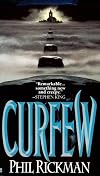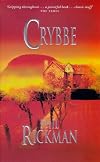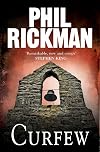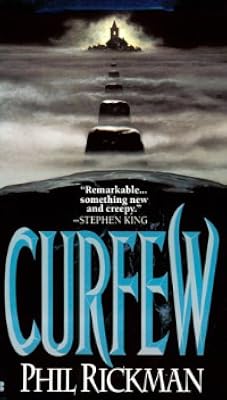
Curfew
by Phil Rickman
On This Page
Description
For four hundred years, the curfew bell has tolled nightly from the church tower of the small country town, Crybbe's only defence against the evil rising unbidden in its haunted streets. Radio reporter Fay Morrison came to Crybbe because she had no choice. Millionaire music tycoon Max Goff came because there was nothing left to conquer, except the power of the spirit. But he knew nothing of the town's legacy of dark magic - and nobody felt like telling him...Tags
Recommendations

















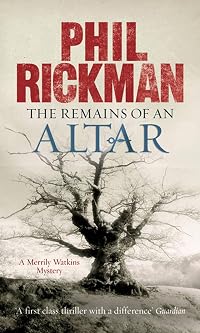
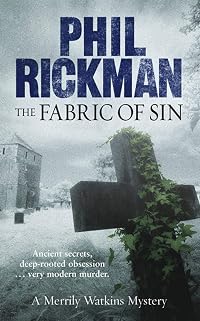
Member Recommendations

ehines Rickman is quite different from Disch--he likes people better, and is more likely to combine horror with light-humorous observation, but in their common ability to make interesting observations about contemporary life and our hunger for meaning within this genre, they are akin.
Member Reviews
All things lead to Stephen King – I know you guys are tired of hearing me go on about my favorite, but it’s true. I look for books that King has recommended or reviewed over the years. When King says that Phil Rickman’s [Curfew] was ‘creepy,’ I take note. If it can creep King out, I’m in. And I admit, I had to put the book down a couple of times after particularly creepy passages.
For centuries, people have been obsessed with ‘ley-lines’ in Britain, especially those that are still marked with stones, like the stones at Stonehenge. For one backwards village, in the borderland near Wales, the obsession was not born of curiosity or wonder, but of fear. Crybbe’s church bell has rung one hundred times every night for 400 show more years. What do the bells ward the town against? Max Goff, a millionaire record executive, begins to re-erect stones along ley-lines where they were removed long ago, hoping to establish the town as a center for new age enlightenment and spiritual awakening. As he repositions the stones, something rather darker that what Goff intended begins to grow in Crybbe. People begin to see sinister things in their homes; they begin to act in strange and violently inappropriate ways. The village keeps ringing the bell, hoping that what’s worked for 400 years will work again.
This book was a revelation to me – you can still uncover amazing and refreshing writers. I was hooked from the first few lines – let’s see if I can hook you,
“In Crybbe, night did not fall. Night rose. It welled out of the bitter brown earth caged in brambles in the neglected wood beyond the churchyard, swarming up the trees until they turned black and began to absorb the sky.”
After reading those lines, I bought the book and begin reading it pretty much immediately.
Rickman is not well-known in America, though he has been fairly successful in Britain, having won awards for his TV and radio journalism. He also writes, under pseudonyms, a few successful series of supernatural mysteries, chief among them the Merrily Watkins books about an Anglican priest and mother. Many of his standalone novels have recently been reprinted here in America, among them [Curfew].
Rickman’s talent is his language and the ability to gradually build suspense. He’s no slouch at storytelling, but the story occasionally got convoluted and meandered a little. But with his skill at creating tone and pace with word choice alone, he never loses the reader. Even when the story is a little unclear, his language draws you in closer, until your slapped back at some unearthly, and often revolting, revelation.
Bottom Line: Creepy book, with a tone and pace created from beautifully chosen language.
4 ½ bones!!!!! show less
For centuries, people have been obsessed with ‘ley-lines’ in Britain, especially those that are still marked with stones, like the stones at Stonehenge. For one backwards village, in the borderland near Wales, the obsession was not born of curiosity or wonder, but of fear. Crybbe’s church bell has rung one hundred times every night for 400 show more years. What do the bells ward the town against? Max Goff, a millionaire record executive, begins to re-erect stones along ley-lines where they were removed long ago, hoping to establish the town as a center for new age enlightenment and spiritual awakening. As he repositions the stones, something rather darker that what Goff intended begins to grow in Crybbe. People begin to see sinister things in their homes; they begin to act in strange and violently inappropriate ways. The village keeps ringing the bell, hoping that what’s worked for 400 years will work again.
This book was a revelation to me – you can still uncover amazing and refreshing writers. I was hooked from the first few lines – let’s see if I can hook you,
“In Crybbe, night did not fall. Night rose. It welled out of the bitter brown earth caged in brambles in the neglected wood beyond the churchyard, swarming up the trees until they turned black and began to absorb the sky.”
After reading those lines, I bought the book and begin reading it pretty much immediately.
Rickman is not well-known in America, though he has been fairly successful in Britain, having won awards for his TV and radio journalism. He also writes, under pseudonyms, a few successful series of supernatural mysteries, chief among them the Merrily Watkins books about an Anglican priest and mother. Many of his standalone novels have recently been reprinted here in America, among them [Curfew].
Rickman’s talent is his language and the ability to gradually build suspense. He’s no slouch at storytelling, but the story occasionally got convoluted and meandered a little. But with his skill at creating tone and pace with word choice alone, he never loses the reader. Even when the story is a little unclear, his language draws you in closer, until your slapped back at some unearthly, and often revolting, revelation.
Bottom Line: Creepy book, with a tone and pace created from beautifully chosen language.
4 ½ bones!!!!! show less
I picked Curfew up from the library after coming it across it on a thread on Facebook where people had posted on their scariest reads. It's a long time since I've read a book that really petrified me and love watching films through my fingers. I admit to binging on Shaun Hutson in my teenage years. Then got into a bit of a silly snobby phase of reading "literature." So left the horror genre behind and never really got back to it.
Now I've read that Rickman doesn't like his early books - of which "Curfew" (originally published as "Crybbe") was his second offering - being caterogised as horror. So he may be happy to read that I wouldn't class it as a horror either. It is a certainly a story with supernatural elements; creepy but not show more terrifying; violent deaths abound but descriptions aren't playing for shock value gore. What makes it engaging is that Rickman draws his inspiration from British folklore and ritual; you get a sense of the eerie atmosphere of historic and sometimes ancient towns and villages. You certainly get a realistic experience of the distrustful and exclusionary nature of locals towards people from 'off'.
The novel moves with the pace of visiting tourist. It's almost 700 pages but I enjoyed every page. The multiple characters are well drawn and distinct. They are believable and have to be for the reader to accept the supernatural events that slowly build to a crescendo.
Rickman is an author I will certainly read again. show less
Now I've read that Rickman doesn't like his early books - of which "Curfew" (originally published as "Crybbe") was his second offering - being caterogised as horror. So he may be happy to read that I wouldn't class it as a horror either. It is a certainly a story with supernatural elements; creepy but not show more terrifying; violent deaths abound but descriptions aren't playing for shock value gore. What makes it engaging is that Rickman draws his inspiration from British folklore and ritual; you get a sense of the eerie atmosphere of historic and sometimes ancient towns and villages. You certainly get a realistic experience of the distrustful and exclusionary nature of locals towards people from 'off'.
The novel moves with the pace of visiting tourist. It's almost 700 pages but I enjoyed every page. The multiple characters are well drawn and distinct. They are believable and have to be for the reader to accept the supernatural events that slowly build to a crescendo.
Rickman is an author I will certainly read again. show less
Be not daunted by the length of this engrossingly book by Brit author Rickman - it's time well spent on ghostie-ghoulie terrain seldom explored by American horror-meisters. Kim Newman's "Jago" touched on some ancient mysteries in the borderlands but not so compellingly as Rickman. A treat for those of us always looking for new supernatural stories.
Phil Rickman is an author who continues to write the kind of horror novels I like best. This novel managed to keep me from guessing the outcome ahead of time.
Bless you, Phil Rickman, for your sensitive handling of Arnold's storyline and not going for the cheap emotional manipulation so frequently used by the tired hacks of the horror genre. This book earns a Pet Lovers Seal of Approval!
*SPOILERISH*
I do love a story where sweet ladies of a certain age wearing tartan skirts and errant heavy equipment operators can be heroes and possibly hook up for a happily-ever-after ending in the readers imagination.
Bless you, Phil Rickman, for your sensitive handling of Arnold's storyline and not going for the cheap emotional manipulation so frequently used by the tired hacks of the horror genre. This book earns a Pet Lovers Seal of Approval!
*SPOILERISH*
I do love a story where sweet ladies of a certain age wearing tartan skirts and errant heavy equipment operators can be heroes and possibly hook up for a happily-ever-after ending in the readers imagination.
Hugely enjoyable. Phil Rickman's characters are quirky and thoroughly engaging, and he has a nice trick of continuing a character's appearance in another novel, sometimes fleetingly, giving the sense of a real world inhabited by all the books. (Though I always rather fancied Joe Powys and wanted him to continue beyond "The Chalice"). He is good on creepiness rather than horror, psychologically acute, and has a lovely wicked dark sense of humour. This is the book where that old hero Gomer Parry first appears.
Great book! If you like Stephen King's books, you'll enjoy this one. Not as much horror, but the tension keeps building and you have to read it to the end. The town is a real character and the people's reaction to old history and superstition is very well drawn. Great writer, great story. The only negative, a bit too long at 498 pages.
The first Phil Rickman novel I read. Rickman bases his novels on England's pagan spiritual past rising up against the remnants of the Christian conquest and the reality of its materialistic present. Outsiders who try to change local customs are thus always up to no good.
I began reading this on a rainy Friday and finished it on a sunny Sunday. I felt the weather fit the book. Rickman got off to a good start, especially in the concept and the terrific sense of place, but in the end he disappointed a little by having his smart and powerful villains too easily defeated. He lost me when he has a middle-aged woman kill a big strong groundskeeper with an exhaust pipe. Rickman wrote 625 pages and filled with a lot of good stuff.
I began reading this on a rainy Friday and finished it on a sunny Sunday. I felt the weather fit the book. Rickman got off to a good start, especially in the concept and the terrific sense of place, but in the end he disappointed a little by having his smart and powerful villains too easily defeated. He lost me when he has a middle-aged woman kill a big strong groundskeeper with an exhaust pipe. Rickman wrote 625 pages and filled with a lot of good stuff.
Members
- Recently Added By
Published Reviews
New Age mystics, led by a record producer moonlighting as a necromancer, rouse a sleepy town's evil spirits in this stylish novel of the occult, the first U.S. publication for British author Rickman.... Rickman convinces with his intricate account of the town's hex: ancient ``ley-lines'' mapped out by druidic-style stones conduct a psychic power that the traditional curfew of the novel's show more title--100 rings of the church bell every night at 10 o'clock--can only contain for so long. The spell is so complete, in fact, that closure becomes difficult: Rickman himself can't--or won't--quite shut the door on the horrors that he introduces here. show less
added by Lemeritus
Horror myth meets New Age psychology on the ghost-riddled border of England and Wales. Promising American debut of a former BBC radio and TV journalist who did a four-year radio stint focused on the supernatural in Wales.... The stones arise—and then the whole town's rocking as the energy-sucking dragon erupts like a grotesque marriage of St. Michael and the batwinged Satan of Disney's show more ``Night on Bald Mountain'' in Fantasia.... Old stuff made to dance anew with smart writing, classy passages. show less
added by Lemeritus
Lists

Jones & Newman: Best Horror Books Further Recommended Reading
577 works; 4 members
Author Information

43+ Works 6,947 Members
Work Relationships
Has as a commentary on the text
Common Knowledge
- Canonical title
- Curfew
- Original title
- Crybbe
- Alternate titles
- Curfew
- Dedication
- In memory of Joachim 'Lupo' Wolf, a genuine new age healer who partly inspired this book.
- First words
- In Crybbe, night did not fall. Night rose.
- Last words
- (Click to show. Warning: May contain spoilers.)Joe Powys grinned and floored the accelerator.
- Canonical DDC/MDS
- 823.914
- Canonical LCC
- PR6068.I264
- Disambiguation notice
- Crybbe was published as Curfew in the U.S.
Classifications
Statistics
- Members
- 418
- Popularity
- 74,016
- Reviews
- 13
- Rating
- (4.00)
- Languages
- English
- Media
- Paper, Audiobook, Ebook
- ISBNs
- 12
- ASINs
- 4