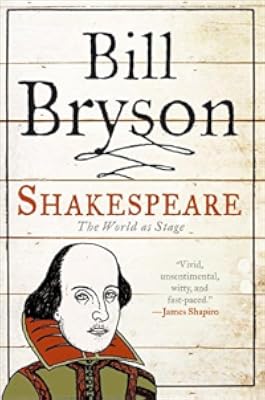
Shakespeare: The World as Stage
by Bill Bryson
On This Page
Description
William Shakespeare, the most celebrated poet in the English language, left behind nearly a million words of text, but his biography has long been a thicket of supposition arranged around scant facts. With his trademark wit, Bill Bryson sorts through this colorful muddle to reveal the man himself. Bryson documents the efforts of earlier scholars, and, emulating the style of his travelogues, records episodes in his own research. He celebrates Shakespeare as a writer of unimaginable talent and show more enormous inventiveness, a coiner of phrases ("vanish into thin air," "foregone conclusion," "one fell swoop") that even today have common currency. His Shakespeare is like no one else's--the beneficiary of Bryson's genial nature, his engaging skepticism, and an unrivaled gift for storytelling.--From publisher description. show lessTags
Recommendations
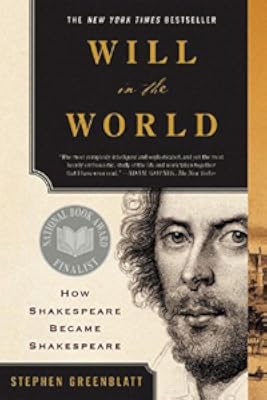
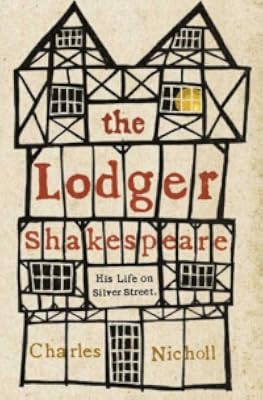
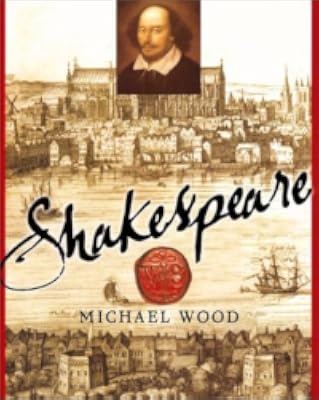
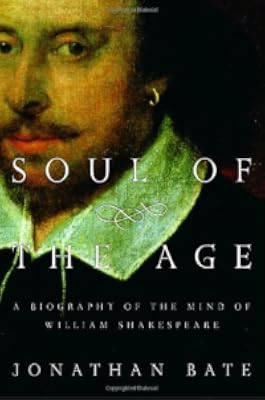

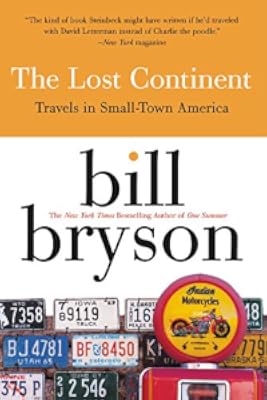
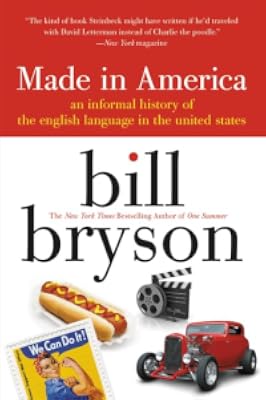
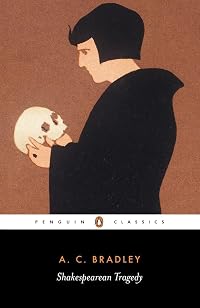

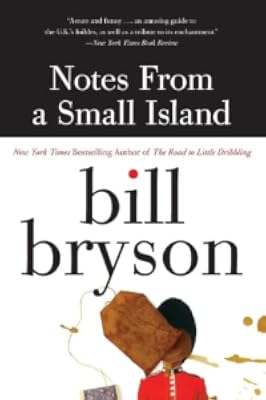
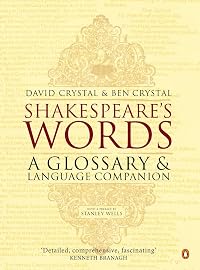
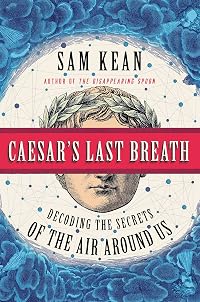

Member Recommendations


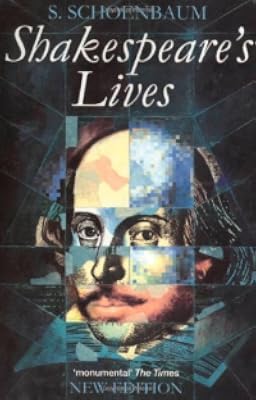
anonymous user Older and shorter, more scholarly but only slightly less witty, introduction. Mr Harrison's accounts of the Elizabethan playhouse and the development of Shakespeare's style are erudite and illuminating. Contains also revealing excerpts from Shakespearean criticism through the centuries (Dryden, Pope, Dr Jonhson, Coleridge). Excellent complement to Mr Bryson's book. Be sure to get (post-)1954 edition (the year of last revision, first published in 1939). Very little dated. Excellent bibliography of scholarly editions of original documents (Henslowe's Diary and Papers, the volumes edited by E. K. Chambers, Mr Harrison's own Elizabethan Journals, and others).
Member Reviews
Precious little is known about the life of William Shakespeare, which makes Bill Bryson the ideal person to write Shakespeare's biography. This he did in 2007 with “Shakespeare: The World as Stage,” part of the Eminent Lives series of brief biographies of notable individuals.
Bryson has had a successful career writing brilliantly not just about his various subjects but about an array of more-or-less related subjects, anything that takes his fancy, in other words. Thus when he writes a chapter called "The Lost Years: 1585-1592," a period in which nothing at all is known about Shakespeare's life, Bryson can stretch it to 20 pages, and it is as interesting as any other chapter in this book.
Because so little is known about the great show more writer, the entire book is more about his times than his life. What was London theater like during that period of history? What were other poets and playwrights doing? What was Queen Elizabeth up to? Even, how much beer did people drink at that time? Bryson lets us know.
This being Bryson, the short book is full of wonderful trivia. There were so many beheadings in London at that time that there was actually an official position called Keeper of the Heads to keep track of where all those heads were mounted for public viewing. Piccadilly got its name from the piccadills, or exotic ruffs common on clothing at that period in history. A theater box office is so called because playgoers then actually put their coins in a box, which was later taken to an office where the money was counted. Eton students were sometimes beaten if they didn't use tobacco, for tobacco was then thought to fight off the plague.
As for Shakespeare, he does manage to make it into his own biography, even if there is more speculation than actual fact. Most of what we do know is based on a few public records and the literature he left behind. And the fact that we still have his plays is something of a miracle, for very few of the plays performed during that period, when the theater was immensely popular, survive. Bryson makes quick work out of claims that someone other than Shakespeare wrote Shakespeare.
Shakespeare wasn't even the most popular or most highly regarded playwright of his day. His stature grew over the centuries after his death. He is now so prominent that countless volumes have been written about him, and like this one, they all consist of more speculation than fact. show less
Bryson has had a successful career writing brilliantly not just about his various subjects but about an array of more-or-less related subjects, anything that takes his fancy, in other words. Thus when he writes a chapter called "The Lost Years: 1585-1592," a period in which nothing at all is known about Shakespeare's life, Bryson can stretch it to 20 pages, and it is as interesting as any other chapter in this book.
Because so little is known about the great show more writer, the entire book is more about his times than his life. What was London theater like during that period of history? What were other poets and playwrights doing? What was Queen Elizabeth up to? Even, how much beer did people drink at that time? Bryson lets us know.
This being Bryson, the short book is full of wonderful trivia. There were so many beheadings in London at that time that there was actually an official position called Keeper of the Heads to keep track of where all those heads were mounted for public viewing. Piccadilly got its name from the piccadills, or exotic ruffs common on clothing at that period in history. A theater box office is so called because playgoers then actually put their coins in a box, which was later taken to an office where the money was counted. Eton students were sometimes beaten if they didn't use tobacco, for tobacco was then thought to fight off the plague.
As for Shakespeare, he does manage to make it into his own biography, even if there is more speculation than actual fact. Most of what we do know is based on a few public records and the literature he left behind. And the fact that we still have his plays is something of a miracle, for very few of the plays performed during that period, when the theater was immensely popular, survive. Bryson makes quick work out of claims that someone other than Shakespeare wrote Shakespeare.
Shakespeare wasn't even the most popular or most highly regarded playwright of his day. His stature grew over the centuries after his death. He is now so prominent that countless volumes have been written about him, and like this one, they all consist of more speculation than fact. show less
There are 120 notes and highlights in my ebook version of this work, and quite a number of them are words I especially like or wasn’t sure about. Very apt indeed that a book written about the creator of several hundred English words is written using such a wide range of vocabulary.
We learn that we know almost nothing about the person (in case you are a fan of conspiracy theories, hold them tightly to your chest, proceed to the last chapter of this book, and be schooled, along with Looney, Silliman and Battey. You’re welcome.) but we have this amazing body of work, a good portion of it preserved in the First Folio. Imagine if they didn’t put together that collection. No, don’t, the world would be a very different place, with many show more academics left without a proper addiction (©Shakespeare).
To give you an idea about the extent to which he gave us everyday words, think about how we would describe a simple scene like this without Shakespeare’s words: I felt lonely©, lying in my bedroom© motionless©, only a moonbeam© lighting the downstairs© room… Moreover, what would we do without phrases like ‘vanish into thin air’ or ‘flesh and blood’, just to name a couple? Or without the Shakespeare insult generators, thou vain beef-witted mammet? See?
As always, I enjoyed Bryson’s wit and style immensely. Every piece of information he provided appeared to be exceptionally exciting (for instance, the origin of the phrase ‘box office’), and his level-headed appreciation of the subject of others’ obsession made it pure joy to read this book. show less
We learn that we know almost nothing about the person (in case you are a fan of conspiracy theories, hold them tightly to your chest, proceed to the last chapter of this book, and be schooled, along with Looney, Silliman and Battey. You’re welcome.) but we have this amazing body of work, a good portion of it preserved in the First Folio. Imagine if they didn’t put together that collection. No, don’t, the world would be a very different place, with many show more academics left without a proper addiction (©Shakespeare).
To give you an idea about the extent to which he gave us everyday words, think about how we would describe a simple scene like this without Shakespeare’s words: I felt lonely©, lying in my bedroom© motionless©, only a moonbeam© lighting the downstairs© room… Moreover, what would we do without phrases like ‘vanish into thin air’ or ‘flesh and blood’, just to name a couple? Or without the Shakespeare insult generators, thou vain beef-witted mammet? See?
As always, I enjoyed Bryson’s wit and style immensely. Every piece of information he provided appeared to be exceptionally exciting (for instance, the origin of the phrase ‘box office’), and his level-headed appreciation of the subject of others’ obsession made it pure joy to read this book. show less
An entertaining and easy-to-read biography with the stated aim of providing what we can "know and reasonably assume about the most venerated figure of the English language" (pg. 3). This, as Bryson freely admits on page 21, is why the book is so short, because bona fide facts about Shakespeare's life are rather thin on the ground. Bryson delves into the research and historiography that surrounds the Bard, showing us that whilst there is much that we do not know (such as the all-important 'lost years' between leaving Stratford-upon-Avon and establishing himself as a renowned playwright in London) we should be grateful for what we have. Compared to other figures of the time, we know quite a bit and, when all is said and done, what we have show more are the man's plays and sonnets – as rich a gift as has been provided to humankind by any one individual.
There are flaws in Bryson's approach, not least that he omits entirely any literary criticism. This may seem like a mercy to those who were made to forensically analyse Shakespeare's plays in high school English classes whilst the sun shone outside, but surely an understanding of why Shakespeare's works are so highly-regarded would be key to any understanding of the man himself and his position in history? Such a keystone is absent in Bryson's biography, with the writer limiting himself to throwaway journalistic mentions of the Bard's 'genius' and dubbing certain plays 'masterpieces'.
However, despite this almost-fatal weakness, Bryson does make the most of what he has got. He brings a ready wit and a infectious joy for the subject to his book, and mines the mysteries and unconventionalities of Shakespeare's biographical record for all they are worth. Whilst there is nothing particularly outstanding about Shakespeare: The World as a Stage, there is plenty that comes close. The denunciation of those conspiracy theorists who claim Shakespeare's plays were written by someone else is deliciously cutting, and Bryson, who made his name as a travel writer, is excellent at painting a picture of Elizabethan London – a far different and yet eerily similar beast to what it is today. Bryson does well to capture the peculiarities and the otherness of the era, whilst at the same time humanising and demythologising the elusive playwright himself. Above all, whilst it is far from comprehensive, the book serves as a fine introduction to the subject for the casual reader. show less
There are flaws in Bryson's approach, not least that he omits entirely any literary criticism. This may seem like a mercy to those who were made to forensically analyse Shakespeare's plays in high school English classes whilst the sun shone outside, but surely an understanding of why Shakespeare's works are so highly-regarded would be key to any understanding of the man himself and his position in history? Such a keystone is absent in Bryson's biography, with the writer limiting himself to throwaway journalistic mentions of the Bard's 'genius' and dubbing certain plays 'masterpieces'.
However, despite this almost-fatal weakness, Bryson does make the most of what he has got. He brings a ready wit and a infectious joy for the subject to his book, and mines the mysteries and unconventionalities of Shakespeare's biographical record for all they are worth. Whilst there is nothing particularly outstanding about Shakespeare: The World as a Stage, there is plenty that comes close. The denunciation of those conspiracy theorists who claim Shakespeare's plays were written by someone else is deliciously cutting, and Bryson, who made his name as a travel writer, is excellent at painting a picture of Elizabethan London – a far different and yet eerily similar beast to what it is today. Bryson does well to capture the peculiarities and the otherness of the era, whilst at the same time humanising and demythologising the elusive playwright himself. Above all, whilst it is far from comprehensive, the book serves as a fine introduction to the subject for the casual reader. show less
This is not much of a biography of [b:William Shakespeare|18135|Romeo and Juliet|William Shakespeare|http://ecx.images-amazon.com/images/I/51XTDJ3P4XL._SL75_.jpg|3349450]. Bryson goes to great pains to establish that very little is known about Shakespeare, certainly not enough to fill even the modest 195 pages of this book, and then proceeds to report and dismiss the many conjectures that have been made about Shakespeare’s life over the years. He also describes the environment, economy and political scene which existed at the time Shakespeare lived and draws all manner of lines between wider events and the Bard’s writings which may, or just as easily may not, be an accurate reflection of reality but, either way, are thoroughly show more entertaining and provide understantable historical context which is a rare thing for a biography.
Even with the paucity of facts available there is, of course, a dissection of Shakespeare’s work and his legacy. For although Bryson demonstrates that the writings we know today survived virtually by accident he also shows how truly fortunate we are that they did. In my favourite chapter, The Plays, Bryson writes “...what really characterises his work –every bit of it, in poems and plays and even dedications, throughout every portion of his career – is a positive and palpable appreciation of the transfixing power of language”. Indeed. Bryson goes on to talk about the many words (2035 to be exact) that Shakespeare is responsible for introducing to English and the beautiful and descriptive phrases that are so prevalent some 400 years after they were written that many are clichés today.
Bryson is clearly a lover of Shakespeare’s writings and while he does occasionally ascribe more genius to the man than a more objective biographer might do, he also discusses the less worthy aspects of Shakespeare’s life (his tight-fistedness for example) to offer balance. And in the end it is fitting that a modern day language artist should write about the English world’s most famous one. The book has all the characteristics that Bryson fans will be familiar with: it is eloquently written, displays those wryly amused observation skills and provides a satisfying number of odd facts to repeat at dinner parties (did you know Shakespeare is responsible for the words ‘lonely’ and ‘unlock’ for example?). In short, it’s an utterly compelling read even if you’re not a particular fan of Shakespeare. show less
Even with the paucity of facts available there is, of course, a dissection of Shakespeare’s work and his legacy. For although Bryson demonstrates that the writings we know today survived virtually by accident he also shows how truly fortunate we are that they did. In my favourite chapter, The Plays, Bryson writes “...what really characterises his work –every bit of it, in poems and plays and even dedications, throughout every portion of his career – is a positive and palpable appreciation of the transfixing power of language”. Indeed. Bryson goes on to talk about the many words (2035 to be exact) that Shakespeare is responsible for introducing to English and the beautiful and descriptive phrases that are so prevalent some 400 years after they were written that many are clichés today.
Bryson is clearly a lover of Shakespeare’s writings and while he does occasionally ascribe more genius to the man than a more objective biographer might do, he also discusses the less worthy aspects of Shakespeare’s life (his tight-fistedness for example) to offer balance. And in the end it is fitting that a modern day language artist should write about the English world’s most famous one. The book has all the characteristics that Bryson fans will be familiar with: it is eloquently written, displays those wryly amused observation skills and provides a satisfying number of odd facts to repeat at dinner parties (did you know Shakespeare is responsible for the words ‘lonely’ and ‘unlock’ for example?). In short, it’s an utterly compelling read even if you’re not a particular fan of Shakespeare. show less
Considering the hundreds of thousands of words that have been written about Shakespeare, relatively little is known about the man himself. In the absence of much documentation about his life, we have the plays and poetry he wrote. In this addition to the Eminent Lives series, bestselling author Bryson (The Life and Times of the Thunderbolt Kid) does what he does best: marshaling the usual little facts that others might overlook--for example, that in Shakespeare's day perhaps 40% of women were pregnant when they got married--to paint a portrait of the world in which the Bard lived and prospered. Bryson's curiosity serves him well, as he delves into subjects as diverse as the reliability of the extant images of Shakespeare, a brief show more history of the theatre in England and the continuing debates about whether William Shakespeare of Stratford-upon-Avon really wrote Shakespeare's works. Bryson is a pleasant and funny guide to a subject at once overexposed and elusive--as Bryson puts it, he is a kind of literary equivalent of an electron--forever there and not there. show less
Okay, really it should be 3 stars, but it's engaging enough to win the 4th on pure charm.
What I loved most was how frequently Bryson reminds the reader that there is no evidence for certain conjectures -- but when there IS evidence, he presents it clearly. He gives balanced pros and cons to theories that could go either way, and he addresses the history of faulty and fraudulent Shakespearean scholarship. As for the authorship debate, he refutes the Baconian and Oxfordian arguments with a hilarious, "We have no proof Shakespeare owned any pants or shoes, either."
Also, he states outright that Shakespeare can be read as a gay poet and dramatist. No dithering. He also discusses the sonnets and the arguments concerning their assumed show more recipients at length, and reminds readers that James I used to make out with handsome young men in the midst of performing court business.
There were also interesting interviews with archivists that put the state and difficultly of the scholarship itself into context. My inner librarian was very happy about that.
The parts of the book concerning the history of the competing theatres didn't work for me at all, however. It was brief, confusing, and seemed possibly to conflate entirely different buildings, although I actually didn't stop to track down the discrepancies. The Ackroyd book was much clearer on what happened with which property under whose ownership (or tenancy) when, and Ackroyd's various histories of London and Britain lead me to trust his research in this and other questions of setting and daily life (where evidence exists involving other people for the same place and time, and so inserting Shakespeare into it is rational).
Awesome palate cleanser. show less
What I loved most was how frequently Bryson reminds the reader that there is no evidence for certain conjectures -- but when there IS evidence, he presents it clearly. He gives balanced pros and cons to theories that could go either way, and he addresses the history of faulty and fraudulent Shakespearean scholarship. As for the authorship debate, he refutes the Baconian and Oxfordian arguments with a hilarious, "We have no proof Shakespeare owned any pants or shoes, either."
Also, he states outright that Shakespeare can be read as a gay poet and dramatist. No dithering. He also discusses the sonnets and the arguments concerning their assumed show more recipients at length, and reminds readers that James I used to make out with handsome young men in the midst of performing court business.
There were also interesting interviews with archivists that put the state and difficultly of the scholarship itself into context. My inner librarian was very happy about that.
The parts of the book concerning the history of the competing theatres didn't work for me at all, however. It was brief, confusing, and seemed possibly to conflate entirely different buildings, although I actually didn't stop to track down the discrepancies. The Ackroyd book was much clearer on what happened with which property under whose ownership (or tenancy) when, and Ackroyd's various histories of London and Britain lead me to trust his research in this and other questions of setting and daily life (where evidence exists involving other people for the same place and time, and so inserting Shakespeare into it is rational).
Awesome palate cleanser. show less
My version was a short audiobook that I found to be very enjoyable and informative. It's a good concise biography, which is what it sets out to be. As well, Bryson adds segments describing life in Elizabethan England in a common sense way, without rising to melodrama about how disagreeable Shakespeare's England was.
We've all heard the alternate author theories, but Bryson dismisses these firmly and is able to back up his argument well. This was done in part by describing some of the "eccentrics" who made the claim, but he also provided credible reasoning that Shakespeare was indeed the author.
The audiobook ended with a good interview with Bryson by his editor. I enjoyed this so much that I ordered a print copy because there are several show more lines, words, names etc. that I want to remember for reference. The worst of audiobooks is that you can't stick post-it notes in them, but the best of this one was that it was an excellent narration by Bill Bryson. show less
We've all heard the alternate author theories, but Bryson dismisses these firmly and is able to back up his argument well. This was done in part by describing some of the "eccentrics" who made the claim, but he also provided credible reasoning that Shakespeare was indeed the author.
The audiobook ended with a good interview with Bryson by his editor. I enjoyed this so much that I ordered a print copy because there are several show more lines, words, names etc. that I want to remember for reference. The worst of audiobooks is that you can't stick post-it notes in them, but the best of this one was that it was an excellent narration by Bill Bryson. show less
Members
- Recently Added By
Lists

Best Biographies
216 works; 26 members

Books Read in 2013
1,630 works; 51 members

Works concerning William Shakespeare
75 works; 4 members

Allie's Wishlist
217 works; 2 members

Books I've read
87 works; 2 members

Books Read in 2016
4,666 works; 199 members

Best 21st Century Books (So Far)
670 works; 86 members

Books Read in 2022
5,226 works; 115 members
Author Information

70+ Works 136,293 Members
Bill Bryson was born in Des Moines, Iowa on December 8, 1951. In 1973, he went backpacking in England, where he eventually decided to settle. He wrote for the English newspapers The Times and The Independent, as well as supplementing his income by writing travel articles. He moved back to the United States in 1995. His first travel book, The Lost show more Continent: Travels in Small-Town America, was published in 1989. His other books include I'm a Stranger Here Myself, In a Sunburned Country, Bill Bryson's Dictionary of Troublesome Words, Neither Here nor There: Travels in Europe, Made in America, The Mother Tongue, Bill Bryson's African Diary, A Short History of Nearly Everything, At Home: A Short History of Private Life, Walk About, and Seeing Further: The Story of Science, Discovery, the Genius of the Royal Society. A Walk in the Woods was adapted into a movie starring Robert Redford and Nick Nolte. Bryson's titles, The Road to Little Dribbling: Adventures of an American in Britain, Notes from a Small Island and Neither Here Nor There made the New York Times bestseller list in 2016. (Bowker Author Biography) show less
Awards and Honors
Awards
Series
Belongs to Publisher Series
Common Knowledge
- Canonical title
- Shakespeare: The World as Stage
- Original title
- Shakespeare: The World as a Stage
- Alternate titles*
- Il mondo è un teatro. La vita e l'epoca di William Shakespeare
- Original publication date
- 2007
- People/Characters
- William Shakespeare; Ben Jonson; Elizabeth I, Queen of England; James VI and I, King of Scots and King of England
- Important places
- London, England, UK; Stratford-upon-Avon, Warwickshire, England, UK
- Important events
- Anglo-Spanish War; Execution of Mary, Queen of Scots; Accession of James VI, King of the Scots; Union of the Crowns
- Dedication
- To Finley and Molly and in memory of Maisie
- First words
- Before he came into a lot of money in 1839, Richard Plantagenet Temple Nugent Brydges Chandos Grenville, second Duke of Buckingham and Chandos, led a largely uneventful life.
- Quotations
- We don't know if [Shakespeare] ever left England. We don't know who his principal companions were or how he amused himself. His sexuality is an irreconcilable mystery. On only a handful of days in his life can we say with com... (show all)plete certainty where he was. . . . For the rest, he is a kind of literary equivalent of an electron—forever there and not there.
In fact it cannot be emphasized too strenuously that there is nothing—not a scrap, not a mote—that gives any certain insight into Shakespeare's feelings or beliefs as a private person. We can know only what came out of hi... (show all)s work, never what went into it.
One variation [of bearbaiting] was to put a chimpanzee on the back of a horse and let the dogs go for both together. The sight of a screeching ape clinging for dear life to a bucking horse while dogs leaped at it from below w... (show all)as considered about as rich an amusement as public life could offer. That an audience that could be moved to tears one day by a performance of Doctor Faustus could return the next to the same space and be just as entertained by the frantic deaths of helpless animals may say as much about the age as any single statement could.
[I]t needs to be said that nearly all of the anti-Shakespeare sentiment—actually all of it, every bit—involves manipulative scholarship or sweeping misstatements of fact.
"In some ways the records are extremely good," Thomas told me. "Sheepskin is a marvellously durable medium, though it has to be treated with some care. Whereas ink soaks into the fibres on paper, on sheepskin it stays on the ... (show all)surface, rather like chalk on a blackboard, and so can be rubbed away comparatively easily. Sixteenth-century paper was of good quality ... It was made of rags and was virtually acid free, so it has lasted very well." ... Paper and parchment were expensive, so no space was wasted. There were no gaps between paragraphs - indeed, no paragraphs. - Last words
- (Click to show. Warning: May contain spoilers.)Only one man had the circumstances and gifts to give us such incomparable works, and William Shakespeare of Stratford was unquestionably that man -- whoever he was.
- Publisher's editor
- Atlas, James
- Blurbers
- Shapiro, James
- Original language
- English
*Some information comes from Common Knowledge in other languages. Click "Edit" for more information.
Classifications
- Genres
- Biography & Memoir, Literature Studies and Criticism, History, Nonfiction
- DDC/MDS
- 822.33 — Literature & rhetoric English & Old English literatures English drama 1558-1625 Elizabethan period William Shakespeare
- LCC
- PR2895 .B79 — Language and Literature English English Literature English renaissance (1500-1640)
- BISAC
Statistics
- Members
- 5,332
- Popularity
- 2,545
- Reviews
- 188
- Rating
- (3.81)
- Languages
- 11 — Danish, Dutch, English, French, German, Hungarian, Italian, Portuguese, Romanian, Spanish, Swedish
- Media
- Paper, Audiobook, Ebook
- ISBNs
- 58
- ASINs
- 46