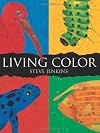
Living Color
by Steve Jenkins
On This Page
Description
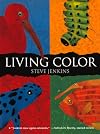
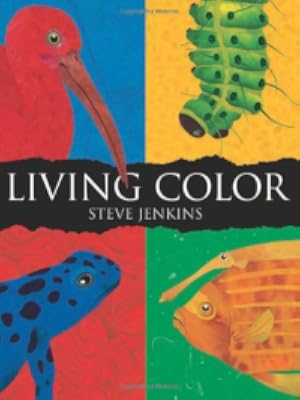
"Red, blue, yellow, green, orange, purple, pink -- animals can be amazingly colorful. Why are they found in so many hues? How do their brilliant feathers, scales, shells, and skin help them survive? Find out ... how animals use color to warn predators, signal friends, attract a mate, or hide from their enemies"--Front dust jacket flap.Tags
Recommendations



Member Reviews
“Living Color” by Steve Jenkins takes a look at animals through the lens of color. “Living Color” is a great tool and informational book for students of all ages. Older elementary students might use this book in the form of an encyclopedia, while younger students might use the book to develop knowledge of color in relation to animals. There are so many different directions in which teachers might venture with this book, which makes this a multi-purpose book. In a first grade classroom during an animal unit, I might focus on just one color per day to avoid information overload. At the end of the book, Jenkins answers other captivating questions about animals such as “How do animals colors evolve?” Also in the back of the show more book, there is a glossary with pictures to describe the physical attributes of each animal along with what the animal eats and other interesting facts. Extremely well organized book with vivid illustrations and the potential for many purposes! show less
This beautifully illustrated information book takes the reader on a tour of the animal kingdom, illustrating how different species use color to aid in survival. The animals in the book are grouped by color, with red, blue, yellow, green, orange, purple and pink represented. Animals portrayed include the red salamander, whose red color advertises the toxic secretions of its skin, and the leafy sea dragon, a fish whose shape and color (green) make it appear to be nothing but a bit of floating seaweed. In total, over 70 animals are profiled in these pages. Also included is a Q & A section at the end of the book that anticipates questions students will have after learning about all these fascinating creatures.
Living Color does an amazing job of giving great examples of living things around the world that are different colors. The way that the author shows the animals' colors makes the pictures almost pop out at you! But not only do the pictures have an amazing effect, but how the author gives information about the animals is an added bonus!
I would use this book in a lesson for teaching about color and the various things around the world.
I would use this book in a lesson for teaching about color and the various things around the world.
Jenkins's Living Color provides accurate, insightful information in a playful and intriguing catalog of various animals. While children are learning animals, they are also paying attention to the many beautiful colors of the world, learning how each one serves an animal as a means to survive in the wild. Not only is the book organized into two to three pages segments of a specific color (blue, green, red, etc.), but a glossary and index of terms and animals is also located at the end of the book.
I found Jenkins's book to be enjoyable to read, but not entirely exciting for me to get through. While the pictures are wonderfully done and give the reader a great depiction of a given animal (they are not so graphic and realistic so as to show more lose children's interest), I think that the amount of information provided in the book to be a little extra for children to grasp hold of. I feel that if the book's content was narrowed down more, be it by theme such as "Animals in the jungle," or "South American/African Animals," the material would not only be more insightful, but also read less as a condensed encyclopedia. After a while, I found myself to no longer be reading for the words, but just to be looking at the images- I was bored with the descriptions. I think that this could be something positive about the book, being that the imagery alone is attention grabbing and nicely designed. However, I feel that if the purpose is to inform and learn about each animal, then the words and overall content should carry an equal weight. I do think this would be the case even if an adult were to read it to a child because the child would be distracted by the images and I feel, begin to ignore the meaning of each animal- particularly by the end of the book. show less
I found Jenkins's book to be enjoyable to read, but not entirely exciting for me to get through. While the pictures are wonderfully done and give the reader a great depiction of a given animal (they are not so graphic and realistic so as to show more lose children's interest), I think that the amount of information provided in the book to be a little extra for children to grasp hold of. I feel that if the book's content was narrowed down more, be it by theme such as "Animals in the jungle," or "South American/African Animals," the material would not only be more insightful, but also read less as a condensed encyclopedia. After a while, I found myself to no longer be reading for the words, but just to be looking at the images- I was bored with the descriptions. I think that this could be something positive about the book, being that the imagery alone is attention grabbing and nicely designed. However, I feel that if the purpose is to inform and learn about each animal, then the words and overall content should carry an equal weight. I do think this would be the case even if an adult were to read it to a child because the child would be distracted by the images and I feel, begin to ignore the meaning of each animal- particularly by the end of the book. show less
This was one of the coolest books that I picked up for my collection. Each page was labeled a different color and it was filled in little sections with animals, plants and insects that are that particular color. Each thing had a little blurb about it talking about facts, what the animal or insect does or eats and if the color has any significance. For example on the purple page there is a deep-sea dragonfish, the purple sea urchin, the violet raft snail, and the rare long-wattled umbrella bird. Many of the pages I was learning new things myself and reading about animals or insects that I had never even heard up. This book is meant to inform the reader of what living things are certain colors and to teach the reader about those show more creatures. In the end of the book there was additional information about every single one of the creatures in order for the reader to learn even more about each thing. I loved this book, the organization was interesting and it kept my attention. More so it was not boring and each of the colors were vibrantly presented. show less
One of the most amazing details of this book is that all the pictures are made from cut paper collage's. I loved how he was able to tie the beauty of each animal he researched with the gorgeous colors of paper. From red to blue to orange to green the author/illustrator is able to find unique animals to fit each and every color of the rainbow. It was fun to read about the colors and why certain animals have adapted to use the colors in so many ways to survive in the wild. I might have to say one of the facts that amazed me the most was that in the animal world pigment colors of the skins only come in three color families: brown-black, yellow-red, and white. But out of those families come so many shades and variations.
This would be a show more great book to have middle school kids read over. show less
This would be a show more great book to have middle school kids read over. show less
This animal-themed nonfiction picturebook showcases animals for several colors – red, blue, yellow, green, orange, purple, and pink. In each of these colors, Jenkins talks about where the animal's color comes from or what it means or is used for – camouflage, mating, warning, etc. Each of the illustrated animals has a caption to pique interest, then a longer paragraph explaining their color. In the back of the book, there are general explanations of how animals get their colors and more on what an animal's color means. In addition, there is a glossary giving details on each of the animals pictured in the previous color sections. An interesting book for browsing or for those interested in general animal characteristics.
Verdict: Steve show more Jenkins is always a reliable choice for nonfiction. This isn't quite as good a read-aloud as some of his other titles, but still a really excellent selection. Recommended.
ISBN: 0618708979; Published September 2007 by Houghton Mifflin; Borrowed from the library; Added to my personal wishlist show less
Verdict: Steve show more Jenkins is always a reliable choice for nonfiction. This isn't quite as good a read-aloud as some of his other titles, but still a really excellent selection. Recommended.
ISBN: 0618708979; Published September 2007 by Houghton Mifflin; Borrowed from the library; Added to my personal wishlist show less
Members
- Recently Added By
Lists

Top Five Books of 2024
795 works; 264 members
Author Information

75+ Works 21,314 Members
Awards and Honors
Awards
Notable Lists
Common Knowledge
- Quotations
- The deep-sea dragonfish is about the length of a pencil, but the barbel growing from its chin can be as long as a full-grown man is tall.
Classifications
Statistics
- Members
- 487
- Popularity
- 62,107
- Reviews
- 70
- Rating
- (4.35)
- Languages
- English, French
- Media
- Paper, Ebook
- ISBNs
- 7
- UPCs
- 1
- ASINs
- 2