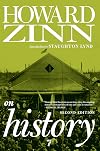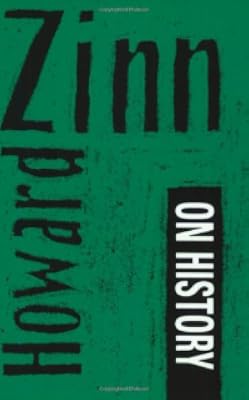
Howard Zinn on History
by Howard Zinn
160 Members (3.50)
On This Page
Description
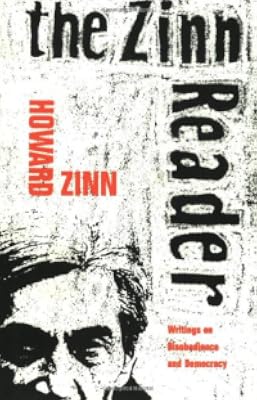
History. Politics. Nonfiction. Howard Zinn began work on his first book for his friends at Seven Stories Press in 1996, a big volume collecting all his shorter writings organized by subject. The themes he chose reflected his lifelong concerns: war, history, law, class, means and ends, and race. Throughout his life Zinn had returned again and again to these subjects, continually probing and questioning yet rarely reversing his convictions or the vision that informed them. The result was The show more Zinn Reader. Five years later, starting with Howard Zinn on History, updated editions of sections of that mammoth tome were published in inexpensive stand-alone editions. This second edition of Howard Zinn on History brings together twenty-seven short writings on activism, electoral politics, the Holocaust, Marxism, the Iraq War, and the role of the historian, as well as portraits of Eugene Debs, John Reed, and Jack London, effectively showing how Zinn's approach to history evolved over nearly half a century, and at the same time sharing his fundamental thinking that social movements--people getting together for peace and social justice--can change the course of history. That core belief never changed. Chosen by Zinn himself as the shorter writings on history he believed to have enduring value--originally appearing in newspapers like the Boston Globe or the New York Times; in magazines like Z, the New Left, the Progressive, or the Nation; or in his book Failure to Quit--these essays appear here as examples of the kind of passionate engagement he believed all historians, and indeed all citizens of whatever profession, need to have, standing in sharp contrast to the notion of "objective" or "neutral" history espoused by some. "It is time that we scholars begin to earn our keep in this world," he writes in "The Uses of Scholarship." And in "Freedom Schools," about his experiences teaching in Mississippi during the remarkable "Freedom Summer" of 1964, he adds: "Education can, and should, be dangerous.". show lessTags
Recommendations
















Member Reviews
Members
- Recently Added By
Lists

Books recommended in the history category on FiveBooks.com
329 works; 4 members
Author Information

85+ Works 26,240 Members
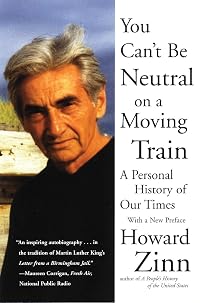
A committed radical historian and activist, Howard Zinn approaches the study of the past from the point of view of those whom he feels have been exploited by the powerful. Zinn was born in Brooklyn, New York in 1922. After working in local shipyards during his teens, he joined the U.S. Army Air Force, where he saw combat as a bombardier in World show more War II. He received a Ph.D. in history from Columbia University in 1958 and was a postdoctoral fellow in East Asian studies at Harvard University. While teaching at Spelman College in Atlanta, Georgia, Zinn joined the civil rights movement and wrote The Southern Mystique (1964) and SNCC: The New Abolitionists (1964). He also became an outspoken critic of the Vietnam War, writing Vietnam: The Logic of Withdrawal (1967) and visiting Hanoi to receive the first American prisoners released by the North Vietnamese. Zinn's best-known and most-praised work, as well as his most controversial, is A People's History of the United States (1980). It explores American history under the thesis that most historians have favored those in power, leaving another story untold. Zinn discusses such topics as Native American views of Columbus and the socialist and anarchist opposition to World War I in examining his theory that historical change is most often due to "mass movements of ordinary people." Zinn's other books include You Can't Be Neutral on a Moving Train: A Personal History of Our Times (1995) and Artists in Times of War (2004). He has also written the plays Emma (1976), Daughter of Venus (1985), and Marx in Soho (1999). (Bowker Author Biography) Howard Zinn grew up in the immigrant slums of Brooklyn, where he worked in shipyards in his late teens. He saw combat duty as an air force bombardier in World War II, and afterward received his doctorate in history from Columbia University. His first book, "La Guardia in Congress", was an Albert Beveridge Prize winner. In 1956, he moved with his wife and children to Atlanta to become chairman of the history department of Spelman College. He has since written and edited many more books, including A People's History of the United States, SNCC: The New Abolitionist; Disobedience and Democracy; The Politics of History; The Pentagon Papers: Critical Essays; You Can't Be Neutral on a Moving Train: A Personal History of Our Times; and The Zinn Reader (Seven Stories Press, 1997). Zinn is also the author of three plays, Emma, Daughter of Venus, and Marx in Soho. Among the many honors Zinn has received is the 1998 Lannan Literary Award for nonfiction. A professor emeritus of political science at Boston University, he lives with his wife, Roslyn, in the Boston area, near their children and grandchildren. (Publisher Provided) show less
Common Knowledge
- People/Characters
- Howard Zinn
Classifications
Statistics
- Members
- 160
- Popularity
- 205,404
- Rating
- (3.50)
- Languages
- English
- Media
- Paper, Ebook
- ISBNs
- 3
- ASINs
- 2