
Jonathan Neale
Author of A People's History of the Vietnam War
About the Author
Jonathan Neale has written eleven plays, three novels, and four nonfiction books. He holds a PhD in social history from Warwick University in England
Disambiguation Notice:
"The American War: Vietnam 1960-1975" was published by Bookmarks (London) in 2001. It was republished as "A People's History of the Vietnam War" by New Press (New York) in 2003. These are the same work.
Works by Jonathan Neale
Tagged
Common Knowledge
- Gender
- male
- Education
- London School of Economics (BSc|Social Anthropology)
University of Warwick (MA|Labour History)
University of Warwick (PhD|Social History) - Occupations
- lecturer (Bath Spa University)
- Disambiguation notice
- "The American War: Vietnam 1960-1975" was published by Bookmarks (London) in 2001. It was republished as "A People's History of the Vietnam War" by New Press (New York) in 2003. These are the same work.
Members
Reviews
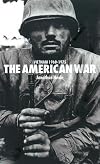
This is a really excellent history of the Vietnam War. The author’s approach is to consistently take the side of the oppressed, exploited and victims (Vietnamese peasants, working class GIs) against the oppressors, exploiters and ruling classes – in South-East Asia and in the USA.
The imperialist ruling class of the USA is the main target of Neale’s refreshingly partisan approach. But he is also critical of the ruling classes of the Stalinist states (North Vietnam, China, the USSR etc) show more which claim/claimed to be “socialist” or “communist”, but which were/are actually bureaucratic state capitalist tyrannies. (And this also goes, of course, for the horrific ultra-Stalinism of the Khmer Rouge in post-Vietnam War Cambodia.)
The book is one of the most powerful I have read. At times it is grim and depressing: for example, when relating the horrors inflicted on the people of Vietnam, Laos and Cambodia by US bombing, when describing the My Lai massacre, or when giving an account of the killing fields of Cambodia under Pol Pot’s Khmer Rouge.
But at times it is also inspiring. For example, there is this quotation about resistance to the war by US troops:
“In November 1969 many of the soldiers at Fort Bliss were forced to march in the Veterans Day Parade in El Paso. A hundred GIs stood facing the review stand, on the other side of the road, under a big banner saying “GIs For Peace”. As the troops from Fort Bliss marched by, instead of saluting the reviewing stand, they saluted the protesters with peace signs and clenched fists.”
The mighty beast of US imperialism was in the end defeated and forced to withdraw from Vietnam. As Neale says, “Three movements had defeated the American ruling class – the American peace movement, the GI’s revolt and the peasant guerrillas.”
Neale himself took part in the peace movement, but that does not stop him pointing out its weaknesses as well as its strengths. In particular he regrets its (and his own) failure to take the anti-war struggle into the organised working class, the force which has the potential power to really challenge the ruling class and change society through collective, democratic struggle. show less
The imperialist ruling class of the USA is the main target of Neale’s refreshingly partisan approach. But he is also critical of the ruling classes of the Stalinist states (North Vietnam, China, the USSR etc) show more which claim/claimed to be “socialist” or “communist”, but which were/are actually bureaucratic state capitalist tyrannies. (And this also goes, of course, for the horrific ultra-Stalinism of the Khmer Rouge in post-Vietnam War Cambodia.)
The book is one of the most powerful I have read. At times it is grim and depressing: for example, when relating the horrors inflicted on the people of Vietnam, Laos and Cambodia by US bombing, when describing the My Lai massacre, or when giving an account of the killing fields of Cambodia under Pol Pot’s Khmer Rouge.
But at times it is also inspiring. For example, there is this quotation about resistance to the war by US troops:
“In November 1969 many of the soldiers at Fort Bliss were forced to march in the Veterans Day Parade in El Paso. A hundred GIs stood facing the review stand, on the other side of the road, under a big banner saying “GIs For Peace”. As the troops from Fort Bliss marched by, instead of saluting the reviewing stand, they saluted the protesters with peace signs and clenched fists.”
The mighty beast of US imperialism was in the end defeated and forced to withdraw from Vietnam. As Neale says, “Three movements had defeated the American ruling class – the American peace movement, the GI’s revolt and the peasant guerrillas.”
Neale himself took part in the peace movement, but that does not stop him pointing out its weaknesses as well as its strengths. In particular he regrets its (and his own) failure to take the anti-war struggle into the organised working class, the force which has the potential power to really challenge the ruling class and change society through collective, democratic struggle. show less
A sloppily written/edited book. Multiple typos/misspellings, mixing up millions and billions in CO2 charts, awkward phrasing, etc.
But far more problematic is the faulty reasoning and insertion of unfounded assertions in the midst of supposedly factual information. Which undermines the validity of many of the key premises of the book. The structure suggests that the author is laying out the facts, then drawing conclusions from them and suggesting a course of action based on those results. But show more the reality seems to be the opposite - starting with an agenda and then searching for evidence to back it up.
Some of the logic is downright head-scratching, such as completely ignoring all greenhouse gasses from natural processes, as if they don't also contribute to the total CO2 emissions:
"This table only includes the emissions of methane that result from human activity. The rest are the emissions of methane from decaying trees and plants, and from the digestion of wild animals. These happen without human intervention, and were happening before this bout of global warming began. These natural processes still produce about one third of the methane in the atmosphere now. We will ignore them, because they were here before us, and will continue even if we reduce all the man-made methane emissions to zero."
Or this jump from electrical power generation/distribution technology straight to full-blown communism:
"Electricity from renewable energy can reduce fossil fuel emissions by more than 90%....However, the market cannot deliver renewable electricity on this scale. The reasons are inherent in the technology. We will need public ownership of the grid and the main electricity providers if this is going to work."
-huh? if the issue is "inherent in the technology" then what difference does it make who owns it??
The arguments against nuclear power, cement/concrete, steel, and urban development range from unrealistic to downright wacky. There's also an unhealthy fixation on coupling reduced carbon emissions with creating new jobs. The realities of increased automation as AI and robotics do more and more (e.g. self-driving vehicles, not thousands of bus/truck drivers as proposed) are largely ignored. As is the concept of a universal basic income.
On the positive side, the author is clearly passionate about the subject, and rather than succumbing to despair remains hopeful that if we try hard and work together we can not only save the planet, but create a more just and prosperous society to live on it. show less
But far more problematic is the faulty reasoning and insertion of unfounded assertions in the midst of supposedly factual information. Which undermines the validity of many of the key premises of the book. The structure suggests that the author is laying out the facts, then drawing conclusions from them and suggesting a course of action based on those results. But show more the reality seems to be the opposite - starting with an agenda and then searching for evidence to back it up.
Some of the logic is downright head-scratching, such as completely ignoring all greenhouse gasses from natural processes, as if they don't also contribute to the total CO2 emissions:
"This table only includes the emissions of methane that result from human activity. The rest are the emissions of methane from decaying trees and plants, and from the digestion of wild animals. These happen without human intervention, and were happening before this bout of global warming began. These natural processes still produce about one third of the methane in the atmosphere now. We will ignore them, because they were here before us, and will continue even if we reduce all the man-made methane emissions to zero."
Or this jump from electrical power generation/distribution technology straight to full-blown communism:
"Electricity from renewable energy can reduce fossil fuel emissions by more than 90%....However, the market cannot deliver renewable electricity on this scale. The reasons are inherent in the technology. We will need public ownership of the grid and the main electricity providers if this is going to work."
-huh? if the issue is "inherent in the technology" then what difference does it make who owns it??
The arguments against nuclear power, cement/concrete, steel, and urban development range from unrealistic to downright wacky. There's also an unhealthy fixation on coupling reduced carbon emissions with creating new jobs. The realities of increased automation as AI and robotics do more and more (e.g. self-driving vehicles, not thousands of bus/truck drivers as proposed) are largely ignored. As is the concept of a universal basic income.
On the positive side, the author is clearly passionate about the subject, and rather than succumbing to despair remains hopeful that if we try hard and work together we can not only save the planet, but create a more just and prosperous society to live on it. show less
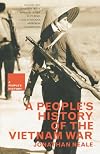
The war in Iraq and September 11th probably will be the defining event of the youth of the United States today when we look back in a few decades, in much the same way the war in Vietnam defined a generation of youth in the 1960s and 1970s. In a war that ended place a decade before most of those youth were born, what lessons can we take back? How exactly did the Vietnamese win? What were the social movements in the US that arose out of this conflict? Why are the myths of the show more American-Vietnamese War?
The trick to understanding a lot of history is that a lot of what was taught us growing up was simply wrong and just a particular point of view. "A People's History of the Vietnam War", by Jonathan Neale, does a fantastic job of presenting an excellent history that skips over the usual hoop-la about certain elite leaders of the war, and instead concentrates on a more systematic analysis of the war that took so many millions of lives. He sees the world in terms of class and therefore argues that the American ruling class got into Vietnam as a continuation of their policies aiming at domination of the globe. They needed to save South Vietnam, which was about a brutal a dictatorship as there gets, in order to shore up their support of other dictators throughout the world.
At the same time, he doesn't commit the same blunder that many other left-wing historians make in supporting elite cadre of the Communist Party either. He correctly identifies that the majority of the party leadership were the sons and daughters of the ruling landlord class, and though they wanted a better world and sought to destroy the class of their ancestors, they also made sure that they, the CP, stayed on as rulers. They did lead a mass mobilization of peasants which liberated their land and carried out a revolution, and life was much better under the CP than it was under the French, but at the same time as Vietnam liberalizes its economy, it is the Party which mainly benefits from it.
Neale makes a pretty convincing argument that three main factors led to the defeat of the United States military in Vietnam by the Vietnamese forces. 1) The main one was the peasants revolt, led by the Communists and guerillas, in which hundreds of thousands of fighters gave their lives to bring a new future to their country. Millions of peasants died in bombings, slaughters, and executions, but they never gave up. When the Viet Cong (the South Vietnamese guerrilla group) was nearly annihilated following the Tet offensive and Operation Phoenix by US special forces, North Vietnamese units filled the void and gave everything until the truce of 1973 five years later. By the time of that truce, the guerrillas of the south and soldiers of the north were completely exhausted.
The second factor for why the US could not win the war (which it could have done given a few more hundred thousand dead soldiers, a few more million dead civilians, and a few more years of death and war) was because of the US Peace movement. This is where Neale does a masterful job of shattering myths. He points out that the Peace movement is remembered mainly as being fought on campuses by middle-class students and that white workers usually were pro-war. This is simply not true. In fact, a greater percentage of middle-class Americans supported the war, and the great majority of working-class Americans were against the war, mainly because it was they who were dying in the war and returning home maimed and psychologically damaged because of the atrocities they were forced to commit. In this atmosphere of civil rights struggles, black and white workers were at the forefront of joint struggles against the war. In fact, Neale argues that a big limit of the student anti-war organizers was that they did not reach out to working class people as much because they had built-in assumptions about racist white working class people being pro-war. In fact, because of the large scale of the anti-war movement, it became hard to mobilize the country's military resources without facing political defeats at home.
There's a great passage here about President Johnson listening to a Pentagon whiz kid in 1966, two years before the war became hugely unpopular, saying the carpet-bombing Hanoi and several key North Vietnamese ports would end the war early, and argues that after feeding numbers into a computer,the Pentagon knows that the atoms bombs of Nagasaki and Hiroshima saved the lives of hundreds of thousands of American soldiers. Johnson responds:
"I have one more problem for your computer- will you feed into it how long it would take five hundred thousand angry Americans to climb the White House wall out there and lynch their President if he does something like that?"
The third factor argued by Neale which lead to the victory of the Vietnamese resistance was the GI revolt. By the end of the war, soldiers refusing to fight, fragging their officers who led them into dangerous missions or other stuff like racism towards black soldiers, and everyday acts of resistance by a huge chunk of the GIs in Vietnam led to an impossible task of the generals pushing forward when they were not even sure they could trust their own soldiers. On nearly every military base in the world, there was a radical underground soldiers newspaper which wrote articles about their dangerous superiors and anti-war material in general. Towards the end of the war, President Nixon switched to almost exclusively air war by carpet bombing North Vietnam and the countryside's of South Vietnam, Cambodia, and Laos, supporters of the Communists.
Neale does a great job explaining the huge effect on post-war Vietnam and United States. The United States proceeded to isolate Vietnam with its alliance with China and the Khymer Rouge in Cambodia. China even invaded Vietnam because of it's occupation of Cambodia after after the Khymer Rouge proceeded to destroy what was left of Cambodia after the massive firebombing of 1973 by the US air force. Gradually, the state rolled back the communal lands that the peasants had won in the war from the landlord class, until the point where today Vietnam is becoming a massive sweatshop in conjunction with large multinational corporations. In the United States, the ruling class learned not to commit to a long ground war, and instead embarks on a big counter-offensive against the gains of marginalized people (People of color, women, gay movements, working people) beginning in the 1980s. They learned the lessons of not letting a large amount of soldiers commit to ground operations, else that breeds massive dissent. The book was written right before the invasion of Iraq in early 2003, and aptly predicted a long ground war in Iraq.
Anyway, this was a great read and very well done. I can't recommend it enough. show less
The trick to understanding a lot of history is that a lot of what was taught us growing up was simply wrong and just a particular point of view. "A People's History of the Vietnam War", by Jonathan Neale, does a fantastic job of presenting an excellent history that skips over the usual hoop-la about certain elite leaders of the war, and instead concentrates on a more systematic analysis of the war that took so many millions of lives. He sees the world in terms of class and therefore argues that the American ruling class got into Vietnam as a continuation of their policies aiming at domination of the globe. They needed to save South Vietnam, which was about a brutal a dictatorship as there gets, in order to shore up their support of other dictators throughout the world.
At the same time, he doesn't commit the same blunder that many other left-wing historians make in supporting elite cadre of the Communist Party either. He correctly identifies that the majority of the party leadership were the sons and daughters of the ruling landlord class, and though they wanted a better world and sought to destroy the class of their ancestors, they also made sure that they, the CP, stayed on as rulers. They did lead a mass mobilization of peasants which liberated their land and carried out a revolution, and life was much better under the CP than it was under the French, but at the same time as Vietnam liberalizes its economy, it is the Party which mainly benefits from it.
Neale makes a pretty convincing argument that three main factors led to the defeat of the United States military in Vietnam by the Vietnamese forces. 1) The main one was the peasants revolt, led by the Communists and guerillas, in which hundreds of thousands of fighters gave their lives to bring a new future to their country. Millions of peasants died in bombings, slaughters, and executions, but they never gave up. When the Viet Cong (the South Vietnamese guerrilla group) was nearly annihilated following the Tet offensive and Operation Phoenix by US special forces, North Vietnamese units filled the void and gave everything until the truce of 1973 five years later. By the time of that truce, the guerrillas of the south and soldiers of the north were completely exhausted.
The second factor for why the US could not win the war (which it could have done given a few more hundred thousand dead soldiers, a few more million dead civilians, and a few more years of death and war) was because of the US Peace movement. This is where Neale does a masterful job of shattering myths. He points out that the Peace movement is remembered mainly as being fought on campuses by middle-class students and that white workers usually were pro-war. This is simply not true. In fact, a greater percentage of middle-class Americans supported the war, and the great majority of working-class Americans were against the war, mainly because it was they who were dying in the war and returning home maimed and psychologically damaged because of the atrocities they were forced to commit. In this atmosphere of civil rights struggles, black and white workers were at the forefront of joint struggles against the war. In fact, Neale argues that a big limit of the student anti-war organizers was that they did not reach out to working class people as much because they had built-in assumptions about racist white working class people being pro-war. In fact, because of the large scale of the anti-war movement, it became hard to mobilize the country's military resources without facing political defeats at home.
There's a great passage here about President Johnson listening to a Pentagon whiz kid in 1966, two years before the war became hugely unpopular, saying the carpet-bombing Hanoi and several key North Vietnamese ports would end the war early, and argues that after feeding numbers into a computer,the Pentagon knows that the atoms bombs of Nagasaki and Hiroshima saved the lives of hundreds of thousands of American soldiers. Johnson responds:
"I have one more problem for your computer- will you feed into it how long it would take five hundred thousand angry Americans to climb the White House wall out there and lynch their President if he does something like that?"
The third factor argued by Neale which lead to the victory of the Vietnamese resistance was the GI revolt. By the end of the war, soldiers refusing to fight, fragging their officers who led them into dangerous missions or other stuff like racism towards black soldiers, and everyday acts of resistance by a huge chunk of the GIs in Vietnam led to an impossible task of the generals pushing forward when they were not even sure they could trust their own soldiers. On nearly every military base in the world, there was a radical underground soldiers newspaper which wrote articles about their dangerous superiors and anti-war material in general. Towards the end of the war, President Nixon switched to almost exclusively air war by carpet bombing North Vietnam and the countryside's of South Vietnam, Cambodia, and Laos, supporters of the Communists.
Neale does a great job explaining the huge effect on post-war Vietnam and United States. The United States proceeded to isolate Vietnam with its alliance with China and the Khymer Rouge in Cambodia. China even invaded Vietnam because of it's occupation of Cambodia after after the Khymer Rouge proceeded to destroy what was left of Cambodia after the massive firebombing of 1973 by the US air force. Gradually, the state rolled back the communal lands that the peasants had won in the war from the landlord class, until the point where today Vietnam is becoming a massive sweatshop in conjunction with large multinational corporations. In the United States, the ruling class learned not to commit to a long ground war, and instead embarks on a big counter-offensive against the gains of marginalized people (People of color, women, gay movements, working people) beginning in the 1980s. They learned the lessons of not letting a large amount of soldiers commit to ground operations, else that breeds massive dissent. The book was written right before the invasion of Iraq in early 2003, and aptly predicted a long ground war in Iraq.
Anyway, this was a great read and very well done. I can't recommend it enough. show less
The author is part of the International Socialist Organization, and so his whitewash of Leninist Russia in the first chapter is totally ahistorical. He does not give the Vietnamese Communist Party the same kidglove treatment, however; the criticism is deserved and fair.
The book's strong points lie in the description of everyday life for a Viet Cong guerilla, and the resistance to the war within the United States. Shockingly, the author gives credit to anarchists in the US where it is due (in show more the creation of coffee shops, in "salting" the military to organize, and in fomenting mutiny), something ISO folks rarely do. show less
The book's strong points lie in the description of everyday life for a Viet Cong guerilla, and the resistance to the war within the United States. Shockingly, the author gives credit to anarchists in the US where it is due (in show more the creation of coffee shops, in "salting" the military to organize, and in fomenting mutiny), something ISO folks rarely do. show less
Lists
You May Also Like


Statistics
- Works
- 22
- Members
- 310
- Popularity
- #76,068
- Rating
- 3.2
- Reviews
- 7
- ISBNs
- 36
- Languages
- 8