
Stanley Karnow (1925–2013)
Author of Vietnam: A History
About the Author
Stanley Karnow was born in Brooklyn, New York on February 4, 1925. During World War II, he served in the Army Air Force. He received a bachelor's degree from Harvard University in 1947. After graduating, he sailed for France intending to spend the summer, but he stayed for a decade. He studied show more politics at the University of Paris in 1948-1949, and from 1950 to 1957 was a Paris correspondent for Time magazine. He was an Asian correspondent for Time-Life from 1959 to 1962, The London Observer from 1961 to 1965, The Saturday Evening Post from 1963 to 1965 and The Washington Post from 1965 to 1971. He was a diplomatic correspondent for The Washington Post in 1971 and 1972, and a special correspondent for NBC and an associate editor of The New Republic from 1973 to 1975. He was a columnist for King Features from 1975 to 1988, wrote for the French newsweekly Le Point from 1976 to 1983 and for Newsweek International from 1977 to 1981. His first book, Southeast Asia, was published in 1962. He also wrote Mao and China: From Revolution to Revolution and Paris in the Fifties. Vietnam: A History was published in 1983 and resulted in a 13-hour PBS documentary entitled Vietnam: A Television History. In Our Image: America's Empire in the Philippines was published in 1989 and won the 1990 Pulitzer Prize for history. It resulted in a three-part PBS documentary entitled The U.S. and the Philippines: In Our Image. He was also a co-author of or contributor to books based on his years in Asia, including Asian-Americans in Transition, Passage to Vietnam, Mekong, and Historical Atlas of the Vietnam War. He died of congestive heart failure on January 27, 2013 at the age of 87. (Bowker Author Biography) show less
Series
Works by Stanley Karnow
Associated Works
Booknotes: America's Finest Authors on Reading, Writing, and the Power of Ideas (1997) — Contributor — 459 copies, 5 reviews
Reporting Vietnam: American Journalism 1959-1969, Volume 1 (1998) — Contributor — 349 copies, 3 reviews
Communist China: Revolutionary Reconstruction and International Confrontation 1949 to the Present (1967) — Contributor — 102 copies, 1 review
Tagged
Common Knowledge
- Legal name
- Karnow, Stanley Abram
- Birthdate
- 1925-02-04
- Date of death
- 2013-01-27
- Gender
- male
- Education
- Harvard College (BA | 1947)
Sorbonne University (1947-48)
Institut d'Etudes Politiques de Paris (1948-49) - Occupations
- journalist
historian - Organizations
- United States Army Air Forces
Time
Life
The Saturday Evening Post
The Washington Post
Council on Foreign Relations (show all 7)
American Society of Historians - Awards and honors
- Emmy (x6)
Peabody Award
George Polk Award
Alfred I. duPont-Columbia University Award - Relationships
- Sarraute, Claude (ex-wife)
- Nationality
- USA
- Birthplace
- New York, New York, USA
- Places of residence
- New York, New York, USA (birth)
Washington, D.C., USA - Place of death
- Potomac, Montgomeru countu, Maryland, Etats-Unis
- Associated Place (for map)
- USA
Members
Reviews

A solid and digestible introduction to Southeast Asia at a certain time in history. Interesting that the summary and evaluation of European imperialism, nationalism, communism and the role of the overseas Chinese is not matched by a comparable analysis of the US intervention in Vietnam (which is noted more than once) even though the book was written in 1967. Of course the Vietnam War was not yet over (and maybe the hopelessness of the war was not yet evident), but then some of the other show more themes were also ongoing. No doubt regardless of whatever intentions the author may have had, Time-Life did not have any appetite to get into taking a position on US foreign policy in a book intended to be an introduction to a region. show less
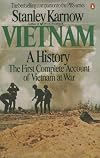
There a few things using the Dewey Decimal System that, IMHO, positively affected my thinking. One is where to file books on the Vietnam War, or any war. It's not in the United States section, it is in the Vietnam section since a war is something that happens to a country, it is not perpetrated by a country. It doesn't matter if one participant is a superpower. A war happens at a place, to a people. This long view that ends with the fall of Saigon starts way back with Vietnam on the fringes show more of Napoleon III's empire and on through post-WW II France handing over a struggle to a United States espousing its domino theory. Well, we left Hitler and Mussolini unmolested and look what happened? At least, that's how the argument went but over all those decades into centuries, really, an internally inconsistent Vietnam struggled to shake off foreign power. Well, at least the part struggled that was ideological, not so much the corrupt and craven leadership of Southern Vietnam... show less
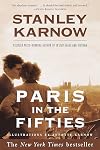
This book expands upon articles the author researched for Time Magazine in the 1950s but presents them as episodes out of his own life. For example, the article on the prince of the gastronomes includes the author’s recounting of having dinner with this Parisian luminary. His summary of popular trials includes his own experience attending them. The reader gets not only interesting information on Paris and France but also the insights of an American living in and learning about Paris and show more the French. show less
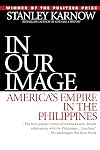
Mr. Karnow is probably more famous for his book on Vietnam but this one is a forceful reminder of earlier times, earlier unpopular wars and how the US became a colonial power sometimes willingly sometimes not. This is just one more area of the world where we have left our footprint without fully realizing what we have done, not nearly comprehending the reactions of the locals to us because of our mixed histories. President McKinley is shown as a weak leader who was hopeless before the show more machinations of Theodore Roosevelt, Dewey, and Senator Lodge. Later on General Douglas MacArthur is shown as major player whose support of the reactionary landowners/businessmen still leaves its imprint on the Philippines today. This is a solid read that might surprise one on how much influence the US has had on Filipino history.
Quote: ( page 310) “Adventurers and bandits of every stripe posed as partisans, and local factionalism riddled the various movements as well. As rival families and clans settled old feuds, duplicitously fighting or helping the enemy to suit their aims. Late n 1944 when the U.S. landings in Leyte presaged the liberation of the archipelago, self styled guerrillas surfaced everywhere in a final frenzy of plunder.
The strongest force was the Peoples Anti Japanese Army, in Tagalog the Hukbong Bayan Laban sa Hapon===Hukbalahap for short , run by a coalition of communists and socialists. Its leaders though mainly urban intellectuals, astutely realized that central Luzon long a caldron of rural unrest was ripe for their efforts.” show less
Quote: ( page 310) “Adventurers and bandits of every stripe posed as partisans, and local factionalism riddled the various movements as well. As rival families and clans settled old feuds, duplicitously fighting or helping the enemy to suit their aims. Late n 1944 when the U.S. landings in Leyte presaged the liberation of the archipelago, self styled guerrillas surfaced everywhere in a final frenzy of plunder.
The strongest force was the Peoples Anti Japanese Army, in Tagalog the Hukbong Bayan Laban sa Hapon===Hukbalahap for short , run by a coalition of communists and socialists. Its leaders though mainly urban intellectuals, astutely realized that central Luzon long a caldron of rural unrest was ripe for their efforts.” show less
Lists
Awards


You May Also Like


Associated Authors
Statistics
- Works
- 19
- Also by
- 6
- Members
- 3,461
- Popularity
- #7,351
- Rating
- 4.0
- Reviews
- 33
- ISBNs
- 53
- Languages
- 2
- Favorited
- 2


