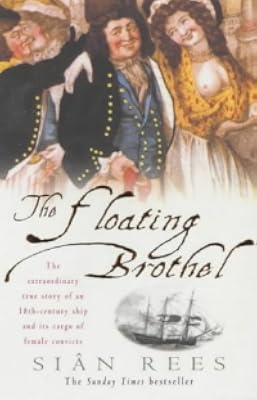
The Floating Brothel: The Extraordinary True Story of an Eighteenth-Century Ship and Its Cargo of Female Convicts
by Sian Rees
On This Page
Description
In July 1789, 237 women convicts left England for Botany Bay in Australia on board a ship called The Lady Julian, destined to provide sexual services and a breeding bank for the men already there. This is the enthralling story of the women and their voyage. Based on painstaking research into contemporary sources such as letters, trial records and the first-hand account of the voyage written by the ship's steward, John Nicol, this is a riveting work of recovered history. The Floating Brothel show more brilliantly conjures up the sights, sounds and particularly the smells of life on board ship at the time and is populated by a cast of larger-than-life characters you will never forget. show lessTags
Recommendations
























Member Recommendations

by anonymous user
Member Reviews
One consequence of the American Revolution was that Britain could no longer transport its convicts to American plantations. As 130,000 returning soldiers and British loyalists pushed women out of the legal trades, women were forced to resort to petty thievery and prostitution to survive. British jail populations swelled, and as even stealing a pair of shoes or some laundry could earn you seven years Transportation to Parts Beyond the Seas, there was a scramble to find someplace else to ship all these "disorderly women". The solution was New South Wales.
In 1787 the first shipment of male convicts and their military minders arrived in Sidney Cove. After two years, they were in dire straits. Governor Phillip wrote desperately for more show more food, more skilled labor, and more women. The more eligible women would serve as wives to the officers and colonists, and the rest as comfort women to the soldiers. Britain's answer was to pack 220 female convicts aboard the Lady Julian and send them off to join the First Fleet. Some were as young as 12 and all but a few were of childbearing age. This book is a narrative history of who these women were, their crimes, and their trip across the world to join the men at Sidney Cove.
Although the author did a tremendous amount of research, there simply are not a lot of surviving records and very little at all from the women themselves. The first part of the book was the best documented, because of court records, and I found that part the most interesting. Once the women were aboard the Lady Julian, the author was forced to rely heavily on one of the sailor's accounts, written decades after the voyage. John Nichol had fallen in love and cohabitated with one of the women on the ship. She even bore his son. But he was unable to remain with her in Australia. Life on the ships was harrowing, and this is where the author had to cobble together Nichol's memoir and experiences with other women on other ships, to make reasonable suppositions. Despite the lack of records, I think Rees does a commendable job of bringing to life the women who would become the "founding mothers" of the colonists in Australia. show less
In 1787 the first shipment of male convicts and their military minders arrived in Sidney Cove. After two years, they were in dire straits. Governor Phillip wrote desperately for more show more food, more skilled labor, and more women. The more eligible women would serve as wives to the officers and colonists, and the rest as comfort women to the soldiers. Britain's answer was to pack 220 female convicts aboard the Lady Julian and send them off to join the First Fleet. Some were as young as 12 and all but a few were of childbearing age. This book is a narrative history of who these women were, their crimes, and their trip across the world to join the men at Sidney Cove.
Although the author did a tremendous amount of research, there simply are not a lot of surviving records and very little at all from the women themselves. The first part of the book was the best documented, because of court records, and I found that part the most interesting. Once the women were aboard the Lady Julian, the author was forced to rely heavily on one of the sailor's accounts, written decades after the voyage. John Nichol had fallen in love and cohabitated with one of the women on the ship. She even bore his son. But he was unable to remain with her in Australia. Life on the ships was harrowing, and this is where the author had to cobble together Nichol's memoir and experiences with other women on other ships, to make reasonable suppositions. Despite the lack of records, I think Rees does a commendable job of bringing to life the women who would become the "founding mothers" of the colonists in Australia. show less
In July of 1789, 237 female convicts aboard the Lady Julian left Portsmouth bound for Sydney Cove, Australia. There are pickpockets, shoplifters, fraudsters and prostitutes. They were "ex-shop girls, ex-milkmaids, ex-laborers, and ex-maidservants" whose jobs had been given to veterans returning from America. These "disorderly women" were burnt at the stake - depending on the value of what they stole - or "leniently" sentenced or pardoned to Transportation. Most had simply stolen to survive, judged not by their peers, but of men of property. Transportation was Britain's way of settling a new colony and ridding itself of "undesirables." Once there, a "whore's ghetto" welcomed "the most abandoned" the rest were married off to encourage show more "breeding" or put to work. But as soon as they took to sea, "every man on board took a wife." In ports, they were a curiosity, and they could only look out for each other, not knowing the destitution that awaited them.
I love niche social history like this. Rees' "Floating Brothel" is not a commentary on the broad state of 18th century female convicts or the various circumstances in which a woman might find herself at sea. It's the singular story of the Lady Julian and her cargo. The ship itself is unexceptional, but thankfully the memoirs of steward John Nicol have survived, giving us a closer look. It speaks volumes of the British prison system when many preferred Transportation over years in a diseased goal or death. Rees discusses the particular activities, unique business transactions and the complex relationships of the convicts. "There were clientage systems...simple friendships..." and of course temporary lovers. Only a handful are mentioned by name, like Nicol's pregnant "sea wife" Sarah Whitelam, so thankfully, the reader is not expected to memorize them all or follow several storylines. No complaints! show less
I love niche social history like this. Rees' "Floating Brothel" is not a commentary on the broad state of 18th century female convicts or the various circumstances in which a woman might find herself at sea. It's the singular story of the Lady Julian and her cargo. The ship itself is unexceptional, but thankfully the memoirs of steward John Nicol have survived, giving us a closer look. It speaks volumes of the British prison system when many preferred Transportation over years in a diseased goal or death. Rees discusses the particular activities, unique business transactions and the complex relationships of the convicts. "There were clientage systems...simple friendships..." and of course temporary lovers. Only a handful are mentioned by name, like Nicol's pregnant "sea wife" Sarah Whitelam, so thankfully, the reader is not expected to memorize them all or follow several storylines. No complaints! show less
One of the unforeseen consequences of the British defeat in the American Revolution, was a dramatic increase in the number of females awaiting trial or convicted in London's Newgate Gaol. True, there were other underlying reasons, like the recent concomitant rise in population and unemployment, but 1783 saw approximately 130,000 discharged soldiers return home.
These men needed work, so naturally females were displaced, and men employed in their stead. Then, in 1785, a tax was imposed on those households employing maidservants over the age of 15. Dismissed servants soon found themselves on the streets too. The Times reported in July 1786 ... upon a very modest calculation, not less than 10,000 have been added to the number of common show more prostitutes by Mr Pitt's tax on maidservants. By October, the newspaper was reporting an estimate to 50,000 prostitutes. Along with prostitution, shoplifting pickpocketing and theft were ways many women found themselves sent to jail. While many of the offences were capital in nature, growing public distaste for hanging petty criminals meant many crimes were downgraded, and the sentence was transportation. However, that same defeat by the Americans had also put an end to the transport of female convicts to that former colony. What to do with them all?
The British government decided one option was transportation to its new colony of New South Wales, Australia. The Lady Julian was dispatched in 1790 with differing records showing from 172 - 245 female convicts on board, ranging in age from 11 to 68. Siân Rees writes of these ... ordinary women who, by a caprice of fate, found themselves in extraordinary circumstances: rounded up on the streets of Britain, shipped across the world and landed at a dirt camp in an alien continent.
The crew and officers had the "right" to a female partner during such voyages. This sounds appalling now, but Rees argued that given the circumstances, some women actually competed for such roles. Women used to competing for everything saw them as offering a degree of protection and security. About thirty women found their voyage potentially easier this way; the rest found themselves lodged in the hold, where power struggles among them were inevitable.
Rees follows the women from their trials, to the voyage from London to Rio to Port Jackson, Australia, a voyage of 11 months. She documents the arrival in their new and frightening world. Throughout, she focusses mainly on five women for whom there is documentation. She also used the first hand account of the Scot John Nicol, the ship's steward and cooper. Nicol took one of the women under his protection, had a child with her, and claimed to have spent the rest of his life trying to find her again after the "distribution" of the women upon their arrival in Australia.
The Floating Brother is a fascinating glimpse into a particular world and time. There should be more books like this. show less
These men needed work, so naturally females were displaced, and men employed in their stead. Then, in 1785, a tax was imposed on those households employing maidservants over the age of 15. Dismissed servants soon found themselves on the streets too. The Times reported in July 1786 ... upon a very modest calculation, not less than 10,000 have been added to the number of common show more prostitutes by Mr Pitt's tax on maidservants. By October, the newspaper was reporting an estimate to 50,000 prostitutes. Along with prostitution, shoplifting pickpocketing and theft were ways many women found themselves sent to jail. While many of the offences were capital in nature, growing public distaste for hanging petty criminals meant many crimes were downgraded, and the sentence was transportation. However, that same defeat by the Americans had also put an end to the transport of female convicts to that former colony. What to do with them all?
The British government decided one option was transportation to its new colony of New South Wales, Australia. The Lady Julian was dispatched in 1790 with differing records showing from 172 - 245 female convicts on board, ranging in age from 11 to 68. Siân Rees writes of these ... ordinary women who, by a caprice of fate, found themselves in extraordinary circumstances: rounded up on the streets of Britain, shipped across the world and landed at a dirt camp in an alien continent.
The crew and officers had the "right" to a female partner during such voyages. This sounds appalling now, but Rees argued that given the circumstances, some women actually competed for such roles. Women used to competing for everything saw them as offering a degree of protection and security. About thirty women found their voyage potentially easier this way; the rest found themselves lodged in the hold, where power struggles among them were inevitable.
Rees follows the women from their trials, to the voyage from London to Rio to Port Jackson, Australia, a voyage of 11 months. She documents the arrival in their new and frightening world. Throughout, she focusses mainly on five women for whom there is documentation. She also used the first hand account of the Scot John Nicol, the ship's steward and cooper. Nicol took one of the women under his protection, had a child with her, and claimed to have spent the rest of his life trying to find her again after the "distribution" of the women upon their arrival in Australia.
The Floating Brother is a fascinating glimpse into a particular world and time. There should be more books like this. show less
Siân Rees has done an amazing job combining various historical records and sources into a dramatically convincing story. The first part of the book consists of accounts based on legal records about various women and their crimes, ranging from theft to prostitution, and their subsequent deportation to the penal colony, then Australia. The hardship of the voyage, the landing and finally settlement with new husbands is decribed in equally engaging chapters, which vividly bring the everyday life experience of the Eighteenth Century to life. However, the literary quality of the book falls somewhat behind the scholarly work, and at times descriptions are a bit too long. The research may not be very spectacular, but the conception of the book show more into a coherent narrative is quite successful. show less
A little plodding in parts, but lively enough. Rees makes some observations about the relativity of justice and morality across time, but the bulk of her story is simply carried forward by the facts and the intimate narrative of John Nicol, retrieved decades later by a friendly ghost writer. Anyone with an interest in crime and punishment in late Georgian England, or in the colonisation of Australia would do well to stop with this book a while, but I'd recommend reading it alongside Tim Flannery's reissue of John Nicols 'The Life and Adventures of John Nicol, Mariner'.
All that said, the book is nowhere near as lively as bhowell's review of it here in LibraryThing. In fact bhowell's description of the book, and the book itself seem to show more part company in a radical kind of way after about 100 pages. For all of that, if Hollywood ever made a movie of Rees' book bhowells could certainly have written the script. Having checked out some of bhowell's other reviews this seems to be something of an entertaining aberration on her part. show less
All that said, the book is nowhere near as lively as bhowell's review of it here in LibraryThing. In fact bhowell's description of the book, and the book itself seem to show more part company in a radical kind of way after about 100 pages. For all of that, if Hollywood ever made a movie of Rees' book bhowells could certainly have written the script. Having checked out some of bhowell's other reviews this seems to be something of an entertaining aberration on her part. show less
Rees's detailing of the events that brought female convicts that would help settle Australia is very well researched. Not only does Rees give a thorough examination of the travel of the Lady Julian convict transport ship on its voyage, there is also examination of the convicts themselves, the circumstances that led to their exile from England, the preparations of the voyage, the political and legal policies that created the penal colonies, and of course the state of the colonies themselves. While this large amount of information may seem overbearing, Rees's writing style organizes it into a fluid and overall entertaining story. While perhaps a better suited for a slower read, it should be recommended.
This is a great read but its title is a little deceptive. This is a true story of a group of English women being transported to Australia and almost certain death for mostly petty crimes. They decide to live. They overcome the crew and take command of the ship. They then live the lives of pirates until they have enough money to retire as genteel wealthy widows in a city in the northeastern states. These women entice travelers aboard the ship with promises of sexual favours but mostly these men receive a roughing up and loss of all of their money and property and are then tossed out, back to their ship or the mainland if they are lucky. The women are more properly described as pirates as their goal is theft and promised sexual services show more are frequently not forthcoming. Like sensible women, they save their money and give up piracy when they have enough to retire in comfort. They then live the rest of their lives as respectable well off women, wisely choosing to settle in America, where immigrants abound and there is little risk of detection. show less
Members
- Recently Added By
Lists

Hot Gossip from Another Century
25 works; 3 members

Club Read's Recommended Nonfiction Written by Women
618 works; 30 members
Author Information
Sian Rees was born and brought up in Cornwall, England, in a family of boatbuilders and designers. After receiving her degree in history, she spent several years abroad, and it was while living in Melbourne, Australia, that she first became interested in the Lady Julian
Common Knowledge
- Original publication date
- 2001
- Important places
- Australia; Botany Bay, New South Wales, Australia; London, England, UK; Tenerife, Canary Islands, Spain; Rio de Janeiro, Brazil; Cape Town, Western Cape, South Africa
- First words
- Winter 1788, London. At the bottom of the Mall, outside the royal stables, a 26-year-old Scots prostitute staked out her space and began the night's work.
- Original language
- English
Classifications
- Genres
- History, Nonfiction, General Nonfiction
- DDC/MDS
- 365.6 — Society, government, & culture Social problems and social services Punishment Inmates
- LCC
- HV8950 .N6 .R46 — Social sciences Social pathology. Social and public welfare. Criminology Social pathology. Social and public welfare. Criminal justice administration Penology. Prisons. Corrections
- BISAC
Statistics
- Members
- 643
- Popularity
- 44,963
- Reviews
- 20
- Rating
- (3.74)
- Languages
- 7 — Dutch, English, French, German, Hungarian, Italian, Polish
- Media
- Paper, Ebook
- ISBNs
- 21
- ASINs
- 7