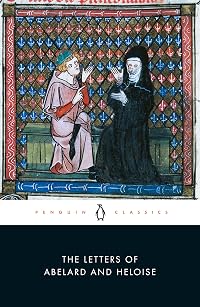
The Letters of Abelard and Heloise
by Peter Abelard (Author), Héloïse d'Argenteuil (Author)
On This Page
Description
The letters of Heloise and Abelard will remain one of the great, romantic and intellectual documents of human civilization while they, themselves, are probably second only to Romeo and Juliet in the fame accrued by tragic lovers. Here for the first time in Mart Martin McLaughlin's edition is the complete correspendence with commentary.Tags
Recommendations

















Member Recommendations


Member Reviews
A fascinating insight into Medieval life, "The Letters" are the real-life correspondences between Peter Abelard, an arrogant (and apparently handsome) monk and writer, and the beautiful young lady, Heloise, whom he seduced. Her subsequent pregnancy caused a scandal for them both, leading to her becoming the Abbess of a convent.
In truth, the story of these people is more interesting than the letters. Heloise is the more fascinating, as she clearly still has feelings, yet has begun to question the wisdom of their relationship, and whether Abelard ever cared for her. Abelard, meanwhile, disguises his arrogance and lack of forethought in his writing, but it's there clearly. Things become interesting as a paranoia evolves around him, show more although his writing suggests that he is clearly either delusional or, more likely, attention-seeking.
Despite the fascinating story - which is chronicled in detail in the introduction - the letters are more about religion than love, which is understandable due to the time. What makes them a worthy read is just as often the insight into the lives of these people. If you're looking for powerful letters of two star-crossed lovers, you're in the wrong place. I'll admit I was a little disappointed by this. Yet, I'm still happy to have read the letters, if only because - despite the trappings and religion orientation of those involved - many of the feelings and thoughts echo down the centuries, so familiarly.
The translation is very strong, as is the depth of the notes and introduction. Wonderfully, the intro even investigates the possibility that the letters were faked. The most likely option is that they are real, but some academics have suspected that Abelard may have written all the letters - either to better create Heloise's real thoughts, or as a kind of Ancient Greek philosophy exercise.
The appendices include a series of much more powerful letters, from around the same time, written between two unknown lovers. The book suggests that they may be the "lost love letters", although there is no real reason to assume this, but these letters are actually a really affecting read. show less
In truth, the story of these people is more interesting than the letters. Heloise is the more fascinating, as she clearly still has feelings, yet has begun to question the wisdom of their relationship, and whether Abelard ever cared for her. Abelard, meanwhile, disguises his arrogance and lack of forethought in his writing, but it's there clearly. Things become interesting as a paranoia evolves around him, show more although his writing suggests that he is clearly either delusional or, more likely, attention-seeking.
Despite the fascinating story - which is chronicled in detail in the introduction - the letters are more about religion than love, which is understandable due to the time. What makes them a worthy read is just as often the insight into the lives of these people. If you're looking for powerful letters of two star-crossed lovers, you're in the wrong place. I'll admit I was a little disappointed by this. Yet, I'm still happy to have read the letters, if only because - despite the trappings and religion orientation of those involved - many of the feelings and thoughts echo down the centuries, so familiarly.
The translation is very strong, as is the depth of the notes and introduction. Wonderfully, the intro even investigates the possibility that the letters were faked. The most likely option is that they are real, but some academics have suspected that Abelard may have written all the letters - either to better create Heloise's real thoughts, or as a kind of Ancient Greek philosophy exercise.
The appendices include a series of much more powerful letters, from around the same time, written between two unknown lovers. The book suggests that they may be the "lost love letters", although there is no real reason to assume this, but these letters are actually a really affecting read. show less
Ah, Peter Abelard. The only person in history to have become more of a dick because he lost his dick. (Though something tells me he was a pretty narcissistic jackass even before then.) As aware as I am that these letters are a wonderful historical source, rereading them only fills me with the urge to go back in time and punch Abelard in the neck. And then to take Heloise to one side, explain the concept of 'internalised misogyny' to her, fix her a strong drink and then talk her through why emotional abusers are bad for you. (Seriously, reading through these letters for the first time since the Twilight craze hit? Inspired some comparisons between Abelard and Edward Cullen.)
Hade en rätt idealiserad bild av deras kärleksrelation innan jag läste denna bok. Héloïses är fyllda av längtan och självuppoffrande för Abélards skull, men Abélard är betydligt mer distanserad och menar att han innan han kastrerades drevs av åtrå snarare än kärlek till Héloïse. Så relationen är betydligt mer ensidig än vad jag hade fått för mig. Boken är läsvärd för Héloïses brev som är en vacker bild av en kärlek av både åtrå, djup och till viss del, överraskande sett till tiden och hennes roll som nunna, i uppror mot Gud. Abélards brev är betydligt längre, torra, avfärdande och förmanande.
Despite my interest in the middle ages, I avoided H&A for a long time. I was under the impression that it was all moaning about love and so on; but no! These letters are actually fascinating. Two incredibly intelligent people, neither of whom I'd want to spend too much time with, write to each other about their amazing lives (famous philosopher gets castrated, hounded by church, hated by monks; famous poet/composer/humanist falls dementedly in love, has a child with her lover, becomes powerful abbess), but mixed in are very, very smart philosophical, theological, and social debates and discussions.
It would be the 'right' thing to do here for me to complain about how Abelard was a misogynist and Heloise was a victim and how her fabulous show more emancipatory light has been hidden under his having a penis. But if you read these letters with any care, you'll recognize Heloise for what she is: someone who is simply too brilliant, and too strong willed, to live a life filled with anything but soap opera level drama. Abelard is less recognizable as a type, in part because although he seems to have been just like Heloise when younger, he resist her attempts to engage in that kind of behavior in his later years. Heloise might have been more oppressed, but Abelard certainly suffered more, and that seems to have mellowed his brilliance and will.
Rather than Heloise-as-hero or Abelard-as-villain, these letters are definitive proof that 'the renaissance' didn't spring fully loaded from the head of some ancient Greek statue. H&A both know and quote at length from the classics; they both assume that secular learning is important; they both conduct their lives as such. These letters put paid to the silly belief of many historians of the early modern period that their period was the first time that anyone was an individual, or had a conflicted relationship with religion etc... And they're just damn entertaining.
They're also enlightening. Abelard's 'biography', the first letter, is a fine piece of life writing; Heloise's request that Abelard compose a rule for the community she headed is deeply learned and hilariously precise (essentially, her letter is an exercise in close reading of the Rule of St Benedict, showing just how unsuitable it is for women, in gloriously fine detail); Abelard's rule is a perfect response (excepting the residual "weaker vessel" nonsense).
There's a problem with this edition, though: for some baffling reason, Abelard's letter to Heloise on the history of nuns is greatly abridged. Why? And if you don't find it odd enough to begin with, consider that it can't have been to save paper; the book ends with a few anonymous letters from the period that some enterprising historian decided, for no particularly good reason, had also been written by H&A.
Here's something from one of the original set of letters:
"Who is there who was once my enemy, whether man or woman, who is not moved now by the compassion which is my due? Wholly guilty though I am, I am also, as you know, wholly innocent. It is not the deed but the intention of the doer which makes the crime, and justice should weight not what was done bu the spirit in which it is done. What my intention towards you has always been, you alone who have known it can judge. I submit all to your scrutiny, yield to your testimony in all things." Thus, Heloise to Abelard: introspective, philosophically sophisticated, conflicted.
Here's something from the unnecessarily appended "Lost Love Letters of Heloise and Abelard":
"Since my mind is turning with many concerns, it fails me, pierced by the sharp hook of love... Just as fire cannot be extinguished or suppressed by any material, unless water, by nature its powerful remedy, is applied, so my love cannot be cured by any means - only by you can it be healed." Thus, we're asked to believe, 'Heloise' to Abelard: ignorant (lots of things extinguish fire), foolish (if your love can't be cured by any means, then it can't be cured by Abelard), dull. I guess at least we have evidence that even twelfth-century people (though not necessarily H&A) could write drivel under the 'inspiration' of love.
If I could do it all over again, maybe I'd read the Hackett volume, which includes some of the love letter drivel, but at least gives us all of Abelard's letter to compensate. show less
It would be the 'right' thing to do here for me to complain about how Abelard was a misogynist and Heloise was a victim and how her fabulous show more emancipatory light has been hidden under his having a penis. But if you read these letters with any care, you'll recognize Heloise for what she is: someone who is simply too brilliant, and too strong willed, to live a life filled with anything but soap opera level drama. Abelard is less recognizable as a type, in part because although he seems to have been just like Heloise when younger, he resist her attempts to engage in that kind of behavior in his later years. Heloise might have been more oppressed, but Abelard certainly suffered more, and that seems to have mellowed his brilliance and will.
Rather than Heloise-as-hero or Abelard-as-villain, these letters are definitive proof that 'the renaissance' didn't spring fully loaded from the head of some ancient Greek statue. H&A both know and quote at length from the classics; they both assume that secular learning is important; they both conduct their lives as such. These letters put paid to the silly belief of many historians of the early modern period that their period was the first time that anyone was an individual, or had a conflicted relationship with religion etc... And they're just damn entertaining.
They're also enlightening. Abelard's 'biography', the first letter, is a fine piece of life writing; Heloise's request that Abelard compose a rule for the community she headed is deeply learned and hilariously precise (essentially, her letter is an exercise in close reading of the Rule of St Benedict, showing just how unsuitable it is for women, in gloriously fine detail); Abelard's rule is a perfect response (excepting the residual "weaker vessel" nonsense).
There's a problem with this edition, though: for some baffling reason, Abelard's letter to Heloise on the history of nuns is greatly abridged. Why? And if you don't find it odd enough to begin with, consider that it can't have been to save paper; the book ends with a few anonymous letters from the period that some enterprising historian decided, for no particularly good reason, had also been written by H&A.
Here's something from one of the original set of letters:
"Who is there who was once my enemy, whether man or woman, who is not moved now by the compassion which is my due? Wholly guilty though I am, I am also, as you know, wholly innocent. It is not the deed but the intention of the doer which makes the crime, and justice should weight not what was done bu the spirit in which it is done. What my intention towards you has always been, you alone who have known it can judge. I submit all to your scrutiny, yield to your testimony in all things." Thus, Heloise to Abelard: introspective, philosophically sophisticated, conflicted.
Here's something from the unnecessarily appended "Lost Love Letters of Heloise and Abelard":
"Since my mind is turning with many concerns, it fails me, pierced by the sharp hook of love... Just as fire cannot be extinguished or suppressed by any material, unless water, by nature its powerful remedy, is applied, so my love cannot be cured by any means - only by you can it be healed." Thus, we're asked to believe, 'Heloise' to Abelard: ignorant (lots of things extinguish fire), foolish (if your love can't be cured by any means, then it can't be cured by Abelard), dull. I guess at least we have evidence that even twelfth-century people (though not necessarily H&A) could write drivel under the 'inspiration' of love.
If I could do it all over again, maybe I'd read the Hackett volume, which includes some of the love letter drivel, but at least gives us all of Abelard's letter to compensate. show less
Some people want to fill the world with silly love songs. Apparently, Peter Abelard was no exception. In addition too being one of the great scholars of his time, he was like all 4 of the
Beatles, his love songs to Heloise were heard in every street. No one seems to know how Heloise felt about that. Why, I'd rather have my phone number on the men's room wall, than...oh, never mind! Seriously, this great romance was in fact a deeply flawed relationship from the start, Abelard's sense of entitlement was so out of control, he felt entitled to the very best, and took it. What's love got to do with it? Nothing. Perhaps they did come to love each other in the end, when no more could be done about it. But this so-called great love was in fact show more an abusive relationship in the guise of many a tabloid romance. show less
Beatles, his love songs to Heloise were heard in every street. No one seems to know how Heloise felt about that. Why, I'd rather have my phone number on the men's room wall, than...oh, never mind! Seriously, this great romance was in fact a deeply flawed relationship from the start, Abelard's sense of entitlement was so out of control, he felt entitled to the very best, and took it. What's love got to do with it? Nothing. Perhaps they did come to love each other in the end, when no more could be done about it. But this so-called great love was in fact show more an abusive relationship in the guise of many a tabloid romance. show less
The story of Abelard and Heloise remains one of the world's most celebrated and tragic love affairs. Through their letters, we follow the path of their romance from its reckless and ecstatic beginnings when Heloise became Abelard's pupil, through the suffering of public scandal and enforced secret marriage, to their eventual separation.
A work which has a surpricing immediacy, centuries later. A good example of why you shouldn't cross potential fathers-in-law.
Members
- Recently Added By
Lists

100 Books to Read in a Lifetime (That Are Older Than 200 Years)
415 works; 175 members

Books I Own But Haven't Read
144 works; 2 members

Blue Pyramid 1,276 Best Books of All Time
1,248 works; 32 members

Letters or Epistles
28 works; 1 member

Relationships: Boys & Girls
112 works; 1 member

Bibliotherapy: Family and Personal Social Issues
174 works; 5 members

Book Titles Mentioned In Newberry Medal And Honor Books
884 works; 3 members

Philip Ward's Lifetime Reading Plan
592 works; 22 members

Books Read in 2017
4,249 works; 130 members

el
1,139 works; 1 member

In Our Time books
4,934 works; 2 members

Lectuurlijst
63 works; 1 member
Author Information

Peter Abelard is considered to be the founder of the University of Paris. He studied under the nominalist Roscelin de Compiegne and the realist William of Champeaux. Disagreement with William led Abelard to withdraw to the provinces and set up his own school at Melun, in northern France, in 1104. He returned to Paris in 1116 to teach. A disastrous show more love affair with the brilliant and sensitive Heloise followed in 1118. Abelard had been hired as her tutor, and, after the birth of their son, they were secretly married. They later separated, and Abelard became a monk and Heloise a nun. Their correspondence during their years of separation is a literary classic. After the separation Abelard withdrew to Brittany and wrote The Theologia Summi Boni, which was condemned at Soissons in 1121. When he returned once more to Paris in 1136 to teach, his theology was condemned at Sens, chiefly because of the influence of Bernard of Clairvaux. Peter the Venerable of Cluny mediated the dispute between the two while Abelard was on his deathbed. Abelard spent his last days peacefully and was buried near Heloise. (Bowker Author Biography) show less
All Editions
Some Editions
Awards and Honors
Notable Lists
Series
Belongs to Publisher Series
Work Relationships
Is contained in
Contains
Common Knowledge
- Canonical title
- The Letters of Abelard and Heloise
- Original publication date
- 1133; 1933 (Scott Moncrieff) (Scott Moncrieff); 1974 (Penguin) (Penguin)
- People/Characters
- Peter Abelard (1079-1142); Héloïse (d'Argenteuil); Pierre Abélard; Peter the Venerable, abbot of Cluny
- Important places
- Paris, France; Brittany, France
- Related movies
- Stealing Heaven (1988 | IMDb)
- First words
- Oft sind es eher Vorbilder als Worte, die menschliche Leidenschaften entweder erregen oder besänftigen.
There are times when example is better than precept for stirring or soothing human passions; and so I propose to follow up the words of consolation I gave you in person with the history of my own misfortunes, hoping thereby t... (show all)o give you comfort in absence. - Last words*
- (Click to show. Warning: May contain spoilers.)Denn auf einen starken Felsen bin ich gegründet.
- Original language
- Latin
- Disambiguation notice
- At least some of these editions also include additional writings such as Historia calamitatum, and two hymns by Abelard: Sabbato ad Vesperas and In Parasceve Domini: III. Nocturno.
*Some information comes from Common Knowledge in other languages. Click "Edit" for more information.
Classifications
- Genres
- History, Nonfiction, Religion & Spirituality, Philosophy, Biography & Memoir, General Nonfiction
- DDC/MDS
- 189.4 — Philosophy & psychology Ancient, medieval & eastern philosophy Medieval western philosophy Scholastic: Scotus, Aquinas, Anselm, Abelard
- LCC
- PA8201 .A4 — Language and Literature Greek language and literature. Latin language and literature Medieval and modern Latin literature Individual authors
- BISAC
Statistics
- Members
- 2,626
- Popularity
- 7,173
- Reviews
- 13
- Rating
- (3.81)
- Languages
- 11 — Danish, Dutch, English, French, Old French, German, Italian, Latin, Portuguese, Spanish, Swedish
- Media
- Paper, Audiobook, Ebook
- ISBNs
- 58
- UPCs
- 1
- ASINs
- 27
