
Helen Waddell (1889–1965)
Author of The Desert Fathers
About the Author
Works by Helen Waddell
The Abbé Prévost : a play 1 copy
Prayer in lent 1 copy
Associated Works
Stories for girls — Contributor — 1 copy
Tagged
Common Knowledge
- Canonical name
- Waddell, Helen
- Legal name
- Waddell, Helen Jane
- Birthdate
- 1889-05-31
- Date of death
- 1965-03-05
- Gender
- female
- Education
- Victoria College for Girls
Queen's University Belfast (BA|1911|MA|1912)
Somerville College, University of Oxford - Occupations
- scholar
translator
playwright
poet
novelist
editor - Organizations
- Irish Literary Society
The Nineteenth Century magazine - Awards and honors
- Royal Society of Literature (Fellow, 1928)
Benson Medal (1928)
Royal Irish Academy (1932)
Medieval Academy of America (Corresponding Fellow, 1937) - Relationships
- Mayne, Rutherford (brother)
Sassoon, Siegfried (friend)
Waddell, Martin (grandnephew) - Cause of death
- complications of dementia
- Nationality
- UK
- Birthplace
- Tokyo, Japan
- Places of residence
- Belfast, Northern Ireland, UK
Paris, France
Tokyo, Japan
London, England, UK - Place of death
- London, England, UK
- Burial location
- Magherally Graveyard, Banbridge, County Down, Northern Ireland, UK
- Map Location
- Northern Ireland, UK
Members
Reviews

The desert fathers were radicals. They sold their possessions and left society behind to spend all of their time in prayer and meditation. The further away they were from each other and especially from society, the better. They lived alone in their huts living on crusts of bread and water as they wove mats from reeds to sell at the market for sustenance. They devoted their silent lives to prayer and meditation.
There’s something inspiring about these figures. They’re portrayed as heroes, show more and in once sense, that’s true. These were the fundamentalists of the third and fourth centuries who gave their lives in drastic fashion on what they believed was the path to godliness.
The insight they developed into human nature is rich. Many of their writings cut to the core of what it means to be a human wrestling with sin. Consider this sentence on fleeing temptation:
"The Fathers used to say, 'if temptation befall thee in the place thou dost inhabit, desert not the place in the time of temptation: for if thou dost, wherever thou goest, thou shalt find what thou fliest before thee'" (94).
The ascetics realized that the temptations they fled society to escape from resided in their heart no matter where they went. Solitude gave them the focus to wrestle with that temptation.
Despite the legendary godliness of these saints, I struggle with their decision to leave society and mortify their bodies for a couple reasons.
1) Jesus spent his life rubbing shoulders with the people the Desert Fathers fled from. Although many of the stories concern people who tracked the saints down, the Fathers spent their life trying to avoid the very contact Jesus sought.
2) In mortifying their flesh, they were disdaining the body the good Creator gave them. This betrays an eschatology rooted in Platonism, far from the robust earthy spirituality of our Jewish heritage.
In the end, I can’t get past Paul’s advice:
"Let no one disqualify you, insisting on asceticism … If with Christ you died to the elemental spirits of the world, why do you as if you were still alive in the world, do you submit to regulations—“Do not handle, Do not taste, Do not touch” (referring to things that all perish as they are used)—according to human precepts and teachings? These have indeed an appearance of wisdom in promoting self-made religion and asceticism and severity to the body, but they are of no value in stopping the indulgence of the flesh" (Colossians 2:18, 20-23 ESV).
While I respect the wholehearted passion of these men and value their insight, I can’t help but think of them as stunted savants—excelling in prayer, solitude, and humility, while all the while missing out on the fullness of eternal life. show less
There’s something inspiring about these figures. They’re portrayed as heroes, show more and in once sense, that’s true. These were the fundamentalists of the third and fourth centuries who gave their lives in drastic fashion on what they believed was the path to godliness.
The insight they developed into human nature is rich. Many of their writings cut to the core of what it means to be a human wrestling with sin. Consider this sentence on fleeing temptation:
"The Fathers used to say, 'if temptation befall thee in the place thou dost inhabit, desert not the place in the time of temptation: for if thou dost, wherever thou goest, thou shalt find what thou fliest before thee'" (94).
The ascetics realized that the temptations they fled society to escape from resided in their heart no matter where they went. Solitude gave them the focus to wrestle with that temptation.
Despite the legendary godliness of these saints, I struggle with their decision to leave society and mortify their bodies for a couple reasons.
1) Jesus spent his life rubbing shoulders with the people the Desert Fathers fled from. Although many of the stories concern people who tracked the saints down, the Fathers spent their life trying to avoid the very contact Jesus sought.
2) In mortifying their flesh, they were disdaining the body the good Creator gave them. This betrays an eschatology rooted in Platonism, far from the robust earthy spirituality of our Jewish heritage.
In the end, I can’t get past Paul’s advice:
"Let no one disqualify you, insisting on asceticism … If with Christ you died to the elemental spirits of the world, why do you as if you were still alive in the world, do you submit to regulations—“Do not handle, Do not taste, Do not touch” (referring to things that all perish as they are used)—according to human precepts and teachings? These have indeed an appearance of wisdom in promoting self-made religion and asceticism and severity to the body, but they are of no value in stopping the indulgence of the flesh" (Colossians 2:18, 20-23 ESV).
While I respect the wholehearted passion of these men and value their insight, I can’t help but think of them as stunted savants—excelling in prayer, solitude, and humility, while all the while missing out on the fullness of eternal life. show less

https://fromtheheartofeurope.eu/the-wandering-scholars-by-helen-waddell/
This was the book that made the reputation of Helen Waddell, the medievalist from my own corner of County Down. It's a study of the lyrical tradition of poetry in the Middle Ages in Europe, tracing influences across geographies and cultures. I found the writing very dense; written very chattily as if these were all people whose reputations we already knew, with minimal context and footnotes mostly to works available only show more in well-equipped university libraries. I'm really surprised that it did so well on publication in 1927; perhaps the readers of the 1920s were more au fait with early medieval literature than I am.
Still there are some fascinating details in there. It's always interesting to be reminded of the career of Gerbert of Aurillac, which is crying out for an accessible biographical treatment, either factual or fictional. The same goes for the murky story of the Viking Siegfried (or Sifrid, as Waddell calls him). There's the mysterious figure of the Archpoet. And more locally it's interesting to see Liège popping up as an important centre of culture.
She supplies a lot of translations of the lyrics, to which she brings her own good ear for a phrase; here's the Archpoet's Estuans Interius, as set to music by Carl Orff in the Carmina Burana a few years later, with the original text (which fairly bounces along) and Helen's translation.
Estuans interius
ira vehementi
in amaritudine
loquor mee menti:
factus de materia,
cinis elementi
similis sum folio,
de quo ludunt venti.
Cum sit enim proprium
viro sapienti
supra petram ponere
sedem fundamenti,
stultus ego comparor
fluvio labenti,
sub eodem tramite
nunquam permanenti.
Feror ego veluti
sine nauta navis,
ut per vias aeris
vaga fertur avis;
non me tenent vincula,
non me tenet clavis,
quero mihi similes
et adiungor pravis.
Mihi cordis gravitas
res videtur gravis;
iocis est amabilis
dulciorque favis;
quicquid Venus imperat,
labor est suavis,
que nunquam in cordibus
habitat ignavis.
Via lata gradior
more iuventutis
inplicor et vitiis
immemor virtutis,
voluptatis avidus
magis quam salutis,
mortuus in anima
curam gero cutis.
Seething over inwardly
With fierce indignation,
In my bitterness of soul,
Hear my declaration.
I am of one element,
Levity my matter,
Like enough a withered leaf
For the winds to scatter.
Since it is the property
Of the sapient
To sit firm upon a rock,
It is evident
That I am a fool, since I
Am a flowing river,
Never under the same sky,
Transient for ever.
Hither, thither, masterless
Ship upon the sea,
Wandering through the ways of air,
Go the birds like me.
Bound am I by ne'er a bond,
Prisoner to no key,
Questing go I for my kind,
Find depravity.
Never yet could I endure
Soberness and sadness,
Jests I love and sweeter than
Honey find I gladness.
Whatsoever Venus bids
Is a joy excelling,
Never in an evil heart
Did she make her dwelling.
Down the broad way do I go,
Young and unregretting,
Wrap me in my vices up,
Virtue all forgetting,
Greedier for all delight
Than heaven to enter in:
Since the soul is in me dead,
Better save the skin.
I'm glad I have read this at last, and I'll put some of Helen Waddell's other works on my reading list now. show less
This was the book that made the reputation of Helen Waddell, the medievalist from my own corner of County Down. It's a study of the lyrical tradition of poetry in the Middle Ages in Europe, tracing influences across geographies and cultures. I found the writing very dense; written very chattily as if these were all people whose reputations we already knew, with minimal context and footnotes mostly to works available only show more in well-equipped university libraries. I'm really surprised that it did so well on publication in 1927; perhaps the readers of the 1920s were more au fait with early medieval literature than I am.
Still there are some fascinating details in there. It's always interesting to be reminded of the career of Gerbert of Aurillac, which is crying out for an accessible biographical treatment, either factual or fictional. The same goes for the murky story of the Viking Siegfried (or Sifrid, as Waddell calls him). There's the mysterious figure of the Archpoet. And more locally it's interesting to see Liège popping up as an important centre of culture.
She supplies a lot of translations of the lyrics, to which she brings her own good ear for a phrase; here's the Archpoet's Estuans Interius, as set to music by Carl Orff in the Carmina Burana a few years later, with the original text (which fairly bounces along) and Helen's translation.
Estuans interius
ira vehementi
in amaritudine
loquor mee menti:
factus de materia,
cinis elementi
similis sum folio,
de quo ludunt venti.
Cum sit enim proprium
viro sapienti
supra petram ponere
sedem fundamenti,
stultus ego comparor
fluvio labenti,
sub eodem tramite
nunquam permanenti.
Feror ego veluti
sine nauta navis,
ut per vias aeris
vaga fertur avis;
non me tenent vincula,
non me tenet clavis,
quero mihi similes
et adiungor pravis.
Mihi cordis gravitas
res videtur gravis;
iocis est amabilis
dulciorque favis;
quicquid Venus imperat,
labor est suavis,
que nunquam in cordibus
habitat ignavis.
Via lata gradior
more iuventutis
inplicor et vitiis
immemor virtutis,
voluptatis avidus
magis quam salutis,
mortuus in anima
curam gero cutis.
Seething over inwardly
With fierce indignation,
In my bitterness of soul,
Hear my declaration.
I am of one element,
Levity my matter,
Like enough a withered leaf
For the winds to scatter.
Since it is the property
Of the sapient
To sit firm upon a rock,
It is evident
That I am a fool, since I
Am a flowing river,
Never under the same sky,
Transient for ever.
Hither, thither, masterless
Ship upon the sea,
Wandering through the ways of air,
Go the birds like me.
Bound am I by ne'er a bond,
Prisoner to no key,
Questing go I for my kind,
Find depravity.
Never yet could I endure
Soberness and sadness,
Jests I love and sweeter than
Honey find I gladness.
Whatsoever Venus bids
Is a joy excelling,
Never in an evil heart
Did she make her dwelling.
Down the broad way do I go,
Young and unregretting,
Wrap me in my vices up,
Virtue all forgetting,
Greedier for all delight
Than heaven to enter in:
Since the soul is in me dead,
Better save the skin.
I'm glad I have read this at last, and I'll put some of Helen Waddell's other works on my reading list now. show less
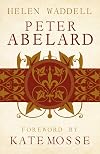
This is a well researched and erudite historical novel about the famous love story of the Medieval religious and intellectual figures Abelard and Heloise (despite the latter not getting her due billing in the title). While their story is fascinating and colourful, I found this novel somewhat disappointing in that I thought it sometimes got bogged down in its erudition at the expense of telling the story, and I found the narrative sometimes confusing as the order of events in their life show more story, with which I have some familiarity, was confused. show less
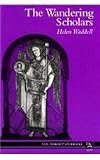
I first read this book 32+ years ago. I was struck then, as I am to this day by its combination of erudition and warmth. Waddell loves the mediæval Latin poets (and for her the Middle Ages begin with the last days of the Roman West), and she examines them in the light of that love, but with a good humour that almost radiates from the page. I had never heard of any of the works or writers when I first read the book, and was instantly convinced of their literary value (but then I was 17 and show more impressionable). If there is a book that in and of itself says what good scholarship should be this is it. show less
Lists
Awards


You May Also Like


Associated Authors
Statistics
- Works
- 17
- Also by
- 10
- Members
- 2,070
- Popularity
- #12,411
- Rating
- 3.7
- Reviews
- 26
- ISBNs
- 71
- Languages
- 1
- Favorited
- 4