
Benedicta Ward (1933–2022)
Author of The Sayings of the Desert Fathers
About the Author
Benedicta Ward is Reader in the History of Christian Spirituality at the University of Oxford and an honorary lecturer at Harris Manchester College.
Image credit: Courtesy of Benedicta Ward.
Works by Benedicta Ward
The Desert Fathers: Sayings of the Early Christian Monks (2003) — Translator — 573 copies, 6 reviews
Give Love and Receive the Kingdom: Essential People and Themes of English Spirituality (2018) 27 copies
In the Company of Christ: Through Lent, Palm Sunday, Good Friday and Easter to Pentecost (2005) 22 copies
Christ Within Me: Prayers and Meditations from the Anglo-Saxon Tradition (1999) — Translator — 19 copies
Intellectual Life in the Middle Ages: Essays Presented to Margaret Gibson (1992) — Editor — 18 copies
Signs and Wonders: Saints, Miracles and Prayer from the 4th Century to the 14th (Variorum Collected Studies) (1992) 6 copies
Christian Spirituality 1 copy
Liturgy Today 1 copy
Associated Works
Prayers and Meditations of St. Anselm with the Proslogion (Penguin Classics) (1979) — Translator, some editions — 485 copies, 1 review
The Lives of the Desert Fathers: Historia Monachorum in Aegypto (1981) — Introduction, some editions — 281 copies, 2 reviews
In the Heart of the Desert: The Spirituality of the Desert Fathers and Mothers (2003) — Foreword, some editions — 200 copies, 3 reviews
Great Spirits 1000-2000: The Fifty-Two Christians Who Most Influenced Their Millennium (2002) — Contributor — 30 copies, 1 review
Tagged
Common Knowledge
- Canonical name
- Ward, Benedicta
- Legal name
- Ward, Florence Margaret (birth)
- Other names
- Sister Benedicta Ward
Sister Benedicta Ward SLG
Sister Benedicta of Jesus - Birthdate
- 1933-02-04
- Date of death
- 2022-05-23
- Gender
- female
- Education
- St. Anne's College, Oxford (D.Phil|1978)
University of Manchester (BA) - Occupations
- theologian
historian of early Christian spirituality
nun - Organizations
- Oxford University
Church of England
Community of the Sisters of the Love of God - Awards and honors
- Supernumerary Fellow & Dean of Degrees, Harris Manchester College, Univ. of Oxford; member--Anglican religious community of the Sisters of the Love of God
- Short biography
- Benedicta Ward is Reader in the History of Christian Spirituality in the University of Oxford. Her most recent book is Anselm of Canterbury: His Life and Legacy (SPCK 2009). She is a member of the Anglican monastic community of the Sisters of the Love of God.
- Nationality
- UK
- Birthplace
- Durham, England, UK
- Places of residence
- Fairacres, Oxforshire, England, UK
- Place of death
- Oxford, Oxfordshire, England, UK
- Associated Place (for map)
- England, UK
Members
Reviews
Harlots of the Desert: A Study of Repentance in Early Monastic Sources (Cistercian Studies Series, 106) by Benedicta Ward
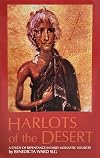
The desert mothers and fathers were serious, stark. Their love of God so all-consuming that they shine as examples of how to live, ascetically, yes, but their asceticism doesn’t diminish their example of how to live.
For Ward, the main point of this study of desert harlots is to affirm that no sin can remove us from the love and mercy of God. Only our surrender to despair can do that. Ward tells the story of a monk who withdraws from the desert after attempting to seduce a wandering woman, show more for shame over his actions. Likewise, the final story in the book, that of Maria, the niece of Abba Abraham, tells the story of a woman who allows herself to be seduced by a “monk in name only” and then, fearing her uncle’s reaction, fleas into the city to live and work in a brothel. Both represent individuals that pridefully regard themselves as too imperfect to be saved, when, as Abba Abraham declares, they are in fact surrounded by persons who want to help mend the brokennesses.
And so to the first story: St. Mary Magdalene. Ward helpfully traces how the various mentions of Marys in scripture came to be conflated with Mary Magdalene and how she came to be remembered as a prostitute. Ward also points out that the figure of Mary Magdalene, a “sinful woman” who was forgiven and became a close friend of Jesus, is a type for the whole human race—we all stand in sin before Christ, but we are met, forgiven, and invited in. Our response is to love and serve. (Mary Magdalene is often called the apostle to the apostles, after all.)
Next is the story of Mary of Egypt. Mary was born in Alexandria and early in life became a prostitute. She sold herself in order to get a boat ride to Palestine, where she plied her trade in Jerusalem. One day, she has a conversion experience before an icon of Jesus and Mary. After venerating the holy cross in the church, she is led into the desert, where she spends the rest of her life as a hermit. Zossima, a monk wandering the desert at Lent, as was the custom in his monastery, happened across her. Zossima is overcome with admiration for her story of repentance and faithfulness. The two meet again a year later, when Zossima gives her Eucharist alongside the Jordan River after the Maundy Thursday services in Jerusalem. A year later, he goes to the prearranged meeting spot—the dried riverbed deep in the desert where they first met—and Zossima finds her dead, resting in peace for a year since having received the Body and Blood of Christ. Zossima buries her with deep admiration for her example. He told his monastic community, and her story is told to this day, often during the Lenten season.
St. Pelegia, an actress turned desert mother, is the third woman discussed in Ward’s book. Pelegia was one of the most beloved actresses in Alexandria, and her beauty and talent won her many lovers as well. One day, she passed a meeting of bishops. All, except for Nonnus, look away for fear of being tempted to lust after Pelegia; Nonnus looks on her and begins to weep, seeing her true beauty. With compunction, he says to God, “I know I am a sinner and unworthy, for today the ornaments of a harlot have shone more brightly than the ornaments of my soul….I stand before your altar and I do not offer you a soul adorned with the beauty you want to see in me” (68). Just as her silent witness struck Nonnus, Nonnus’s verbal witness, his sermon the next day, struck Pelegia to the heart, she having wandered into the church. She immediately asked to be baptized and gave her possessions away and went to live in the desert, where, disguised as a male monk, she grew in fame for her spirituality and faith. Nonnus sends one of his friends to meet “Pelegius” the monk, and she simply asks for prayers. Later she dies, and the friend buries her, and reports back to Nonnus. The chronicler concludes the account saying, “May the life of this harlot, this account of total conversion, join us to her and bring us all the mercy of the Lord on the day of judgement, to whom be glory and power and honour to the ages of ages. Amen” (75).
Next is St. Thaïs’s story. Thaïs was a prostitute in Egypt. Abba Paphnutius, a monk of the desert, heard of her and went to her in civilian clothes to confront her. She spoke of God’s presence and he uses the opportunity to call her to repentance. She repents and is locked away in a convent as an anchoress. After three years a vision reveals to Paphnutius that her repentance has been accepted by God, and he goes to remove her from her cell. She comes out and dies 15 days later, ready to meet her Lord.
“It is not judgement of sins, excuses, or understanding of alleviating circumstances that break the heart, but mercy and love. This is a fundamental aspect of the life of the desert fathers: not to judge but to love” (88). This lesson we all need to hear is especially relevant to the story of Maria the Niece of Abraham. As I wrote above, Maria is seduced and joins a brothel in her despair. Having disguised himself as a soldier, so as not to attract attention from the brothel-owner, Abraham eventually gets to Maria’s bed chamber, where he reveals his identity, and asks:
“Don’t you know me, Maria my child? Dear heart, am I not he who took care of you? What happened, my dear? Who hurt you, my daughter? What had become of the dress of angels that you used to wear [i.e., her monastic robes]? What has become of your virginity, your tears, your vigils, all your prayers? From what a height you have fallen, my child, into such a pit as this! Why, when you sinned, did you not tell me? Why could you not come and speak of it with me? For of course I would have done penance for you, I and our dearest [friend and chronicler] Ephraim. Why did you not do that?…For who is without sin, save God alone?…To you, your sins seem like mountains, but God has spread his mercy over all that He has made” (98).
Maria repents and joins Abraham back at their hermitage in the desert. They pass away soon thereafter, Abraham first, then Maria a number of years later.
The story ends with an incredibly moving note, a note that one can certainly identify with. He laments the passing of his saintly friends and his failures in their absence. And he closes with this fine prayer, asking for the Father’s mercy:
“Have mercy on me, God, alone without sin, and save me, for you alone are kind and merciful. For besides you and the only-begotten Son who became man for us, and the Holy Spirit who sanctifies all things, I know of no other nor do I believe in any other. Now remember me, Lover of men, and lead me out of the prison of my sins, for it was you who first willed me to enter the world and now you stand ready to bring me out of it. Remember me, for I have no protection, and save me, a sinner; and let those who were to me in this world a help, a refuge, and a glory, keep me under their wings from the day of terror and fear. You who see the heart, you know how greatly I have tried to avoid depravity and sin, vanity and especially heresy, by your grace which illuminates my soul. I pray you, holy Lord, save me in your kingdom, and deign to bless me, together with those who were so good in your sight, for to you alone belong glory and adoration and wonder, Father, Son and Holy Spirit, AMEN” (101).
I find all of these stories incredibly compelling, and take heart since Ward points out how these are retold to encourage readers in the way of holiness, affirming that no one who seeks will fail to find God’s grace and mercy. And I marvel at their single-mindedness after their conversions; how I wish we Christians, myself foremostly in need, could have this single-sightedness and devotion to our Lord.
Saints Mary Magdalene, Mary of Egypt, Pelegia, Thaïs, and Maria, pray for us! show less
For Ward, the main point of this study of desert harlots is to affirm that no sin can remove us from the love and mercy of God. Only our surrender to despair can do that. Ward tells the story of a monk who withdraws from the desert after attempting to seduce a wandering woman, show more for shame over his actions. Likewise, the final story in the book, that of Maria, the niece of Abba Abraham, tells the story of a woman who allows herself to be seduced by a “monk in name only” and then, fearing her uncle’s reaction, fleas into the city to live and work in a brothel. Both represent individuals that pridefully regard themselves as too imperfect to be saved, when, as Abba Abraham declares, they are in fact surrounded by persons who want to help mend the brokennesses.
And so to the first story: St. Mary Magdalene. Ward helpfully traces how the various mentions of Marys in scripture came to be conflated with Mary Magdalene and how she came to be remembered as a prostitute. Ward also points out that the figure of Mary Magdalene, a “sinful woman” who was forgiven and became a close friend of Jesus, is a type for the whole human race—we all stand in sin before Christ, but we are met, forgiven, and invited in. Our response is to love and serve. (Mary Magdalene is often called the apostle to the apostles, after all.)
Next is the story of Mary of Egypt. Mary was born in Alexandria and early in life became a prostitute. She sold herself in order to get a boat ride to Palestine, where she plied her trade in Jerusalem. One day, she has a conversion experience before an icon of Jesus and Mary. After venerating the holy cross in the church, she is led into the desert, where she spends the rest of her life as a hermit. Zossima, a monk wandering the desert at Lent, as was the custom in his monastery, happened across her. Zossima is overcome with admiration for her story of repentance and faithfulness. The two meet again a year later, when Zossima gives her Eucharist alongside the Jordan River after the Maundy Thursday services in Jerusalem. A year later, he goes to the prearranged meeting spot—the dried riverbed deep in the desert where they first met—and Zossima finds her dead, resting in peace for a year since having received the Body and Blood of Christ. Zossima buries her with deep admiration for her example. He told his monastic community, and her story is told to this day, often during the Lenten season.
St. Pelegia, an actress turned desert mother, is the third woman discussed in Ward’s book. Pelegia was one of the most beloved actresses in Alexandria, and her beauty and talent won her many lovers as well. One day, she passed a meeting of bishops. All, except for Nonnus, look away for fear of being tempted to lust after Pelegia; Nonnus looks on her and begins to weep, seeing her true beauty. With compunction, he says to God, “I know I am a sinner and unworthy, for today the ornaments of a harlot have shone more brightly than the ornaments of my soul….I stand before your altar and I do not offer you a soul adorned with the beauty you want to see in me” (68). Just as her silent witness struck Nonnus, Nonnus’s verbal witness, his sermon the next day, struck Pelegia to the heart, she having wandered into the church. She immediately asked to be baptized and gave her possessions away and went to live in the desert, where, disguised as a male monk, she grew in fame for her spirituality and faith. Nonnus sends one of his friends to meet “Pelegius” the monk, and she simply asks for prayers. Later she dies, and the friend buries her, and reports back to Nonnus. The chronicler concludes the account saying, “May the life of this harlot, this account of total conversion, join us to her and bring us all the mercy of the Lord on the day of judgement, to whom be glory and power and honour to the ages of ages. Amen” (75).
Next is St. Thaïs’s story. Thaïs was a prostitute in Egypt. Abba Paphnutius, a monk of the desert, heard of her and went to her in civilian clothes to confront her. She spoke of God’s presence and he uses the opportunity to call her to repentance. She repents and is locked away in a convent as an anchoress. After three years a vision reveals to Paphnutius that her repentance has been accepted by God, and he goes to remove her from her cell. She comes out and dies 15 days later, ready to meet her Lord.
“It is not judgement of sins, excuses, or understanding of alleviating circumstances that break the heart, but mercy and love. This is a fundamental aspect of the life of the desert fathers: not to judge but to love” (88). This lesson we all need to hear is especially relevant to the story of Maria the Niece of Abraham. As I wrote above, Maria is seduced and joins a brothel in her despair. Having disguised himself as a soldier, so as not to attract attention from the brothel-owner, Abraham eventually gets to Maria’s bed chamber, where he reveals his identity, and asks:
“Don’t you know me, Maria my child? Dear heart, am I not he who took care of you? What happened, my dear? Who hurt you, my daughter? What had become of the dress of angels that you used to wear [i.e., her monastic robes]? What has become of your virginity, your tears, your vigils, all your prayers? From what a height you have fallen, my child, into such a pit as this! Why, when you sinned, did you not tell me? Why could you not come and speak of it with me? For of course I would have done penance for you, I and our dearest [friend and chronicler] Ephraim. Why did you not do that?…For who is without sin, save God alone?…To you, your sins seem like mountains, but God has spread his mercy over all that He has made” (98).
Maria repents and joins Abraham back at their hermitage in the desert. They pass away soon thereafter, Abraham first, then Maria a number of years later.
The story ends with an incredibly moving note, a note that one can certainly identify with. He laments the passing of his saintly friends and his failures in their absence. And he closes with this fine prayer, asking for the Father’s mercy:
“Have mercy on me, God, alone without sin, and save me, for you alone are kind and merciful. For besides you and the only-begotten Son who became man for us, and the Holy Spirit who sanctifies all things, I know of no other nor do I believe in any other. Now remember me, Lover of men, and lead me out of the prison of my sins, for it was you who first willed me to enter the world and now you stand ready to bring me out of it. Remember me, for I have no protection, and save me, a sinner; and let those who were to me in this world a help, a refuge, and a glory, keep me under their wings from the day of terror and fear. You who see the heart, you know how greatly I have tried to avoid depravity and sin, vanity and especially heresy, by your grace which illuminates my soul. I pray you, holy Lord, save me in your kingdom, and deign to bless me, together with those who were so good in your sight, for to you alone belong glory and adoration and wonder, Father, Son and Holy Spirit, AMEN” (101).
I find all of these stories incredibly compelling, and take heart since Ward points out how these are retold to encourage readers in the way of holiness, affirming that no one who seeks will fail to find God’s grace and mercy. And I marvel at their single-mindedness after their conversions; how I wish we Christians, myself foremostly in need, could have this single-sightedness and devotion to our Lord.
Saints Mary Magdalene, Mary of Egypt, Pelegia, Thaïs, and Maria, pray for us! show less
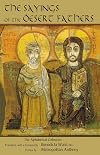
Wonderful collection of the sayings of the Desert Fathers (and Mothers). The 'Sayings' are arranged topically. The material included in this volume include parables, stories, legends, wise sayings, dialogues and visions. The diversity of the material is matched only by the diversity of the desert monks themselves. Some of them are cranky and legalistic people. Others are graceful but strange, and some are friendly and hospitable. There is a lot in this volume that is thought provoking about show more the life of prayer. I think if you read it, you would definitely find something to enjoy about these strange saints. show less
The wisdom that is in these sayings is profound and well worth delving into. The sayings of mostly Desert Fathers, with some Mothers are arranged alphabetically and though short in content, they give us much food for thought. Many sayings are counter to our earthly wisdo
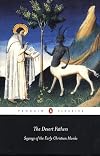
Of course the sayings of the Desert Fathers are great. I couldn't have enjoyed reading them more and I certainly was edified along the way many times over. My reason for rating this book at 3 stars is the translation itself, with which I was very disappointed, and the introduction of the book, also written by the translator. The introduction of the book entirely ignores all Eastern monasticism; how you can write an introduction on the relevance of the Desert Fathers and skip over Mount Athos show more I'll never understand. The translator also seems ignorant of the continued monasticism in the Egyptian desert, on Mount Sinai and in many of the same places where the great Desert Fathers lived, such as at St. Anthony's monastic community. The conscious choice of the translator to leave out the title "Abba" or "Father" for the monks (and its equivalent "Amma" or "Mother" for the nuns) seems to me to be disrespectful at least, no matter her justification. I'm sure there's better translations. show less
Lists
Awards

You May Also Like


Associated Authors
Statistics
- Works
- 26
- Also by
- 8
- Members
- 2,405
- Popularity
- #10,663
- Rating
- 4.0
- Reviews
- 16
- ISBNs
- 65
- Languages
- 3