
Arthur Waley (1889–1966)
Author of Three Ways of Thought in Ancient China
About the Author
Arthur Waley (1889-1966) is highly regarded for his many translations of Chinese & Japanese literature. (Bowker Author Biography)
Works by Arthur Waley
The Way and Its Power: Lao Tzu's Tao Te Ching and Its Place in Chinese Thought (1958) — Author; Translator — 347 copies, 2 reviews
Madly Singing in the Mountains: An Appreciation and Anthology of Arthur Waley (1970) — Author — 41 copies
Associated Works
Anthology of Japanese Literature: From the Earliest Era to the Mid-Nineteenth Century (1960) — Translator — 806 copies
Fifty Years: Being a Retrospective Collection of Novels, Novellas, Tales, Drama, Poetry, and Reportage and Essays: All Drawn from Volumes Issued during the Last Half-Century by… (1965) — Contributor — 56 copies
The Travels of an Alchemist - The Journey of the Taoist Ch'ang-Ch'un From China to the Hindukush at the Summons of Chingiz Khan (1976) — Translator, some editions — 29 copies
Tagged
Common Knowledge
- Legal name
- Waley, Arthur David
Schloss, Arthur David - Birthdate
- 1889-08-19
- Date of death
- 1966-06-27
- Gender
- male
- Education
- University of Cambridge (King's College ∙ Classics ∙ did not graduate)
Rugby School, Rugby, England, UK - Occupations
- museum curator
writer
translator
civil servant, Ministry of Information - Organizations
- School of Oriental and African Studies
British Museum - Awards and honors
- Order of the British Empire (Commander, 1952)
Order of the Companions of Honour (1956)
Queen's Medal for Poetry (1953)
honorary fellow of King's College, Cambridge (1945) - Relationships
- de Zoete, Beryl (partner)
- Short biography
- Despite his groundbreaking translations from the Chinese and Japanese, Waley (according to Jonathan D. Spence) never visited China or Japan.
- Nationality
- UK
- Birthplace
- Tunbridge Wells, Kent, England, UK
- Place of death
- London, England, UK
- Burial location
- Highgate Cemetery, London, England, UK
- Map Location
- England, UK
Members
Reviews

An unexpected gem from my late father’s library. I presume he bought it because Harold Acton was the translator, but it was the Chinese storytelling that called to me.
The book comprises four short stories published in China in 1627, plus a few notes. Each main story is prefaced by a page or two of an even older story that is a progenitor and, in one case, the opposite.
Despite the title, they are not especially “cautionary” or moralistic. They concern lust and love, with a sprinkling show more of humour and short verses, imbuing authentic atmosphere. Assertive women, taking charge of their destinies and desires, were a pleasant surprise to me - as they were to the men in the stories (albeit for different reasons!). Even the open-mindedness about gender can be critiqued with a modern slant.
“Clouds and Rain”
The traditional Chinese euphemism is used for lovemaking: clouds represent the coming together of man and woman, heaven and earth, with rain being the climax.
Image: Zhangziajie, China, 2012, photographed by Lydia Goetze (Source.)
Nevertheless, the stories are not exactly coy: they culminate in a month-long orgy that would be too bawdy for Shakespeare.
This is as explicit as any of the stories get:
“Ta-ch’ing undressed Ching Chên and put her to bed. Her tremulous jade-white body and throbbing breasts drowned him in a frenzy of ecstasy. Inspired by the wine he had drunk, Ta-ch’ing showed all his virtuosity. Ching Chên was so enthralled that her soul seemed to fly from her body. Her muscles relaxed, and she melted into luscious surrender. At length she lay languid and still on the couch, and both forgot themselves in a soothing sleep which lasted till breakfast time.”
The lyrical prose is far more poetic than the actual verses, which tend towards doggerel. I don’t know if that’s a fault of the translation or because they were written as entertainment, rather than great literature.
1. Love in a Junk
“Who craves incessantly for amorous flowers
Forfeits his health and spiritual powers.”
So starts the short pre-story about a man who has visions of success, but succumbs to carnal distractions, ending:
“A moment’s bliss is much too dear,
If to pursue it
A man must rue it
By ruining his whole career!”
Then onto the main story. Two junks moor alongside each other in a storm for a few days.
Image: The Kangxi Emperor (r. 1654–1722) on the deck of a junk (Source.)
An ambitious 16-year old young man (preparing for government examinations) is aboard one, with family and staff, and a beautiful 15-year old girl on the other:
“Her eyes like streams in autumn… Beside this vision other beauties fade.”
The storm helps, but propriety hinder. Dreams, secret messages in verse, disguises, and so on. Charming.
2. Brother or Bride?
No surprises here, thanks to the title and the first two lines:
“A cap and a gown need not be masculine:
How can the sex be proved by outer skin?”
Furthermore, like the best fairy tales, and God in the Garden of Eden, a teacher sets their pupil free into the world, with a warning of the one thing they must not do.
The main story is, according to the notes, Mùlán, but that didn’t matter, as my knowledge was limited to the title of Disney’s 1998 animation, and knowing it featured a strong, positive young woman.
3. The Everlasting Couple
Marriages are made in Heaven, even if parents and matchmakers are involved, and life is like a game of chess (Mrs Gump was wrong).
Two nine-year olds are betrothed, their families having been neighbours for generations. But before they can be married, circumstances change: contracts are questioned, but honour matters more. It seems to be heading towards Romeo and Juliet territory, but a dash of magical-realism leads to a happy ending. (Not a big spoiler: they all have happy endings; that’s the way.)
4. The Mandarin-Duck Girdle
“The merry crowds troop out on holiday,
Their faces glow like garlands bright and gay,
As if among the rosy clouds they stand
Beside the dazzling blossoms, hand-in-hand.”
This one’s a Zhoot and there’s Galahad more than one gal ahead. Bedroom farce, dodgy builders, deceit, and peril (death from "libidinous excess"), but the shock value is veiled by delicate language. I kept picturing it as a scene from Monty Python and the Holy Grail: it’s mostly set in a convent, and includes men disguised as nuns. However, The Convent of Spiritual Ecstasy is a more alluring name than Castle Anthrax!
The moral is: be careful where you leave your Grail girdle.
Image: Rank Badge with Mandarin Duck, early 19th century, in Metropolitan Museum of Art, New York (Source.)
Other Quotes
• “Her beauty was so dazzling as to make fishes dive under water, geese swoop down to earth, the moon hide, and flowers blush for shame.”
• “All are brothers within the four seas.” Confucius’s most famous saying, apparently.
• “To save a man’s life is better than building a seven-storied pagoda.”
• “A well-bred girl doesn’t drink the tea of two different families.”
• “He bowed like a spade newly drawn from the furnace.”
• And finally:
The book comprises four short stories published in China in 1627, plus a few notes. Each main story is prefaced by a page or two of an even older story that is a progenitor and, in one case, the opposite.
Despite the title, they are not especially “cautionary” or moralistic. They concern lust and love, with a sprinkling show more of humour and short verses, imbuing authentic atmosphere. Assertive women, taking charge of their destinies and desires, were a pleasant surprise to me - as they were to the men in the stories (albeit for different reasons!). Even the open-mindedness about gender can be critiqued with a modern slant.
“Clouds and Rain”
The traditional Chinese euphemism is used for lovemaking: clouds represent the coming together of man and woman, heaven and earth, with rain being the climax.
Image: Zhangziajie, China, 2012, photographed by Lydia Goetze (Source.)
Nevertheless, the stories are not exactly coy: they culminate in a month-long orgy that would be too bawdy for Shakespeare.
This is as explicit as any of the stories get:
“Ta-ch’ing undressed Ching Chên and put her to bed. Her tremulous jade-white body and throbbing breasts drowned him in a frenzy of ecstasy. Inspired by the wine he had drunk, Ta-ch’ing showed all his virtuosity. Ching Chên was so enthralled that her soul seemed to fly from her body. Her muscles relaxed, and she melted into luscious surrender. At length she lay languid and still on the couch, and both forgot themselves in a soothing sleep which lasted till breakfast time.”
The lyrical prose is far more poetic than the actual verses, which tend towards doggerel. I don’t know if that’s a fault of the translation or because they were written as entertainment, rather than great literature.
1. Love in a Junk
“Who craves incessantly for amorous flowers
Forfeits his health and spiritual powers.”
So starts the short pre-story about a man who has visions of success, but succumbs to carnal distractions, ending:
“A moment’s bliss is much too dear,
If to pursue it
A man must rue it
By ruining his whole career!”
Then onto the main story. Two junks moor alongside each other in a storm for a few days.
Image: The Kangxi Emperor (r. 1654–1722) on the deck of a junk (Source.)
An ambitious 16-year old young man (preparing for government examinations) is aboard one, with family and staff, and a beautiful 15-year old girl on the other:
“Her eyes like streams in autumn… Beside this vision other beauties fade.”
The storm helps, but propriety hinder. Dreams, secret messages in verse, disguises, and so on. Charming.
2. Brother or Bride?
No surprises here, thanks to the title and the first two lines:
“A cap and a gown need not be masculine:
How can the sex be proved by outer skin?”
Furthermore, like the best fairy tales, and God in the Garden of Eden, a teacher sets their pupil free into the world, with a warning of the one thing they must not do.
The main story is, according to the notes, Mùlán, but that didn’t matter, as my knowledge was limited to the title of Disney’s 1998 animation, and knowing it featured a strong, positive young woman.
3. The Everlasting Couple
Marriages are made in Heaven, even if parents and matchmakers are involved, and life is like a game of chess (Mrs Gump was wrong).
Two nine-year olds are betrothed, their families having been neighbours for generations. But before they can be married, circumstances change: contracts are questioned, but honour matters more. It seems to be heading towards Romeo and Juliet territory, but a dash of magical-realism leads to a happy ending. (Not a big spoiler: they all have happy endings; that’s the way.)
4. The Mandarin-Duck Girdle
“The merry crowds troop out on holiday,
Their faces glow like garlands bright and gay,
As if among the rosy clouds they stand
Beside the dazzling blossoms, hand-in-hand.”
This one’s a Zhoot and there’s Galahad more than one gal ahead. Bedroom farce, dodgy builders, deceit, and peril (death from "libidinous excess"), but the shock value is veiled by delicate language. I kept picturing it as a scene from Monty Python and the Holy Grail: it’s mostly set in a convent, and includes men disguised as nuns. However, The Convent of Spiritual Ecstasy is a more alluring name than Castle Anthrax!
The moral is: be careful where you leave your Grail girdle.
Image: Rank Badge with Mandarin Duck, early 19th century, in Metropolitan Museum of Art, New York (Source.)
Other Quotes
• “Her beauty was so dazzling as to make fishes dive under water, geese swoop down to earth, the moon hide, and flowers blush for shame.”
• “All are brothers within the four seas.” Confucius’s most famous saying, apparently.
• “To save a man’s life is better than building a seven-storied pagoda.”
• “A well-bred girl doesn’t drink the tea of two different families.”
• “He bowed like a spade newly drawn from the furnace.”
• And finally:
“He dallied daily with the flowers,show less
With little nuns misspent his hours
And wrecked them on a convent reef.
Those nuns were lusty succubae,
Too strong for any debauchee;
Alack, he quickly came to grief!
He lost his hair through amorous strife,
And finally he lost his life.
O ponder, ye that flowers crave,
Upon his solitary grave!”

This engrossing account of a lovable, hot tempered and wildly prejudiced poet is another of the delightful pictures of Chinese life by Arthur Waley, the most perceptive English interpreter of far eastern culture. Yuan Mei was the best known poet of his time. Witty, generous and affectionate, he wrote first that even at its lightest always has an undertone of deep feeling and at its saddest may at any moment light a sudden spark of fun. He was a professed hedonist whose gaiety was the keynote show more of his work. show less
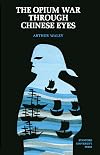
This is a treat. The narrative is thin but consistent. Waley gives us excerpts from several Chinese-language sources about the nefarious doings of the British. The first and the longest is the diary of Lin Tse-hsü, the famous Commissioner Lin, who, at the behest of the Qing emperor Tao-kuang (or Daoguang) sought to destroy the opium trade in China. An impossibility, of course, in a nation with such an endless unguarded coast. But Lin gave it his all. When about halfway through Lin's diary show more we read of the Emperor' insistence that Lin complete his task (again, an impossible one) so he can take up the reigns of a governorship in another part of China, we realize he is doomed. In time, when he can't deliver, he is investigated though not tried, and reduced in rank. It's sad to see the Chinese of the 1840s trying to respond militarily to the British. There is no command and control, no training, no planning. Lin's section, the longest, verges on a character study. It's fascinating. Subsequent diaries, one by Pei Ch'ing-ch'iao, a young man of no rank but with a gung-ho father, gives us the Chinese military's Keystones Cops-like response to British arms under General I-Ching. It would be laughable were it not so tragic. Further diaries include Chu Chih-yün's, a poet who lived near the Grand Canal outside the walls of Chinkiang, ninety miles up the Yangtze estuary. He tells us of the British encroachment on that town and "the horror, the horror," experienced by the residents. It's hard to believe Niall Ferguson now wants us to look on the gentle side of empire. Just think of all the wonderful things it gave to the world, he says. Ok, like what, bureaucracy? Sorry, Niall. That just won't square the Brits with China. Besides the Chinese were already known for their own homegrown style of administration back when the British were still crawling from the sea on vestigial limbs. It simply strikes one dumb to think that the Brits thought it their right to sell opium to the Chinese, thus creating a vast class of addicts, something of course never permitted in Merry England. Highly recommended. show less
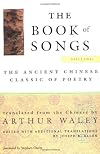
The earliest collection of ancient Chinese literature, these poems give us a glimpse of daily life on a wide socio-economic range, from the 11th to 7th centuries BCE. Most interesting to me is the comparison between these poems and those the Greeks were coming up with. The lives and concerns of women appear much more frequently here, which is really interesting.
A couple of my favorites:
Along the Highroad
If along the highroad
I caught hold of your sleeve,
Do not hate me;
Old ways take time to show more overcome.
Sun in the East
Sun in the east!
This lovely man
Is in my house,
Is in my home,
His foot is upon my doorstep.
Moon in the east!
This lovely man
Is in my bower,
Is in my bower,
His foot is upon my threshold. show less
A couple of my favorites:
Along the Highroad
If along the highroad
I caught hold of your sleeve,
Do not hate me;
Old ways take time to show more overcome.
Sun in the East
Sun in the east!
This lovely man
Is in my house,
Is in my home,
His foot is upon my doorstep.
Moon in the east!
This lovely man
Is in my bower,
Is in my bower,
His foot is upon my threshold. show less
Lists
Awards


You May Also Like


Associated Authors
Statistics
- Works
- 35
- Also by
- 17
- Members
- 2,725
- Popularity
- #9,421
- Rating
- 3.9
- Reviews
- 22
- ISBNs
- 168
- Languages
- 3
- Favorited
- 4

