
Burton Watson (1925–2017)
Author of Chuang Tzu: Basic Writings
About the Author
Burton DeWitt Watson was born in New Rochelle, New York on June 13, 1925. When he was 17 years old, he dropped out of high school and joined the Navy. He experienced Japan through his weekly shore leaves while stationed at Yokosuka Naval Base in 1945. After returning to the United States, he show more received a bachelor's degree in Chinese in 1949 and a master's degree in Chinese in 1951 from Columbia University. He spent time learning Japanese as a graduate student at Kyoto University before receiving a doctorate in Chinese in 1956 from Columbia. He has taught English at Doshisha University in Kyoto and Chinese at Stanford University and Columbia. He became a translator of Chinese and Japanese literature and poetry. His numerous translations included Cold Mountain: 100 Poems by the Tang Poet Han-shan, Han Fei Tzu: Basic Writings, The Complete Works of Chuang Tzu, and The Tso Chuan: Selections from China's Oldest Narrative History. His collections included Early Chinese Literature, Chinese Lyricism: Shih Poetry from the Second to the Twelfth Century, From the Country of Eight Islands: An Anthology of Japanese Poetry, and The Columbia Book of Chinese Poetry: From Early Times to the 13th Century. He received Columbia University's Translation Center's Gold Medal Award in 1979, the PEN Translation Prize in 1981 and 1995, and the Ralph Manheim Medal for Translation in 2015. He died on April 1, 2017 at the age of 91. show less
Works by Burton Watson
From the Country of Eight Islands: An Anthology of Japanese Poetry (1981) — Editor; Translator — 116 copies, 1 review
Courtier And Commoner In Ancient China: Selections From The History Of The Former Han by Pan Ku (1974) 36 copies
Kanshi: The Poetry of Ishikawa Jozan and Other Edo-Period Poets (1990) — Translator — 33 copies, 2 reviews
Japanese Literature in Chinese, Vol. 2: Poetry & Prose in Chinese by Japanese Writers of the Later Period (1976) 6 copies
Japanese Literature in Chinese, Vol. 1: Poetry & Prose in Chinese by Japanese Writers of the Early Period (English and Chinese Edition) (1975) 5 copies
KUTAI ZHONGGUO WENXUE 1 copy
Grass Hill 1 copy
Associated Works
Anthology of Japanese Literature: From the Earliest Era to the Mid-Nineteenth Century (1960) — Translator — 808 copies
The teaching of Vimalakirti (Vimalakirtinirdesa) (1972) — Translator, some editions — 632 copies, 7 reviews
Sources of Chinese Tradition volume I : From Earliest Times to 1600 (1960) — Editor, some editions — 469 copies
19 Ways of Looking at Wang Wei: How a Chinese Poem is Translated (1987) — Translator — 322 copies, 10 reviews
Modern Japanese Literature: From 1868 to the Present Day (1956) — Translator, some editions — 320 copies, 1 review
Records of the Grand Historian: Qin Dynasty (1993) — Translator, some editions — 152 copies, 3 reviews
Records of the Grand Historian of China. Volume I: Early Years of the Han Dynasty, 209-141 B.C. (1993) — Translator, some editions — 112 copies
Records of the Grand Historian of China. Volume 2, the Age of Emperor Wu, 140 to Circa 100 B.C. (1993) — Translator, some editions — 79 copies
For All My Walking: Free-Verse Haiku of Taneda Santōka with Excerpts from His Diaries (2003) — Translator, some editions — 49 copies
Records of the historian : chapters from the Shih chi of Ssu-ma Ch'ien (1969) — Translator — 44 copies, 1 review
Montemora No. 1 — Contributor — 2 copies
Tagged
Common Knowledge
- Legal name
- Watson, Burton DeWitt
- Birthdate
- 1925-06-13
- Date of death
- 2017-04-01
- Gender
- male
- Education
- Columbia University
- Awards and honors
- Columbia University Translation Center Gold Medal Award (1979)
American Academy of Arts and Letters Academy Award (Literature ∙ 2005)
PEN/Ralph Manheim Medal for Translation (2015) - Nationality
- USA
- Birthplace
- New Rochelle, New York, USA
- Place of death
- Kamagaya, Chiba Prefecture, Japan
- Associated Place (for map)
- USA
Members
Reviews

It’s a classic Taoist text, so reviewing it seems a little strange. If you’re interested at all in Taoism, this should be on your reading list, right after the Tao Te Ching, even if you have read it many times before.
I’m not a scholar of Taoism by any means. And Taoism is not part of my heritage. So I know its effect on me, as a modern western reader raised in a Christian culture, may be very different from what it is to others.
Quietism. An acceptance that things just are as they are, show more and to fight against that is a losing battle, like trying to hold back a wave.
More specifically, a withdrawl from judgment. Judgments oppose reality. Judgments that something shouldn’t happen, although it does. Judgments that something should happen, although it doesn’t.
Judgments are never absolute. You can’t count on them. Something large is always smaller than something even smaller. Something useful is always useless for one purpose or another. Something is right for the moment, but not for the next moment.
By themselves, things just are, and wisdom is a matter of accepting, in your thoughts and in your actions, that things just are as they are.
It means, in simple terms, aligning your efforts with the way the world moves and works, so that your efforts aren’t really efforts at all. Swimming with the current, not against it.
It’s a difficult message to swallow. We want to fight with reality, to fight against the current.
And what if the current isn’t healthy? What if the current is built on corruption, danger, or harm? What if the current is climate destruction, hunger, or cruelty?
But those things are all judgments, aren’t they?
Are those things the “way”? They can’t be. Are they in fact counter to the current of the world — corruptions, efforts against health, against life?
Maybe the biggest reward (and fun) of reading Chuang-Tzu is his play with language. He regarded language as an untrustworthy friend, someone who will lead you to insights tangled with blind alleys and dead ends when you follow it too far. As you read, you learn to trust nothing at face value, not even that you should trust nothing at face value.
Wisdom is elusive. It defies descriptions and rules. Descriptions have counter-examples, rules have exceptions and often mislead.
The opening of the Tao Te Ching says, in some translations, that the Tao that is spoken of is not the Tao. That’s because language leads us into these blind alleys and dead ends. All that we can do, through experience, including the experience of the Taoist texts, is approach the goal, to get nearer to it without ever supposing you have captured it in your words or the terms of your understanding. If you think you have captured it, you’re up a blind alley.
The Tao isn’t rational. It isn’t something you can describe. It’s only something you can experience. That’s why it is told in parables, parables that often don’t make obvious sense or have an obvious moral.
You fall into Chuang-Tzu’s paradoxical way of thinking and speaking — it is this and it isn’t this, it means this and it doesn’t mean this. You’ll never talk or think your way to it. It’s right in front of you, and it’s elusive. It’s right up ahead, and you’ll never get there.
It all sounds so mystical, but I think the point is that it is anything but mystical. It’s so real, so ordinary, and so familiar that it’s right there in front of us, all the time.
I keep rewriting this review as if I were going to get it “right.” Gotta laugh! show less
I’m not a scholar of Taoism by any means. And Taoism is not part of my heritage. So I know its effect on me, as a modern western reader raised in a Christian culture, may be very different from what it is to others.
Quietism. An acceptance that things just are as they are, show more and to fight against that is a losing battle, like trying to hold back a wave.
More specifically, a withdrawl from judgment. Judgments oppose reality. Judgments that something shouldn’t happen, although it does. Judgments that something should happen, although it doesn’t.
Judgments are never absolute. You can’t count on them. Something large is always smaller than something even smaller. Something useful is always useless for one purpose or another. Something is right for the moment, but not for the next moment.
By themselves, things just are, and wisdom is a matter of accepting, in your thoughts and in your actions, that things just are as they are.
It means, in simple terms, aligning your efforts with the way the world moves and works, so that your efforts aren’t really efforts at all. Swimming with the current, not against it.
It’s a difficult message to swallow. We want to fight with reality, to fight against the current.
And what if the current isn’t healthy? What if the current is built on corruption, danger, or harm? What if the current is climate destruction, hunger, or cruelty?
But those things are all judgments, aren’t they?
Are those things the “way”? They can’t be. Are they in fact counter to the current of the world — corruptions, efforts against health, against life?
Maybe the biggest reward (and fun) of reading Chuang-Tzu is his play with language. He regarded language as an untrustworthy friend, someone who will lead you to insights tangled with blind alleys and dead ends when you follow it too far. As you read, you learn to trust nothing at face value, not even that you should trust nothing at face value.
Wisdom is elusive. It defies descriptions and rules. Descriptions have counter-examples, rules have exceptions and often mislead.
The opening of the Tao Te Ching says, in some translations, that the Tao that is spoken of is not the Tao. That’s because language leads us into these blind alleys and dead ends. All that we can do, through experience, including the experience of the Taoist texts, is approach the goal, to get nearer to it without ever supposing you have captured it in your words or the terms of your understanding. If you think you have captured it, you’re up a blind alley.
The Tao isn’t rational. It isn’t something you can describe. It’s only something you can experience. That’s why it is told in parables, parables that often don’t make obvious sense or have an obvious moral.
You fall into Chuang-Tzu’s paradoxical way of thinking and speaking — it is this and it isn’t this, it means this and it doesn’t mean this. You’ll never talk or think your way to it. It’s right in front of you, and it’s elusive. It’s right up ahead, and you’ll never get there.
It all sounds so mystical, but I think the point is that it is anything but mystical. It’s so real, so ordinary, and so familiar that it’s right there in front of us, all the time.
I keep rewriting this review as if I were going to get it “right.” Gotta laugh! show less
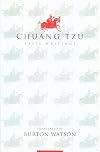
This book contains the "inner chapters," not the entire Chuang Tzu, but generally considered the essential and least corrupt chapters. It's one of my favorite books, and after reading Watson's translation I'm unable to read anyone else's - it's wonderful (and there are quite a few weak versions, and weaker paraphrases). Of the Chinese classics I've read this is not only the most subtle and profound, it's sometimes absolutely hilarious. His parodies of Confucianism are a riot, his magical show more unrealism is timeless, his man dreaming he's a butterfly - or is it the other way around? - the useless tree that's preserved itself so long by being useless, not like all those fructiferous trees .... It's a rare combination of inane silliness with serious reflections on human nature, existence, nature and metaphysics (if that's the right term). show less
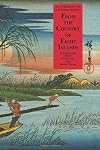
I don't know that I have the energy to write a review like this book *deserves* -- but I'm stunned no one has reviewed it! Just gobsmacked. This is a ~600 page survey of Japanese poetry from (I think) the oldest things there are to the work of poets born well into the 20th century. It feels pretty comprehensive, and it runs from things that are so ... I don't know, elemental ... they're hard to connect with, through loads of haiku, hokku, renga, tanka and so on, loads of which are show more wonderfully evocative of the natural world, to ... well, very modern stuff. You *won't* love everything presented here, but you *will* come away enriched, thrilled anew with poetry's possibilities, and curious about a culture where poetry seems ... ah, I dunno, *important*? I ordered my copy used, and to my irritation I got a copy with a broken spine, that has chunks of pages falling out. Normally I'd unload a book like that, but this one is so good I'm going to keep it (and probably replace it with a better copy). Get it! show less

This is the fourth book with Burton Watson in charge of the translation that I read. As I'm absolutely not acquainted with the Chinese language, I'm extremely happy that such jewels were rendered into the english language. For all I know in ancient China heroes were cultural, i.e. no man of war was praised, no person of great conquest. People who set foundations for cultural values and development of civilizational refinement were much respected. Su Tung-P'o was definitely a Confucian ideal: show more He was punished by the Emperor's ruling party once - by justly siding with the people when his better judgment told him to - and he was right, pardoned later. Yet his forebearance and a sense of righteousness portray a deeply wounded man, whose first beloved wife passed away early. Who was moved from place to place without firm rooting by official governmental decrees. Poems as lifeblood of mawkish uprightness, overcoming the sentiment and moving forth, partially drunk where he reminds of Ommar Khayyam and his praises to wine in the Rubayyat. I envisioned sceneries of his travels in my mind, thinking about all the scrupulously presented annotations by Watson, so that we may acquaint the history and meandres of the times better. A book is an insight into the mind of the author, and a window into his times, all the dust that the dead gathered are alive with poetry. 'Living water needs living fire to boil' - in the words of Su Tung-P'o. Let's share this chalice. show less
Lists
Awards


You May Also Like


Associated Authors
Statistics
- Works
- 36
- Also by
- 26
- Members
- 2,038
- Popularity
- #12,612
- Rating
- 4.1
- Reviews
- 23
- ISBNs
- 60
- Languages
- 4
- Favorited
- 3
