
Sima Qian
Author of Records of the Grand Historian: Qin Dynasty
About the Author
Image credit: wikimedia commons
Series
Works by Sima Qian
The First Emperor: Selections from the Historical Records (Oxford World's Classics) (2007) 123 copies, 3 reviews
Records of the Grand Historian of China. Volume I: Early Years of the Han Dynasty, 209-141 B.C. (1993) 108 copies
Records of the Grand Historian of China. Volume 2, the Age of Emperor Wu, 140 to Circa 100 B.C. (1993) 79 copies
Records of the historian : chapters from the Shih chi of Ssu-ma Ch'ien (1969) — Author — 44 copies, 1 review
The Grand Scribe's Records: The Basic Annals of Pre-Han China (Grand Scribe's Records) (1995) 18 copies
The Grand Scribe's Records, Volume V.1: The Hereditary Houses of Pre-Han China, Part I (2006) 11 copies
Records of the Historian: The Four Lords of the Warring States (Asiapac comic series) (1990) 8 copies
Statesman, Patriot and General in Ancient China, Three Shih Chi Biographies of the Ch'in Dynasty (255-206 B. C.) 2 copies, 1 review
The Stories of the Records of the Grand Historian in comic(Hardcover) (Chinese Edition) (2023) 2 copies
The Shi Ji 史记築磨书房版 1 copy
“Letter in Reply to Jen An” 1 copy
Het leven van Confucius 1 copy
Les Mémoires Historiques de Se-Ma Ts'ien, Vol. 3: Première Partie; Chapitres XIII-XXII (Classic Reprint) (French Edition) (2017) 1 copy
Shi Ji Volume 2 史记第2卷 中华书局版 1 copy
Sử Ký Tư Mã Thiên [2 Tập] 1 copy
The Cream of Classical Chinese Literature, Vol. 3 (Condensed, Chinese-English Edition; 8-Book Boxed Set) (2001) 1 copy
文白对照全译史记第一卷 1 copy
Shi Ji Volume 1 史记第1卷 中华书局版 1 copy
Shi Ji Volume 7 史记第7卷 中华书局版 1 copy
Shi Ji Volume 3 史记第3卷 中华书局版 1 copy
Shi Ji Volume 4 史记第4卷 中华书局版 1 copy
Shi Ji Volume 5 史记第5卷 中华书局版 1 copy
Shi Ji Volume 8 史记第8卷 中华书局版 1 copy
Shi Ji Volume 9 史记第9卷 中华书局版 1 copy
Tagged
Common Knowledge
- Legal name
- 司馬遷
- Birthdate
- 145 BCE (circa)
- Date of death
- 86 BCE (circa)
- Gender
- male
- Occupations
- Prefect of the Grand Scribes
historian - Nationality
- China
- Places of residence
- Hancheng, Shaanxi, China (birth)
Changan, China - Associated Place (for map)
- China
Members
Reviews
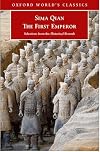
A tricky book to rate, as in many ways, it is excellent - as well as (probably) being unique. However, I didn't always find it riveting. Some passages are surprisingly entertaining, while others are somewhat dull. My overall enjoyment is probably 3.5* (I'm harsh with stars), but for those who want a serious but succinct insight into the period, it's probably 4 or 5*.
It is translations of selected passages written by Sima Qian, the famous Grand Historiographer (what a wonderful title), in show more which he tells how China was unified under the Qin dynasty, a century earlier. It includes the building of the Great Wall, as well as various rebellions and a huge burning of books.
HISTORICAL ACCURACY and METHOD
Forget what you expect of official historical records. Yes, this has a foreword, footnotes, index, map and timeline, but they are all modern additions. The historical records themselves are told as literary stories, full of anecdotes, parables, opinion, dialogue, political ideology (and a little too much genealogy). I chuckled more than I expected.
Sometimes a single episode is described in two chapters, from a different, possibly conflicting, viewpoint. Despite all the modern notes, this means it doesn't always have the feel of a coherent, chronological narrative, but maybe I wasn't paying enough attention.
Another aspect is that the dialog often credits the speakers with knowledge they could not have had at the time, whether that be someone's presumed thoughts and motives, or using a name that was only applied years later. Each section ends with a sermonic(?) summary by The Grand Historiographer, one of which ends, somewhat defensively, "They told it to me just like this".
As it says in the introduction:
"Sima Qian... took an exuberant interest in good stories and certainly would not have felt the need to submit his material to the kind of scrutiny that would have worried the conscience of a modern historian. The ancient Chinese historical style was in any case to preserve traditions rather than to get at the truth."
And in one of the notes, there is this dry aside:
"In reading this chapter sharpness of sight is necessary to enable one to extract the nuggets of historical truth from the rich seam of fantasy."
INSIGHTS and AMUSEMENTS
This approach to history means that there are often intriguing asides that one would be unlikely to read in Hansard. One man moves to another area and "became fond of a dog-butcher", as you do. Another concerns a Queen Dowager, infamous for her "immoral behaviour". An official heard of a man with a large penis and paid him to walk around with a wooden wheel attached to it, to ensnare the Queen as part of a more complicated and profitable plot.
One scheme has shades of the story of The Emperor's New Clothes: give a ruler a deer, call it a horse, and hope he assumes he is deluded!
Best of all, "He sent me to insult them" conjured the French taunting from Monty Python and the Holy Grail.
A few specific words attracted my attention: "enfeoff" is used several times, without ever being explained in the notes (it means giving someone property - a fiefdom), and I was oddly charmed to read "smote", "parley" and "brigand" several times.
LIFE and DEATH
This is a political document, depicting turbulent times, so there is plenty of plotting, death and so on - even boiling people alive. It's not all gruesome, though: there is a somewhat slapstick assassination attempt and chase.
OTHER HISTORICAL POINTS
There are plenty of passing references to traditional beliefs (magicians, spirit mountains, elixirs, dream interpretation, evil spirits, lucky numbers), as well actual events. Some of the latter had strong parallels with 20th century horrors: mass book burning; purging intellectuals; rampant nepotism, corruption and bribery; faked documents and rewritten history; officials being too scared to bring bad news so inventing lies; delaying the announcement of a leader's death, and political executions, assassinations and "accidents".
Although I have read quite a few books about and set in China, there were some features of the times that were new to me:
* Hostage sons were sent to other states to try to prevent war breaking out.
* Honourable suicide (not always entirely voluntary) seems to have pretty common in the court.
* Because white was for mourning, it was also used to ward off ill-fortune by preparing for the worst.
* Relatives could be jointly tried for crimes they did not themselves commit.
* There was a "Minister of Faults to take charge of all the officials".
TRANSLATION
Raymond Dawson (translator and writer of most of the additional material) and KE Brashier (who wrote the Preface) have done a good job of making these ancient texts accessible to modern readers, and in places, even explain their approach. There are some slightly stilted parts ("I am rather stupid, and I am afraid I cannot wait a moment"), that left me wondering about authenticity of voice, but that's a minor issue, especially compared with the liberties that Sima Qian apparently took. show less
It is translations of selected passages written by Sima Qian, the famous Grand Historiographer (what a wonderful title), in show more which he tells how China was unified under the Qin dynasty, a century earlier. It includes the building of the Great Wall, as well as various rebellions and a huge burning of books.
HISTORICAL ACCURACY and METHOD
Forget what you expect of official historical records. Yes, this has a foreword, footnotes, index, map and timeline, but they are all modern additions. The historical records themselves are told as literary stories, full of anecdotes, parables, opinion, dialogue, political ideology (and a little too much genealogy). I chuckled more than I expected.
Sometimes a single episode is described in two chapters, from a different, possibly conflicting, viewpoint. Despite all the modern notes, this means it doesn't always have the feel of a coherent, chronological narrative, but maybe I wasn't paying enough attention.
Another aspect is that the dialog often credits the speakers with knowledge they could not have had at the time, whether that be someone's presumed thoughts and motives, or using a name that was only applied years later. Each section ends with a sermonic(?) summary by The Grand Historiographer, one of which ends, somewhat defensively, "They told it to me just like this".
As it says in the introduction:
"Sima Qian... took an exuberant interest in good stories and certainly would not have felt the need to submit his material to the kind of scrutiny that would have worried the conscience of a modern historian. The ancient Chinese historical style was in any case to preserve traditions rather than to get at the truth."
And in one of the notes, there is this dry aside:
"In reading this chapter sharpness of sight is necessary to enable one to extract the nuggets of historical truth from the rich seam of fantasy."
INSIGHTS and AMUSEMENTS
This approach to history means that there are often intriguing asides that one would be unlikely to read in Hansard. One man moves to another area and "became fond of a dog-butcher", as you do. Another concerns a Queen Dowager, infamous for her "immoral behaviour". An official heard of a man with a large penis and paid him to walk around with a wooden wheel attached to it, to ensnare the Queen as part of a more complicated and profitable plot.
One scheme has shades of the story of The Emperor's New Clothes: give a ruler a deer, call it a horse, and hope he assumes he is deluded!
Best of all, "He sent me to insult them" conjured the French taunting from Monty Python and the Holy Grail.
A few specific words attracted my attention: "enfeoff" is used several times, without ever being explained in the notes (it means giving someone property - a fiefdom), and I was oddly charmed to read "smote", "parley" and "brigand" several times.
LIFE and DEATH
This is a political document, depicting turbulent times, so there is plenty of plotting, death and so on - even boiling people alive. It's not all gruesome, though: there is a somewhat slapstick assassination attempt and chase.
OTHER HISTORICAL POINTS
There are plenty of passing references to traditional beliefs (magicians, spirit mountains, elixirs, dream interpretation, evil spirits, lucky numbers), as well actual events. Some of the latter had strong parallels with 20th century horrors: mass book burning; purging intellectuals; rampant nepotism, corruption and bribery; faked documents and rewritten history; officials being too scared to bring bad news so inventing lies; delaying the announcement of a leader's death, and political executions, assassinations and "accidents".
Although I have read quite a few books about and set in China, there were some features of the times that were new to me:
* Hostage sons were sent to other states to try to prevent war breaking out.
* Honourable suicide (not always entirely voluntary) seems to have pretty common in the court.
* Because white was for mourning, it was also used to ward off ill-fortune by preparing for the worst.
* Relatives could be jointly tried for crimes they did not themselves commit.
* There was a "Minister of Faults to take charge of all the officials".
TRANSLATION
Raymond Dawson (translator and writer of most of the additional material) and KE Brashier (who wrote the Preface) have done a good job of making these ancient texts accessible to modern readers, and in places, even explain their approach. There are some slightly stilted parts ("I am rather stupid, and I am afraid I cannot wait a moment"), that left me wondering about authenticity of voice, but that's a minor issue, especially compared with the liberties that Sima Qian apparently took. show less
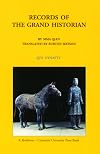
Writing from the perspective of the Han Dynasty, Sima Qian (145-89 BC) was in a position to assess the mistakes of the short-lived Qin that preceded the Han. Qian was actually close enough in time to the chaotic close of the Qin to be able to interview some of the participants. This volume is one of several in which Burton Watson translated portions of the Records of the Grand Historian. I haven't read any of the other volumes (for example, on the early Han), but I was impressed enough with show more this volume to seek out others. Qian's work reminds me somewhat of Thucydides's history of the Peloponnesian war. Qian obviously took very seriously the job of reporting what actually occured, but he also included biographical details, letters, supposed conversations that jput the modern reader in a good position to understand the historical characters and events. The scale and brutality of the Warring States period may be unprecedented. Qian reports on battles involving millions, in which I recall him describing one army as losing 240,000 killed. Also fascinating is the role of the sage philosophers in politics and governments of the day. It was not at all uncommon for wise men to travel to other states, or even enemy states, to offer their services to the ruler. Qian describes the rise of the Qin from its semi-barbaric western origins to its uniting of all of civilized China under the first Emperor. Along with success came the beginning of the excesses (building the Great Wall, ridiculous palaces, roads through mountains) that led to the downfall of the Qin under the usurper Second Emperor (and his controller, the eunuch Zhao Gao). The Qin came a long way to let it all unravel so quickly. The importance of reasonable laws and reasonable enforcement of those laws must surely have been a lesson learned by succeeding dynasties. show less
Statesman, Patriot and General in Ancient China, Three Shih Chi Biographies of the Ch'in Dynasty (255-206 B. C.) by Qian Sima

This book is a translation and commentary on three biographies from the Records of the Grand Historian written by Sima Qian.
Sima Qian was the Herodotus and Thucydides of China. He died in 86 b. c. e. and wrote during the Han dynasty. His writing set the style and format for Chinese history writing. While writing his Records he was sentenced to be executed and chose the penalty of castration so that he could complete them. I have a translation of a letter he wrote to a friend about this show more decision which is very moving.
The three persons written about are Lu Buwei, Jing Ke and Ming T'ian. Of the three the story of Lu Buwei is the most interesting. He was a rich merchant who became the patron of the father of the First Emperor and then the First Emperor before the Qin state conquered and unified China. His biography was altered after Sima Qian finished it by Confucian scholars who were opposed to the Legalist philosophy of the First Emperor. The changes made the First Emperor the illegitimate child of Lu Buwei and that story was adopted in later Chinese history. Lu Buwei was also unpopular with the Confucians because merchants were disfavored by the Confucian government officials.
Jing Ke was a member of a state that was competing with the Qin state during the wars that led to the unification of China in 221 b.c.e. by the Qin. Jing Ke tried to assassinate the King of Qin who later became the First Emperor. The story is told with a great deal of action and suspense as Jing Ke struggles with the King and throws a poisoned dagger at him which strikes a column missing the intended target.
Ming T'ian was involved in building the great Wall and his story includes some of the details of that project.
The history of this period is very significant because the practices and institutions established by the First emperor became the basis for the Imperial government that ruled China until 1911. Mao Zedong was often compared to the First Emperor as the man who made a new China that replaced the Imperial system.
I enjoyed the book and felt the translator's commentary were very insightful. There are many different translations of the Records of the Grand Historian including a recent translation of the entire project. show less
Sima Qian was the Herodotus and Thucydides of China. He died in 86 b. c. e. and wrote during the Han dynasty. His writing set the style and format for Chinese history writing. While writing his Records he was sentenced to be executed and chose the penalty of castration so that he could complete them. I have a translation of a letter he wrote to a friend about this show more decision which is very moving.
The three persons written about are Lu Buwei, Jing Ke and Ming T'ian. Of the three the story of Lu Buwei is the most interesting. He was a rich merchant who became the patron of the father of the First Emperor and then the First Emperor before the Qin state conquered and unified China. His biography was altered after Sima Qian finished it by Confucian scholars who were opposed to the Legalist philosophy of the First Emperor. The changes made the First Emperor the illegitimate child of Lu Buwei and that story was adopted in later Chinese history. Lu Buwei was also unpopular with the Confucians because merchants were disfavored by the Confucian government officials.
Jing Ke was a member of a state that was competing with the Qin state during the wars that led to the unification of China in 221 b.c.e. by the Qin. Jing Ke tried to assassinate the King of Qin who later became the First Emperor. The story is told with a great deal of action and suspense as Jing Ke struggles with the King and throws a poisoned dagger at him which strikes a column missing the intended target.
Ming T'ian was involved in building the great Wall and his story includes some of the details of that project.
The history of this period is very significant because the practices and institutions established by the First emperor became the basis for the Imperial government that ruled China until 1911. Mao Zedong was often compared to the First Emperor as the man who made a new China that replaced the Imperial system.
I enjoyed the book and felt the translator's commentary were very insightful. There are many different translations of the Records of the Grand Historian including a recent translation of the entire project. show less
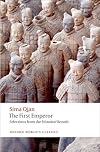
Historical records recreate the Qin dynasty of Ancient China. We know Qin Shi Huang by his magnificent tomb with thousands of life-sized, each unique, soldier statues. This book takes disparate sources to create the impression of a ruthless, brave, intelligent and amoral man who wanted to maintain power even after death.
Lists
Awards


You May Also Like


Associated Authors
Statistics
- Works
- 83
- Members
- 798
- Popularity
- #31,947
- Rating
- 4.0
- Reviews
- 9
- ISBNs
- 91
- Languages
- 10
- Favorited
- 3