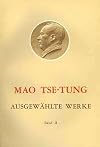
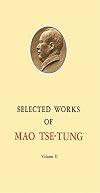
On This Page
Description
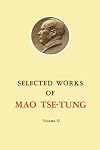
Selected Works of Mao Tse-Tung, Volume II focuses on the thoughts of Mao Tse-Tung on revolution, communism, war tactics, national unity, and patriotism. The volume first discusses the policies, measures, and perspectives for resisting the invasion of Japan; mobilization of China's forces for victory in the war of resistance; and tasks following the establishment of Kuomintang-communist co-operation. The publication also takes a look at the situation and tasks in the anti-Japanese war show more following the fall of Shanghai and Taiyuan, including the opposition to class capitulationism and the relation show lessTags
Recommendations

















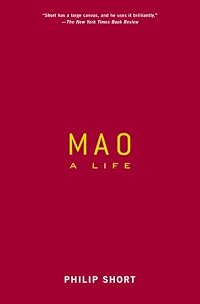

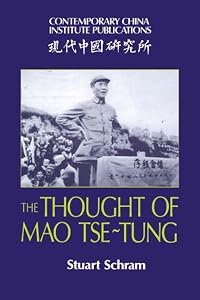


Member Reviews
Selected Works of Mao Tse-Tung, Volume II focuses on the thoughts of Mao Tse-Tung on revolution, communism, war tactics, national unity, and patriotism. The volume first discusses the policies, measures, and perspectives for resisting the invasion of Japan; mobilization of China's forces for victory in the war of resistance; and tasks following the establishment of Kuomintang-communist co-operation. The publication also takes a look at the situation and tasks in the anti-Japanese war following the fall of Shanghai and Taiyuan, including the opposition to class capitulationism and the relation between class and national capitulationism. The book examines the problems of strategy in the guerilla war against Japan and the establishment of show more base areas. Considerations include types and conditions for establishing base areas and expansion of base areas. The text also ponders on the role of the Chinese Communist Party in the national war, as well as patriotism and internationalism, party discipline and democracy, and expansion of the communist party and prevention of infiltration by enemy agents. The volume is a dependable source of data for readers interested in the philosophy of Mao Tse-Tung on communism, war, revolution, and patriotism. show less
Department of History, University of Hong Kong
Department of History, University of Hong Kong
Ratings
Members
- Recently Added By
Author Information

525+ Works 5,981 Members
Mao Tse-tung is, of course, best known as a political leader, having held power in the People's Republic from its founding in 1949 until his death, as president until 1959 and then as chairman of the Communist party. He undertook some of the most radical social experiments in human history, and although he has been dead for many years, he still show more casts a long shadow over current events in Asia, and his legacy is still hotly debated. Born into a prosperous peasant family in Hunan Province, Mao first came into contact with revolutionary writings during the decade of the 1910s. He was present at the founding of the Communist party in 1921 and had already risen to prominence by 1935. It was after the heroic Long March, while the Communists were consolidating their power in their northwest base in Yenan, that Mao Tse-tung held his Forum on Literature and Art, which, as Howard L. Boorman has said, "drew a firm line across the page of modern Chinese creative writing and promulgated what has since become, with some later variations, the "correct' analysis of the literary and aesthetic principles designed to guide the "progressive' writers and artists of China." Essentially, it was to be a literature shaped by "Party spirit," designed for the masses (particularly workers, peasants, and soldiers), and written in a bold, simple, and earthy style. There would be no toleration of "art for art's sake," or subjective inspiration, or other bourgeois themes or tendencies. Literature's sole aim would be to serve politics. One can find many examples of the approved content and style in Mao's own writings. His speeches and essays are strongly colored by his rural roots; one finds an earthy humor and terseness of expression that are reminiscent of many traditional works in the colloquial language. Mao's poetry is a bit more complicated. Having been educated to some extent in the classical tradition, he has always favored the tz'u form for his own verse. And, although he does conform to the time-honored metrical rules, in many ways his poems mark a break with the past in their strong egotism, preference for the present over the past, and desire to conquer nature rather than to live in passive harmony with it. However, his sentimentality and use of imagery still confirm his strong identification with the lyric past, and even many Chinese who disagree with his politics can nevertheless find pleasure in his verses. (Bowker Author Biography) show less
Series

Work Relationships
Is contained in
Contains
Common Knowledge
- Canonical title
- Selected Works of Mao Tse-Tung, Volume II
Classifications
- Genres
- Nonfiction, History, Politics and Government, General Nonfiction
- DDC/MDS
- 951.05 — History & geography History of Asia East Asia: China, Taiwan, Hong Kong, Korea History 1949- (People's Republic, 20th century)
- LCC
- HX418.5 .S454 — Social sciences Socialism. Communism. Anarchism Socialism. Communism. Anarchism
- BISAC
Statistics
- Members
- 107
- Popularity
- 302,057
- Reviews
- 3
- Rating
- (3.50)
- Languages
- 7 — Chinese, English, French, German, Italian, Norwegian (Bokmål), Spanish
- Media
- Paper, Ebook
- ISBNs
- 10
- ASINs
- 11