Freedom from Fear and Other Writings
by Aung San Suu Kyi
On This Page
Description
Speeches and essays on and interviews with the human rights activist and Nobel Peace Prize winner.Tags
Recommendations













Member Reviews
Freedom from Fear by Aung San Suu Kyi Oh, the feels. There's just too much here and during this time. I'm trying to keep this to a review and will post the book inspired rant later. Please bear with me, there will be crossover. This book is amazing and really showcases the struggle and strength of a founder of democracy for her country. This is one of my Reading Nobel Women books. Aung San Suu Kyi was the recipient of the 1991 Nobel Peace Prize.
My feelings about what I was reading alternated based on the current US political scene. I was reading it during the last presidential debate and while I was watching the states turn red on election day. I'd rather not get into American politics, but there were some serious concerns on both show more sides of the aisle and here and some outrage in the aftermath that made reading about student protests in another country and almost 20 years ago that much more relevant.
The book begins with a foreword by Aung San Suu Kyi's husband, Michael Aris. He explains a little of their history together and what had been happening since her struggle for democracy began, it's the personal side that includes that her children had not been able to see her for years on account of it. As someone who works in a "masculine" field and has been married to an at-home dad for six years, I cannot adequately explain how much I adore Aris's support of his wife and the way he never alludes to feelings of emasculation. A woman's struggle and strength does not inherently emasculate her husband. It just doesn't. I love how compiling this work and editing it must have allowed him to feel close to her despite all the things that were keeping them apart at the time of its writing.
He then explains the format for the book. It is broken in three parts. The first are the works about Burma that she wrote before her political involvement. They give the reader a good sense of Burma and how much she loves and appreciates her country. They also get cited quite a bit later, so it helps to have read these works. The next part is her political writings that are mostly by her as well, but some are about her and written by others, such as the acceptance speech given for the Nobel Peace Prize that was given by her son.
It was this part that first made me think about the democracy that we have here and what we want here and what our ideals about democracy really are. It's easy to look at the long history of US democracy and lose the ideas of a founder. This book helped me out with that a little. At worse, it just changed my thoughts about what was going through their minds. There's the bits on the military and how it should (and in the US does) stay out of politics. Aung San Suu Kyi's party was consistently harassed by the military and denied the authorization to assemble but the demonstrations stayed peaceful. It was interesting to see the way she used the presence of the military at her demonstrations as an opportunity to reach out to rather than criticize them.
The last part are the writings in appreciation of Aung San See Kyi's movement and her character. One is written by a personal friend, which was an interesting touch. Another seems a bit more objective but still focuses on the way her involvement changed the movement that had already been there, the way she led them into unity and how she maintained a platform of peaceful protest for democracy over crowds that could have easily gotten violent.
The whole book is a beautiful testament to her strong leadership and character is a proponent of peace and democracy in her country. It recognizes that her position was merely advantageous in the beginning but acknowledges that it was her personal strength and ability that got the country to where it needed to go. It is not a memoir, which was what I had read about previous laureates. I love memoirs, but it was interesting to change it up in that this is part of the body of work that she was given the award for rather than her personal experience through it.
It was also a timely read, as mentioned before. It gives good insight into the mind of a revolutionary striving for democracy in a country that has never had it. The inspirational nature of her writing works to make me want to work on improving upon our own democracy and how it works, to get more involved. show less
My feelings about what I was reading alternated based on the current US political scene. I was reading it during the last presidential debate and while I was watching the states turn red on election day. I'd rather not get into American politics, but there were some serious concerns on both show more sides of the aisle and here and some outrage in the aftermath that made reading about student protests in another country and almost 20 years ago that much more relevant.
The book begins with a foreword by Aung San Suu Kyi's husband, Michael Aris. He explains a little of their history together and what had been happening since her struggle for democracy began, it's the personal side that includes that her children had not been able to see her for years on account of it. As someone who works in a "masculine" field and has been married to an at-home dad for six years, I cannot adequately explain how much I adore Aris's support of his wife and the way he never alludes to feelings of emasculation. A woman's struggle and strength does not inherently emasculate her husband. It just doesn't. I love how compiling this work and editing it must have allowed him to feel close to her despite all the things that were keeping them apart at the time of its writing.
He then explains the format for the book. It is broken in three parts. The first are the works about Burma that she wrote before her political involvement. They give the reader a good sense of Burma and how much she loves and appreciates her country. They also get cited quite a bit later, so it helps to have read these works. The next part is her political writings that are mostly by her as well, but some are about her and written by others, such as the acceptance speech given for the Nobel Peace Prize that was given by her son.
It was this part that first made me think about the democracy that we have here and what we want here and what our ideals about democracy really are. It's easy to look at the long history of US democracy and lose the ideas of a founder. This book helped me out with that a little. At worse, it just changed my thoughts about what was going through their minds. There's the bits on the military and how it should (and in the US does) stay out of politics. Aung San Suu Kyi's party was consistently harassed by the military and denied the authorization to assemble but the demonstrations stayed peaceful. It was interesting to see the way she used the presence of the military at her demonstrations as an opportunity to reach out to rather than criticize them.
The last part are the writings in appreciation of Aung San See Kyi's movement and her character. One is written by a personal friend, which was an interesting touch. Another seems a bit more objective but still focuses on the way her involvement changed the movement that had already been there, the way she led them into unity and how she maintained a platform of peaceful protest for democracy over crowds that could have easily gotten violent.
The whole book is a beautiful testament to her strong leadership and character is a proponent of peace and democracy in her country. It recognizes that her position was merely advantageous in the beginning but acknowledges that it was her personal strength and ability that got the country to where it needed to go. It is not a memoir, which was what I had read about previous laureates. I love memoirs, but it was interesting to change it up in that this is part of the body of work that she was given the award for rather than her personal experience through it.
It was also a timely read, as mentioned before. It gives good insight into the mind of a revolutionary striving for democracy in a country that has never had it. The inspirational nature of her writing works to make me want to work on improving upon our own democracy and how it works, to get more involved. show less
Heroes come in all shapes and sizes. Aung San Suu Kyi stands alongside Nelson Mandela as a hero of our time and so, I very much looked forward to reading this book. Unfortunately, heroes are not necessarily great authors and, to make matters worse, this was not a text written to be produced in book form, but a series of articles for newspapers and journals. This leads to quite large chunks of information being repeated: an entirely legitimate situation when the articles were appearing in different magazines, and quite possibly in different parts of the World; but less so in this book. The fact that these were articles also affected the writing style: I am sure that, were Aung San Suu Kyl to have intended this as a coherent single show more entity, she would have made changes.
I would also criticise the article about her father for a lack of objectivity. This again, is understandable but, as the saintly man becomes more and more a paragon of all that is righteous and anyone who disagrees slowly turns into a pantomime villain, Suu Kyi's credibility starts to suffer.
I could be wrong, but I get the feeling that this was a cynical piece of publishing. Some editor decided that 'this woman' was making a name for herself and that any book bearing her name would fly off the shelves. I did not feel any the wiser for the reading of this tome and, therefore, reluctantly, only offer it three stars. show less
I would also criticise the article about her father for a lack of objectivity. This again, is understandable but, as the saintly man becomes more and more a paragon of all that is righteous and anyone who disagrees slowly turns into a pantomime villain, Suu Kyi's credibility starts to suffer.
I could be wrong, but I get the feeling that this was a cynical piece of publishing. Some editor decided that 'this woman' was making a name for herself and that any book bearing her name would fly off the shelves. I did not feel any the wiser for the reading of this tome and, therefore, reluctantly, only offer it three stars. show less
http://nhw.livejournal.com/1008238.html
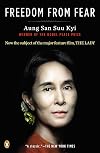
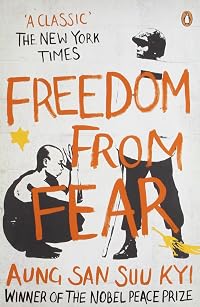
The first half of Freedom From Fear begins with two lengthy pieces by Aung San Suu Kyi on her father and on the country as a whole, and also includes two of her essays on Burmese literature. The next quarter of the book is taken up with her political statements from the brief period when she was free to make them at the end of the 1980s, and then the last section has some personal reminiscences by her friends, including to my surprise and to the editor's credit a mildly critical piece by Josef Silverstein. It falls however to a fellow student from her days at St Hugh's in Oxford to make a point in writing that is obvious when you look at the cover of the book: Aung San Suu Kyi is beautiful.
And also show more very brave. The editor of the book, published in 1990, was her late husband, Michael Aris, who writes with love and gratitude of the sixteen or so years they had together before she answered the call of destiny that they had both always known might some day come. She will be 63 this year; her father was 32 when he was killed (and she was only two). Her harassment and imprisonment by the Burmese state has lasted almost twenty years; her sons are now in their thirties. Politics is not an especially easy life anywhere; but this is something else. Freedom From Fear ends with Suu Kyi being awarded the Nobel Peace Prize in 1991. It is an international disgrace that we seem no closer to resolving the situation in 2008. show less
The first half of Freedom From Fear begins with two lengthy pieces by Aung San Suu Kyi on her father and on the country as a whole, and also includes two of her essays on Burmese literature. The next quarter of the book is taken up with her political statements from the brief period when she was free to make them at the end of the 1980s, and then the last section has some personal reminiscences by her friends, including to my surprise and to the editor's credit a mildly critical piece by Josef Silverstein. It falls however to a fellow student from her days at St Hugh's in Oxford to make a point in writing that is obvious when you look at the cover of the book: Aung San Suu Kyi is beautiful.
And also show more very brave. The editor of the book, published in 1990, was her late husband, Michael Aris, who writes with love and gratitude of the sixteen or so years they had together before she answered the call of destiny that they had both always known might some day come. She will be 63 this year; her father was 32 when he was killed (and she was only two). Her harassment and imprisonment by the Burmese state has lasted almost twenty years; her sons are now in their thirties. Politics is not an especially easy life anywhere; but this is something else. Freedom From Fear ends with Suu Kyi being awarded the Nobel Peace Prize in 1991. It is an international disgrace that we seem no closer to resolving the situation in 2008. show less
p. 178 from her essay "In Quest of Democracy" she says
"In a revolutionary movement there is always the danger that political exigencies might obscure, or even nullify, essential spiritual aims. A firm insistence on the inviolability and primacy of such aims is not mere idealism but a necessary safeguard against an Animal Farm syndrome where the new order ... takes on the murky colours of the very system is has replaced."
interesting juxtaposition to Nelson Mandella's reasoning that non-violence was not to be the absolute from a tactical perspective, in his autobiography Long Walk to Freedom. I'm glad to see that Gandhi (and of course Dr. Martin Luther King Jr.)was not the only person to understand the vital importance of non-violence in show more bringing about change.
This also shows the fundamental importance of non-violent ideology, across Buddhism, Christianity and Hinduism .
Read, Write, Dream, Teach !
ShiraDest
19 February, 12016 HE show less
"In a revolutionary movement there is always the danger that political exigencies might obscure, or even nullify, essential spiritual aims. A firm insistence on the inviolability and primacy of such aims is not mere idealism but a necessary safeguard against an Animal Farm syndrome where the new order ... takes on the murky colours of the very system is has replaced."
interesting juxtaposition to Nelson Mandella's reasoning that non-violence was not to be the absolute from a tactical perspective, in his autobiography Long Walk to Freedom. I'm glad to see that Gandhi (and of course Dr. Martin Luther King Jr.)was not the only person to understand the vital importance of non-violence in show more bringing about change.
This also shows the fundamental importance of non-violent ideology, across Buddhism, Christianity and Hinduism .
Read, Write, Dream, Teach !
ShiraDest
19 February, 12016 HE show less
p. 178 from her essay "In Quest of Democracy" she says
"In a revolutionary movement there is always the danger that political exigencies might obscure, or even nullify, essential spiritual aims. A firm insistence on the inviolability and primacy of such aims is not mere idealism but a necessary safeguard against an Animal Farm syndrome where the new order ... takes on the murky colours of the very system is has replaced."
interesting juxtaposition to Nelson Mandella's reasoning that non-violence was not to be the absolute from a tactical perspective, in his autobiography Long Walk to Freedom. I'm glad to see that Gandhi (and of course Dr. Martin Luther King Jr.)was not the only person to understand the vital importance of non-violence in show more bringing about change.
This also shows the fundamental importance of non-violent ideology, across Buddhism, Christianity and Hinduism .
Read, Write, Dream, Teach !
ShiraDest
19 February, 12016 HE show less
"In a revolutionary movement there is always the danger that political exigencies might obscure, or even nullify, essential spiritual aims. A firm insistence on the inviolability and primacy of such aims is not mere idealism but a necessary safeguard against an Animal Farm syndrome where the new order ... takes on the murky colours of the very system is has replaced."
interesting juxtaposition to Nelson Mandella's reasoning that non-violence was not to be the absolute from a tactical perspective, in his autobiography Long Walk to Freedom. I'm glad to see that Gandhi (and of course Dr. Martin Luther King Jr.)was not the only person to understand the vital importance of non-violence in show more bringing about change.
This also shows the fundamental importance of non-violent ideology, across Buddhism, Christianity and Hinduism .
Read, Write, Dream, Teach !
ShiraDest
19 February, 12016 HE show less
Aung San Suu Kyi's collected writings - edited by her late husband, whom the ruling military junta prevented from visiting Burma as he was dying of cancer - reflects her greatest hopes and fears for her fellow Burmese people, and her concern about the need for international co-operation in the continuing fight for Burma's freedom. Bringing together her most powerful speeches, letters and interviews, this remarkable collection gives a voice to Burma's 'woman of destiny', whose fate remains in the hands of her enemies.
Aung San Suu Kyi, reconocida activista de los derechos humanos en Myanmar fue liberada por su Gobierno, trascurridos más de 7 años de prisión domicilaria, impuesta por la autoridad política. La emblemática figura del partido opositor Liga Nacional para la Democracia (LND), saca la voz y afirma que “la base de la libertad democrática es la libertad de expresión”. Una vez radicada en Gran Bretaña, escribió Libres del miedo, libro donde narra la historia de su padre, la independencia del país de los británicos y su actividad política como defensora de la democracia birmana.
Dec 1, 2017Spanish
Members
- Recently Added By
Author Information

17+ Works 771 Members
Suu Kyi's struggle is one of the most extraordinary examples of civil courage in Asia in recent decades." As leader of the prodemocracy movement and cofounder of the National League for Democracy, the nation's opposition party, Aung San Suu Kyi has been under house arrest for what Myanmar's leaders call treasonous acts after clashes between show more demonstrators and armed troops in 1988 and 1989. A scholar and mother, Aung San Suu Kyi had never directly involved herself in politics, yet she was always aware of her identity as the daughter of Aung San, the late Burmese nationalist leader who led the country to independence. During a trip to her homeland, she became aware of deteriorating human rights and the people's cry for democracy. She began her crusade in August 1988 by traveling throughout Burma, calling on the people to help bring democracy to a country governed as a dictatorship since 1962. By introducing the issue of basic human rights, especially the right to choose one's government, Aung San Suu Kyi inspired crowds wherever she went. Aung San Suu Kyi received Nobel Peace Prize in 1991. (Bowker Author Biography) show less
All Editions
Work Relationships
Is abridged in
Common Knowledge
- Canonical title
- Freedom from Fear and Other Writings
- Important places*
- Myanmar
*Some information comes from Common Knowledge in other languages. Click "Edit" for more information.
Classifications
- Genres
- Nonfiction, General Nonfiction, Biography & Memoir, Politics and Government, History
- DDC/MDS
- 959.1 — History & geography History of Asia Southeast Asia: Myanmar, Thailand, Laos, Cambodia, Vietnam Burma (Myanmar)
- LCC
- DS530 .A86 — History of Europe, Asia, Africa and Oceania Asia History of Asia Southeast Asia Burma
- BISAC
Statistics
- Members
- 370
- Popularity
- 85,050
- Reviews
- 7
- Rating
- (3.76)
- Languages
- 6 — Dutch, English, Indonesian, Italian, Norwegian (Bokmål), Spanish
- Media
- Paper, Ebook
- ISBNs
- 16
- ASINs
- 5