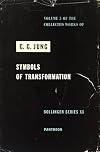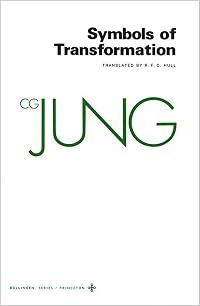
Symbols of Transformation
by C. G. Jung
On This Page
Description
A complete revision of Psychology of the Unconscious (orig. 1911-12), Jung's first important statement of his independent position.Tags
Recommendations
















Member Reviews
checked out.
Esta es la versión completa y definitiva de una de las obras más revolucionarias y centrales de C. G. Jung. A partir de la reconstrucción y examen de los procesos semiconscientes e inconscientes del caso de una joven, Jung muestra que la psicología no puede prescindir de la historia del espíritu humano. La fantasía creadora dispone del espíritu primitivo, con sus imágenes específicas, que se manifiestan en las mitologías de todos los pueblos y épocas e integran lo inconsciente colectivo.
Feb 4, 2026Spanish
Ratings
Members
- Recently Added By
Lists

Jordan B. Peterson's Recommended Books
104 works; 5 members

Men's healing resources
749 works; 1 member
Author Information

901+ Works 42,886 Members
Carl Gustav Jung was born in Switzerland on July 26, 1875. He originally set out to study archaeology, but switched to medicine and began practicing psychiatry in Basel after receiving his degree from the University of Basel in 1902. He became one of the most famous of modern psychologists and psychiatrists. Jung first met Sigmund Freud in 1907 show more when he became his foremost associate and disciple. The break came with the publication of Jung's Psychology of the Unconscious (1912), which did not follow Freud's theories of the libido and the unconscious. Jung eventually rejected Freud's system of psychoanalysis for his own "analytic psychology." This emphasizes present conflicts rather than those from childhood; it also takes into account the conflict arising from what Jung called the "collective unconscious"---evolutionary and cultural factors determining individual development. Jung invented the association word test and contributed the word complex to psychology, and first described the "introvert" and "extrovert" types. His interest in the human psyche, past and present, led him to study mythology, alchemy, oriental religions and philosophies, and traditional peoples. Later he became interested in parapsychology and the occult. He thought that unidentified flying objects (UFOs) might be a psychological projection of modern people's anxieties. He wrote several books including Studies in Word Association, Flying Saucers: A Modern Myth of Things Seen in the Skies, and Psychology and Alchemy. He died on June 6, 1961 after a short illness. (Bowker Author Biography) show less
Some Editions
Series
Belongs to Publisher Series
Common Knowledge
- Canonical title
- Symbols of Transformation
- Original title
- Wandlungen und Symbole der Libido
- Original publication date
- 1912
- First words
- Anyone who can read Freud’s Interpretation of Dreams without being outraged by the novelty and seemingly unjustified boldness of his procedure, and without waxing morally indignant over the stark nakedness of his dream-inte... (show all)rpretations, but can let this extraordinary book work upon his imagination calmly and without prejudice, will not fail to be deeply impressed at that point where Freud reminds us that an individual conflict, which he calls the incest fantasy, lies at the root of that monumental drama of the ancient world, the Oedipus legend.
- Quotations
- There is an identity of fundamental human conflicts which is independent of time and place.
- Last words
- (Click to show. Warning: May contain spoilers.)I do not regard the pursuit of science as a bickering about who is right, but as an endeavour to augment and deepen human knowledge. The present work is addressed to those who think and feel about science in the same way.
- Original language
- German
Classifications
Statistics
- Members
- 542
- Popularity
- 54,998
- Reviews
- 2
- Rating
- (4.36)
- Languages
- 7 — Danish, English, German, Italian, Portuguese, Serbian, Spanish
- Media
- Paper, Ebook
- ISBNs
- 18
- ASINs
- 18