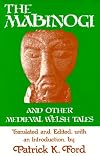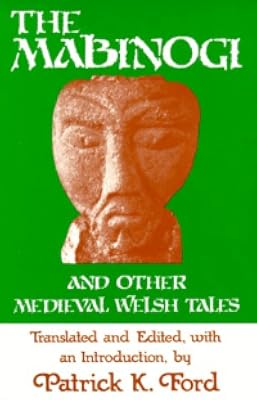
The Mabinogi and Other Medieval Welsh Tales
by Patrick K. Ford
On This Page
Description
The four stories that make up the Mabinogi, along with three additional tales from the same tradition, form this collection and compose the core of the ancient Welsh mythological cycle. Included are only those stories that have remained unadulterated by the influence of the French Arthurian romances, providing a rare, authentic selection of the finest works in medieval Celtic literature. This landmark edition translated by Patrick K. Ford is a literary achievement of the highest order.Tags
Recommendations







Member Recommendations

Member Reviews
This second reading was significantly easier than the first, if only because I knew what to expect and to brace myself for the tedious list of How Culhwch Won Olwen. The bits of Taliesin included in this copy that weren't included in the [a: Sioned Davies|187332|Sioned Davies|https://s.gr-assets.com/assets/nophoto/user/u_50x66-632230dc9882b4352d753eedf9396530.png] translation were also a distinct treat, though Davies included in hers some other material that [a: Patrick K. Ford|295814|Patrick K. Ford|https://s.gr-assets.com/assets/nophoto/user/u_50x66-632230dc9882b4352d753eedf9396530.png] omitted. To each their own with this strange tradition.
For a first time reader I would recommend Davies, as she provides a more thorough grounding show more within the Welsh tradition. Her footnotes fill in the blanks that allow subsequent translations to better describe why what was being said was said and a more thorough analysis of the stories. Honestly, I'm excited to read more translations of it, now that I've two under my belt and can actually form preferences in regards to them. I'm a bit curious as to the bowdlerized one as well, though I'm uncertain when I'll try and if it will ultimately be disappointing... Though I understand it is a better reflection of the Victorian Romantic sensibility than it is of the prehistoric Welsh and Arthurian Tradition. show less
For a first time reader I would recommend Davies, as she provides a more thorough grounding show more within the Welsh tradition. Her footnotes fill in the blanks that allow subsequent translations to better describe why what was being said was said and a more thorough analysis of the stories. Honestly, I'm excited to read more translations of it, now that I've two under my belt and can actually form preferences in regards to them. I'm a bit curious as to the bowdlerized one as well, though I'm uncertain when I'll try and if it will ultimately be disappointing... Though I understand it is a better reflection of the Victorian Romantic sensibility than it is of the prehistoric Welsh and Arthurian Tradition. show less
What the stories represent (culture, people, tidbits of history) is greater than the stories. It almost feels like the narrative gives precedence to the information contained in them. They are meandering, plot points are introduced and dropped suddenly as the author said they would. They are not for the average reader who is looking for entertaining mythological tales.
The Mabinogi are four linked medieval Welsh tales; Pwyll, Prince of Dyfed, Branwen daughter of Llyr, Manawydan son of Llyr, and Math son of Mathonwy. Other tales are included in this volume, which represents the core of Welsh mythology. Each story is prefaced with a plain-English summary, then the story is presented as originaly written (the editor, Patrick K. Ford, did the translating). There is a handy glossary of names, a pronunciation guide, and an index of names at the back of the book.
These tales are full of magic, humor, and pathos. It is a great introduction to Welsh mythology. I liked this translation better than the Jeffrey Gantz one.
Some of the repetitiveness in Culhwch and Olwen irked me, because it started out funny but show more then dragged on. I’m not one to read poetry, so much of the Gwion Bach and Taliesin story wasn’t interesting to me, but those are the book’s only drawbacks in my opinion.
Overall, the book is worth reading just for the Mabinogi. All four of those stories were great. I especially enjoyed Manawydan son of Llyr. I won’t spoil the story, but I found it extremely funny when different people came by and tried to talk Manawydan out of hanging a mouse (for thievery) by stringing it up between two forks stuck in the ground! show less
These tales are full of magic, humor, and pathos. It is a great introduction to Welsh mythology. I liked this translation better than the Jeffrey Gantz one.
Some of the repetitiveness in Culhwch and Olwen irked me, because it started out funny but show more then dragged on. I’m not one to read poetry, so much of the Gwion Bach and Taliesin story wasn’t interesting to me, but those are the book’s only drawbacks in my opinion.
Overall, the book is worth reading just for the Mabinogi. All four of those stories were great. I especially enjoyed Manawydan son of Llyr. I won’t spoil the story, but I found it extremely funny when different people came by and tried to talk Manawydan out of hanging a mouse (for thievery) by stringing it up between two forks stuck in the ground! show less
The best treatment of The Mabinogion I have yet encountered. Avoids many of the stylistic tropes from the oral tradition that make other editions so tedious.
[Later note: The Sioned Davies version is even better.)
[Later note: The Sioned Davies version is even better.)
This book is a collection of the four branches of the Mabinogi and a handful of other assorted Welsh stories that make up the Welsh mythic cycle. This version of the collection is missing stories that show up in other 'Mabinogion' collections, such as 'The Dream of Maxen' and 'The Countess of the Fountain', stories that are connected to the Arthurian legends. It does, however, include the 'Tale of Gwion Bach and Tale of Taliesin' often omitted in other translations.
There are certainly many other compilations of the Welsh tales, usually under the title of 'Mabinogion'. I have several variations myself and in each one the tales vary just a bit. I would not recommend this book over others, but certainly in tandem with one or two of the show more others. Any and all of these versions are useful in that they contain that core part of Welsh mythology. Of all the Celtic subcultures, precious little seems to have survived of Welsh myth and if one wishes to work within the Welsh pantheon, these stories are invaluable.
I would certainly recommend this book to others. I found it to be easy to read, even at its most technical parts such as the Introduction and the prefaces to the stories themselves. I've come across other versions were these 'technical' parts are very wordy and difficult to process. It was a very enjoyable read. It's a shame that the mythology of the Welsh and the Celtic peoples in general tend to get ignored in the literature we teach our young today. Or at least that was the case when I was going through school. Every year, without fail, we would make a big deal over Greek and Roman myths and, it seems, overlook the fact that there are other cultures with rich mythologies out there. I would definitely recommend this particular version to any teacher seeking to broaden their students' horizons. show less
There are certainly many other compilations of the Welsh tales, usually under the title of 'Mabinogion'. I have several variations myself and in each one the tales vary just a bit. I would not recommend this book over others, but certainly in tandem with one or two of the show more others. Any and all of these versions are useful in that they contain that core part of Welsh mythology. Of all the Celtic subcultures, precious little seems to have survived of Welsh myth and if one wishes to work within the Welsh pantheon, these stories are invaluable.
I would certainly recommend this book to others. I found it to be easy to read, even at its most technical parts such as the Introduction and the prefaces to the stories themselves. I've come across other versions were these 'technical' parts are very wordy and difficult to process. It was a very enjoyable read. It's a shame that the mythology of the Welsh and the Celtic peoples in general tend to get ignored in the literature we teach our young today. Or at least that was the case when I was going through school. Every year, without fail, we would make a big deal over Greek and Roman myths and, it seems, overlook the fact that there are other cultures with rich mythologies out there. I would definitely recommend this particular version to any teacher seeking to broaden their students' horizons. show less
Too academic for me, as I'm completely naive to any Welsh folklore (and almost so to the Irish and Arthurian stories related, accd. to Ford, to these. Much supplemental material is included.
I would like to see adaptations. From what I could get out of skimming this book there is wit, cleverness, and true poetry--not just adventure--in the tradition.
I would like to see adaptations. From what I could get out of skimming this book there is wit, cleverness, and true poetry--not just adventure--in the tradition.
The Mabinogi and Other Medieval Welsh Tales by Patrick Ford is an excellent and accessible translation of most of the stories normally included in the Mabinogion (minus the three Arthurian tales, Macsen Wledig, and Rhonabwy), plus "The Tale of Gwion Bach/The Tale of Taliesin" and the hard-to-find "Cad Goddeu". Includes introductions, a glossary of proper names, and an index.
Members
- Recently Added By
Author Information

5+ Works 625 Members
Some Editions
Common Knowledge
- Original publication date
- 1977
- People/Characters
- Pwyll, Prince of Dyfed; Pryderi; Bendigeidfran (as Bendigaidfran); Branwen; Manawydan; Rhiannon (show all 13); Cigfa; Math ap Mathonwy; Gwydion; Aranrhod; Lleu Llaw Gyffes; Blodeuedd; Taliesin (Gwion | Gwion Bach)
- Important places
- Dyfed, Wales, UK; Gwynedd, Wales, UK; Wales, UK; Anglesey, Wales, UK; Ceredigion, Wales, UK; Carmarthenshire, Wales, UK (show all 7); Pembrokeshire, Wales, UK
Classifications
- Genre
- Fiction and Literature
- DDC/MDS
- 891.6631 — Literature & rhetoric Literatures of other languages East Indo-European and Celtic literatures Celtic languages Welsh Welsh fiction –1600
- LCC
- PB2363 .M2 .F6 — Language and Literature Modern languages. Celtic languages and literature Modern languages. Celtic languages Celtic languages and literature Brittanic group Welsh. Cymric
- BISAC
Statistics
- Members
- 558
- Popularity
- 52,986
- Reviews
- 13
- Rating
- (4.02)
- Languages
- English, Welsh
- Media
- Paper, Ebook
- ISBNs
- 5
- ASINs
- 4