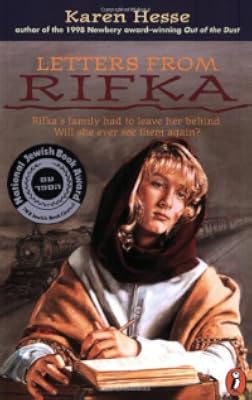
Letters from Rifka
by Karen Hesse
On This Page
Description
In letters to her cousin, a young Jewish girl chronicles her family's flight from Russia in 1919 and her own experiences when she must be left in Belgium for a while when the others emigrate to America.Tags
Recommendations
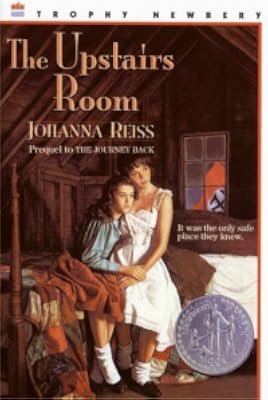
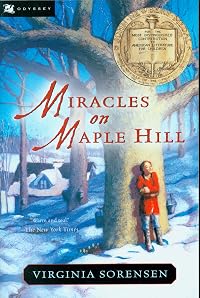
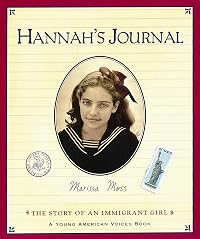
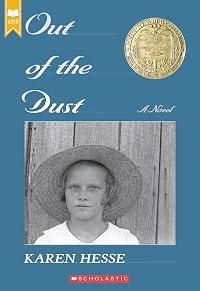


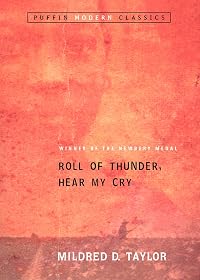
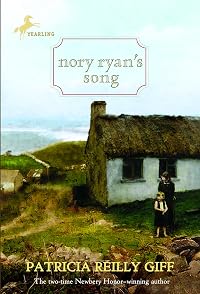


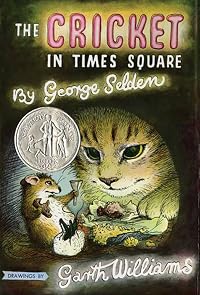
Member Recommendations
Member Reviews
Karen Hesse uses the epistolary style to present the story of a Russian Jewish girl, and her family, escaping persecution with the hope of a new life in America. The story is based on the real life experience of the author’s Aunt Lucy. Rifka tells the story completely through letters to her cousin Tovah, which are written in the margins of her beloved book of poetry by Alexander Pushkin.
The author takes the reader through the immigrant experience in a way that connects with readers. The use of letters makes the novel extremely personal in nature and the reader strongly bonds to Rifka, who shares her experiences, fears, thoughts, hopes, and worries of the unknown.
The setting of the book is constantly changing in terms of location. show more However, the time period is clearly and effectively communicated through descriptions of clothing, modes of transportation, food (most memorable is the abundance of herring and onions). Hesse excels at illustrating the contrast between life, material items, food, and every day events in the family between Russia and Poland, compared to that of Western Europe and New York City, even on Ellis Island. Hesse successfully describes the various settings by sharing Rifka’s experiences through her senses, such as the smells on trains, and what she sees, the lovely markets and gardens of Antwerp, the crowds at Ellis Island.
Rifka herself experiences a great transformation through her own story. She is brave and courageous right from the beginning, but not independent and strong. She is living in fear. While on her journey, she experiences the kindness of others, even those who are not Jewish, and begins to trust. She develops confidence in herself and her abilities.
I highly recommend this book for children ages 9-12 and anyone interested in the immigrant experience, the experience of Russian Jews, and/or genealogy. show less
The author takes the reader through the immigrant experience in a way that connects with readers. The use of letters makes the novel extremely personal in nature and the reader strongly bonds to Rifka, who shares her experiences, fears, thoughts, hopes, and worries of the unknown.
The setting of the book is constantly changing in terms of location. show more However, the time period is clearly and effectively communicated through descriptions of clothing, modes of transportation, food (most memorable is the abundance of herring and onions). Hesse excels at illustrating the contrast between life, material items, food, and every day events in the family between Russia and Poland, compared to that of Western Europe and New York City, even on Ellis Island. Hesse successfully describes the various settings by sharing Rifka’s experiences through her senses, such as the smells on trains, and what she sees, the lovely markets and gardens of Antwerp, the crowds at Ellis Island.
Rifka herself experiences a great transformation through her own story. She is brave and courageous right from the beginning, but not independent and strong. She is living in fear. While on her journey, she experiences the kindness of others, even those who are not Jewish, and begins to trust. She develops confidence in herself and her abilities.
I highly recommend this book for children ages 9-12 and anyone interested in the immigrant experience, the experience of Russian Jews, and/or genealogy. show less
Karen Hesse also wrote Out of the Dust, one of my favorite Newbery award winning books. Once again, I am in awe of Hesses' ability to portray a historical period with characters who take us on a journey through time wherein the emotions and the setting paint vivid images of overcoming difficult adversity.
This book is well deserving of the many accolades it received, including some of the following:
Horn Book Outstanding Book of the Year
American Library Association Notable Book
National Jewish Book Award
-------------------
Travel with a twelve-year old Jewish young woman Rifka as she and her family dangerously slip out of Russia to avoid persecution. Her prize possession is a book of poetry by the great Russian author Puskin. It is the love show more of poetry, of family and the kindness of strangers that sustains Rifka. Learn the courage and difficulty of the immigrant experience. Smile at the fortitude of this spunky character who faces extreme adversity.
As Rifka travels she writes to her cousin Tovah who remains in Russia. The book is a series of letters of Rifka's journey and her dramatic experiences as her family flees senseless hate and bigotry with the hope of a new life in America.
Taken from real life experience of the author's Aunt Lucy, this is a compelling story of despair balanced with hope, of loss and then gain, of tragedy and then light.
Highly recommended! show less
This book is well deserving of the many accolades it received, including some of the following:
Horn Book Outstanding Book of the Year
American Library Association Notable Book
National Jewish Book Award
-------------------
Travel with a twelve-year old Jewish young woman Rifka as she and her family dangerously slip out of Russia to avoid persecution. Her prize possession is a book of poetry by the great Russian author Puskin. It is the love show more of poetry, of family and the kindness of strangers that sustains Rifka. Learn the courage and difficulty of the immigrant experience. Smile at the fortitude of this spunky character who faces extreme adversity.
As Rifka travels she writes to her cousin Tovah who remains in Russia. The book is a series of letters of Rifka's journey and her dramatic experiences as her family flees senseless hate and bigotry with the hope of a new life in America.
Taken from real life experience of the author's Aunt Lucy, this is a compelling story of despair balanced with hope, of loss and then gain, of tragedy and then light.
Highly recommended! show less
Although this is a compelling and suspenseful story, the epistolary/diary format really doesn't work. It's very hard to get those to work right, and in this case it has the usual problem: the narrative is WAY too detailed to make a convincing letter.
There is also the problem of Rifka writing facts in her letters that the reader doesn't know, but which her cousin clearly would -- like, listing the names of her brothers, when in a real letter she would just say "My brothers," and also explaining about pogroms and the Russian government drafting Jewish boys as soldiers -- which her cousin, being a Russian Jew, would not need to be told. The author could have been more smooth in imparting necessary information, perhaps in a foreword.
Maybe show more most people aren't bothered by that sort of thing, but it bothers me. Hence, three and a half stars instead of four. show less
There is also the problem of Rifka writing facts in her letters that the reader doesn't know, but which her cousin clearly would -- like, listing the names of her brothers, when in a real letter she would just say "My brothers," and also explaining about pogroms and the Russian government drafting Jewish boys as soldiers -- which her cousin, being a Russian Jew, would not need to be told. The author could have been more smooth in imparting necessary information, perhaps in a foreword.
Maybe show more most people aren't bothered by that sort of thing, but it bothers me. Hence, three and a half stars instead of four. show less
This is a sweet middle years novel about the Jewish immigrant experience in the early 1900s. While the book gives a taste of hardships faced by immigrants in transit and upon arrival in the US, it's probably an unrealistically happy book. That said, a more realistic book would not be appropriate for kids this age and the novel raises the spector of alternate bad outcomes well enough.
I'm not a fan of epistolary fiction, but this cross between diary and correspondence isn't bad. Hesse does a good job of capturing Rifka's age (12-13) and the contradictions of childishness and impending adulthood. She also does well showing the challenge of adjusting to a culture different from that one has grown up in and giving a little of the history of immigration to the US from Russia and eastern Europe during the early 20th century.
The story is keeping my interest, however, I found it very difficult to get into. I think that it would take a lot of patience and help to get my students started, as the whole epistolary format doesn't really go with the style of narration very well (no one writes letters with full dialogue and with such detail--you forget they're letters and then when you're reminded that they are, the whole thing seems implausible-credibility suffers). That aside, the narrative is compelling.
On page 56...
Okay, I'm used to the style now. Rifka's character should inspire young readers: avid readers and writers to try to write their own poetry & prose; girls who don't think they can get by on looks alone to cherish their intelligence; any young adult show more to handle new and intimidating experiences with grace and courage. Rifka is definitely a real-life hero and she inspired me to be more selfless. I especially loved how Rifka never gave thought to the fact that all of her troubles were a result of one poor choice and she NEVER blamed the Polish peasant girl---I was constantly dwelling on that fact, but Rifka never did; a true testimony in favor of positive thinking in the face of adversity.
It took me longer than it should have to read it, however, which indicates to me that it didn't hold my interest as much as I'd have liked. show less
On page 56...
Okay, I'm used to the style now. Rifka's character should inspire young readers: avid readers and writers to try to write their own poetry & prose; girls who don't think they can get by on looks alone to cherish their intelligence; any young adult show more to handle new and intimidating experiences with grace and courage. Rifka is definitely a real-life hero and she inspired me to be more selfless. I especially loved how Rifka never gave thought to the fact that all of her troubles were a result of one poor choice and she NEVER blamed the Polish peasant girl---I was constantly dwelling on that fact, but Rifka never did; a true testimony in favor of positive thinking in the face of adversity.
It took me longer than it should have to read it, however, which indicates to me that it didn't hold my interest as much as I'd have liked. show less
Told in a series of letters from Rifka to her cousin, this is an endearing, realistic, and ultimately, hopeful book. Hesse takes the reader with Rifka from Russia to America, through hardship and hope. Rifka's voice draws in the reader, placing you with her as she walks through the trials. I highly recommend this for kids, as a way to learn about history from an engaging viewpoint. This would be excellent in conjunction with the history of Russian during the revolution after WWI, and for learning about immigration to the US during that turbulent time.
Members
- Recently Added By
Lists

GCS 6th grade summer reading list
171 works; 4 members

Favorite Epistolary Fiction
143 works; 144 members
Author Information

38+ Works 28,876 Members
Karen Hesse (born on August 29, 1952 Baltimore, Maryland) is an American author of children's literature and literature for young adults. She studied theatre at Towson State College, and finished her undergraduate degree at the University of Maryland in English, Psychology, and Anthropology. In 1998 she won the Newbery Medal for her young adult show more novel, Out of the Dust. Hesse lives in Vermont with her husband and two teen-aged daughters. (Bowker Author Biography) show less
Awards and Honors
Awards
Distinctions
Common Knowledge
- Canonical title
- Letters from Rifka
- Original publication date
- 1992
- People/Characters
- Rifka; Alexander Pushkin
- Important places
- Russia; Ellis Island, New York, USA
- Dedication
- In memory of Zeyde and Bubbe, my beloved grandparents
The Weitzman Family - First words
- My dear cousin Tovah, We made it!
- Last words
- (Click to show. Warning: May contain spoilers.)At last I send you my love from America. Shalom, my dear cousin, Rifka.
Classifications
- Genres
- Fiction and Literature, Kids, Children's Books
- DDC/MDS
- 813.54 — Literature & rhetoric American literature in English American fiction in English 1900-1999 1945-1999
- LCC
- PZ7 .H4364 .L — Language and Literature Fiction and juvenile belles lettres Fiction and juvenile belles lettres Juvenile belles lettres
- BISAC
Statistics
- Members
- 2,973
- Popularity
- 6,003
- Reviews
- 63
- Rating
- (3.95)
- Languages
- English, Italian
- Media
- Paper, Audiobook, Ebook
- ISBNs
- 32
- ASINs
- 15