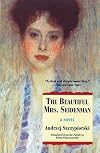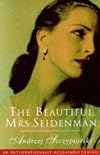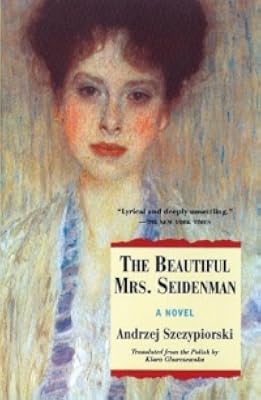
The Beautiful Mrs. Seidenman
by Andrzej Szczypiorski
On This Page
Description
In the Nazi-occupied Warsaw of 1943, Irma Seidenman, a young Jewish widow, possesses two attributes that can spell the difference between life and death: she has blue eyes and blond hair. With these, and a set of false papers, she has slipped out of the ghetto, passing as the wife of a Polish officer, until one day an informer spots her on the street and drags her off to the Gestapo. At times a dark lament, at others a sly and sardonic thriller, The Beautiful Mrs. Seidenman is the story of show more the thirty-six hours that follow Irma's arrest and the events that lead to her dramatic rescue as the last of Warsaw's Jews are about to meet their deaths in the burning ghetto. show lessTags
Recommendations



















Member Recommendations
Member Reviews
It took me longer than I anticipated to become as fully immersed in this work as in the first book of his that I read, A Mass for Arras (reviewed here). But when I did I came away enormously impressed—again—with this author, a Polish Catholic who writes about Jewish/Polish relations. A man who took part in the Warsaw Uprising in WWII, was imprisoned in a Nazi concentration camp, was an activist for Solidarity, and was imprisoned by the Polish Communist government, and who—it appeared after his death—may have collaborated with the secret police under Stalin. The book tells of the arrest and brief imprisonment of the title character. Each chapter examines in detail the life of one of the various people—Pole, Jew, Nazi, Catholic show more nun, and others—who had a role in her release. The stories are vividly told, occasionally philosophical, and always deeply moving. An exceptional work, highly recommended. show less
An excellent novel that looks at Poland (Warsaw) and the Polish during the German occupation of Poland during WWII.
The story is based around the blond and blue-eyed Jewish widow Mrs Seidenman, now known as Mrs Gromowski (sp?), a Polish officer's widow. Someone informs on her, and her community comes through to save her. Though this is the framework for the novel, each chapter looks at a different person living in Warsaw at the time--from Mrs S-G (as she goes by after the war, living in Paris), to Pawel (a teen who plays a part in her rescue), to her academic next door neighbor Mr Korba (who sets the ball rolling, and has no idea that she actually is Jewish), to a street criminal. We also meet a long-time pro-Poland fighter in the show more Underground who has been fighting for an independent Poland since 1905, Pawel's best friend Henio (and his father and 4-yo sister, who is smuggled from the ghetto to a convent, where she is converted to Catholicism to save her), to Johann (Jíçs) MÃ_ller (a German who has lived in Poland his entire life, and plays the key role in saving Mrs Seidenman).
It can get a bit confusing with multiple nicknames and aliases, but you get a real feel for the community that existed under occupation. During WWI, Poland was occupied by the Russians, and you see the fear from those events effecting some of the characters' actions. You see the confusion over what the Germans are doing to their Jewish friends and neighbors, and anyone who crosses the paths of the wrong German occupier. show less
The story is based around the blond and blue-eyed Jewish widow Mrs Seidenman, now known as Mrs Gromowski (sp?), a Polish officer's widow. Someone informs on her, and her community comes through to save her. Though this is the framework for the novel, each chapter looks at a different person living in Warsaw at the time--from Mrs S-G (as she goes by after the war, living in Paris), to Pawel (a teen who plays a part in her rescue), to her academic next door neighbor Mr Korba (who sets the ball rolling, and has no idea that she actually is Jewish), to a street criminal. We also meet a long-time pro-Poland fighter in the show more Underground who has been fighting for an independent Poland since 1905, Pawel's best friend Henio (and his father and 4-yo sister, who is smuggled from the ghetto to a convent, where she is converted to Catholicism to save her), to Johann (Jíçs) MÃ_ller (a German who has lived in Poland his entire life, and plays the key role in saving Mrs Seidenman).
It can get a bit confusing with multiple nicknames and aliases, but you get a real feel for the community that existed under occupation. During WWI, Poland was occupied by the Russians, and you see the fear from those events effecting some of the characters' actions. You see the confusion over what the Germans are doing to their Jewish friends and neighbors, and anyone who crosses the paths of the wrong German occupier. show less
A story of Poland told through several stories of people who are living in Warsaw, Poland and generally is set in WWII though it does span over several years and into more modern times. Poland is made up of many peoples who have identity with Poland; the Polish, the German, the Jewish and Russians. The characters were all intimately presented and we get to know their inner thoughts and how others see them. The author gave each person their unique voice but also was able to speak through his characters to give the reader insight into Poland.
OPENING LINE: The room was in twilight because the judge was a lover of twilight.
QUOTES:
But God is merciful to those who seek Him, even if they search for him in such peculiar circumstances, amid the show more world's filth and indignities. Pg 30
Christians considered themselves superior,perhaps precisely because although being in the minority, they nevertheless felt themselves to be favored by the world. Pg 86
The sky always seemed to him dirty. Pg152
What has become of our freedom if we cannot be ourselves? 160
They took away the right to be herself, the right to self-determination. 192
WORDS:
Xenophobic; fear of foreigners
Semitophile; lover of Jewish people and culture
Philologist; humanist specializing in classical scholarship
******CLOSING LINE: But it's possible that she would have felt the same sense of relief at bringing into the world a son.
RATING: excellent show less
OPENING LINE: The room was in twilight because the judge was a lover of twilight.
QUOTES:
But God is merciful to those who seek Him, even if they search for him in such peculiar circumstances, amid the show more world's filth and indignities. Pg 30
Christians considered themselves superior,perhaps precisely because although being in the minority, they nevertheless felt themselves to be favored by the world. Pg 86
The sky always seemed to him dirty. Pg152
What has become of our freedom if we cannot be ourselves? 160
They took away the right to be herself, the right to self-determination. 192
WORDS:
Xenophobic; fear of foreigners
Semitophile; lover of Jewish people and culture
Philologist; humanist specializing in classical scholarship
******CLOSING LINE: But it's possible that she would have felt the same sense of relief at bringing into the world a son.
RATING: excellent show less
This is a very sad but enjoyable novel set in Poland and Warsaw in 1943. The novel brings together Polish history and the Polish character and attitudes through the thoughts of various people, all of which have contact with Mrs Seidenman, a blue-eyed and blond-haired Jewish woman. Mrs Seidenman has changed her name and has false papers. Andrzej Szczypiorski manages to get an excellent balance between the dark sadness of those days and the humour as individuals engage with each other and carry on some sort of normal life. The author shows incredible compassion for everyone, Jews, Germans and Poles and makes a good attempt to get inside the head of the different characters in the novel. Szczypiorski was born in 1924 and took part in the show more 1944 uprising and so the novel feels authentic in the scenes it portrays. It is good to read a war novel from a Polish perspective and this was an excellent read. show less
Meh. This book presents many very intriguing characters, but the author seems so wrapped up in his own ideas about Poles and the future of Poland that he seems to forget he is supposed to be telling a story here. There is no story. There is no suspense.
You already know from the beginning that Mrs. Seidenman will be rescued, because it says so on the dust jacket. (And, contrary to what the dust jacket says, the rescue was not "dramatic." It wasn't like they stormed the jail Bastille-style or anything like that. Her friends simply got a German man to go to the jail and say he knows her and she's not a Jew.) You already know she will survive the war and live to an old age. In fact, you already know the fate of every single character in the show more story before long, because whenever one is introduced the author immediately tells you what their life will be like later and how and when they will die.
Most of the book consists of various people from all walks of life, all connected in some way with Mrs. Seidenman, giving speeches. These are either internal or external monologues and they go on for pages. And much of this is interesting, even profound, but the fact is that while the characters are standing around philosophizing, nothing is happening and there is no plot to speak of.
This book is good, perhaps, if you want to want know the history and social climate of Warsaw in 1943, but it is a piss-poor excuse for a novel. show less
You already know from the beginning that Mrs. Seidenman will be rescued, because it says so on the dust jacket. (And, contrary to what the dust jacket says, the rescue was not "dramatic." It wasn't like they stormed the jail Bastille-style or anything like that. Her friends simply got a German man to go to the jail and say he knows her and she's not a Jew.) You already know she will survive the war and live to an old age. In fact, you already know the fate of every single character in the show more story before long, because whenever one is introduced the author immediately tells you what their life will be like later and how and when they will die.
Most of the book consists of various people from all walks of life, all connected in some way with Mrs. Seidenman, giving speeches. These are either internal or external monologues and they go on for pages. And much of this is interesting, even profound, but the fact is that while the characters are standing around philosophizing, nothing is happening and there is no plot to speak of.
This book is good, perhaps, if you want to want know the history and social climate of Warsaw in 1943, but it is a piss-poor excuse for a novel. show less
As far as World War II literature goes, I feel I've read better and more emotional works. Maybe it was the use of multiple viewpoints with chapters all from different perspectives, but I felt this was very unconnected and I never really felt much sympathy for any of the characters.
Tragically lovely. This book left me pretty speechless.
Members
- Recently Added By
Lists

1001 Books You Must Read Before You Die
1,448 works; 1,136 members
Author Information

24+ Works 955 Members
Andrzej Szczypiorski is a Polish novelist and playwright who uses wit, melancholy and a rare understanding of human nature to portray the political and social realities of Eastern Europe over the last turbulent fifty years. He calls on his own experience as a fighter in the Polish Resistance, a participant in the Warsaw uprising of 1944, and a show more German prisoner of war in his novel The Beautiful Mrs. Seidenman. He combines rich character studies with historical accuracy to create a poignant look at life under Nazi rule. Self-Portrait with Woman moves the clock up several decades to look at the malaise of post-communist Poland. Once again, history's effect on individuals creates a bittersweet picture by a master storyteller. Andrzej Szczypiorski's work has been compared to that of Milan Kundera. He stands with Kundera as one of the most important writers of Eastern Europe. (Bowker Author Biography) show less
Some Editions
Awards and Honors
Series
Belongs to Publisher Series
Common Knowledge
- Canonical title
- The Beautiful Mrs. Seidenman
- Original title
- Początek
- Original publication date
- 1986
- People/Characters
- Irma Seidenman
- Important places
- Warsaw, Poland
- Important events*
- Shoah
- First words
- The room was in twilight because the judge was a lover of twilight.
- Last words
- (Click to show. Warning: May contain spoilers.)But it's possible that she would have felt the same sense of relief at bringing into the world a son.
- Original language*
- Polnisch
*Some information comes from Common Knowledge in other languages. Click "Edit" for more information.
Classifications
- Genres
- General Fiction, Fiction and Literature, Historical Fiction
- DDC/MDS
- 891.8537 — Literature & rhetoric Literatures of other languages East Indo-European and Celtic literatures West and South Slavic languages (Bulgarian, Slovene, Polish, Czech, Slovak, Serbo-Croatian, and Macedonian) Polish Polish fiction 1919–1989
- LCC
- PG7178 .Z3 .P5913 — Language and Literature Slavic languages and literatures. Baltic languages. Albanian language Slavic. Baltic. Albanian Slavic Polish
- BISAC
Statistics
- Members
- 623
- Popularity
- 46,919
- Reviews
- 11
- Rating
- (3.97)
- Languages
- 14 — Catalan, Dutch, English, Finnish, French, German, Hungarian, Italian, Norwegian, Polish, Portuguese, Romanian, Russian, Spanish
- Media
- Paper, Audiobook, Ebook
- ISBNs
- 49
- ASINs
- 8