Life Story
by Virginia Lee Burton
On This Page
Description
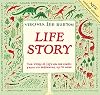
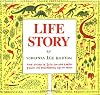
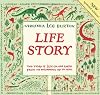
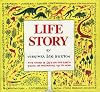
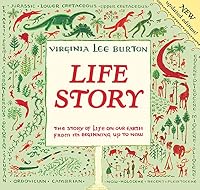
Earth takes center stage in this updated version of Virginia Lee Burton's 1962 classic Life Story. Told through five acts, Burton's art and text tell the history of earth from beginning to present day. Readers will gain an in-depth understanding of the planet's history and their leading roles in it today. The ebook has been updated with cutting-edge science, including up-to-the-minute information on fossil records and the geologic principles.Tags
Recommendations




Member Reviews
Burton sets the stage and tells the drama of the history of the earth. Starting at the beginning of the universe, she bring us forward through time through each era and describes the major geological features as well as the forms of life present at the time. As she approaches the present, the time periods become shorter until we we are in the present century, the present lifetime, the present year, the present season, the present day. The illustrations are vibrant and play into the "drama" setting by showing an image of the era as if it's playing out on a stage. The text page features interesting details in black, white and yellow. Despite the scope and scale of the book, the narrative imparts you with the significance of your life in show more the present moment, small as it is in comparison to all you've just witnessed.
"And now it is your Life Story and it is you who play the leading role. The stage is set, the time is now, and the place wherever you are. Each passing second a new link in the endless chain of Time. The drama of Life is a continuous story--ever new, ever changing, and ever wondrous to behold." show less
"And now it is your Life Story and it is you who play the leading role. The stage is set, the time is now, and the place wherever you are. Each passing second a new link in the endless chain of Time. The drama of Life is a continuous story--ever new, ever changing, and ever wondrous to behold." show less
Burton sets the stage and tells the drama of the history of the earth. Starting at the beginning of the universe, she bring us forward through time through each era and describes the major geological features as well as the forms of life present at the time. As she approaches the present, the time periods become shorter until we we are in the present century, the present lifetime, the present year, the present season, the present day. The illustrations are vibrant and play into the "drama" setting by showing an image of the era as if it's playing out on a stage. The text page features interesting details in black, white and yellow. Despite the scope and scale of the book, the narrative imparts you with the significance of your life in show more the present moment, small as it is in comparison to all you've just witnessed.
"And now it is your Life Story and it is you who play the leading role. The stage is set, the time is now, and the place wherever you are. Each passing second a new link in the endless chain of Time. The drama of Life is a continuous story--ever new, ever changing, and ever wondrous to behold." show less
"And now it is your Life Story and it is you who play the leading role. The stage is set, the time is now, and the place wherever you are. Each passing second a new link in the endless chain of Time. The drama of Life is a continuous story--ever new, ever changing, and ever wondrous to behold." show less
I think this is THE best book about evolution and time for little kids. If only I could read it without crying- as Burton brings the focus in and moves inexorably nearer in time to the reader, the intensity ramps up to a point where the brevity and beauty of life is so apparent that it's painful. An exquisite and breathtaking book.
A science book that is over fifty years old is just not going to cut it. Back in the day, this was fine. Lovely, in fact. But even the updated version calls dinosaurs reptiles, though we've since conclusively figured out that they were birds. And the time scale is way off, too. I mean, yes, the last 50 years are much more interesting than the first 3B years, but there's just nothing that will stick except the number of pages given to each era, and that is disproportionate.
I owned a paperback copy of this growing up and spent countless hours reading and noticing every little detail on every page. it's so comprehensive but told in such an engaging way, and my young mind just soaked it all up! I have so many fond memories of this book and didn't know until just recently that she's the same author of mike mulligan and his steam shovel, another book easily in my top 10 kids books!
This book was originally published in 1962, and has been updated a few times since, due to scientific changes. "Life Story" is a book about the evolution. It includes the progression of time of our solar system and life on earth. Written in play and poetry format, "Life Story" gives a fresh approach to the evolution subject. The overall theme of the book is to discuss the evolution theory and changes in seasons and the earth.
I like this book, being a science major, and a former environmental educator. The language is concise and takes a neutral, narrative tone. Evolution books can be difficult for children, as it is a dense subject. I like how Virgina Lee Burton presented the information as a play. This allows for the discussion of show more "interpretation" on a touchy subject. She also includes different life forms on the text pages and pronunciation guides. The play language is apparent through her text with "the scene has changed... the climate has turned hot and humid" as an example. She manages to present language is a simple and direct way.
The illustrations are also interesting. Burton divides the book pages with a text page and an illustration page. The text pages include smaller pictures of animals, life forms, or important things not depicted in the illustration page. The small pictures provide dates, identifications, and pronunciation guides. This is helpful in preventing the main text from becoming dry and text-book like. Her use of language also helps with accuracy by including different, useful information. For extinct life forms as it approaches present day, Burton even includes distant modern day relatives. This helps readers identify with the text and illustrations.
The illustration pages are done as stage and set designs. This creates a theater like presence for the reader. The perspective of the illustrations makes the reader feel like he is watching a play at a theatre watching. The illustrations even presents the set design feel, including signs to tell the reader what "act and scene" the part of evolution it is. show less
I like this book, being a science major, and a former environmental educator. The language is concise and takes a neutral, narrative tone. Evolution books can be difficult for children, as it is a dense subject. I like how Virgina Lee Burton presented the information as a play. This allows for the discussion of show more "interpretation" on a touchy subject. She also includes different life forms on the text pages and pronunciation guides. The play language is apparent through her text with "the scene has changed... the climate has turned hot and humid" as an example. She manages to present language is a simple and direct way.
The illustrations are also interesting. Burton divides the book pages with a text page and an illustration page. The text pages include smaller pictures of animals, life forms, or important things not depicted in the illustration page. The small pictures provide dates, identifications, and pronunciation guides. This is helpful in preventing the main text from becoming dry and text-book like. Her use of language also helps with accuracy by including different, useful information. For extinct life forms as it approaches present day, Burton even includes distant modern day relatives. This helps readers identify with the text and illustrations.
The illustration pages are done as stage and set designs. This creates a theater like presence for the reader. The perspective of the illustrations makes the reader feel like he is watching a play at a theatre watching. The illustrations even presents the set design feel, including signs to tell the reader what "act and scene" the part of evolution it is. show less
The story of life on earth - from pre-primordial ooze to modern day. Really nice treatment, with a sweet ending about how you are in charge of your own life story. Only complaint was the "discovery of the new world" page - but to be expected from a book that is dated.
Members
- Recently Added By
Author Information

17+ Works 22,503 Members
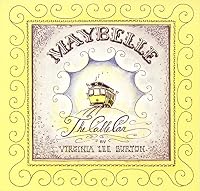
Virginia Lee Burton was born August 30, 1909 in Massachusetts. She was an author and illusrator of children's books. Her titles include Maybelle the Cable Car, Mike Mulligan and His Steam Shovel and Choo Choo: The Story of a Little Engine Who Ran Away. In 1942, she won the Caldecott Medal for her title, The Little House. Burton died on October 15, show more 1968 in Massachusetts. (Bowker Author Biography) show less
Awards and Honors
Common Knowledge
- Original publication date
- 1962
- Dedication
- To Lee from Jinnee
Classifications
Statistics
- Members
- 480
- Popularity
- 62,968
- Reviews
- 14
- Rating
- (3.98)
- Languages
- English, Japanese
- Media
- Paper, Ebook
- ISBNs
- 10
- UPCs
- 2
- ASINs
- 7