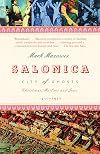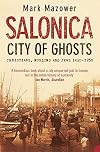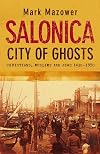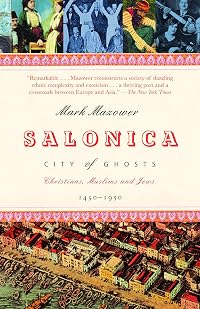
Salonica, City of Ghosts: Christians, Muslims and Jews, 1430-1950
by Mark Mazower
On This Page
Description
"Salonica, City of Ghosts is an evocation of the life of a vanished city and an exploration of how it passed away. Under the rule of the Ottoman sultans, one of the most extraordinary and diverse societies in Europe lived for five centuries amid its minarets and cypresses on the shore of the Aegean, alongside its Roman ruins and Byzantine monasteries. Egyptian merchants and Ukrainian slaves, Spanish-speaking rabbis - refugees from the Iberian Inquisition - and Turkish pashas rubbed shoulders show more with Orthodox shopkeepers, Sufi dervishes and Albanian brigands. Creeds clashed and mingled in an atmosphere of shared piety and messianic mysticism. How this bustling, cosmopolitan and tolerant world emerged and then disappeared under the pressure of modern nationalism is the subject of this book."--Jacket. show lessTags
Recommendations



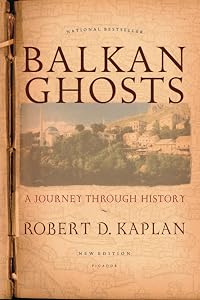
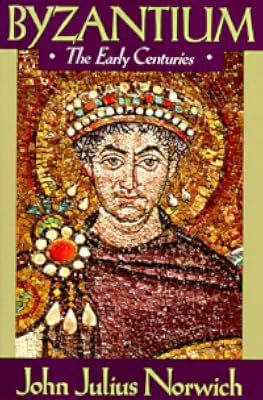

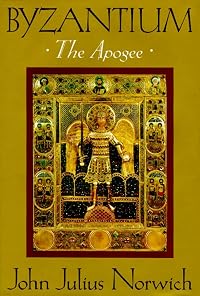


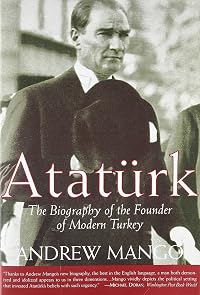









Member Recommendations
Member Reviews
This is the kind of book that makes me want to throw my guide books to Rome, Istanbul, Israel, and Athens in the trash and begin a different kind of world travel. I raved about Salonica for months and recommended it to every general nonfiction reader I know. Several students at the college where I work as a librarian were blown away by this beautifully constructed account of Christians, Jews, and Muslims cohabitating in an incredible cosomopolis. Through what must have been exhausting primary research, the author beautifully reconstructs the lives of many, including the obscure and unknown. The illustrations added to my appreciation. (History books should be more heavily illustrated in general.) People who enjoy reading the works of show more W.G. Sebald, Roberto Bolano, Elaine Pagels, Joseph Campbell, and Rebecca Solnit should read this account of 500 + hundred years in the history of a Greek city. show less
http://nhw.livejournal.com/702231.html
It is very good - an excellent story of the city through waves of depopulation and resettlement: the Greeks leave when the Ottomans take over in 1460, the Jews come in from Spain and Portugal in the 1490s, the city becomes one of the centres of the Ottoman empire and (I guess) the largest Jewish city in the world, and then is captured by the Greek kingdom in 1912, the Turks are kicked out in 1923, the Jews deported and almost all killed in 1943, and that's it.
Mazower has written two other very good books, one on the Balkans and one on Europe as a whole. Like the others, this one is great on the grand sweeping strategies and the public personalities of the city. I would have liked a bit more of the show more human side of things, which he also does well. Three individual stories which he did present well, and which will linger in my mind, were the looting and destruction of the Incantadas (a glorious ancient monument) by the French in the early nineteenth century, the tango craze of the 1920s, and the deportation of the Jews in 1943.
Mazower is of course reconstructing a history which has been wilfully forgotten by the Greek state, which prefers to stick to a narrative of continuous Hellenism for the whole of the last millennium. The real story is of course more complex, and in the last couple of pages Mazower argues for his history particularly eloquently:
"As small states integrate themselves in a wider world, and even the largest learn how much they need their neighbours' help to tackle the problems that face them all, the stringently-patrolled and narrow-minded conception of history which they once nurtured and which gave them a kind of justification starts to look less plausible and less necessary. Other futures may require other pasts."
I think he proves his point well. show less
It is very good - an excellent story of the city through waves of depopulation and resettlement: the Greeks leave when the Ottomans take over in 1460, the Jews come in from Spain and Portugal in the 1490s, the city becomes one of the centres of the Ottoman empire and (I guess) the largest Jewish city in the world, and then is captured by the Greek kingdom in 1912, the Turks are kicked out in 1923, the Jews deported and almost all killed in 1943, and that's it.
Mazower has written two other very good books, one on the Balkans and one on Europe as a whole. Like the others, this one is great on the grand sweeping strategies and the public personalities of the city. I would have liked a bit more of the show more human side of things, which he also does well. Three individual stories which he did present well, and which will linger in my mind, were the looting and destruction of the Incantadas (a glorious ancient monument) by the French in the early nineteenth century, the tango craze of the 1920s, and the deportation of the Jews in 1943.
Mazower is of course reconstructing a history which has been wilfully forgotten by the Greek state, which prefers to stick to a narrative of continuous Hellenism for the whole of the last millennium. The real story is of course more complex, and in the last couple of pages Mazower argues for his history particularly eloquently:
"As small states integrate themselves in a wider world, and even the largest learn how much they need their neighbours' help to tackle the problems that face them all, the stringently-patrolled and narrow-minded conception of history which they once nurtured and which gave them a kind of justification starts to look less plausible and less necessary. Other futures may require other pasts."
I think he proves his point well. show less
n Salonica: City of Ghosts, Mark Mazower, a Columbia University professor of Modern Greek History, provides an in-depth, balanced, and compassionate overview of the complex structures and forces that led to the changing face of Salonica (Thessaloniki in Greek), once a multiethnic city of Muslims, Christians, and Jews.
Under the Ottoman Empire, Sephardic Jews expelled from Spain and Portugal joined the Muslims and Christians living in the city. Religion, not nationality, defined identity, and correligionists lived together in separate, self-governing regions of the city. This coexistence was peaceful, though not always harmonious.
Mazower documents the shifts in identity after World War I and the end of the Ottoman Empire. As Western show more nationalism took hold, Christians identified as Greeks, Bulgarians, and Serbs and began to fight over turf. The Greco-Turkish Wars of 1919-1923 led to ethnic violence and massive population exchanges between Greece and Turkey. During World World II. the Nazis occupied Greece and expelled the Salonica's Jewish population to Auschwitz.
While Mazower's skill as an academic historian is evident throughout, he writes in a lively, accessible manner. Saloinca is a fascinating read.
Highly recommend. show less
Under the Ottoman Empire, Sephardic Jews expelled from Spain and Portugal joined the Muslims and Christians living in the city. Religion, not nationality, defined identity, and correligionists lived together in separate, self-governing regions of the city. This coexistence was peaceful, though not always harmonious.
Mazower documents the shifts in identity after World War I and the end of the Ottoman Empire. As Western show more nationalism took hold, Christians identified as Greeks, Bulgarians, and Serbs and began to fight over turf. The Greco-Turkish Wars of 1919-1923 led to ethnic violence and massive population exchanges between Greece and Turkey. During World World II. the Nazis occupied Greece and expelled the Salonica's Jewish population to Auschwitz.
While Mazower's skill as an academic historian is evident throughout, he writes in a lively, accessible manner. Saloinca is a fascinating read.
Highly recommend. show less
The perfect book to read on first visit to 'thessaloniki. Unfolds the many layers of this extraordinary "border town", and how the complexity got shaved away over the course of the 20th century by wars, fires and ethnic murder. Mazower's background as a historian of the whole european story makes him especially well qualified for this little corner.
Not quite a history book. A little more almost. Slips in chronology drove me mad while reading it. But the last chapter is a lesson anyone with an opinion about history as it is studied should read, and particularly about how we perceive history – what history is. The last chapter does not make much sense without reading the rest of the book.
very well written, but tries too hard to avoid certain not secondary subjects
I learned a lot from this book, and I admire Mazower's ability to form such a complete account of Salonica.
Members
- Recently Added By
Author Information

32+ Works 4,149 Members
Mark Mazower is a professor of history at Princeton University and has recently been appointed professor of history at Birkbeck College, London. He is the author of several books, most recently Dark Continent: Europe's Twentieth Century. (Bowker Author Biography)
Awards and Honors
Common Knowledge
- Canonical title
- Salonica, City of Ghosts: Christians, Muslims and Jews, 1430-1950
- Original title
- Salonica. City of ghosts
- Original publication date
- 2004
- Important places
- Thessaloniki, Greece
Classifications
- Genres
- History, Nonfiction, General Nonfiction, Religion & Spirituality
- DDC/MDS
- 949.565 — History & geography History of Europe Greece, Albania, Yugoslavia, Serbia, Romania, Bulgaria Greece and the Byzantine Empire Civil war 1945-1949
- LCC
- DF951 .T45 .M39 — History of Europe, Asia, Africa and Oceania Greece History of Greece Modern Greece Local history and description Other cities, towns, etc., A-Z
- BISAC
Statistics
- Members
- 671
- Popularity
- 42,845
- Reviews
- 11
- Rating
- (4.13)
- Languages
- 9 — Dutch, English, Greek, Hebrew, Italian, Polish, Portuguese, Spanish, Turkish
- Media
- Paper, Ebook
- ISBNs
- 17
- ASINs
- 4