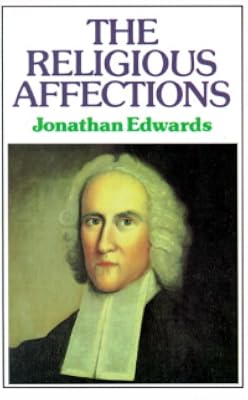
The Religious Affections
by Jonathan Edwards 
On This Page
Description
In one of the unsurpassed religious masterpieces produced by an American writer, Jonathan Edwards distinguishes between true and false religion by defining a believer's correct affections and explaining their importance. He further identifies the distinction between genuine-seeming and legitimate affections. Essential reading for divinity students and those studying American religious history.Tags
Recommendations















Member Reviews
The Religious Affections is probably the most profound analysis of spiritual experience ever written - and by the most brilliant philosopher/theologian to ever come from North America (and possibly the English language).
Jonathan Edwards wrote this book after the Great Awakening with which he was closely involved. He wrote as both a friend, defending the authenticity of revivals - and also as a critique, warning against putting trust in things which were not certain signs of genuine Spirit-wrought affections.
His treatise takes three parts. In part one he defines his terms and gives twelve reasons why genuine religion (i.e. Christian spirituality - "religion," in Edwards day, did not have the negative connotations that it carries today) show more consists much in the affections. The affections, for Edwards, are more than mere emotions - they are the strong and lively inclinations of the will, seated in the human heart.
Part two discusses twelve things which are not certain signs of true religious affections. These are things which Edwards warned should not be trusted as evidences of grace OR discarded as evidences that the Holy Spirit has NOT worked in a saving way. They are not indicators one way or the other.
Part three is the most lenghty and examines twelve things which are signs of a true work of the grace, wrought by God's holy Spirit in the heart. This is where Edwards is at his best - carefully, logically, biblically, and passionately describing the true evidences of regeneration. His analysis is keen, his thoughts clear, his argument orderly, his scholarship extensive, his knowledge of Scripture profuse, and his understanding of the human heart profound.
This particular edition - produced by Yale and edited by John Smith - is the best critical edition in print. The introduction and notes on the text are very helpful, as Smith summarizes Edwards' arguments and backgrounds the Puritan writers and their books which Edwards quotes in Religious Affections. This volume also includes Edwards' related correspondence with Thomas Gillespie from Scotland - this being the first time the complete correspondence has been printed in the same volume with the Affections.
This is not an easy book to read. Edwards takes getting used to. But it is very worthwhile. I'm currently reading it for the third time and I continue to find it useful. I highly recommend it for pastors and preachers and all Christians who yearn for a personal and corporate work of the Spirit in revival and spiritual awakening. show less
Jonathan Edwards wrote this book after the Great Awakening with which he was closely involved. He wrote as both a friend, defending the authenticity of revivals - and also as a critique, warning against putting trust in things which were not certain signs of genuine Spirit-wrought affections.
His treatise takes three parts. In part one he defines his terms and gives twelve reasons why genuine religion (i.e. Christian spirituality - "religion," in Edwards day, did not have the negative connotations that it carries today) show more consists much in the affections. The affections, for Edwards, are more than mere emotions - they are the strong and lively inclinations of the will, seated in the human heart.
Part two discusses twelve things which are not certain signs of true religious affections. These are things which Edwards warned should not be trusted as evidences of grace OR discarded as evidences that the Holy Spirit has NOT worked in a saving way. They are not indicators one way or the other.
Part three is the most lenghty and examines twelve things which are signs of a true work of the grace, wrought by God's holy Spirit in the heart. This is where Edwards is at his best - carefully, logically, biblically, and passionately describing the true evidences of regeneration. His analysis is keen, his thoughts clear, his argument orderly, his scholarship extensive, his knowledge of Scripture profuse, and his understanding of the human heart profound.
This particular edition - produced by Yale and edited by John Smith - is the best critical edition in print. The introduction and notes on the text are very helpful, as Smith summarizes Edwards' arguments and backgrounds the Puritan writers and their books which Edwards quotes in Religious Affections. This volume also includes Edwards' related correspondence with Thomas Gillespie from Scotland - this being the first time the complete correspondence has been printed in the same volume with the Affections.
This is not an easy book to read. Edwards takes getting used to. But it is very worthwhile. I'm currently reading it for the third time and I continue to find it useful. I highly recommend it for pastors and preachers and all Christians who yearn for a personal and corporate work of the Spirit in revival and spiritual awakening. show less
The Religious Affections is probably the most profound analysis of spiritual experience ever written - and by the most brilliant philosopher/theologian to ever come from North America (and possibly the English language).
Jonathan Edwards wrote this book after the Great Awakening with which he was closely involved. He wrote as both a friend, defending the authenticity of revivals - and also as a critique, warning against putting trust in things which were not certain signs of genuine Spirit-wrought affections.
His treatise takes three parts. In part one he defines his terms and gives twelve reasons why genuine religion (i.e. Christian spirituality - "religion," in Edwards day, did not have the negative connotations that it carries today) show more consists much in the affections. The affections, for Edwards, are more than mere emotions - they are the strong and lively inclinations of the will, seated in the human heart.
Part two discusses twelve things which are not certain signs of true religious affections. These are things which Edwards warned should not be trusted as evidences of grace OR discarded as evidences that the Holy Spirit has NOT worked in a saving way. They are not indicators one way or the other.
Part three is the most lenghty and examines twelve things which are signs of a true work of the grace, wrought by God's holy Spirit in the heart. This is where Edwards is at his best - carefully, logically, biblically, and passionately describing the true evidences of regeneration. His analysis is keen, his thoughts clear, his argument orderly, his scholarship extensive, his knowledge of Scripture profuse, and his understanding of the human heart profound.
This particular edition - produced by Yale and edited by John Smith - is the best critical edition in print. The introduction and notes on the text are very helpful, as Smith summarizes Edwards' arguments and backgrounds the Puritan writers and their books which Edwards quotes in Religious Affections. This volume also includes Edwards' related correspondence with Thomas Gillespie from Scotland - this being the first time the complete correspondence has been printed in the same volume with the Affections.
This is not an easy book to read. Edwards takes getting used to. But it is very worthwhile. I'm currently reading it for the third time and I continue to find it useful. I highly recommend it for pastors and preachers and all Christians who yearn for a personal and corporate work of the Spirit in revival and spiritual awakening. show less
Jonathan Edwards wrote this book after the Great Awakening with which he was closely involved. He wrote as both a friend, defending the authenticity of revivals - and also as a critique, warning against putting trust in things which were not certain signs of genuine Spirit-wrought affections.
His treatise takes three parts. In part one he defines his terms and gives twelve reasons why genuine religion (i.e. Christian spirituality - "religion," in Edwards day, did not have the negative connotations that it carries today) show more consists much in the affections. The affections, for Edwards, are more than mere emotions - they are the strong and lively inclinations of the will, seated in the human heart.
Part two discusses twelve things which are not certain signs of true religious affections. These are things which Edwards warned should not be trusted as evidences of grace OR discarded as evidences that the Holy Spirit has NOT worked in a saving way. They are not indicators one way or the other.
Part three is the most lenghty and examines twelve things which are signs of a true work of the grace, wrought by God's holy Spirit in the heart. This is where Edwards is at his best - carefully, logically, biblically, and passionately describing the true evidences of regeneration. His analysis is keen, his thoughts clear, his argument orderly, his scholarship extensive, his knowledge of Scripture profuse, and his understanding of the human heart profound.
This particular edition - produced by Yale and edited by John Smith - is the best critical edition in print. The introduction and notes on the text are very helpful, as Smith summarizes Edwards' arguments and backgrounds the Puritan writers and their books which Edwards quotes in Religious Affections. This volume also includes Edwards' related correspondence with Thomas Gillespie from Scotland - this being the first time the complete correspondence has been printed in the same volume with the Affections.
This is not an easy book to read. Edwards takes getting used to. But it is very worthwhile. I'm currently reading it for the third time and I continue to find it useful. I highly recommend it for pastors and preachers and all Christians who yearn for a personal and corporate work of the Spirit in revival and spiritual awakening. show less
I only started listening to this because it was free on ChristianAudio, but it's exactly what I needed at this point in my spiritual journey. It's all about the difference between those who are actually in Christ, and those who are fooling themselves. The difference is the religious affections, the genuine and unconditional love for the glory and holiness of God.
There's a lot in this book to digest, which is especially hard in the audio format, so I made highlights in the 99-cent kindle copy. That way, I can go back over the most relevant passages. It's a little technical in structure, but my brain loved that aspect of it. The English is a little old, but it's good to help one better absorb the previous meanings of words. Also the show more English wasn't old at all compared to John Bunyan which I'd just finished listening to.
Mr Edwards supports all his points very thoroughly with scripture, and offers help in many of the things modern writers are neglecting. I would recommend this to anyone who can comprehend it, or is willing to learn to comprehend it. show less
There's a lot in this book to digest, which is especially hard in the audio format, so I made highlights in the 99-cent kindle copy. That way, I can go back over the most relevant passages. It's a little technical in structure, but my brain loved that aspect of it. The English is a little old, but it's good to help one better absorb the previous meanings of words. Also the show more English wasn't old at all compared to John Bunyan which I'd just finished listening to.
Mr Edwards supports all his points very thoroughly with scripture, and offers help in many of the things modern writers are neglecting. I would recommend this to anyone who can comprehend it, or is willing to learn to comprehend it. show less
how can we be saved and be the same? our wants, our affections, our ambitions... they are all redeemed when our soul is saved. how deep does that grace run? superficially? not if it is of the Lord... it changes the nature of our being.... complete transformation. what a great book!
Fourteen and a half months later, I have completed my reading of The Religious Affections. I have had a love/hate relationship with Edwards. At times I greatly appreciated his brilliance; at other times I detested his verboseness. All in all, a treasure for the Church. Edwards has encouraged me to search myself and for that I am grateful.
Certainly not for the faint of heart. For me at least, hard work was required. At times I had to get away from the book. This was in part due to his extreme repetition; conviction of heart also added to this. Far better men than me have concluded that Edwards is one of the great theologians of the Church. I cannot argue with this.
Edwards' reasoning from the Scripture provides a good example for us in show more how we should approach controversies. show less
Certainly not for the faint of heart. For me at least, hard work was required. At times I had to get away from the book. This was in part due to his extreme repetition; conviction of heart also added to this. Far better men than me have concluded that Edwards is one of the great theologians of the Church. I cannot argue with this.
Edwards' reasoning from the Scripture provides a good example for us in show more how we should approach controversies. show less
In my most recent read of the great puritan pastor-theologian Jonathan Edwards I was able to read some analytical treatises written on revival. In the book Jonathan Edwards on Revival the selective works included are “A Narrative of Surprising Conversions” which is dealing with the religious revival in Northampton in 1735. Then also included are “The Distinguishing Marks of a Work of the Spirit of God“, and “An Account of the Revival of Religion in North Hampton 1740-1742” which also dealt with revival and what it constitutes and how to know if it is or is not a true work of the Holy Spirit.
The treatises are prefaced with some introductory material. This work hopes to further familiarize readers with Edwards and his timeless show more writings. Jonathan Edwards is widely recognized today as perhaps the greatest of all North American thinkers, philosophers, and theologians. He began his ministry in Northampton, Massachusetts, and exemplifies the Puritan influence which had been felt in New England.
Edwards being one othe foremost authorities on revivalism writes on his encounters with the outcomes of such spiritual activity. This is a great read for those who think a revival is going away on a weekend conference so you can feel good about yourself. Edwards shows why it is not that, rather he shows that true revival is a great outpouring of the Holy Spirit that generally leads to massive numbers converting to Christ due to mourning over sin.
Edwards shows how having a true conversion constitutes having a genuine awareness of your own sin often accompanied with a great fear of hell and a great desire for true Holiness. Again readers must realize that true revivals are where converts continue in the Christian faith and they are not necessarily those of large Evangelistic conventions where many respond to an altar call but few thereafter are seen again. This is a great book for any Christian wanting to know what true revival is. show less
The treatises are prefaced with some introductory material. This work hopes to further familiarize readers with Edwards and his timeless show more writings. Jonathan Edwards is widely recognized today as perhaps the greatest of all North American thinkers, philosophers, and theologians. He began his ministry in Northampton, Massachusetts, and exemplifies the Puritan influence which had been felt in New England.
Edwards being one othe foremost authorities on revivalism writes on his encounters with the outcomes of such spiritual activity. This is a great read for those who think a revival is going away on a weekend conference so you can feel good about yourself. Edwards shows why it is not that, rather he shows that true revival is a great outpouring of the Holy Spirit that generally leads to massive numbers converting to Christ due to mourning over sin.
Edwards shows how having a true conversion constitutes having a genuine awareness of your own sin often accompanied with a great fear of hell and a great desire for true Holiness. Again readers must realize that true revivals are where converts continue in the Christian faith and they are not necessarily those of large Evangelistic conventions where many respond to an altar call but few thereafter are seen again. This is a great book for any Christian wanting to know what true revival is. show less
With overwhelming logic and Scriptural backing, Edwards examines the true evidences of conversion and gives excellent counsel in examining both out own fruit and that of others.
Members
- Recently Added By
Lists

Develop Your Personal Christian Library
101 works; 15 members

Christian Classics (Old and Modern)
53 works; 3 members
Author Information

225+ Works 19,358 Members
In 1716 Edwards was admitted to Yale at the remarkable age of thirteen. After he graduated in 1722, he spent four years there pursuing theological interests, teaching, and completing his master's degree. In 1727 ,Edwards complied with his grandfather's request and traveled to Northhampton, Massachusetts to be his assistant in his church. A show more committed scholar of John Calvin and the early Puritan theologians, as well as of the writings of John Locke and Isaac Newton, Edwards pursued a theology founded on two seemingly contradictory themes---a desire to return to the Calvinist tradition, as well as a desire to include the insights of contemporary Enlightenment philosophy. While Edwards's theological formulations were not completely developed until the 1750s, his lifetime pursuit of these ideas profoundly influenced the Puritan period of religious revival known as the Great Awakening. Though Edwards's provocative theology and sermons occasionally invoked fire and brimstone, as in the famous Sinners in the Hands of an Angry God (1741), his sermons generally moved parishioners to faith through the employment of positive imagery, as in God Glorified in Man's Dependence (1731). In spite of his successes during the Great Awakening, Edwards was ultimately involved in a controversy that led to his dismissal at the Northhampton parish in 1750. Viewed as too progressive by a faction of the church known as the Old Lights, Edwards stepped down after delivering his famous Farewell Sermon (1750), in which he declared that God would ultimately determine whether Edwards had been right or wrong (Bowker Author Biography) show less
Jonathan Edwards has a Legacy Library. Legacy libraries are the personal libraries of famous readers, entered by LibraryThing members from the Legacy Libraries group.
Series
Belongs to Publisher Series
Work Relationships
Is contained in
Common Knowledge
- Original title
- A Treatise Concerning Religious Affections
- Alternate titles
- Religious affections : how man's will affects his character before God; Religious affections : true faith shows itself in the fruit of the Spirit and Christlike living; 屬靈情感; 信仰的深情 : 上帝面前的基督徒稟性; 宗教情感; 宗教情操真偽辨 (show all 7); A treatise concerning the nature of religious affections in modern, simplified English
- Original publication date
- 1746
- Disambiguation notice
- Part I. Concerning the nature of the affections, and their importance in religion
Part II. Showing what are no certain signs that religious affections are truly gracious, or that they are not
Part III. Showing what ... (show all)are distinguishing signs of truly gracious and holy affections
Classifications
Statistics
- Members
- 2,612
- Popularity
- 7,220
- Reviews
- 17
- Rating
- (4.29)
- Languages
- 5 — Chinese, English, Korean, Portuguese, Spanish
- Media
- Paper, Audiobook, Ebook
- ISBNs
- 70
- UPCs
- 1
- ASINs
- 38