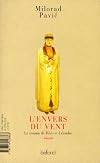
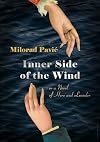
The Inner Side of the Wind, or The Novel of Hero and Leander
by Milorad Pavić
On This Page
Description
"Milorad Pavic, the brilliantly innovative author whose first novel, the phenomenal Dictionary of the Khazars, inspired readers to look at literature in a new and unique way, and whose second, Landscape Painted with Tea, virtually created a new set of directions by which to interpret fiction, now gives us The Inner Side of the Wind, a magically entertaining love story that spans two centuries." "In his most personal and intimate work to date, Pavic parallels the myth of Hero and Leander, show more telling of two lovers in Belgrade, one from the turn of the eighteenth century and the other from early in the twentieth, who reach out to each other from across the gulf of time. So that the reader is afforded the opportunity to read the novel from either lover's point of view, it is approachable from either the front cover (Hero's story) or the back (Leander's). In this way, the lovers' paths converge both figuratively and physically, ultimately joining at the center of the book, no matter whose story one has chosen to explore first." "In the playfully inventive manner in which it suggests new ways for language to shape human thought, The Inner Side of the Wind is everything we have come to expect from this remarkable writer: pure Pavic!"--BOOK JACKET.Title Summary field provided by Blackwell North America, Inc. All Rights Reserved show lessTags
Recommendations




























Member Reviews
I'm not sure I'm smart enough to read this. Then again I'm not sure anyone is, maybe not even the author. I'll say what others may not: this is language for the sake of language, language as paint, not as narrative. Everything is metaphor and everything is descriptive of something else. Or is it? We may never be sure.
Even after I read the story, or rather: both of them, I had to go back to the cover to find out what I had just read. Supposedly we read a story about to lovers who can get in each other's orbit but can never get close without destroying each other. You can read the story from her perspective or from his, depending on which end you start and which way you hold the book.
Maybe this book is an experiment in prose poetry and I show more would be ok with that. Having said that there are enough sharp logical observations to blow that argument out of the water. Then again, to me it reads best as if reading poetry.
If you like to read a text for its impressions and allusions, then this is the perfect book for you. If you want a narrative with a plot and clearly delineated characters and story, then it isn't. show less
Even after I read the story, or rather: both of them, I had to go back to the cover to find out what I had just read. Supposedly we read a story about to lovers who can get in each other's orbit but can never get close without destroying each other. You can read the story from her perspective or from his, depending on which end you start and which way you hold the book.
Maybe this book is an experiment in prose poetry and I show more would be ok with that. Having said that there are enough sharp logical observations to blow that argument out of the water. Then again, to me it reads best as if reading poetry.
If you like to read a text for its impressions and allusions, then this is the perfect book for you. If you want a narrative with a plot and clearly delineated characters and story, then it isn't. show less
From: A Slavic Love Story: Hero and Leander Retold
http://wp.me/p14mpp-bR
The Inner Side of the Wind, or The Novel of Hero and Leander,
Milorad Pavic, Christina Pribicevic-Zoric (Translator) (1993).
The myth of Hero and Leander, the ill-fated lovers divided by the sea, was already well known in the time of the Roman poet Ovid, who wrote about them in Heroides (Heroines). In 1993, this love story was told again in prose by the Slavic author Milorad Pavic. His novel, set in modern Serbia, tells of two lovers separated by "the waves of time": Leander lived at the turn of the eighteenth century and Hero lived in the twentieth century.
As published, Pavic's novel can be opened and read front-to-back or back-to-front: the reader has the show more choice—read Leander’s story first or turn the book over and read Hero’s story first. Each story ends in the middle of the book where Hero and Leander meet for the first time. This is unusual, to say the least; you have to see it to believe it.
I read Leander’s story first. The story opens as young Leander is leaving home: “All futures have one great virtue: they never look the way you imagine them,” said the father to Leander.
Leander learns to read and becomes a builder. His fate is to build churches that are destroyed by the invading Turks.
Turning the book over, the reader meets chemistry student Heronea Bukur who lives in Belgrade. Heronea takes a part-time job as a French tutor. Her student, a young boy, is reading a French version of the Hero and Leander.
The boy confuses Heronea, his teacher, with Hero. Heronea/Hero must leave her job when she develops a language block and forgets the present and past tenses completely—she can no longer conjugate verbs. Eventually, Heronea joins a theater group presenting a play of Hero and Leander by a famous (but fictitious) Slavic grammarian.
Oddly enough, this strange version of the old love story captured my fancy—I enjoyed reading, but when I had read to the middle of the book for the second time I was at a total loss. What was I to deduce from the blank page separating Hero from Leander? Oh well, there is much that I don’t understand about that region of the world.
My congratulations to translator Pribicevic-Zoric who must have found her work challenging. I recommend this book to those readers who enjoy a charming story spun with a good number of absurd situations and no really satisfactory ending.
Carto
### show less
http://wp.me/p14mpp-bR
The Inner Side of the Wind, or The Novel of Hero and Leander,
Milorad Pavic, Christina Pribicevic-Zoric (Translator) (1993).
The myth of Hero and Leander, the ill-fated lovers divided by the sea, was already well known in the time of the Roman poet Ovid, who wrote about them in Heroides (Heroines). In 1993, this love story was told again in prose by the Slavic author Milorad Pavic. His novel, set in modern Serbia, tells of two lovers separated by "the waves of time": Leander lived at the turn of the eighteenth century and Hero lived in the twentieth century.
As published, Pavic's novel can be opened and read front-to-back or back-to-front: the reader has the show more choice—read Leander’s story first or turn the book over and read Hero’s story first. Each story ends in the middle of the book where Hero and Leander meet for the first time. This is unusual, to say the least; you have to see it to believe it.
I read Leander’s story first. The story opens as young Leander is leaving home: “All futures have one great virtue: they never look the way you imagine them,” said the father to Leander.
Leander learns to read and becomes a builder. His fate is to build churches that are destroyed by the invading Turks.
Turning the book over, the reader meets chemistry student Heronea Bukur who lives in Belgrade. Heronea takes a part-time job as a French tutor. Her student, a young boy, is reading a French version of the Hero and Leander.
The boy confuses Heronea, his teacher, with Hero. Heronea/Hero must leave her job when she develops a language block and forgets the present and past tenses completely—she can no longer conjugate verbs. Eventually, Heronea joins a theater group presenting a play of Hero and Leander by a famous (but fictitious) Slavic grammarian.
Oddly enough, this strange version of the old love story captured my fancy—I enjoyed reading, but when I had read to the middle of the book for the second time I was at a total loss. What was I to deduce from the blank page separating Hero from Leander? Oh well, there is much that I don’t understand about that region of the world.
My congratulations to translator Pribicevic-Zoric who must have found her work challenging. I recommend this book to those readers who enjoy a charming story spun with a good number of absurd situations and no really satisfactory ending.
Carto
### show less
Ratings
Members
- Recently Added By
Lists

Significant works of postmodern fiction
86 works; 25 members

Books as Objects & Metatextual Works
32 works; 3 members

Gimmicks
56 works; 12 members
Author Information

71+ Works 3,560 Members
Milorad Pavic was born in Belgrade on October 15, 1929. After receiving a doctorate from the University of Zagreb, he taught philosophy at the University of Novi Sad followed by the University of Belgrade. During his lifetime, he wrote several novels including Dictionary of the Khazars, Landscape Painted with Tea, The Inner Side of the Wind, and show more Last Love in Constantinople. He also wrote short stories, nonfiction and poetry. He died due to complications of a heart attack on November 30, 2009 at the age of 80. (Bowker Author Biography) show less
Some Editions
Awards and Honors
Awards
Series
Belongs to Publisher Series
Common Knowledge
- Canonical title
- The Inner Side of the Wind, or The Novel of Hero and Leander
- Original title
- Unutrasnja strana vetra ili roman o Heri i Leandru
- Original publication date
- 1991 (original Serbian) (original Serbian); 1993 (English translation) (English translation)
- Important places
- Serbia
Classifications
- Genres
- Fiction and Literature, General Fiction, Fantasy, Romance
- DDC/MDS
- 891.8235 — Literature & rhetoric Literatures of other languages East Indo-European and Celtic literatures West and South Slavic languages (Bulgarian, Slovene, Polish, Czech, Slovak, Serbo-Croatian, and Macedonian) Serbo-Croatian Fiction 1900–1991
- LCC
- PG1419.26 .A78 .U5713 — Language and Literature Slavic languages and literatures. Baltic languages. Albanian language Slavic. Baltic. Albanian Serbo-Croatian
Statistics
- Members
- 197
- Popularity
- 166,066
- Reviews
- 2
- Rating
- (3.92)
- Languages
- 12 — Czech, English, Estonian, French, Italian, Japanese, Lithuanian, Romanian, Russian, Serbian, Spanish, Swedish
- Media
- Paper, Ebook
- ISBNs
- 20
- ASINs
- 2