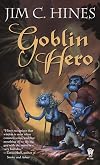
GOBLIN HERO returns to the story of Jig, the runty goblin who got kidnapped by adventurers, killed a Necromancer, defeated a dragon and returned to tell about it. While Jig is useful to his fellow goblins for his healing ability, he's viewed as a threat by the goblin chief. So when an ogre shows up looking for Jig the Dragonslayer to battle a new threat to their mountain home Jig has two choices: go and face somewhat certain death, or stay and face much more certain death at the hands of his deceitful fellows. Going and getting killed will at least free him from having to watch his back, so off Jig goes.
GOBLIN HERO is an enjoyable follow up to GOBLIN QUEST. Hines has managed to create a world and characters that keep the reader guessing. Instead of heroes-with-a-capital-H his characters are just trying to stay alive and (with one exception) have no delusions of grandeur. This is a world where one could as easily be stabbed by one's companions as by the enemy (and friendly-stabbing happens more than once in the novel).
The book takes a lot of stabs at heroism-with-a-capital-H, adventurers in general, notions of fair play, and who someone is and who someone pretends to be. At one point a hobgoblin who has no compunction eating another hobgoblin, goblin or ogre (cannibalism isn't really a matter of ethics in this world as one of survival) complains about adventurers bringing their pets into the mountain only to be killed leaving their pets to fend for themselves.
The real show more strength of the book, however, is the gradual revealing of each character as more than just your typical fantasy monster. From the amorphous concept of goblin Hines pulls out individuals. They are cowardly and sneaky and backstabbing, to be sure, but they also have interests that involve more than just self-preservation. Over the course of the book the characters grow from roughly sketched stereotypes into finely drawn personalities. And it all takes place through the characters eyes, as they come to realize there's more to each other than meets the eye. It's a delightful realization. show less
GOBLIN HERO is an enjoyable follow up to GOBLIN QUEST. Hines has managed to create a world and characters that keep the reader guessing. Instead of heroes-with-a-capital-H his characters are just trying to stay alive and (with one exception) have no delusions of grandeur. This is a world where one could as easily be stabbed by one's companions as by the enemy (and friendly-stabbing happens more than once in the novel).
The book takes a lot of stabs at heroism-with-a-capital-H, adventurers in general, notions of fair play, and who someone is and who someone pretends to be. At one point a hobgoblin who has no compunction eating another hobgoblin, goblin or ogre (cannibalism isn't really a matter of ethics in this world as one of survival) complains about adventurers bringing their pets into the mountain only to be killed leaving their pets to fend for themselves.
The real show more strength of the book, however, is the gradual revealing of each character as more than just your typical fantasy monster. From the amorphous concept of goblin Hines pulls out individuals. They are cowardly and sneaky and backstabbing, to be sure, but they also have interests that involve more than just self-preservation. Over the course of the book the characters grow from roughly sketched stereotypes into finely drawn personalities. And it all takes place through the characters eyes, as they come to realize there's more to each other than meets the eye. It's a delightful realization. show less
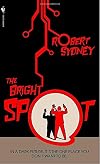
The Bright Spot is a well written book of noirish science fiction even though neither the story or the characters ever really engaged me. The hero, Nick, is just smart enough, and the situation just plotted enough to keep one reading along (as long as one doesn't look too hard at logistics of 'ware, the main plot device). It's the ending that's a letdown, a little too easy, a little too neatly wrapped up. The rest of the book could have been forgiven if Nick had been made to make the really tough decision at the end rather than being given an easy out by the author. It's a quick Saturday read, but not a story that will stick with one beyond the last page.
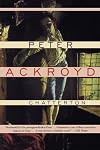
Honestly I don't know why I was so interested in getting a hold of this book. I had it on my want list for a year or more before I came across a copy. I think it was the story of Thomas Chatterton that intrigued me. I was left cold by the book. Stylistically and thematically the story was fine. I got a bit bored of everyone turning out to be forgers. After all a two-by-four will do just as well as a four-by-four to make one's point and the reader is still conscious to appreciate it.
But I was turned off of the book at page 72 with the mention of "Valley Forge University, Wyoming." After that the book really never stood a chance. This goes right along with Al Franken setting the University of Wyoming in Cheyene at the end of Why Not Me?. I realize this is a petty reason to dislike a book. I realize that I'm probably the only person in the world who gets annoyed by the mistakes made with the least populated state's reality. Even so it gets me right in the gizzard and festers there along with my ill will towards people who toss garbage out of their cars or clutter the 10 Items or Less lines with their Way More Than Thirty Items. In other books Franken acknowledges using research assistants. Would it have killed the guy to take a moment to see where the University of Wyoming is actually located instead of just looking up the state capital and calling it a day? And while I'll admit that one can take any liberties one wants with fictional universities, to name a university in show more Wyoming for a place over 1,700 miles away in Pennsylvania is less cheek and more presumption.
There may be people out there who get worked up over similiar trifles. Chatterton has received lots of praise so I doubt Mr. Ackroyd would lose any sleep over my miff, even if he knew about it. show less
But I was turned off of the book at page 72 with the mention of "Valley Forge University, Wyoming." After that the book really never stood a chance. This goes right along with Al Franken setting the University of Wyoming in Cheyene at the end of Why Not Me?. I realize this is a petty reason to dislike a book. I realize that I'm probably the only person in the world who gets annoyed by the mistakes made with the least populated state's reality. Even so it gets me right in the gizzard and festers there along with my ill will towards people who toss garbage out of their cars or clutter the 10 Items or Less lines with their Way More Than Thirty Items. In other books Franken acknowledges using research assistants. Would it have killed the guy to take a moment to see where the University of Wyoming is actually located instead of just looking up the state capital and calling it a day? And while I'll admit that one can take any liberties one wants with fictional universities, to name a university in show more Wyoming for a place over 1,700 miles away in Pennsylvania is less cheek and more presumption.
There may be people out there who get worked up over similiar trifles. Chatterton has received lots of praise so I doubt Mr. Ackroyd would lose any sleep over my miff, even if he knew about it. show less

Unlace that corset before reading this book! The beauty of De Laclos's writing is his ability to create a unique "voice" for each character through the letters they write. The machinations and plotting, the duel between Valmont and Merteuil, the corruption of innocence all adds up for a naughty, yummy read.

It's amazing this book came out in 1989 and to see that many of the concerns and enthusiasms on both sides of the ebook debate are still going strong, years later. In Cyberbooks the rejection and objection to the ebook concept comes not from the authors but the marketing department and distributors. The question copyright and IP control don't even enter the question. The book may have been meant as a commentary on the publishing business circa the 1980s and so it suffers from jokes falling flat and a whiff of "quaintness" that often dogs older science fiction.
Courtney Crumrin, Vol. 3: Courtney Crumrin In The Twilight Kingdom (Courtney Crumrin (Graphic Novels)) by Ted Naifeh
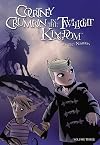
I got turned on to Courtney Crumrin a couple of years ago by a friend. The stories, artwork, characters, everything is engaging. Courtney struggles not only with supernatural forces, but her own hormones and changing view of the world. There is very little angst in Courtney's world, just a resignation to the fact that somebody has to get the job done and that somebody is Courtney. This is definitely a series I'll be sharing with my daughter when she's older.
Courtney Crumrin, Vol. 2: Courtney Crumrin & The Coven of Mystics (Courtney Crumrin (Graphic Novels)) by Ted Naifeh
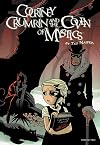
I got turned on to Courtney Crumrin a couple of years ago by a friend. The stories, artwork, characters, everything is engaging. Courtney struggles not only with supernatural forces, but her own hormones and changing view of the world. There is very little angst in Courtney's world, just a resignation to the fact that somebody has to get the job done and that somebody is Courtney. This is definitely a series I'll be sharing with my daughter when she's older.
Courtney Crumrin, Vol. 1: Courtney Crumrin & The Night Things (Courtney Crumrin (Graphic Novels)) by Ted Naifeh
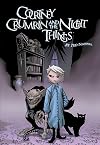
I got turned on to Courtney Crumrin a couple of years ago by a friend. The stories, artwork, characters, everything is engaging. Courtney struggles not only with supernatural forces, but her own hormones and changing view of the world. There is very little angst in Courtney's world, just a resignation to the fact that somebody has to get the job done and that somebody is Courtney. This is definitely a series I'll be sharing with my daughter when she's older.
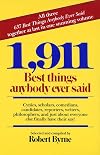
This book provides an irreverent balance to more serious quotation books. The best part is the index and the occassional "dialogs" between quotees.
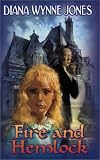
I read this book years ago in middle school and loved it. The shifting of memory and the mix of fantasy with reality really struck a chord with me.
Most of the suggestions in this book won't work today but it's still useful for story research.
As with Scarlett, The Wind Done Gone, is a derivative work of Gone With the Wind. It's a predictable book and doesn't go as far as it could, but it's a good example of why the current copyright system is broken.
This story could have been so much better if the plot didn't rely so heavily on coincidence and contrivance to keep going.

This is the first work of Clive Barker's I ever read and inspired a life-long literary crush. It was one of those books I checked out constantly as a teenager. Years later when I got my hands of a copy of my own I reread the stories. For the most part they had held up over the intervening years. It's still one of my favorite horror collections.
A reprint of a 19th century book, this provides a lot more were-lore than one finds in later werewolf compendiums.
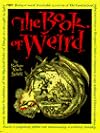
Another book I read as a child. I checked it out from the library and spent many afternoons pouring over the alphabetical entries, making up stories in my mind that used all the elements listed in the book. The binding was in poor condition when I checked it out and the library discarded it upon return. It took more than a decade for me to track down another copy of the book. This is one of those reference books useful to any fantasy writer.
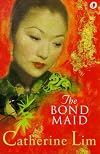
What could be an interesting story suffers from poor writing and a confusing ending. The characters lack any real depth, and the main character works more as a fairy tale heroine/victim than an engaging protagonist. The sotry is saved from a one-star rating by the tidbits of Singapore folk and ghostlore.

A readable history of Scotland Yard. There's enough accounts of horrific crimes to balance out the more mundane details of accommodations and technological advances.
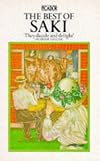
Ah...Saki...whenever I need a dose of irony or animal protagonists in small doses I turn to Saki. The Storyteller is a must read for anyone who writes (or tells) children's stories.
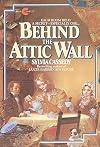
This is another book I read as a child that I loved. I still relate to Maggie, her awkwardness around others, her tendency to prefer fantasy over the disappointment that is her every day life, her love of solitaire.

This is the first Robin Mckinley book I ever read and it is still my favorite. It's also one of the first books I bought for myself. It is a take on the Beauty and the Beast fairy tale that adds depth to not only the main characters but the secondary as well.

I love, love, love Kate Chopin! I'm not overly fond of the character-driven plot, but I've always found her characters engaging. It helps that she writes in a time period that I'm interested in as well.
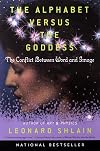
A challenging book, with some convincing conclusions. I found the sections dealing with the brain and language development the most interesting.
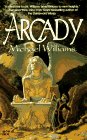
The story itself didn't really impress me, but I liked the concept of a story centered around a family: the crumbling manor home, the extended family of siblings, cousins, parents and grandparents, the landscape so familiar from childhood being consumed by a moving menace of chaotic magic. That aspect really inspired me.

The illustrations are gorgeous and the descriptions clever. The frame story is the weakest part of the book, with two dimensional characters and cliched motivations.