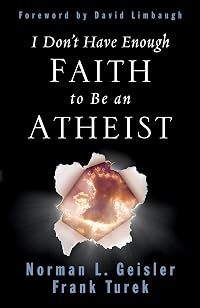
I Don't Have Enough Faith to Be an Atheist
by Norman L. Geisler, Frank Turek
On This Page
Description
To some, the concept of having faith in a higher power or a set of religious beliefs is nonsensical. Indeed, many view religion in general, and Christianity in particular, as unfounded and unreasonable. Norman Geisler and Frank Turek argue, however, that Christianity is not only more reasonable than all other belief systems, but is indeed more rational than unbelief itself. With conviction and clear thinking, Geisler and Turek guide readers through some of the traditional, tested arguments show more for the existence of a creator God. They move into an examination of the source of morality and the reliability of the New Testament accounts concerning Jesus. The final section of the book deals with a detailed investigation of the claims of Christ. This volume will be an interesting read for those skeptical about Christianity, as well as a helpful resource for Christians seeking to articulate a more sophisticated defense of their faith. show lessTags
Recommendations
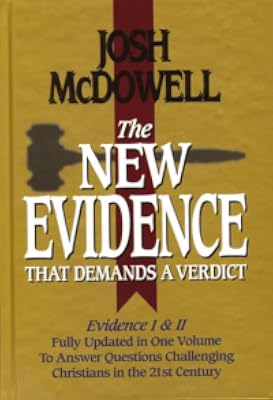
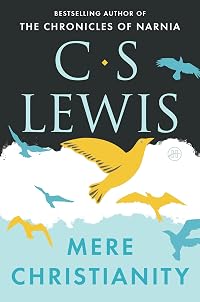
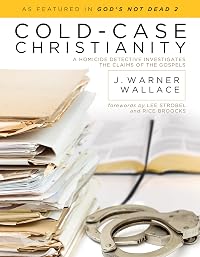
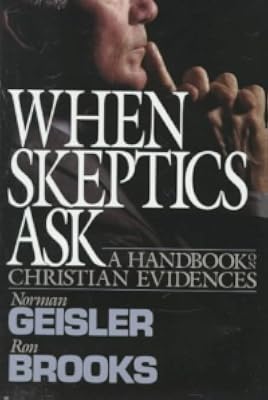
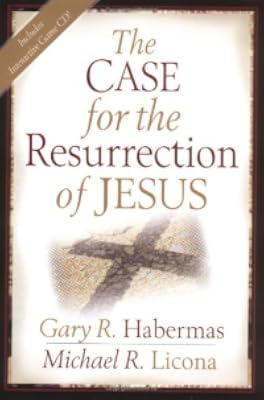
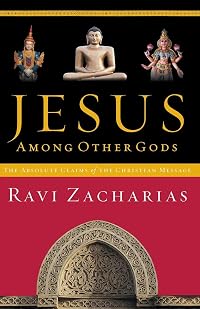
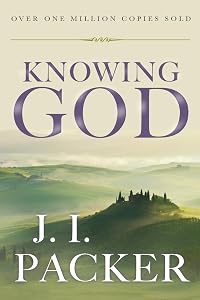
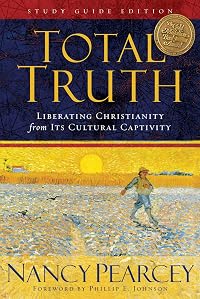
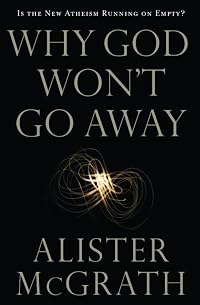
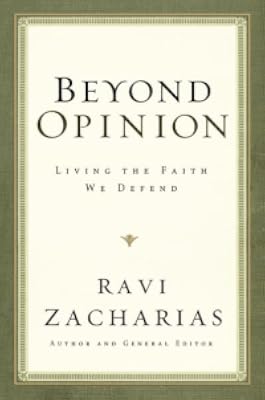
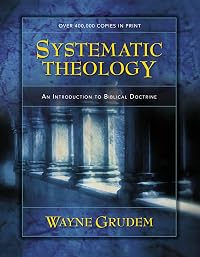

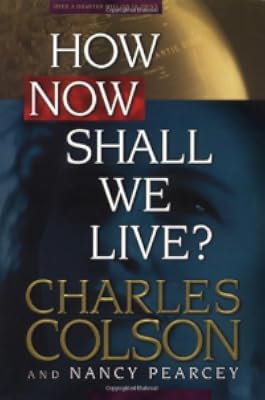
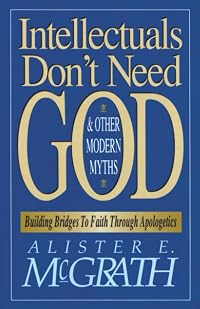

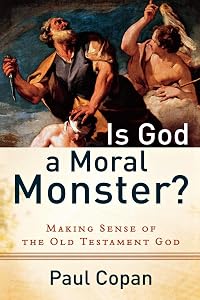
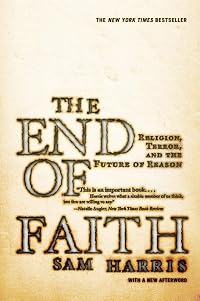



Member Recommendations

sundancer Both books contain facts and information from science, nature, space, plants, animals, dna, etc that provide evidence for a Creator.
Member Reviews
I enjoyed this one a lot. The authors’ argument for the existence of God can basically be condensed to two parts:
1. Logic dictates that we live in a theistic universe—we are created and watched over by an all-powerful being who lives outside of space and time.
2. The Bible serves as convincing evidence that this being is the God of Christianity.
I hardly agreed with all of the building blocks in the argument, yet I found this to be maybe the best apologetics book I’ve read. The presentation is very organized and steps logically from point to point. It’s clear the authors have had a great deal of experience in debate, and this book has become somewhat of a flagship for amateur apologists. While the title lends itself to easy show more derision by opponents, it’s a lot better argued than I anticipated.
There is a drawback to building argument upon argument, of course: If perchance you have a weak foundation, the whole shebang comes tumbling down. For example, the authors’ proof for reliable eyewitness testimony depends strongly upon traditional conservative authorship of the Bible; this depends strongly upon early dating of the synoptic gospels; early dating of these gospels depends strongly upon dating the book of acts to the 7th decade (since Luke precedes Acts, and Mark precedes Luke); and early dating of Acts depends upon the assumption that, had it been written later, the author surely would have discussed the death of Paul and the destruction of the Temple. Thus, a great deal rides on an argument from silence.
The arguments are engaging and thought-provoking, though not without flaws, and will in many instances require research and hard analysis to see the flaws. Thus, it was a lot of fun to read and took me quite a while. Some arguments are subjective in nature, and some are (hooray!) objective fact. In particular, I devoured two long lists in the book: one of 84 verifiable historical references in the book of Acts, and one of 59 attestations to the historical authenticity of John.
The result is a five-star review for interesting writing and for making me think, even when I disagree. Consider this the official end of the book review—what follows are a few examples where critical thinking prevents my full agreement with the authors. :)
* The book argues for the existence of a God-given Moral Law, written on the hearts of all people. I’ve never grasped how this argument could support Christianity. Consider the extreme disagreement between Christians today over whether or not gays should be allowed to share in a loving relationship. Or the disagreement not long ago over whether slavery was moral. If such a moral law exists, Christianity may be the religion having the hardest time figuring out what it is.
* The book argues that the New Testament was written before 70 A.D. because it makes no point of telling the story of the destruction of Jerusalem. This is not quite true; the Gospels do mention how the Christians fled Jerusalem in the war, though they do so from a pre-war perspective. But why do no other Bible books mention so earth-shattering an event? Probably because it WAS so earth-shattering! Remember, these authors were not writing to preserve history; they were writing to share the message of a new beginning with their comrades. What Christian in the first century, having lived through the war, needs a reminder that the old world had passed away, and a new world begun?
* The book repeatedly insists that there is no evidence whatsoever for macroevolution. But it doesn’t matter how often you repeat this mantra, it is a lie. There exists plenty of evidence for macroevolution, and though there are a limited number of fossil records, the number we have is quite consistent with current theories of how species evolved. I’ve written about this many times, so I won’t repeat myself here, except to say I can’t figure out why so many Christian apologists are hung up on evolution. show less
1. Logic dictates that we live in a theistic universe—we are created and watched over by an all-powerful being who lives outside of space and time.
2. The Bible serves as convincing evidence that this being is the God of Christianity.
I hardly agreed with all of the building blocks in the argument, yet I found this to be maybe the best apologetics book I’ve read. The presentation is very organized and steps logically from point to point. It’s clear the authors have had a great deal of experience in debate, and this book has become somewhat of a flagship for amateur apologists. While the title lends itself to easy show more derision by opponents, it’s a lot better argued than I anticipated.
There is a drawback to building argument upon argument, of course: If perchance you have a weak foundation, the whole shebang comes tumbling down. For example, the authors’ proof for reliable eyewitness testimony depends strongly upon traditional conservative authorship of the Bible; this depends strongly upon early dating of the synoptic gospels; early dating of these gospels depends strongly upon dating the book of acts to the 7th decade (since Luke precedes Acts, and Mark precedes Luke); and early dating of Acts depends upon the assumption that, had it been written later, the author surely would have discussed the death of Paul and the destruction of the Temple. Thus, a great deal rides on an argument from silence.
The arguments are engaging and thought-provoking, though not without flaws, and will in many instances require research and hard analysis to see the flaws. Thus, it was a lot of fun to read and took me quite a while. Some arguments are subjective in nature, and some are (hooray!) objective fact. In particular, I devoured two long lists in the book: one of 84 verifiable historical references in the book of Acts, and one of 59 attestations to the historical authenticity of John.
The result is a five-star review for interesting writing and for making me think, even when I disagree. Consider this the official end of the book review—what follows are a few examples where critical thinking prevents my full agreement with the authors. :)
* The book argues for the existence of a God-given Moral Law, written on the hearts of all people. I’ve never grasped how this argument could support Christianity. Consider the extreme disagreement between Christians today over whether or not gays should be allowed to share in a loving relationship. Or the disagreement not long ago over whether slavery was moral. If such a moral law exists, Christianity may be the religion having the hardest time figuring out what it is.
* The book argues that the New Testament was written before 70 A.D. because it makes no point of telling the story of the destruction of Jerusalem. This is not quite true; the Gospels do mention how the Christians fled Jerusalem in the war, though they do so from a pre-war perspective. But why do no other Bible books mention so earth-shattering an event? Probably because it WAS so earth-shattering! Remember, these authors were not writing to preserve history; they were writing to share the message of a new beginning with their comrades. What Christian in the first century, having lived through the war, needs a reminder that the old world had passed away, and a new world begun?
* The book repeatedly insists that there is no evidence whatsoever for macroevolution. But it doesn’t matter how often you repeat this mantra, it is a lie. There exists plenty of evidence for macroevolution, and though there are a limited number of fossil records, the number we have is quite consistent with current theories of how species evolved. I’ve written about this many times, so I won’t repeat myself here, except to say I can’t figure out why so many Christian apologists are hung up on evolution. show less
I was looking for a book to introduce an apologetics group at my church to many of the arguments for the Christian world view. There are so many great books that focus on each of these arguments individually, but I wanted to use something that hit most of the marks on a precursory level and this book does that quite well.
Drs Geisler and Turek lay out the sections of the book in a very logical way. Starting with objective truth, the cosmological argument, intelligent design, the moral argument and moving through the reliability of the Bible, the Resurrection and to Jesus being God and Man.
None of the stuff they bring about is new. But this is the first book that I've read that was able to get most of the basics into one volume. And it's show more written in a very readable and accessible style so you don't feel like you're reading a college text book when you get into the deep stuff. Their methodology is to show the preponderance of evidence for the various arguments and the truths that you have to deny in order to maintain an atheistic world view. How it takes more "blind faith" to be an atheist than it does to be a Christian because Christians have more evidence for their views.
I highly recommend this book to anyone who is honestly seeking answers and to anyone who is seeking to better equip themselves to give a defense for the hope they have within show less
Drs Geisler and Turek lay out the sections of the book in a very logical way. Starting with objective truth, the cosmological argument, intelligent design, the moral argument and moving through the reliability of the Bible, the Resurrection and to Jesus being God and Man.
None of the stuff they bring about is new. But this is the first book that I've read that was able to get most of the basics into one volume. And it's show more written in a very readable and accessible style so you don't feel like you're reading a college text book when you get into the deep stuff. Their methodology is to show the preponderance of evidence for the various arguments and the truths that you have to deny in order to maintain an atheistic world view. How it takes more "blind faith" to be an atheist than it does to be a Christian because Christians have more evidence for their views.
I highly recommend this book to anyone who is honestly seeking answers and to anyone who is seeking to better equip themselves to give a defense for the hope they have within show less
Lots of depth and reason. I enjoyed the extent of their arguments and research. I did find some of the material redundant from chapter to chapter but overall this is worth reading.
This book absolutely changed my life forever. I spent my college years struggling with the Christian faith that I had grown up with and wondering what concrete reasons there were that I should continue to believe it, but not actually doing anything to find the answers. I guess the right time came for me, and after reading this and a couple of other apologetic works, I now know exactly why it makes sense to believe, which as a pretty logical person, is exactly what I needed. I would recommend this book to anybody, especially people who are jaded by the whole "organized religion" thing like I was. The problem isn't the religion, it's the crazy things some people do because of it.
Wow! There's a lot to chew on in this book. It offers logical steps on a faith journey - even if that seems oxymoronic. From Einstein to Jesus, it's a remarkable read.
Excellent apologetic book. Very logical and scriptural. Makes good arguments for the existence of the LORD God. Makes good arguments for the truthfulness and inerrancy of Scripture. Weakness is in a strong portrayal of the "free will" of man in opposition to the sovereignty of God particularly in salvation.
Excellent resource for defending one's Christian faith. Well-written and arranged.
Members
- Recently Added By
Lists

Develop Your Personal Christian Library
101 works; 15 members

Top Five Books of 2022
736 works; 272 members

Books Read in 2022
5,226 works; 112 members

Books With Complete Sentence Titles
502 works; 17 members
Author Information

166+ Works 19,705 Members
Norman Geisler was born on July 21, 1932, in Warren, Mich. He is the author of Christian texts that promote the Bible and morality and serve to provide sound advice and reasoning for the Christian faith. A fervent believer in the inerrancy of the Bible, his books When Skeptics Ask and When Critics Ask provide answers to those who question show more discrepancies in the Bible or challenge its authority. In Legislating Morality, he discusses why laws should be passed and enforced to create a moral, Christian society. Geisler is a frequent speaker and debater, providing learned answers about religion and society. He was educated at Wheaton College, the Detroit Bible College, and Loyola University. He is currently the Dean of the Southern Evangelical Seminary in Charlotte, North Carolina. (Bowker Author Biography) show less

12 Works 2,246 Members
Frank Turek is the president of CrossExamined.org and the coauthor of I Don't Have Enough Faith to Be an Atheist.
Some Editions
Work Relationships
Has the adaptation
Has as a supplement
Common Knowledge
- Canonical title
- I Don't Have Enough Faith to Be an Atheist
- Original publication date
- 2004
Classifications
Statistics
- Members
- 1,772
- Popularity
- 12,409
- Reviews
- 13
- Rating
- (4.02)
- Languages
- Dutch, English, Portuguese
- Media
- Paper, Audiobook, Ebook
- ISBNs
- 24
- UPCs
- 1
- ASINs
- 10