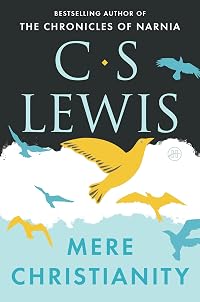
Mere Christianity
by C. S. Lewis
On This Page
Description
Mere Christianity is C. S. Lewis' forceful and accessible doctrine on Christian belief. First heard as informal radio broadcasts and then published as three separate books-The Case for Christianity, Christian Behavior, and Beyond Personality-Mere Christianity brings together what Lewis sees as the fundamental truths of his religion. Rejecting the boundaries that divide Christianity's many denominations, C. S. Lewis finds a common ground on which all those who have Christian faith can stand show more together, proving that "at the center of each there is something, or a Someone, who against all divergences of belief, all differences of temperament, all memories of mutual persecution, speaks with the same voice." show lessTags
Recommendations

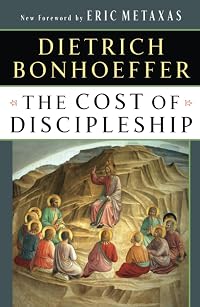
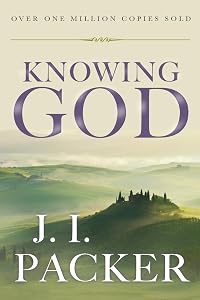
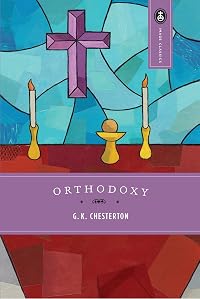
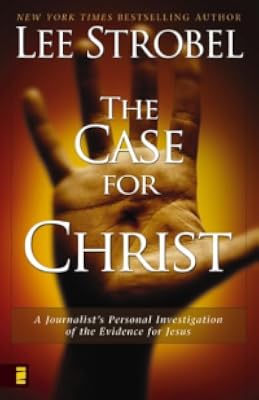
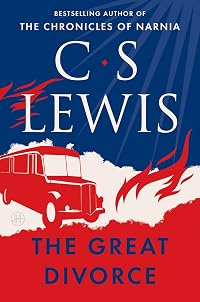



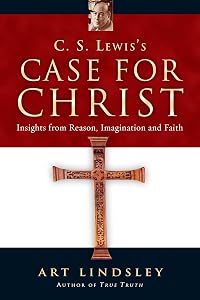
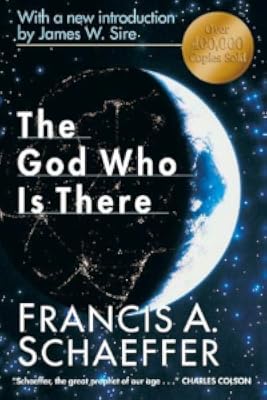
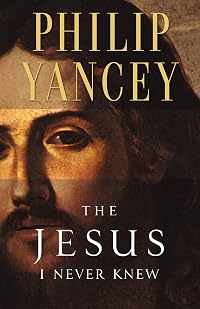
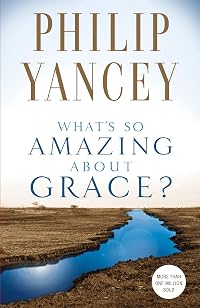



Member Recommendations
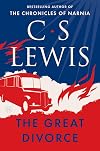
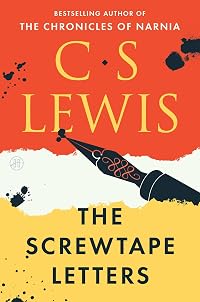
timspalding People often recommend you read The Screwtape Letters before or after Mere Christianity. The Great Divorce is better.
90


Member Reviews
"If we did all that Plato or Aristotle or Confucius told us, we should get on a great deal better than we do. And so what? We never have followed the advice of the great teachers. Why are we likely to begin now? Why are we more likely to follow Christ than any of the others? Because He is the best moral teacher? But that makes it even less likely that we shall follow Him."
A slow starter that once it gets properly going, it really unfolds its wings.
Lewis, as a layman, does a very honourable and thorough job at conveying Christian ideas. I particularly like the lack of shallow evangelism. What I mean by that is that it's not constantly talking about Jesus, and if you just love Jesus everything will be allright. That is a huge gripe I have show more nowadays where it's just Jesus me that, Jesus me this. It's too formulaic, and it absolutely neglects and foregoes the deeper and challenging aspects of faith. Lewis actually wrestles with some of these aspects of belief and makes analogies to break them down for the reader. And he does these things better than most believers and maybe even pastors of today, in my opinion.
"Mere Christianity" actually starts of rather slow, and almost goes around in circles which had me worried, even though I liked the initial subject. The book is divided into four "books" with chapters attached, and it was the second half of the book I loved the most when topics such as marriage, sexuality, sin, virtue, forgiveness, etc. were put under the microscope. The way Lewis conceptualize God and the Holy Spirit were also very insightful to me. Some of the more hardcore theology didn't quite come across that well for me, and didn't always make sense. To be fair, there's a few times where Lewis actually just writes that if this next part does not make sense, skip it.
This is not a book that will convert you - no book will. At the end of the day, you have to be open to the subject, and not sit with crossed arms and a pouty face. Lewis actually used to be an atheist but converted to Christianity, although that journey is not covered in this book. He does state that the book is not a new doctrine, but hopes to bring the reader into a hall where you at some point may find a door of faith that suits you, which you can enter. Personally, I read this book from an agnostic point of view in the midst of a spiritual search. I didn't find a door that fit me yet, as I've gone outside to feel and ponder some more. But I definitely left the hall wiser thanks to this book.
"Pride gets no pleasure out of having something, only out of having more of it than the next man. We say that people are proud of being rich, or clever, or good-looking, but they are not. They are proud of being richer, or cleverer, or better-looking than others [...] It is the comparison that makes you proud: the pleasure of being above the rest. Once the element of competition has gone, pride has gone."
It is worth noting that in some aspects this book is a product of its time, and some of the author's viewpoints on society may not be akin to those of today. It happens a handful of times, but you shouldn't let that deter you from enjoying the book. Some people seem to use these instances as reasons to dismiss anything put forward by Lewis, however, you stand to gain nothing by bringing presentism into this, or anywhere else in life, really. If you're not able to separate the wheat from the chaff, that says more about you than the author.
"Mere Christianity" is one man's faith and how it made sense for him, and should be read as that. I was first introduced to this book on the YouTube channel CSLewisDoodle many years ago, where excerpts were paired with continuous drawings to illustrate the talking points. The talks were quite inspiring, and I am glad that I finally got around to reading the book itself.
It may very well help believers dig further into their faith. It won't do anything for the staunch atheist. And it may very well be illuminating for the seekers and the curious, and make you rub your chin and think. show less
A slow starter that once it gets properly going, it really unfolds its wings.
Lewis, as a layman, does a very honourable and thorough job at conveying Christian ideas. I particularly like the lack of shallow evangelism. What I mean by that is that it's not constantly talking about Jesus, and if you just love Jesus everything will be allright. That is a huge gripe I have show more nowadays where it's just Jesus me that, Jesus me this. It's too formulaic, and it absolutely neglects and foregoes the deeper and challenging aspects of faith. Lewis actually wrestles with some of these aspects of belief and makes analogies to break them down for the reader. And he does these things better than most believers and maybe even pastors of today, in my opinion.
"Mere Christianity" actually starts of rather slow, and almost goes around in circles which had me worried, even though I liked the initial subject. The book is divided into four "books" with chapters attached, and it was the second half of the book I loved the most when topics such as marriage, sexuality, sin, virtue, forgiveness, etc. were put under the microscope. The way Lewis conceptualize God and the Holy Spirit were also very insightful to me. Some of the more hardcore theology didn't quite come across that well for me, and didn't always make sense. To be fair, there's a few times where Lewis actually just writes that if this next part does not make sense, skip it.
This is not a book that will convert you - no book will. At the end of the day, you have to be open to the subject, and not sit with crossed arms and a pouty face. Lewis actually used to be an atheist but converted to Christianity, although that journey is not covered in this book. He does state that the book is not a new doctrine, but hopes to bring the reader into a hall where you at some point may find a door of faith that suits you, which you can enter. Personally, I read this book from an agnostic point of view in the midst of a spiritual search. I didn't find a door that fit me yet, as I've gone outside to feel and ponder some more. But I definitely left the hall wiser thanks to this book.
"Pride gets no pleasure out of having something, only out of having more of it than the next man. We say that people are proud of being rich, or clever, or good-looking, but they are not. They are proud of being richer, or cleverer, or better-looking than others [...] It is the comparison that makes you proud: the pleasure of being above the rest. Once the element of competition has gone, pride has gone."
It is worth noting that in some aspects this book is a product of its time, and some of the author's viewpoints on society may not be akin to those of today. It happens a handful of times, but you shouldn't let that deter you from enjoying the book. Some people seem to use these instances as reasons to dismiss anything put forward by Lewis, however, you stand to gain nothing by bringing presentism into this, or anywhere else in life, really. If you're not able to separate the wheat from the chaff, that says more about you than the author.
"Mere Christianity" is one man's faith and how it made sense for him, and should be read as that. I was first introduced to this book on the YouTube channel CSLewisDoodle many years ago, where excerpts were paired with continuous drawings to illustrate the talking points. The talks were quite inspiring, and I am glad that I finally got around to reading the book itself.
It may very well help believers dig further into their faith. It won't do anything for the staunch atheist. And it may very well be illuminating for the seekers and the curious, and make you rub your chin and think. show less
I think you'd have to be pretty malicious to deny the man's good intentions or to suggest there aren't any interesting ideas here. And yet, the thing is almost shockingly naive. He starts with some reasonable, if questionable, ideas about basic ethics and morality, but by the time he actually gets to discussing the "atonement" and the trinity, he ends up sounding like some backwoods redneck raised on gospel radio and Billy Graham. He often mentions that we should not think like children, and yet his ideas about God and Jesus are like Santa Claus and Superman. And his ideas about other religions reeks of Western superiority. Which, given everything that happened between the UK and India over the few decades before the book was written, show more is particularly crass. Gandhi, Besant, Krishnamurti--all of that was current. There was absolutely no reason to be so ignorant about Hinduism, Buddhism, or even Islam, if there ever was. The odd thing is that his Narnia books seem to contain so much more than these extremely narrow views. show less
I think you'd have to be pretty malicious to deny the man's good intentions or to suggest there aren't any interesting ideas here. And yet, the thing is almost shockingly naive. He starts with some reasonable, if questionable, ideas about basic ethics and morality, but by the time he actually gets to discussing the "atonement" and the trinity, he ends up sounding like some backwoods redneck raised on gospel radio and Billy Graham. He often mentions that we should not think like children, and yet his ideas about God and Jesus are like Santa Claus and Superman. And his ideas about other religions reeks of Western superiority. Which, given everything that happened between the UK and India over the few decades before the book was written, show more is particularly crass. Gandhi, Besant, Krishnamurti--all of that was current. There was absolutely no reason to be so ignorant about Hinduism, Buddhism, or even Islam, if there ever was. The odd thing is that his Narnia books seem to contain so much more than these extremely narrow views. show less
To begin with, I have to say outright that I admire C.S. Lewis. I enjoy his writing. I think his scholarly work was brilliant and I adore his fiction. I also think that his writings as a Christian apologist are in some ways the most difficult to place in his oeuvre, and it is these works that people, at least people I know, either tend to love or hate.
I enjoyed Mere Christianity. I had read it before. If you are expecting sophisticated theology, or an intellectual defense of Christianity, this is not the book for you. It does not have the rigor of his academic works and I do not believe this was ever Lewis' intention. The book remains popular because it is a clear explanation of "mere" Christianity, as I believe Lewis understood it as a show more "mere" man. It reads like a series of brief chats. In fact I think the book was conceived as a series of talks to be given on the radio and expanded from that. The talks are meant to be simple. They succeed because I think they address many issues experienced by real people who are Christians or are struggling with Christianity. I think if one is struggling with the meaning of life or with how to live a good life and is open to the emotional sides of life aside from just the intellectual, there are parts of this book that are bound to resonate. This is one of the reasons for its continued success. Theologically, Lewis may not always pull off his explanations, he might not even explain something in a way that has since become accepted, but I feel he carries this off as he explains it as the current state of his own evolving understanding.
That said, much that is said is dated, is written for a different time and world-view. This might be difficult for some people, although the fundamental principles remain the same several generations later. And as usual, Lewis makes me think, and reevaluate, both when I agree with him and when I don't. show less
I enjoyed Mere Christianity. I had read it before. If you are expecting sophisticated theology, or an intellectual defense of Christianity, this is not the book for you. It does not have the rigor of his academic works and I do not believe this was ever Lewis' intention. The book remains popular because it is a clear explanation of "mere" Christianity, as I believe Lewis understood it as a show more "mere" man. It reads like a series of brief chats. In fact I think the book was conceived as a series of talks to be given on the radio and expanded from that. The talks are meant to be simple. They succeed because I think they address many issues experienced by real people who are Christians or are struggling with Christianity. I think if one is struggling with the meaning of life or with how to live a good life and is open to the emotional sides of life aside from just the intellectual, there are parts of this book that are bound to resonate. This is one of the reasons for its continued success. Theologically, Lewis may not always pull off his explanations, he might not even explain something in a way that has since become accepted, but I feel he carries this off as he explains it as the current state of his own evolving understanding.
That said, much that is said is dated, is written for a different time and world-view. This might be difficult for some people, although the fundamental principles remain the same several generations later. And as usual, Lewis makes me think, and reevaluate, both when I agree with him and when I don't. show less
C.S. Lewis’s Mere Christianity is the undisputed people’s champion of Christian non-fiction. Dividing his little book sequentially into four parts—spanning apologetics, doctrine, morality, and theology, respectively—Lewis attempts to explicate the ecumenical core of Christianity while expressly disregarding denominational variations. As a non-believer, Mere Christianity occupies a special place in my life, as the book that is most often recommended to me by Christian acquaintances—yes, more often than the Bible, and wisely so, most likely. So this review represents not just an assessment of Lewis’s work, but also a repository of responses to many well-meaning, but ultimately misguided, would-be rescuers of my immortal show more soul.
I’m not going to discuss in detail, in what I say below, Lewis’s explication of Christian ethics, so I’ll very briefly address it here at the outset. Aside from some tangents in the directions of casual homophobia and paternalistic sexism, Lewis champions an ethics that I think could be approved of by most secular people as well as Christians. Oversimplifying horribly, much of it reduces to (1) the Golden Rule, and (2) the Idea that Pleasure points us in the Direction of the Good, but (3) Don’t Overdo It. There’s a lot in there about the necessity of faking it until you make it as a means of developing moral character, and about the hidden psychological rewards of being good to others, all of which is consistent with my experience. I’ve got no big complaints on this front, with the exception of the aforementioned bigotry.
Lewis begins (as does the substance of this review) with a long section dedicated to Christian apologetics, and his first priority is to wrangle some evidence that something corresponding to the word “God,” does, in fact, exist. I will not be able to do full justice to his argument in such a short space, but, in effect, he argues that the existence of conscience—that is, an innate awareness of the difference between right and wrong, universal in humans at all times and places—is powerful evidence for the existence of a universal moral law, the source of which law is the being we call God. Now, that’s not bad, as far as these things go, particularly considering that Lewis is writing prior to the emergence of sociobiology and the molecular revolution in genetics. But contemporary science appears to be up to the task of explaining human moral instincts without appealing to the supernatural. In fact, modular theories of mind have gone some way towards explaining the mental feature that seems to most throw Lewis for a loop, namely, that our pro-social instincts are so easily accessible to consciousness—that is, they are experienced as “conscience”—while our anti-social instincts seem to be relatively shrouded from our introspection, and are instead consciously experienced mostly as faults and mere weaknesses of the will. See Robert Kurzban, Why Everyone (Else) is a Hypocrite, and Robert Trivers, The Folly of Fools.
But anyway, this little argument based on the moral instincts (which, to his credit, Lewis never styles as a “proof” of the existence of God) probably represents Lewis at his best in Mere Christianity, if only because it is not obviously wrong in the way that almost all of what follows is. But—and Lewis acknowledges this—we have not yet reached the playing field of specifically Christian apologetics. It is obviously possible for a God to exist who is the source of human moral instincts, but who nevertheless bears no resemblance to the Christian God—e.g., such a being might not have incarnated, suffered and died for the atonement of human sins, and might indeed be comprised of greater or fewer than three divine Persons. But before embarking on a defense of Christian doctrines in particular, tradition requires that Lewis first place himself on the defensive by undertaking the burden of theodicy. Now, in a book like this one, finding a way to dismiss the problem of evil is basically boilerplate, and as such, Lewis isn’t bothering to throw any curves when he writes:
God created things which had free will. That means creatures which can go either wrong or right… Why, then, did God give them free will? Because free will, though it makes evil possible, is also the only thing that makes possible any love or joy or goodness worth having. A world of automata—of creatures that worked like machines—would hardly be worth creating. (pp. 47-48)
See? Textbook. Of course, I too would be violating the rules of genre if, in reviewing Lewis’s little book, I failed to take up the gauntlet for the other side. Here we go.
Imagine that you bring your young child to the playground, and, observing her from a nearby bench, you see her picking on her playmates, pushing them to the ground, and kicking sand in their faces. And now suppose that you don’t intervene to stop it. You are aware of the harm your child is causing, and you have the ability and the authority to put an end to it, but you elect, instead, to do nothing. Will I get any argument if I characterize your behavior as vile? Who would mount a moral defense of such negligence? If you begin to protest your innocence on the basis of your profound respect for your daughter’s free will, or your stern conviction that only un-coerced goodness is worth having, then perhaps, indeed, you are free of moral fault—upon reflection, we might find you to be merely deranged. But if, in this scenario, you put God in the place of the parent, the human race in the place of the children, and, in place of the bullying you substitute, inter alia, all of the thefts and rapes and murders that comprise the juicy bits of human history, here comes C.S. Lewis, with a horde of theologians, to inform us that, far from constituting a moral failing on his part, God’s failure to intervene, construed properly, illustrates just how supremely good he actually is, and indeed, the depth of his love for us! Ruminate on this a while, as I try to stop sputtering in rage.
The only way Lewis’s line of argument gets off the ground is if you are willing to jettison any moral meaning from the word “good.” When you make the claim that God is a supremely good being, you cannot mean that he is the supreme model of moral behavior—instead, you have to have in mind the tautology: God is whatever God is, and whatever that is, we call it “good.” And all you will have gained for the trouble you took to mangle the language of ethics beyond recognition is a degenerate solution to the problem of evil.
Moving on to Christian doctrine now, we come to what is, by acclaim—though not, it appears, by design—the centerpiece of Mere Christianity: Lewis’s celebrated trilemma, wherein we are advised that all options are foreclosed to us, except to recognize Jesus of Nazareth either (1) as a lunatic, (2) as a liar, or (3) as Lord. Having encountered this gambit before in conversation, I think I speak for many non-believers when I say that my reflexive response is to head my interlocutor off at the pass, by denying that those are the only options. But having now gone straight to the source, and having learned with some surprise how weak is Lewis’s subsequent line of reasoning on the subject, I think that an even more devastating critique can be made if we first allow him to lead us a little way down this rabbit hole. So, accepting for the sake of argument that Lewis’s trilemma is an accurate assessment of the logical position in which we find ourselves, what is the basis of his disqualification of its lunatic- and liar-horns? I’m glad you asked. Lewis can speak for himself:
Now it seems to me obvious that He was neither a lunatic nor a fiend: and consequently, however strange or terrifying or unlikely it may seem, I have to accept the view that He was and is God. (p. 53)
Seriously? That’s it? This, in all its glory, is the entire denouement of the most celebrated gambit in 20th century Christian apologetics? It seems to me obvious!?!? On inspection, it would appear that Lewis framed his argument as a trilemma in order to fool the unwary reader into thinking that he was going to be employing reason and logic to reach his preferred conclusion. For all the logic that he in fact employs, he might as well have tossed the trilemma-framing, and come straight out and said what he was really thinking: “It seems to me obvious that Jesus is God. Now stop asking me questions.” To respond to this dud as anything other than blithering idiocy, one has to make the charitable assumption that what Lewis means is that, having read the biblical accounts of the life of Jesus, he has determined that the person described therein could not have been a lunatic or a liar. But there are at least two reasons why it’s suspect to rely upon the gospels as giving fair and accurate accounts of the life of Jesus.
First, the gospels were very clearly written by the Jesus-as-Lord camp. Thus it’s no surprise that when you scrape them for evidence in favor of the Jesus-as-lunatic or Jesus-as-liar interpretations, you come up pretty short. But imagine, if you will, the hypothetical Gospel according to Pontius Pilate, which would probably provide some ammunition for Team Lunatic; or, better yet, the Gospel according to the Pharisees, which would almost certainly score some points for Team Liar. I’m not proposing that these hypothetical gospels would necessarily be any more historically accurate than the ones we’ve got—I’m simply pointing out that, if we had them, we’d all agree that they had to be read with care in order to excavate the nuggets of historical fact that they might contain, buried under their authors’ prejudices. We should, in short, consider the source, and conclude that the gospels are a biased jumping-off point if you’re trying to evaluate the respective prongs of Lewis’s trilemma. What’s more, Lewis could not have possibly been fool enough to have thought otherwise.
Secondly, allow me to pose a question: when you read Plutarch or Pliny, who were rough contemporaries of the gospel-writers, and whose works are rife with prophecies and omens in the first case, and miracles and monsters in the second, do you believe what you are reading, and to what extent? I think that most people are aware that when they read the “non-fiction” of the first century, they are reading a hybrid of fact and legend, and that it’s not always trivial to separate the two. At the very least, any purported fact encountered in one of these works has to pass the smell-test. We reject the magical, the miraculous, and the implausible elements of their accounts, or we try to make sense of them in non-magical, non-miraculous ways. But not just that—we also look askance at perfectly plausible accounts, on the grounds that they are just a little too neat, too formulaic, too obviously symbolic, or too literary. A good example is Livy’s account of Gaius Mucius Scaevola’s botched infiltration of the Etruscan camp. There’s nothing very implausible about that story. Nevertheless, it’s such a good story, one gets the feeling that it must have been burnished by centuries of retelling in the city of Rome, and would have come to form a part of the city’s “history,” irrespective of its veracity. Maybe it’s completely true. But it bears more than a passing resemblance to what we now refer to as “urban legends.” And so we are justifiably dubious. How then can Lewis avoid such dubiousness when he relies on the folk-heroic and fantastical gospel accounts to bolster his conclusion that the man at their center could not have been a liar or a lunatic? It’s not that all of the stories recounted in the gospels—or any of them, necessarily—are definitely false; rather, it’s that we (a) have learned to be skeptical when faced with precisely these kinds of Iron Age accounts, and (b) have very little independent basis for believing that any of the gospel stories are factually accurate. Lewis feints to try to cover his flank on this issue when he writes:
Every historical statement in the world is believed on authority. None of us has seen the Norman Conquest or the defeat of the Armada. None of us could prove them by pure logic as you prove a thing in mathematics. We believe them simply because people who did see them have left writings that tell us about them: in fact, on authority. A man who jibbed at authority in other things as some people do in religion would have to be content to know nothing all his life. (p. 62)
But of course this is a straw man, and what’s more, Lewis is bright enough to recognize it as such. I’m not advising anyone to reject ancient sources outright—I’m saying that the gospel accounts should be read with the same care and skepticism that we employ when we read any other ancient source.
Lewis writes that he was advised by his correspondents not to address Christian theology in Mere Christianity, on the basis that laypeople don’t want to hear it (p. 153). They should have advised him to exclude theology on the basis that writing with even the slightest clarity on the subject of theology tends to reveal it for the shell game that it is. A favorite instance of mine comes when Lewis attempts to explain the Trinity by analogy to higher-dimensional geometries:
On the human level, one person is one being, and any two persons are separate beings—just as, in two dimensions (say on a flat sheet of paper) one square is one figure, and any two squares are two separate figures. On the Divine level you still find personalities; but up there you find them combined in new ways which we, who do not live on that level, cannot imagine. In God’s dimension, so to speak, you find a being who is three Persons while remaining one Being, just as a cube is six squares while remaining one cube. (p. 162)
At this point, I scribbled in the margin that all this talk about higher-dimensional geometry made me wonder if it would be possible, on Lewis’s account, through a change of variables, to discover a different, but isomorphic, description of the Holy Trinity, which description might correspond to a radically different theology, but which theology would nevertheless correspond in every particular to the underlying theological reality. I’m not mentioning this in order to say gotcha! to Lewis, and I don’t even necessarily think that, in mentioning it, I’ve made a particularly smart, or even cogent, assault on his analogy. In fact, I’m not confident that such a proposal could even be said to be contra Lewis. Rather, I’m mentioning this idea here because I think it represents a move in the same game, so to speak, that Lewis and the theologians are playing. And what’s shocking, when you think about it, is that neither you, nor I, nor, I suspect, anyone, knows whether the move I just proposed to make is legal!
Lewis’s theological explanations, like all theological explanations, tend to come coated in superficial profundity—allowing the believer to feel that he’s been handed a key to something quite precious—but consist mainly of a core of logical squishiness—such that the believer can never quite trust himself to use the key that he’s been handed. I don’t think this always happens by design—it’s just that this form of memeplex tends to be quite memorable and durable, and so pseudo-explanations couched this way tend to stick around. Obviously too, over time these pseudo-explanations tend to catalyze the formation of religious castes consisting of, in the first rank, the initiated, who can make (almost) any theological pronouncement they fancy without consequence, and below them, the flock, who find it safest to merely nod their assent.
This places the believer in a doubly dependent situation: now, not only is he dependent on authority to declaim upon God’s nature—he’s also dependent upon the same authority to referee subsequent extrapolations from the prior pronouncement. No matter how many analogies the theologians offer to explain the nature of God, the time never arrives when the ordinary believer can safely make his own deductions. There’s always the risk that if he does, he will unwittingly fall into heresy. In short, what had masqueraded as elucidations finally result instead in the erasure of entire continents from the chart of the believer’s intellectual life—in their places, perhaps, the legend, always an implicit threat, “Here be dragons.”
One is left with the impression that if C.S. Lewis was ever an atheist, as he claims to have been in his youth, he must have been a peculiarly ill-informed and gullible one. He evinces not the least bit of imagination about what the science of his own day might go on to discover about human nature or the universe at large, nor does he exhibit a trace of skepticism about the biblical texts that form the entire basis of his apologetics. His theology and theodicy are all hand-waving and misdirection, unlikely to change the mind of an intelligent person who had ever held views to the contrary. I submit that no one possessing the education and native intelligence required to have produced this tidy little book could have simultaneously been sufficiently ignorant to have been persuaded by it… unless, perhaps, our craven author was so senselessly and abjectly terrified of punishment after death that all his reasonable doubts were eventually liquefied in the powerful solvent of his pitiable fears. show less
I’m not going to discuss in detail, in what I say below, Lewis’s explication of Christian ethics, so I’ll very briefly address it here at the outset. Aside from some tangents in the directions of casual homophobia and paternalistic sexism, Lewis champions an ethics that I think could be approved of by most secular people as well as Christians. Oversimplifying horribly, much of it reduces to (1) the Golden Rule, and (2) the Idea that Pleasure points us in the Direction of the Good, but (3) Don’t Overdo It. There’s a lot in there about the necessity of faking it until you make it as a means of developing moral character, and about the hidden psychological rewards of being good to others, all of which is consistent with my experience. I’ve got no big complaints on this front, with the exception of the aforementioned bigotry.
Lewis begins (as does the substance of this review) with a long section dedicated to Christian apologetics, and his first priority is to wrangle some evidence that something corresponding to the word “God,” does, in fact, exist. I will not be able to do full justice to his argument in such a short space, but, in effect, he argues that the existence of conscience—that is, an innate awareness of the difference between right and wrong, universal in humans at all times and places—is powerful evidence for the existence of a universal moral law, the source of which law is the being we call God. Now, that’s not bad, as far as these things go, particularly considering that Lewis is writing prior to the emergence of sociobiology and the molecular revolution in genetics. But contemporary science appears to be up to the task of explaining human moral instincts without appealing to the supernatural. In fact, modular theories of mind have gone some way towards explaining the mental feature that seems to most throw Lewis for a loop, namely, that our pro-social instincts are so easily accessible to consciousness—that is, they are experienced as “conscience”—while our anti-social instincts seem to be relatively shrouded from our introspection, and are instead consciously experienced mostly as faults and mere weaknesses of the will. See Robert Kurzban, Why Everyone (Else) is a Hypocrite, and Robert Trivers, The Folly of Fools.
But anyway, this little argument based on the moral instincts (which, to his credit, Lewis never styles as a “proof” of the existence of God) probably represents Lewis at his best in Mere Christianity, if only because it is not obviously wrong in the way that almost all of what follows is. But—and Lewis acknowledges this—we have not yet reached the playing field of specifically Christian apologetics. It is obviously possible for a God to exist who is the source of human moral instincts, but who nevertheless bears no resemblance to the Christian God—e.g., such a being might not have incarnated, suffered and died for the atonement of human sins, and might indeed be comprised of greater or fewer than three divine Persons. But before embarking on a defense of Christian doctrines in particular, tradition requires that Lewis first place himself on the defensive by undertaking the burden of theodicy. Now, in a book like this one, finding a way to dismiss the problem of evil is basically boilerplate, and as such, Lewis isn’t bothering to throw any curves when he writes:
God created things which had free will. That means creatures which can go either wrong or right… Why, then, did God give them free will? Because free will, though it makes evil possible, is also the only thing that makes possible any love or joy or goodness worth having. A world of automata—of creatures that worked like machines—would hardly be worth creating. (pp. 47-48)
See? Textbook. Of course, I too would be violating the rules of genre if, in reviewing Lewis’s little book, I failed to take up the gauntlet for the other side. Here we go.
Imagine that you bring your young child to the playground, and, observing her from a nearby bench, you see her picking on her playmates, pushing them to the ground, and kicking sand in their faces. And now suppose that you don’t intervene to stop it. You are aware of the harm your child is causing, and you have the ability and the authority to put an end to it, but you elect, instead, to do nothing. Will I get any argument if I characterize your behavior as vile? Who would mount a moral defense of such negligence? If you begin to protest your innocence on the basis of your profound respect for your daughter’s free will, or your stern conviction that only un-coerced goodness is worth having, then perhaps, indeed, you are free of moral fault—upon reflection, we might find you to be merely deranged. But if, in this scenario, you put God in the place of the parent, the human race in the place of the children, and, in place of the bullying you substitute, inter alia, all of the thefts and rapes and murders that comprise the juicy bits of human history, here comes C.S. Lewis, with a horde of theologians, to inform us that, far from constituting a moral failing on his part, God’s failure to intervene, construed properly, illustrates just how supremely good he actually is, and indeed, the depth of his love for us! Ruminate on this a while, as I try to stop sputtering in rage.
The only way Lewis’s line of argument gets off the ground is if you are willing to jettison any moral meaning from the word “good.” When you make the claim that God is a supremely good being, you cannot mean that he is the supreme model of moral behavior—instead, you have to have in mind the tautology: God is whatever God is, and whatever that is, we call it “good.” And all you will have gained for the trouble you took to mangle the language of ethics beyond recognition is a degenerate solution to the problem of evil.
Moving on to Christian doctrine now, we come to what is, by acclaim—though not, it appears, by design—the centerpiece of Mere Christianity: Lewis’s celebrated trilemma, wherein we are advised that all options are foreclosed to us, except to recognize Jesus of Nazareth either (1) as a lunatic, (2) as a liar, or (3) as Lord. Having encountered this gambit before in conversation, I think I speak for many non-believers when I say that my reflexive response is to head my interlocutor off at the pass, by denying that those are the only options. But having now gone straight to the source, and having learned with some surprise how weak is Lewis’s subsequent line of reasoning on the subject, I think that an even more devastating critique can be made if we first allow him to lead us a little way down this rabbit hole. So, accepting for the sake of argument that Lewis’s trilemma is an accurate assessment of the logical position in which we find ourselves, what is the basis of his disqualification of its lunatic- and liar-horns? I’m glad you asked. Lewis can speak for himself:
Now it seems to me obvious that He was neither a lunatic nor a fiend: and consequently, however strange or terrifying or unlikely it may seem, I have to accept the view that He was and is God. (p. 53)
Seriously? That’s it? This, in all its glory, is the entire denouement of the most celebrated gambit in 20th century Christian apologetics? It seems to me obvious!?!? On inspection, it would appear that Lewis framed his argument as a trilemma in order to fool the unwary reader into thinking that he was going to be employing reason and logic to reach his preferred conclusion. For all the logic that he in fact employs, he might as well have tossed the trilemma-framing, and come straight out and said what he was really thinking: “It seems to me obvious that Jesus is God. Now stop asking me questions.” To respond to this dud as anything other than blithering idiocy, one has to make the charitable assumption that what Lewis means is that, having read the biblical accounts of the life of Jesus, he has determined that the person described therein could not have been a lunatic or a liar. But there are at least two reasons why it’s suspect to rely upon the gospels as giving fair and accurate accounts of the life of Jesus.
First, the gospels were very clearly written by the Jesus-as-Lord camp. Thus it’s no surprise that when you scrape them for evidence in favor of the Jesus-as-lunatic or Jesus-as-liar interpretations, you come up pretty short. But imagine, if you will, the hypothetical Gospel according to Pontius Pilate, which would probably provide some ammunition for Team Lunatic; or, better yet, the Gospel according to the Pharisees, which would almost certainly score some points for Team Liar. I’m not proposing that these hypothetical gospels would necessarily be any more historically accurate than the ones we’ve got—I’m simply pointing out that, if we had them, we’d all agree that they had to be read with care in order to excavate the nuggets of historical fact that they might contain, buried under their authors’ prejudices. We should, in short, consider the source, and conclude that the gospels are a biased jumping-off point if you’re trying to evaluate the respective prongs of Lewis’s trilemma. What’s more, Lewis could not have possibly been fool enough to have thought otherwise.
Secondly, allow me to pose a question: when you read Plutarch or Pliny, who were rough contemporaries of the gospel-writers, and whose works are rife with prophecies and omens in the first case, and miracles and monsters in the second, do you believe what you are reading, and to what extent? I think that most people are aware that when they read the “non-fiction” of the first century, they are reading a hybrid of fact and legend, and that it’s not always trivial to separate the two. At the very least, any purported fact encountered in one of these works has to pass the smell-test. We reject the magical, the miraculous, and the implausible elements of their accounts, or we try to make sense of them in non-magical, non-miraculous ways. But not just that—we also look askance at perfectly plausible accounts, on the grounds that they are just a little too neat, too formulaic, too obviously symbolic, or too literary. A good example is Livy’s account of Gaius Mucius Scaevola’s botched infiltration of the Etruscan camp. There’s nothing very implausible about that story. Nevertheless, it’s such a good story, one gets the feeling that it must have been burnished by centuries of retelling in the city of Rome, and would have come to form a part of the city’s “history,” irrespective of its veracity. Maybe it’s completely true. But it bears more than a passing resemblance to what we now refer to as “urban legends.” And so we are justifiably dubious. How then can Lewis avoid such dubiousness when he relies on the folk-heroic and fantastical gospel accounts to bolster his conclusion that the man at their center could not have been a liar or a lunatic? It’s not that all of the stories recounted in the gospels—or any of them, necessarily—are definitely false; rather, it’s that we (a) have learned to be skeptical when faced with precisely these kinds of Iron Age accounts, and (b) have very little independent basis for believing that any of the gospel stories are factually accurate. Lewis feints to try to cover his flank on this issue when he writes:
Every historical statement in the world is believed on authority. None of us has seen the Norman Conquest or the defeat of the Armada. None of us could prove them by pure logic as you prove a thing in mathematics. We believe them simply because people who did see them have left writings that tell us about them: in fact, on authority. A man who jibbed at authority in other things as some people do in religion would have to be content to know nothing all his life. (p. 62)
But of course this is a straw man, and what’s more, Lewis is bright enough to recognize it as such. I’m not advising anyone to reject ancient sources outright—I’m saying that the gospel accounts should be read with the same care and skepticism that we employ when we read any other ancient source.
Lewis writes that he was advised by his correspondents not to address Christian theology in Mere Christianity, on the basis that laypeople don’t want to hear it (p. 153). They should have advised him to exclude theology on the basis that writing with even the slightest clarity on the subject of theology tends to reveal it for the shell game that it is. A favorite instance of mine comes when Lewis attempts to explain the Trinity by analogy to higher-dimensional geometries:
On the human level, one person is one being, and any two persons are separate beings—just as, in two dimensions (say on a flat sheet of paper) one square is one figure, and any two squares are two separate figures. On the Divine level you still find personalities; but up there you find them combined in new ways which we, who do not live on that level, cannot imagine. In God’s dimension, so to speak, you find a being who is three Persons while remaining one Being, just as a cube is six squares while remaining one cube. (p. 162)
At this point, I scribbled in the margin that all this talk about higher-dimensional geometry made me wonder if it would be possible, on Lewis’s account, through a change of variables, to discover a different, but isomorphic, description of the Holy Trinity, which description might correspond to a radically different theology, but which theology would nevertheless correspond in every particular to the underlying theological reality. I’m not mentioning this in order to say gotcha! to Lewis, and I don’t even necessarily think that, in mentioning it, I’ve made a particularly smart, or even cogent, assault on his analogy. In fact, I’m not confident that such a proposal could even be said to be contra Lewis. Rather, I’m mentioning this idea here because I think it represents a move in the same game, so to speak, that Lewis and the theologians are playing. And what’s shocking, when you think about it, is that neither you, nor I, nor, I suspect, anyone, knows whether the move I just proposed to make is legal!
Lewis’s theological explanations, like all theological explanations, tend to come coated in superficial profundity—allowing the believer to feel that he’s been handed a key to something quite precious—but consist mainly of a core of logical squishiness—such that the believer can never quite trust himself to use the key that he’s been handed. I don’t think this always happens by design—it’s just that this form of memeplex tends to be quite memorable and durable, and so pseudo-explanations couched this way tend to stick around. Obviously too, over time these pseudo-explanations tend to catalyze the formation of religious castes consisting of, in the first rank, the initiated, who can make (almost) any theological pronouncement they fancy without consequence, and below them, the flock, who find it safest to merely nod their assent.
This places the believer in a doubly dependent situation: now, not only is he dependent on authority to declaim upon God’s nature—he’s also dependent upon the same authority to referee subsequent extrapolations from the prior pronouncement. No matter how many analogies the theologians offer to explain the nature of God, the time never arrives when the ordinary believer can safely make his own deductions. There’s always the risk that if he does, he will unwittingly fall into heresy. In short, what had masqueraded as elucidations finally result instead in the erasure of entire continents from the chart of the believer’s intellectual life—in their places, perhaps, the legend, always an implicit threat, “Here be dragons.”
One is left with the impression that if C.S. Lewis was ever an atheist, as he claims to have been in his youth, he must have been a peculiarly ill-informed and gullible one. He evinces not the least bit of imagination about what the science of his own day might go on to discover about human nature or the universe at large, nor does he exhibit a trace of skepticism about the biblical texts that form the entire basis of his apologetics. His theology and theodicy are all hand-waving and misdirection, unlikely to change the mind of an intelligent person who had ever held views to the contrary. I submit that no one possessing the education and native intelligence required to have produced this tidy little book could have simultaneously been sufficiently ignorant to have been persuaded by it… unless, perhaps, our craven author was so senselessly and abjectly terrified of punishment after death that all his reasonable doubts were eventually liquefied in the powerful solvent of his pitiable fears. show less
This review is written with a GPL 4.0 license and the rights contained therein shall supersede all TOS by any and all websites in regards to copying and sharing without proper authorization and permissions. Crossposted at WordPress, Blogspot & Librarything by Bookstooge’s Exalted Permission
Title: Mere Christianity
Series: ----------
Author: C.S. Lewis
Rating: 5 of 5 Stars
Genre: Theological Non-Fiction
Pages: 190
Format: Massmarket paperback
Synopsis:
Lewis turns some radio lectures/talks into book format in which he talks about Christianity and humanity on very basic levels and very broad terms. It really does come across as someone trying to have a casual conversation about an important subject and it feels like Lewis gets the balance of show more casual and importance just right.
My Thoughts:
I read this completely because of my reaction to Toll the Hounds. I needed a good anti-dote to Erikson's horrific existentialism and his debasement of Redemption. If any one could help, strengthen and encourage me in my Christian faith, Lewis is the man to do it.
I deliberately didn't take notes and actually tried to read through this as fast as I could, kind of like chugging some medicine. Not because it tasted bad, but I knew if I stopped to taste it, I'd start eating it drop by drop to get the full taste and I needed a large dose of medicine NOW. It worked well. No man is sufficient to himself and we ALL need help and encouragement along life's way.
This was not a heady and deep look into the various thoughts of Christian doctrine and how this church and that church have come to the conclusions they have, etc, etc. This was very much like Lewis having a conversation with you and much like any good conversation, if you aren't ready for it or don't want it, then it won't work for you no matter how good it is. So I certainly wouldn't just blanket recommend this to everyone. If you don't know anything about Christianity and want to learn something without committing yourself or getting dragged into theological depths you simply aren't even aware of, this is the book for you. If you are a Christian who needs some reminders and some encouragement, this is the book for you.
I COULD have taken notes. Pages of them. But that might just be me and how I deal with non-fiction. I go into a gear where I feel like I need to write a book report whenever I read non-fiction. However, I did underline one phrase that really stood out to me:
“For mere improvement is no redemption, though redemption always improves people...”
Attaboy Lewis!!!
I am giving this a conditional “best book of the year” tag. Conditional because I don't read enough non-fiction for there to be enough to truly choose from. Also, I really don't like comparing escapist fare (no matter how enjoyable) with a serious book like this. Comparing them would mean they are equal and they aren't and I don't ever want to get into the mindset where they are.
★★★★★ show less
Title: Mere Christianity
Series: ----------
Author: C.S. Lewis
Rating: 5 of 5 Stars
Genre: Theological Non-Fiction
Pages: 190
Format: Massmarket paperback
Synopsis:
Lewis turns some radio lectures/talks into book format in which he talks about Christianity and humanity on very basic levels and very broad terms. It really does come across as someone trying to have a casual conversation about an important subject and it feels like Lewis gets the balance of show more casual and importance just right.
My Thoughts:
I read this completely because of my reaction to Toll the Hounds. I needed a good anti-dote to Erikson's horrific existentialism and his debasement of Redemption. If any one could help, strengthen and encourage me in my Christian faith, Lewis is the man to do it.
I deliberately didn't take notes and actually tried to read through this as fast as I could, kind of like chugging some medicine. Not because it tasted bad, but I knew if I stopped to taste it, I'd start eating it drop by drop to get the full taste and I needed a large dose of medicine NOW. It worked well. No man is sufficient to himself and we ALL need help and encouragement along life's way.
This was not a heady and deep look into the various thoughts of Christian doctrine and how this church and that church have come to the conclusions they have, etc, etc. This was very much like Lewis having a conversation with you and much like any good conversation, if you aren't ready for it or don't want it, then it won't work for you no matter how good it is. So I certainly wouldn't just blanket recommend this to everyone. If you don't know anything about Christianity and want to learn something without committing yourself or getting dragged into theological depths you simply aren't even aware of, this is the book for you. If you are a Christian who needs some reminders and some encouragement, this is the book for you.
I COULD have taken notes. Pages of them. But that might just be me and how I deal with non-fiction. I go into a gear where I feel like I need to write a book report whenever I read non-fiction. However, I did underline one phrase that really stood out to me:
“For mere improvement is no redemption, though redemption always improves people...”
Attaboy Lewis!!!
I am giving this a conditional “best book of the year” tag. Conditional because I don't read enough non-fiction for there to be enough to truly choose from. Also, I really don't like comparing escapist fare (no matter how enjoyable) with a serious book like this. Comparing them would mean they are equal and they aren't and I don't ever want to get into the mindset where they are.
★★★★★ show less
What an incredible book.
Britain is suffering a monumental decline in religious belief: if this book were to be compulsive reading for each secondary pupil, that trend would be reversed in an instant. Lewis does not push Christianity: how often do these type of books contain phrases such as, "you would therefore be stupid to doubt the existence of..."? Not here.
The book is a carefully thought out argument in favour of a deity. He makes it very clear, at the beginning of the work, that he is not going to force the correctness of his Anglican beliefs but merely point out the inevitability of a creative entity.
One of the surprising side issues of this book is that it contains the clearest explanation of the concept of time that I have show more come across. The idea that time is not a linear progression is one that is prevalent in all scientific talk currently and, each time that it is explained, it becomes more confusing. Lewis gives this a perspective which is both believable, and understandable.
The only book which could be perfect (for me) is one written by myself, so, inevitably, there was one issue upon which I would have to disagree with the great man: the subject of women, where Lewis affirms the Old Testament concept that women should obey their man. This is a paragraph, or so, in a book of 200 pages and, I would like to believe that this is a view that he would have amended with more serious thought. show less
Britain is suffering a monumental decline in religious belief: if this book were to be compulsive reading for each secondary pupil, that trend would be reversed in an instant. Lewis does not push Christianity: how often do these type of books contain phrases such as, "you would therefore be stupid to doubt the existence of..."? Not here.
The book is a carefully thought out argument in favour of a deity. He makes it very clear, at the beginning of the work, that he is not going to force the correctness of his Anglican beliefs but merely point out the inevitability of a creative entity.
One of the surprising side issues of this book is that it contains the clearest explanation of the concept of time that I have show more come across. The idea that time is not a linear progression is one that is prevalent in all scientific talk currently and, each time that it is explained, it becomes more confusing. Lewis gives this a perspective which is both believable, and understandable.
The only book which could be perfect (for me) is one written by myself, so, inevitably, there was one issue upon which I would have to disagree with the great man: the subject of women, where Lewis affirms the Old Testament concept that women should obey their man. This is a paragraph, or so, in a book of 200 pages and, I would like to believe that this is a view that he would have amended with more serious thought. show less
Members
- Recently Added By
Published Reviews
ThingScore 50
Mere Christianity is full of memorable and powerful revelations that elucidate the foundations of Christian theology, our relationship to God, and the meaning of life. Only C.S. Lewis could summarize such broad concepts so eloquently without coming across as overly-religious or preachy. His extraordinary ability to focus on the core tenets of Christianity and explain them with remarkable ease show more reinforces the wide appeal of his writings.
Regarding man's relationship with and need for God:
God designed the human machine to run on Himself. He Himself is the fuel our spirits were designed to burn, or the food our spirits were designed to feed on. There is no other. That is why it is just not good asking God to make us happy in our own way without bothering about religion. God cannot give us a happiness and peace apart from Himself, because it is not there. There is no such thing.
Regarding true happiness and freedom:
The happiness which God designs for His higher creatures is the happiness of being freely, voluntarily united to Him and each other in an ecstasy of love and delight compared with which the most rapturous love between a man and a woman on this earth is mere milk and water. And for that they must be free.
On pursuing truth and finding comfort in our lives:
In religion, as in war and everything else, comfort is one thing you cannot get by looking for it. If you look for truth, you may find comfort in the end: if you look for comfort you will not get either comfort or truth -- only soft soap and wishful thinking to begin with and, in the end, despair.
In a world that is often hostile to religion, particularly the Christian faith, Mere Christianity stands as a testament to truth, love, faith, and the value of human life; its enduring and inspiring message shines like a beacon, guiding and helping all those who have eyes to see and ears to listen. show less
Regarding man's relationship with and need for God:
God designed the human machine to run on Himself. He Himself is the fuel our spirits were designed to burn, or the food our spirits were designed to feed on. There is no other. That is why it is just not good asking God to make us happy in our own way without bothering about religion. God cannot give us a happiness and peace apart from Himself, because it is not there. There is no such thing.
Regarding true happiness and freedom:
The happiness which God designs for His higher creatures is the happiness of being freely, voluntarily united to Him and each other in an ecstasy of love and delight compared with which the most rapturous love between a man and a woman on this earth is mere milk and water. And for that they must be free.
On pursuing truth and finding comfort in our lives:
In religion, as in war and everything else, comfort is one thing you cannot get by looking for it. If you look for truth, you may find comfort in the end: if you look for comfort you will not get either comfort or truth -- only soft soap and wishful thinking to begin with and, in the end, despair.
In a world that is often hostile to religion, particularly the Christian faith, Mere Christianity stands as a testament to truth, love, faith, and the value of human life; its enduring and inspiring message shines like a beacon, guiding and helping all those who have eyes to see and ears to listen. show less
added by ArrowStead
Mere Christianity is a long walk, through which Lewis holds your hand the entire time. It isn’t so much long in size (my copy is 191 pages) as it is in attention to detail. Lewis begins with human nature, the law, the ability to discern between right and wrong, and step-by-step, slowly but surely, comes to understand Christianity and God manifested all the way down to, by the end of the show more book, our daily lives and our every moments...Lewis does more than just “prove” Christianity, if you will. In establishing the Christian God as the only reasonable solution to, you know, everything going on in the universe ever, Lewis provides and expounds upon a context through which things like forgiveness, sexual morality, charity, hope, and faith can all be understood more fully in their role in the church. show less
added by ArrowStead
I am well aware of Lewis' writing talent and he is clearly an intelligent individual, so I feel unqualified to "critique" Mr. Lewis. However, I would like to comment on why, at least for me, Lewis' arguments for the existence of God are uncompelling.
added by jimroberts
Lists

Church Times 100 Best Christian Books
106 works; 26 members

Develop Your Personal Christian Library
101 works; 15 members
Christianity Books You've Read
179 works; 19 members

Top 50 Books That Have Shaped Evangelical Christians
49 works; 6 members

Top Five Books of 2013
1,562 works; 721 members

Non-Fiction Worth Reading
1,015 works; 261 members

Recommend the 20 best books you've read in the last five years
2,168 works; 606 members

Top-Rated Books on LibraryThing
272 works; 117 members
How to Read a Christian Book Three-Year Plan
36 works; 2 members
25 Books Every Christian Should Read
27 works; 4 members
Wayland Preaching Class
31 works; 2 members
Trinity Norman Recommended Christian Readings
170 works; 5 members
RZIM Introductory Christianity List
12 works; 1 member
Sycamore Baptist Church Book Study Reading List
156 works; 5 members

Xenos Christian Fellowship Book Suggestions
102 works; 2 members

BookTok Adult
115 works; 2 members

Tom's Bookstore
346 works; 2 members
KIB Non-Fiction Book Cloud
41 works; 1 member

Christian Classics (Old and Modern)
53 works; 3 members
Books That Changed Our Perspective
423 works; 168 members

Books Read in 2020
4,379 works; 124 members

Recommendations by Peter Kreeft
45 works; 4 members
Recommendations by Stand To Reason
34 works; 1 member

1001 Books You Must Read Before You Die
1,448 works; 1,134 members

Top Five Books of 2025
954 works; 303 members
STR's Recommended Reading List
34 works; 2 members
Favourite Books
1,819 works; 316 members

I Can't Finish This Book
189 works; 22 members

Books Read in 2016
4,666 works; 197 members

Books Read in 2017
4,249 works; 130 members
Blue Pyramid 1,276 Best Books of All Time
1,248 works; 32 members
Books Read in 2015
3,299 works; 129 members
Generation Joshua
115 works; 3 members

Books I Own But Haven't Read
144 works; 2 members

Honey For a Child's Heart
1,152 works; 25 members
Ambleside Books
459 works; 18 members

Sonlight Books
1,487 works; 25 members

One Book, Many Authors
441 works; 40 members
Bibliography for Among Others
159 works; 15 members

el
1,139 works; 1 member

Unread books
1,063 works; 87 members
Talk Discussions
Past Discussions
Mere Christianity in Friends of Jack (C.S. Lewis) (January 2017)
Author Information

537+ Works 523,926 Members
C. S. (Clive Staples) Lewis, "Jack" to his intimates, was born on November 29, 1898 in Belfast, Ireland. His mother died when he was 10 years old and his lawyer father allowed Lewis and his brother Warren extensive freedom. The pair were extremely close and they took full advantage of this freedom, learning on their own and frequently enjoying show more games of make-believe. These early activities led to Lewis's lifelong attraction to fantasy and mythology, often reflected in his writing. He enjoyed writing about, and reading, literature of the past, publishing such works as the award-winning The Allegory of Love (1936), about the period of history known as the Middle Ages. Although at one time Lewis considered himself an atheist, he soon became fascinated with religion. He is probably best known for his books for young adults, such as his Chronicles of Narnia series. This fantasy series, as well as such works as The Screwtape Letters (a collection of letters written by the devil), is typical of the author's interest in mixing religion and mythology, evident in both his fictional works and nonfiction articles. Lewis served with the Somerset Light Infantry in World War I; for nearly 30 years he served as Fellow and tutor of Magdalen College at Oxford University. Later, he became Professor of Medieval and Renaissance English at Cambridge University. C.S. Lewis married late in life, in 1957, and his wife, writer Joy Davidman, died of cancer in 1960. He remained at Cambridge until his death on November 22, 1963. (Bowker Author Biography) show less
Some Editions
Awards and Honors
Notable Lists
Series
Belongs to Publisher Series
Work Relationships
Is contained in
The Complete Works: Fantasy & Sci-Fi Novels, Religious Studies, Poetry & Autobiography: Enriched edition. The Chronicles of Narnia, The Space Trilogy, The Screwtape Letters by C. S. Lewis
The Abolition of Man / The Great Divorce / Mere Christianity / Miracles / The Problem of Pain / The Screwtape Letters by C. S. Lewis
The Four Loves / Surprised by Joy / A Grief Observed / The Screwtape Letters / The Great Divorce / Mere Christianity by C. S. Lewis
THE CHRISTIAN COLLECTION. 9 Books including: Mere Christianity; Screwtape Letters; Miracles; The Great Divorce; Pilgrim's Recess; The Problem Of Pain ... (Timeless Wisdom Collection Book 1016) by C. S. Lewis
The C. S. Lewis Collection: Signature Classics and Other Major Works: The Eleven Titles Include: Mere Christianity; The Screwtape Letters, Miracles; The ... Surprised by Joy; and Letters to Malcolm by C. S. Lewis
The C. S. Lewis Signature Classics: An Anthology of 8 C. S. Lewis Titles: Mere Christianity, The Screwtape Letters, Miracles, The Great Divorce, The ... The Abolition of Man, and The Four Loves by C. S. Lewis
Contains
Is abridged in
Has as a study
Common Knowledge
- Canonical title
- Mere Christianity
- Original title
- Mere Christianity
- Alternate titles
- 如此基督教.; 返璞歸真. English; 返璞歸真; 如此基督教. English; 基督教信仰初探. English; 如此基督教 (show all 11); 基督教信仰正解. English; 基督教信仰初探.; 基督教信仰初探; 基督教信仰正解; 基督教信仰正解.
- Original publication date
- 1942 – 1944 (serial) (serial); 1952; 1952 (book) (book)
- First words
- Every one has heard people quarrelling.
- Quotations
- You must make your choice. Either this man was, and is, the Son of God: or else a madman or something worse. You can shut Him up for a fool, you can spit at Him and kill Him as a demon; or you can fall at His feet and call Hi... (show all)m Lord and God. But let us not come with any patronizing nonsense about His being a great human teacher. He has not left that open to us. He did not intend to.
A man who jibbed at authority in other things as some people do in religion would have to be content to know nothing all his life.
The bad psychological material is not a sin but a disease. It does not need to be repented of, but to be cured... Human beings judge one another by their external actions. God judges them by their moral choices.
We must get over wanting to be needed: in some goodish people, specially women, that is the hardest of all temptations to resist.
How monotonously alike all the great tyrants and conquerors have been: how gloriously different are the saints.
Ever since I became a Christian I have thought that the best, perhaps the only, service I could do for my unbelieving neighbours was to explain and defend the belief that has been common to nearly all Christians at all times.... (show all) I had more than one reason for thinking this. In the first place, the questions which divide Christians from one another often involve points of high Theology or even of ecclesiastical history which ought never to be treated except by real experts.
Imagine yourself as a living house. God comes in to rebuild that house. At first, perhaps, you can understand what He is doing. He is getting the drains right and stopping the leaks in the roof and so on: you knew that those ... (show all)jobs needed doing and so you are not surprised. But presently he starts knocking the house about in a way that hurts abominably and does not seem to make sense. What on earth is he up to? The explanation is that He is building quite a different house from the one you thought of--throwing out a new wing here, putting on an extra floor there, running up towers, making courtyard. You thought you were going to be made into a decent little cottage: but He is building a palace. - Last words
- (Click to show. Warning: May contain spoilers.)But look for Christ and you will find Him, and with Him everything else thrown in.
- Original language
- English
Classifications
Statistics
- Members
- 30,224
- Popularity
- 116
- Reviews
- 248
- Rating
- (4.25)
- Languages
- 27 — Afrikaans, Chinese, Czech, Danish, Dutch, English, Estonian, Finnish, French, German, Hebrew, Hungarian, Italian, Japanese, Korean, Latvian, Lithuanian, Norwegian (Bokmål), Farsi/Persian, Polish, Romanian, Russian, Spanish, Swedish, Turkish, Portuguese (Portugal), Portuguese (Brazil)
- Media
- Paper, Audiobook, Ebook
- ISBNs
- 159
- UPCs
- 4
- ASINs
- 159