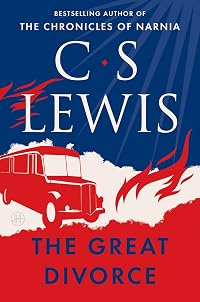
The Great Divorce
by C. S. Lewis
On This Page
Description
C.S. Lewis' The Great Divorce is a classic Christian allegorical tale about a bus ride from hell to heaven. An extraordinary meditation upon good and evil, grace and judgment, Lewis's revolutionary idea in the The Great Divorce is that the gates of Hell are locked from the inside. Using his extraordinary descriptive powers, Lewis' The Great Divorce will change the way we think about good and evil.Tags
Recommendations



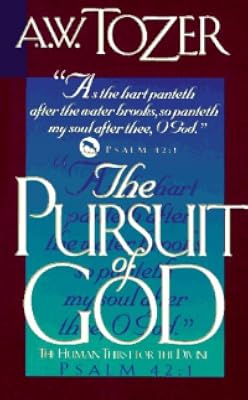
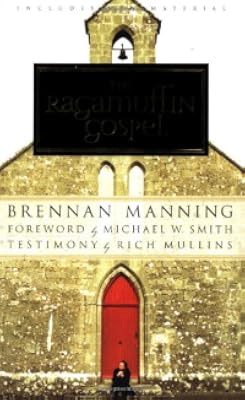
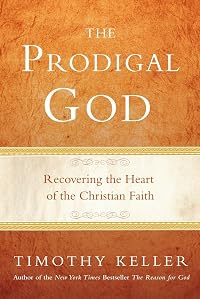

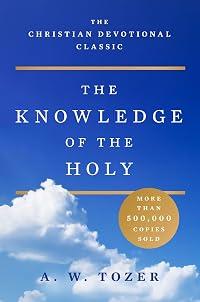





Member Recommendations
Member Reviews
"No, there is no escape. There is no heaven with a little bit of hell in it-- no plan to retain this or that of the devil in our hearts or our pockets. Out Satan must go, every hair and feather." --George MacDonald [1824-1905]
This slim volume may not be that startling today, when many believe in Universal salvation, but I imagine it provoked many theological discussions when first published in 1946.
I especially enjoyed the end, when Lewis referenced Julian of Norwich; 'hungry ghosts' and bodhisattvas of Buddhism; and free will. The vignettes prior to the theological exposition were fun and thought-provoking, though the faint feminist streak in me was disappointed that the men were, in the main, arguing from (pseudo)logic, while the show more women were petty and desperate in their desire to attach themselves in such a needy manner to others. But I remind myself that this was written in 1946. show less
This slim volume may not be that startling today, when many believe in Universal salvation, but I imagine it provoked many theological discussions when first published in 1946.
I especially enjoyed the end, when Lewis referenced Julian of Norwich; 'hungry ghosts' and bodhisattvas of Buddhism; and free will. The vignettes prior to the theological exposition were fun and thought-provoking, though the faint feminist streak in me was disappointed that the men were, in the main, arguing from (pseudo)logic, while the show more women were petty and desperate in their desire to attach themselves in such a needy manner to others. But I remind myself that this was written in 1946. show less
I confess that I've come to love C.S. Lewis. He's got a way of fleshing out Christian teachings that not only touches the heart, but also helps me understand them better. In the Great Divorce, he looks at the nature of our sinfulness by recounting a visit of the outskirts of Heaven by citizens of Hell. In it we can see where our petty (but deadly) foibles will lead us and how God endeavors to save us from ourselves. The ending, I must also confess, is rather weak. But it's still worth checking out.
--J.
--J.
The Great Divorce is Lewis' supposal of what would happen if a busload of souls from Hell was given an excursion to Heaven. Lewis is quick to point out in his foreword that the book is not supposed to be a theological work speculating on what really happens in the afterlife. The setup of the story is just a frame to contain the ideas. People in Hell do not have the ability to suddenly repent and choose Heaven after a field trip to the latter!
The book is a little confusing at first if you go into it, like me, without knowing much about it. Is the narrator in Hell with the others? He doesn't seem to know what is going on, but why else would he be there, and in the same state as the other Hell-dwellers? It's somewhat explained at the end, show more but I found the ambiguity distracting in the beginning.
The narrator observes several conversations between the Hell-dwellers and the people in Heaven who have come there specifically to reason and plead with the tourists.
A recurring idea in Lewis' Platonian mind was the notion that everything we have and are right now is insubstantial mist in light of the real that is perfect, and which we will experience on reaching Heaven. This same idea is in the Chronicles of Narnia, where Narnia becomes sharper and more real than it ever had been in the last book. Every blade of grass is sharper, every mountain is more like a mountain, every tree and sparrow and stream is suddenly invested with a weight and substance they never before possessed. It is the same in Heaven in this book. The people from Hell appear as insubstantial ghosts and hurt themselves walking on the real grass. They cannot lift anything in Heaven; they are too weak. Trying to pick a flower is like trying to pluck a full-grown tree with one hand.
Lewis imagines himself taken in hand by George MacDonald, his literary and spiritual mentor. One thing I found rather unsatisfactory was Lewis' attempt to have MacDonald explain his belief in universalism. The result is a page of near-incomprehensible confusion.
Some of the images that Lewis conjures up in this book will stick with me forever, like the Dwarf and the Tragedian. The Dwarf is a man who is slowly being diminished, word by word, by the tall Tragedian he holds on a chain. The Tragedian does nothing but feel sorry for himself and urge the Dwarf to feel the same. As the Tragedian's hold grows stronger, the Dwarf gets smaller and smaller until he disappears, and then the Tragedian swallows the chain. He has won.
One striking thing about that part was Lewis' discussion of the tyranny of pity. The Dwarf's wife was a denizen of Heaven and had been pleading with him to shake off the Tragedian and stay with her. But when her husband fails to do so, and instead listens to the Tragedian's ridiculous selfishness, the Lady feels no pain for him. Lewis writes that in Heaven, the pain of other people's bad choices will no longer be allowed to torment us. It seems heartless, but should the eternal joy of the saints be marred by the selfish decision of a miserable soul? Should Joy itself be captive to the caprices of a cosmic dog in the manger? By no means.
I thought Lewis' treatment of the apostate and liberal bishop was absolutely word-perfect. He captures the man's arrogance and self-delusion so neatly. Lewis' exploration of the perversion of motherly love — to the point where God Himself becomes nothing more than a means of the mother getting to her son — is also striking. The insights on why people reject God and choose Hell instead are profound.
One thing becomes clearer as the story goes on: the people in Hell are there because they want to be. What did Satan say in Paradise Lost — "Better to reign in Hell than in Heaven serve"? Lewis says that there are only two kinds of people: those who say to God, "Thy will be done," and those to whom God says, "Thy will be done." I think he's right; people don't suddenly repent when they die. An unrepentant heart can only be changed by the action of the Holy Spirit, and that action will not be taken after physical death.
I enjoyed this book. It was a quick read, just over an hour for me, but I think it will hold up well to rereading. Recommended. show less
The book is a little confusing at first if you go into it, like me, without knowing much about it. Is the narrator in Hell with the others? He doesn't seem to know what is going on, but why else would he be there, and in the same state as the other Hell-dwellers? It's somewhat explained at the end, show more but I found the ambiguity distracting in the beginning.
The narrator observes several conversations between the Hell-dwellers and the people in Heaven who have come there specifically to reason and plead with the tourists.
A recurring idea in Lewis' Platonian mind was the notion that everything we have and are right now is insubstantial mist in light of the real that is perfect, and which we will experience on reaching Heaven. This same idea is in the Chronicles of Narnia, where Narnia becomes sharper and more real than it ever had been in the last book. Every blade of grass is sharper, every mountain is more like a mountain, every tree and sparrow and stream is suddenly invested with a weight and substance they never before possessed. It is the same in Heaven in this book. The people from Hell appear as insubstantial ghosts and hurt themselves walking on the real grass. They cannot lift anything in Heaven; they are too weak. Trying to pick a flower is like trying to pluck a full-grown tree with one hand.
Lewis imagines himself taken in hand by George MacDonald, his literary and spiritual mentor. One thing I found rather unsatisfactory was Lewis' attempt to have MacDonald explain his belief in universalism. The result is a page of near-incomprehensible confusion.
Some of the images that Lewis conjures up in this book will stick with me forever, like the Dwarf and the Tragedian. The Dwarf is a man who is slowly being diminished, word by word, by the tall Tragedian he holds on a chain. The Tragedian does nothing but feel sorry for himself and urge the Dwarf to feel the same. As the Tragedian's hold grows stronger, the Dwarf gets smaller and smaller until he disappears, and then the Tragedian swallows the chain. He has won.
One striking thing about that part was Lewis' discussion of the tyranny of pity. The Dwarf's wife was a denizen of Heaven and had been pleading with him to shake off the Tragedian and stay with her. But when her husband fails to do so, and instead listens to the Tragedian's ridiculous selfishness, the Lady feels no pain for him. Lewis writes that in Heaven, the pain of other people's bad choices will no longer be allowed to torment us. It seems heartless, but should the eternal joy of the saints be marred by the selfish decision of a miserable soul? Should Joy itself be captive to the caprices of a cosmic dog in the manger? By no means.
I thought Lewis' treatment of the apostate and liberal bishop was absolutely word-perfect. He captures the man's arrogance and self-delusion so neatly. Lewis' exploration of the perversion of motherly love — to the point where God Himself becomes nothing more than a means of the mother getting to her son — is also striking. The insights on why people reject God and choose Hell instead are profound.
One thing becomes clearer as the story goes on: the people in Hell are there because they want to be. What did Satan say in Paradise Lost — "Better to reign in Hell than in Heaven serve"? Lewis says that there are only two kinds of people: those who say to God, "Thy will be done," and those to whom God says, "Thy will be done." I think he's right; people don't suddenly repent when they die. An unrepentant heart can only be changed by the action of the Holy Spirit, and that action will not be taken after physical death.
I enjoyed this book. It was a quick read, just over an hour for me, but I think it will hold up well to rereading. Recommended. show less
Very well written, of course. It's C.S. Lewis.
I greatly admire Lewis' non-fiction writings, but not his fiction. Fantasy just isn't for me. I enjoyed old school fantasy when I was a young teen - Ray Bradbury - but bring out a couple of angels, ghosts, unicorns, or the talisman or oracle of the great Derp and my eyes glaze over. It all simply seems the same to me.
I know this work has great lessons to teach, but I quit 70 percent through. Too many other books I will find genuinely interesting on my ereader, or waiting for me at the library.
Not to knock it, though. If you're into fantasy, you're likely to love this.
I greatly admire Lewis' non-fiction writings, but not his fiction. Fantasy just isn't for me. I enjoyed old school fantasy when I was a young teen - Ray Bradbury - but bring out a couple of angels, ghosts, unicorns, or the talisman or oracle of the great Derp and my eyes glaze over. It all simply seems the same to me.
I know this work has great lessons to teach, but I quit 70 percent through. Too many other books I will find genuinely interesting on my ereader, or waiting for me at the library.
Not to knock it, though. If you're into fantasy, you're likely to love this.
A very convicting novel. I just got around to reading it, even though my senior bible teacher recommended it to us months ago (shame on me!).
This short novel should be read alongside Dante's Inferno as *the* book on hell. Lewis recognized the truth that we all overlook: "good" people go to hell. Hell might be full of murderers and thieves, but it is a place mostly populated by "normal guys", just like us. One thing that really struck me was the philosopher who had overlooked Christ in his intellectual pursuits. He spent so much time working to prove that God existed that he missed seeking God for Himself. Another was the mother who had poured her life into her son, and made him the center of her world instead of Christ.
Shit like that show more just messes with me. We spent a good amount of time in senior bible talking about Christ's critique of the church and religious people. I'm from the South, and a community were everyone is Christian, so it really struck a cord with me to realize that religious people need Christ even more than your stereotypical sinner. Wow.
I'm sorry for how awkward this review is! I wish I knew what to say and how to say it :/ show less
This short novel should be read alongside Dante's Inferno as *the* book on hell. Lewis recognized the truth that we all overlook: "good" people go to hell. Hell might be full of murderers and thieves, but it is a place mostly populated by "normal guys", just like us. One thing that really struck me was the philosopher who had overlooked Christ in his intellectual pursuits. He spent so much time working to prove that God existed that he missed seeking God for Himself. Another was the mother who had poured her life into her son, and made him the center of her world instead of Christ.
Shit like that show more just messes with me. We spent a good amount of time in senior bible talking about Christ's critique of the church and religious people. I'm from the South, and a community were everyone is Christian, so it really struck a cord with me to realize that religious people need Christ even more than your stereotypical sinner. Wow.
I'm sorry for how awkward this review is! I wish I knew what to say and how to say it :/ show less
I read this book again every few years. Even the Preface is a treasure, reorienting my thinking about God and Heaven.
Is Hell a real place or a state of mind? Is Heaven a real place? Will we like what we find in Heaven? What if there is no further intellectual pursuit because we finally meet the real and complete Truth? What is we have no further service to provide and in fact we are not needed there at all? Is Mother-love truly the most honorable of all emotions? Is it wrong to evoke pity in others?
This is a great book with some very challenging images. When I get into a grumbling mood, I have to stop to see if I am becoming one big grumble. Reading this book always makes me pause and rethink what I mean when I love someone. How much of show more that is a craving to be loved? I have to admit many of my relationships (or lack of relationships) are colored by my fear and concern that I be loved rather than an honest love of the other person.
And what would I hesitate to give up for joy? How can I hold those things, needs, and fears loosely, ready to let them be torn away, killed, and replaced by something so much better?
Highly recommended show less
Is Hell a real place or a state of mind? Is Heaven a real place? Will we like what we find in Heaven? What if there is no further intellectual pursuit because we finally meet the real and complete Truth? What is we have no further service to provide and in fact we are not needed there at all? Is Mother-love truly the most honorable of all emotions? Is it wrong to evoke pity in others?
This is a great book with some very challenging images. When I get into a grumbling mood, I have to stop to see if I am becoming one big grumble. Reading this book always makes me pause and rethink what I mean when I love someone. How much of show more that is a craving to be loved? I have to admit many of my relationships (or lack of relationships) are colored by my fear and concern that I be loved rather than an honest love of the other person.
And what would I hesitate to give up for joy? How can I hold those things, needs, and fears loosely, ready to let them be torn away, killed, and replaced by something so much better?
Highly recommended show less
In this fantasy tale, Lewis explores the nature of heaven and hell and the ramifications of salvation and redemption. In the introduction, he points out that this is an imaginative exploration of these locations, not to be taken as gospel or even as his own beliefs, but a simple fantasy that explores what could be.
Hell is a drab place, where fights break out and people are drawn into deeper and deeper solitude. It is always gray, that fading light that just precedes night time, and the weather is damp and drizzly. The narrator, presumably Lewis himself, isn't at first aware of the true nature of his surroundings, and neither are we. Through vivid descriptions and cryptic dialogue we piece together an idea that this is hell that he is show more traversing (which is later confirmed by an angel). By chance he sees a queue, and for want of anything better to do he joins it, later discovering that it is a bus line, and he hops on board. The bus, however, is no ordinary means of public transport: it flies.
The dull gray drops away, light percolates through shut window blinds, and the bus approaches cliffs that loom over the riders. The top of the top of these sheer rock walls reveals a lush green valley, and beautiful mountains in the distance. The light is the soft brilliance of early dawn, just before day breaks. Of course, this is heaven.
While the physical settings of heaven and hell are, in themselves, fascinating, Lewis's inventive mind has more to offer. The denizens of hell become mere ghosts in the bright land, so insubstantial that even the smallest stalk of grass pierces them, water is solid, and an apple weighs a ton. The angels that descend upon the bus riders have come with a purpose, one angel to one ghost, in a last attempt to break through their worldly walls and win them to repentance and salvation. The exchanges between the angels and the ghosts, still stubbornly clinging to their flawed ideas that placed them in hell in the first place, become philosophical debates where Lewis has a chance to refute some common criticisms of Christianity.
I've always liked Lewis, because he has a touch for explaining theological conundrums in simple terms, and because he has a rich imagination. This book combines both. Clearly, the fantasy is just a vehicle to delve into those philosophic exchanges, but since his intention is clear from the introduction I didn't feel like he was playing a trick. On the contrary, I thought it was a clever way to make subject matter that could otherwise be dry become very entertaining. show less
Hell is a drab place, where fights break out and people are drawn into deeper and deeper solitude. It is always gray, that fading light that just precedes night time, and the weather is damp and drizzly. The narrator, presumably Lewis himself, isn't at first aware of the true nature of his surroundings, and neither are we. Through vivid descriptions and cryptic dialogue we piece together an idea that this is hell that he is show more traversing (which is later confirmed by an angel). By chance he sees a queue, and for want of anything better to do he joins it, later discovering that it is a bus line, and he hops on board. The bus, however, is no ordinary means of public transport: it flies.
The dull gray drops away, light percolates through shut window blinds, and the bus approaches cliffs that loom over the riders. The top of the top of these sheer rock walls reveals a lush green valley, and beautiful mountains in the distance. The light is the soft brilliance of early dawn, just before day breaks. Of course, this is heaven.
While the physical settings of heaven and hell are, in themselves, fascinating, Lewis's inventive mind has more to offer. The denizens of hell become mere ghosts in the bright land, so insubstantial that even the smallest stalk of grass pierces them, water is solid, and an apple weighs a ton. The angels that descend upon the bus riders have come with a purpose, one angel to one ghost, in a last attempt to break through their worldly walls and win them to repentance and salvation. The exchanges between the angels and the ghosts, still stubbornly clinging to their flawed ideas that placed them in hell in the first place, become philosophical debates where Lewis has a chance to refute some common criticisms of Christianity.
I've always liked Lewis, because he has a touch for explaining theological conundrums in simple terms, and because he has a rich imagination. This book combines both. Clearly, the fantasy is just a vehicle to delve into those philosophic exchanges, but since his intention is clear from the introduction I didn't feel like he was playing a trick. On the contrary, I thought it was a clever way to make subject matter that could otherwise be dry become very entertaining. show less
Members
- Recently Added By
Lists

Christianity Books You've Read
179 works; 19 members

Mike's Theology Books
74 works; 2 members

Xenos Christian Fellowship Book Suggestions
102 works; 2 members

One Book, Many Authors
441 works; 40 members

Book Worlds We'd Like To Visit
322 works; 158 members

Our Favorite Comfort Reads
334 works; 200 members

Books That Changed Our Perspective
423 works; 168 members
Books We Love to Reread
688 works; 296 members

Books Read in 2021
5,361 works; 114 members

Books That Most Shaped Me
8 works; 1 member

Ten+ Books About the Afterlife
13 works; 2 members
Books I've Read More Than Once
602 works; 49 members

Ambleside Books
459 works; 18 members
Generation Joshua
115 works; 3 members

Good, Smart, Clean Fiction
46 works; 4 members

Sonlight Books
1,487 works; 25 members

Recommendations by Peter Kreeft
45 works; 4 members
Author Information

537+ Works 524,084 Members
C. S. (Clive Staples) Lewis, "Jack" to his intimates, was born on November 29, 1898 in Belfast, Ireland. His mother died when he was 10 years old and his lawyer father allowed Lewis and his brother Warren extensive freedom. The pair were extremely close and they took full advantage of this freedom, learning on their own and frequently enjoying show more games of make-believe. These early activities led to Lewis's lifelong attraction to fantasy and mythology, often reflected in his writing. He enjoyed writing about, and reading, literature of the past, publishing such works as the award-winning The Allegory of Love (1936), about the period of history known as the Middle Ages. Although at one time Lewis considered himself an atheist, he soon became fascinated with religion. He is probably best known for his books for young adults, such as his Chronicles of Narnia series. This fantasy series, as well as such works as The Screwtape Letters (a collection of letters written by the devil), is typical of the author's interest in mixing religion and mythology, evident in both his fictional works and nonfiction articles. Lewis served with the Somerset Light Infantry in World War I; for nearly 30 years he served as Fellow and tutor of Magdalen College at Oxford University. Later, he became Professor of Medieval and Renaissance English at Cambridge University. C.S. Lewis married late in life, in 1957, and his wife, writer Joy Davidman, died of cancer in 1960. He remained at Cambridge until his death on November 22, 1963. (Bowker Author Biography) show less
Some Editions
Series
Belongs to Publisher Series
Work Relationships
Is contained in
The Complete Works: Fantasy & Sci-Fi Novels, Religious Studies, Poetry & Autobiography: Enriched edition. The Chronicles of Narnia, The Space Trilogy, The Screwtape Letters by C. S. Lewis (indirect)
The Abolition of Man / The Great Divorce / Mere Christianity / Miracles / The Problem of Pain / The Screwtape Letters by C. S. Lewis
The Four Loves / Surprised by Joy / A Grief Observed / The Screwtape Letters / The Great Divorce / Mere Christianity by C. S. Lewis
THE CHRISTIAN COLLECTION. 9 Books including: Mere Christianity; Screwtape Letters; Miracles; The Great Divorce; Pilgrim's Recess; The Problem Of Pain ... (Timeless Wisdom Collection Book 1016) by C. S. Lewis
Of Other Worlds Essays & Stories / Till We Have Faces: A Myth Retold / The Great Divorce by C. S. Lewis
The C. S. Lewis Signature Classics: An Anthology of 8 C. S. Lewis Titles: Mere Christianity, The Screwtape Letters, Miracles, The Great Divorce, The ... The Abolition of Man, and The Four Loves by C. S. Lewis
Was inspired by
Has as a student's study guide
Common Knowledge
- Canonical title
- The Great Divorce
- Original title
- The Great Divorce
- Alternate titles
- The great divorce : a fantastic bus ride from hell to heaven - A round trip for some but not for others; 天淵之別; 天淵之別. English; 夢幻巴士; 夢幻巴士. English; 開往天堂的巴士 (show all 10); 開往天堂的巴士. English; 夢幻巴士:一趟地獄住客的天堂之旅; 夢幻巴士:一趟地獄住客的天堂之旅. English; The great divorce: a dream
- Original publication date
- 1946 (book) (book); 1944-11-10 to 1945-04-13 (in The Guardian) (in The Guardian)
- People/Characters
- The Narrator (it is implied that this is Lewis himself); George MacDonald; Tragedian Ghost; Hardbitten Ghost; Episcopal Ghost; The Lady
- Important places
- The Bus; Grey Town; Heaven
- Epigraph
- "No, there is no escape. There is no heaven with a little of hell in it--no plan to retain this or that of the devil in our hearts or our pockets. Out Satan must go, every hair and feather."--George MacDonald
- Dedication
- Barbara Wall: Best and most long-suffering of scribes
- First words
- I seemed to be standing in a busy queue by the side of a long, mean street.
- Quotations
- When the sun rises here and the twilight turns to blackness down there, the Blessed will say, "We have never lived anywhere except in Heaven," and the Lost, "We were always in Hell."
And both will speak truly.
There are only two kinds of people in the end: those who say to God, "Thy will be done," and those to whom God says, in the end, "Thy will be done." All that are in Hell, choose it.
That is what mortals misunderstand. They say of some temporal suffering, `No future bliss can make up for it,’ not knowing that Heaven, once attained, will work backwards and turn even that agony into a glory. - Last words
- (Click to show. Warning: May contain spoilers.)I awoke in a cold room, hunched on the floor beside a black and empty grate, the clock striking three, and the siren howling overhead.
- Canonical DDC/MDS
- 236.2
Classifications
Statistics
- Members
- 13,600
- Popularity
- 557
- Reviews
- 124
- Rating
- (4.21)
- Languages
- 17 — Chinese, Czech, Danish, Dutch, English, Finnish, French, German, Hungarian, Italian, Norwegian (Bokmål), Farsi/Persian, Polish, Russian, Spanish, Portuguese (Portugal), Portuguese (Brazil)
- Media
- Paper, Audiobook, Ebook
- ISBNs
- 72
- UPCs
- 3
- ASINs
- 76