
Letters from the Earth
by Mark Twain  , Bernard Devoto (Editor)
On This Page
Description
Penniless and downtrodden at the loss of his wife and one of his daughters, Samuel Clemens turned to writing. The short stories and essays in Letters from the Earth find Clemens, under the pseudonym of Mark Twain, at perhaps his most quizzical and questioning state ever. Written as diary entries, Twain penned a series of letters from the point of view of a dejected angel on Earth who observes the many curious natures of man. These pieces, gathered by Twain's literary executor, feature sharp show more takes on the inconsistencies and illogic of Christianity and farcical criticisms of American life. Deemed too irreligious and controversial to see the light of day when Twain wrote them, their publication occurred more than fifty years after his death. A brilliant treasure trove of satirical and witty observations of humankind, "Letters from the Earth" showcases Twain's his true range as an author. show lessTags
Recommendations















Member Recommendations
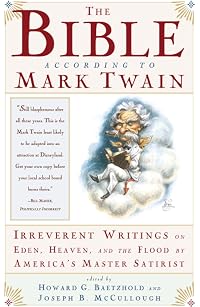
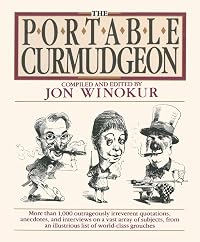
Waldheri Similar because: both are easy to read and have similar anti-religious goals.
Waldheri Similar because: both anti-religious writings, concentrating on Christianity, of which both contend their unnatural doctrines. Both have humour and readable in one sitting.

fundevogel Like Twain Russell uses wit and humor to present his social and philosophical views, often on reason, sexuality and religion.
paradoxosalpha Short-form satires leveraging biblical mythology.
Member Reviews
The cover of my paperback copy of Letters from the Earth boasts "new uncensored writings by Mark Twain" with a little more significance than such labels usually hold. The contents of this volume were the very first to be edited for posthumous publication by the Twain literary estate, but Twain's daughter Clara Clemens' misgivings denied publication to the book until 1962, after the editor's own death! By then, several of the individual texts included had seen individual publication in periodicals and a book of Twain scholarship.
Although she gave as her motive the concern that the book's contents would misrepresent Twain's actual ideas as she understood them, a reader will readily infer that Clara's fear was chiefly about offending show more against conventional piety. Nearly half of the book consists of satires grounded in biblical mythology: the title piece (largely in the voice of the angel Satan), the "Papers of the Adam Family" thus organized and titled by editor Bernard DeVoto, and the brief "Letter to the Earth." The first of these, and apparently the most finished in Twain's own manuscript, is clearly modeled on Montesquieu's Persian Letters, in which a traveler from a distant land reports back to his own people on the bewildering and exotic features of the culture shared by the reader and the actual author of the text.
"Letters from the Earth" at one point refers to sex as "the Supreme Art. They practiced it diligently and were filled with contentment. The Deity ordered them to practice it. They obeyed, this time. But it was just as well it was not forbidden, for they would have practiced it anyhow, if a thousand Deities had forbidden it" (25). Satan supplies a sober and accurate appraisal of the Christian revelation: "... as the meek and gentle Savior he was a thousand billion times crueler than ever he was in the Old Testament--oh, incomparably more atrocious than ever he was at the very worst in those old days!" (46)
The "Papers of the Adam Family" treat antediluvian society with attention to the premise that the long lifespans of characters in Genesis--even assuming that they waited a few extra decades before parenthood--made for a society many living generations deep, and thus strangely dense and hierarchical. Several of these "translations from the Adamic" are in the voice of Eve, "the Most Illustrious, Most Powerful, Most Gracious, Most Reverend, her Grandeur, the Acting Head of the Human Race" (91-2). There is also a focus on the early tenth century as clocked from Eden, consisting mostly of thinly-veiled satire on Twain's own time, which certainly had catastrophe imminent.
A number of short pieces include a whimsical cat-focused story (where Twain in passing vaunts his own "conscience torpid through virtuous inaction," 113), a merciless criticism of the prose style of James Fenimore Cooper, a reasonably funny parody of etiquette instructions, some travelogue from England, and a few other essays.
The book concludes with its longest and strangest item. "The Great Dark" (title furnished by the editor) is a horror story that hinges on its protagonist's efforts and failures to assign reality to his actual circumstances after being subjected to a dream-world of simulation. Latter-day readers might see this piece as a precocious Matrix sort of story. (Who needs wetware and full-body VR when you have a Victorian microscope?) But of course the central conundrum goes back to Chuang Tzu and probably to the dawn of reflective thought. show less
Although she gave as her motive the concern that the book's contents would misrepresent Twain's actual ideas as she understood them, a reader will readily infer that Clara's fear was chiefly about offending show more against conventional piety. Nearly half of the book consists of satires grounded in biblical mythology: the title piece (largely in the voice of the angel Satan), the "Papers of the Adam Family" thus organized and titled by editor Bernard DeVoto, and the brief "Letter to the Earth." The first of these, and apparently the most finished in Twain's own manuscript, is clearly modeled on Montesquieu's Persian Letters, in which a traveler from a distant land reports back to his own people on the bewildering and exotic features of the culture shared by the reader and the actual author of the text.
"Letters from the Earth" at one point refers to sex as "the Supreme Art. They practiced it diligently and were filled with contentment. The Deity ordered them to practice it. They obeyed, this time. But it was just as well it was not forbidden, for they would have practiced it anyhow, if a thousand Deities had forbidden it" (25). Satan supplies a sober and accurate appraisal of the Christian revelation: "... as the meek and gentle Savior he was a thousand billion times crueler than ever he was in the Old Testament--oh, incomparably more atrocious than ever he was at the very worst in those old days!" (46)
The "Papers of the Adam Family" treat antediluvian society with attention to the premise that the long lifespans of characters in Genesis--even assuming that they waited a few extra decades before parenthood--made for a society many living generations deep, and thus strangely dense and hierarchical. Several of these "translations from the Adamic" are in the voice of Eve, "the Most Illustrious, Most Powerful, Most Gracious, Most Reverend, her Grandeur, the Acting Head of the Human Race" (91-2). There is also a focus on the early tenth century as clocked from Eden, consisting mostly of thinly-veiled satire on Twain's own time, which certainly had catastrophe imminent.
A number of short pieces include a whimsical cat-focused story (where Twain in passing vaunts his own "conscience torpid through virtuous inaction," 113), a merciless criticism of the prose style of James Fenimore Cooper, a reasonably funny parody of etiquette instructions, some travelogue from England, and a few other essays.
The book concludes with its longest and strangest item. "The Great Dark" (title furnished by the editor) is a horror story that hinges on its protagonist's efforts and failures to assign reality to his actual circumstances after being subjected to a dream-world of simulation. Latter-day readers might see this piece as a precocious Matrix sort of story. (Who needs wetware and full-body VR when you have a Victorian microscope?) But of course the central conundrum goes back to Chuang Tzu and probably to the dawn of reflective thought. show less
America's greatest satirist takes on the not so Holy Bible and thumps it. Imagine the hymn to constipation sung on the Ark. Brilliant, laugh out loud sarcasm unleashed. Completely understandable that he left instructions for this not to be published until after his passing. The only ding is on this particular edition - no lettering on the spine and no page numbers But it was the only edition I could find readily available (I had lost a better edition years ago) and is still required reading. Highly recommended.
I read this book because I was seeking inspiration in three ways: 1) I wanted to read some good religious satire to motivate further writing for my TheKnish.com website. 2) I wanted to observe some editor methods as this work was compiled in expert ways by a single resource. 3) I wanted to see if Twain himself covered ground on a sequel idea I have for one of his works. To the first point, I found exactly what I was looking for, and some idea germs have begun generating, though some of his work is almost too clever. To the second point, I found what I was seeking as well. The footnotes at the end reveal fascinating approaches to curating disjointed writings, exactly what I needed. To the third point, I am delighted to find that Twain show more actually abandoned the idea that I have in my head to pursue other works. I am, therefore, really excited. show less
By far one of Twain's all time bests. The master humorist turns his attention to the strange conditions of human belief, and a series of short stories and essays addresses the condition Twain has referred to as the "damn human race". He begins with the title story, a tale as told by the devil himself, visiting earth and reporting back (with much amusement) to heaven. Then he follows that up with the history of the "Adam family", including exerpts from Eve's autobiography and Methuselah's diary. In the hands of such a master satirist, the result is uproraringly amusing, and yet at the same time profound enough to make you think about things in a way you've never thought about them before.
I picked this up solely for the first story, Letters from the Earth, but I ended up reading through the entire book and find I have a new appreciation for Twain’s humor and satire. Letters was very entertaining, although the religiously inclined may not find it funny at all. However, I’m not, and I did! Some other portions worth a read include Eve’s autobiography (revealing!), an amusing critique of James Fenimore Cooper’s writing style, a parody of an etiquette manual, and The Damned Human Race, which demonstrates the ’descent’ of man. Twain died in 1910, and this collection of essays and short stories was not published until 1962.
Oh, and Mark Twain referring to "hot young blossoms" amused me to no end.
Oh, and Mark Twain referring to "hot young blossoms" amused me to no end.
There's nothing quite like reading Mark Twain that helps one to remember what American literature could and should be, but, unfortunately, isn't. Mark Twain was the best America has ever produced. Satire as a literary genre might as well not exist today when compared with that of Twain. This particular book is a collection of perhaps simultaneously some of the funniest, most insightful, most uncomfortably true, and most challenging short stories and essays that Twain wrote. Forget Colbert and Stewart; if you want real satire of the absurdities of the modern world and of the American people and government (still relevant, even if written a hundred and more years ago), this is the place to go. Forget Hitchens and Dawkins; if you want a show more critique of Christian faith and practice that is really relevant, challenging, and insightful, this, again, is the place to go. I recommend this book for those with a good sense of humor, a decent head on their shoulders, and a little intestinal fortitude. show less
Gloves off Twain is always better than hokey Twain and man the gloves are off for this one. The first half is letters Lucifer sent home to his angel buddies back in heaven. Lucifer has been exiled. Bored of swooping through galactic emptiness he visits God's experiment Earth. He is flabbergasted by what he finds there. Eat your heart out C.S. Lewis. Though I plan on protecting my children from the vulgarities of monotheistic religion, I would consider these for bed time stories.
The letters are cuttingly funny, but the similarly themed essays which accompany them make this work a little one note. You could always just listen to Lucifer's letters and leave it at that.
Carl Reiner does a terrific job capturing Twain's cadence. He lit show more Twain's prose on fire. show less
The letters are cuttingly funny, but the similarly themed essays which accompany them make this work a little one note. You could always just listen to Lucifer's letters and leave it at that.
Carl Reiner does a terrific job capturing Twain's cadence. He lit show more Twain's prose on fire. show less
Members
- Recently Added By
Lists

Best Books Involving Satan
63 works; 26 members

Books You Read During High School (For School)
301 works; 53 members

Mind Expanding Books by hackerkid
581 works; 8 members

Atheism, humanism, freethought, &c. — Best nonfiction books in favour of
167 works; 14 members

Simulated Reality in Fiction
124 works; 7 members

Favorite Epistolary Fiction
143 works; 144 members

Mustich's 1000 Books to Read Before You Die: A Life Changing List
1,001 works; 19 members

Books That Changed Our Perspective
423 works; 168 members

School Made Us Read It
380 works; 196 members
Author Information

2,760+ Works 208,813 Members
Mark Twain was born Samuel L. Clemens in Florida, Missouri on November 30, 1835. He worked as a printer, and then became a steamboat pilot. He traveled throughout the West, writing humorous sketches for newspapers. In 1865, he wrote the short story, The Celebrated Jumping Frog of Calaveras County, which was very well received. He then began a show more career as a humorous travel writer and lecturer, publishing The Innocents Abroad in 1869, Roughing It in 1872, and, Gilded Age in 1873, which was co-authored with Charles Dudley Warner. His best-known works are The Adventures of Tom Sawyer, Mississippi Writing: Life on the Mississippi, and The Adventures of Huckleberry Finn. He died of a heart attack on April 21, 1910. (Bowker Author Biography) show less
Mark Twain has a Legacy Library. Legacy libraries are the personal libraries of famous readers, entered by LibraryThing members from the Legacy Libraries group.

A Harvard University graduate and impassioned student and teacher of American history and literature, Utah-born Bernard de Voto held faculty positions at Northwestern University and Harvard University. He was also the second editor of the Saturday Review of Literature and for many years wrote "The Editor's Easy Chair" column in Harper's magazine. show more At Harvard, de Voto was the editor of the Mark Twain manuscripts and produced several works about Twain and his time. He is best known for his trilogy-The Year of Decision: 1846 (1943), Across the Wide Missouri (1947), and The Course of Empire (1952). For Across the Wide Missouri, he personally traced the western trails first blazed by Lewis and Clark. Although recent scholarship has changed many perceptions about the West, de Voto's splendid accounts continue to have wide appeal. (Bowker Author Biography) show less
Some Editions
Awards and Honors
Awards
Distinctions
Series
Belongs to Publisher Series
Work Relationships
Common Knowledge
- Canonical title
- Letters from the Earth
- Original title
- Letters from the Earth
- Original publication date
- 1962; 1909
- Important places
- Old Testament Locations
- First words
- The Creator sat upon the throne, thinking.
- Last words
- (Click to show. Warning: May contain spoilers.)We haven't had an observation for four months, but we are going ahead, and do our best to fetch up somewhere.
- Blurbers
- Jones, Howard Mumford; Harding, Walter
- Disambiguation notice
- Please note: Letters from the Earth was written by Mark Twain. If you have this work, please list Mark Twain as the primary author, and use the "Other Authors" field to list Bernard DeVoto as Editor. This will allow yo... (show all)ur book to be combined with the copies on the Mark Twain author page.
Classifications
- Genres
- Fiction and Literature, General Fiction
- DDC/MDS
- 818.409 — Literature & rhetoric American literature in English American miscellaneous writings in English Later 19th Century 1861-1900
- LCC
- PS1331 .A3 — Language and Literature American literature American literature Individual authors 19th century
- BISAC
Statistics
- Members
- 3,029
- Popularity
- 5,848
- Reviews
- 40
- Rating
- (4.12)
- Languages
- 13 — Catalan, Czech, Dutch, English, Finnish, French, German, Greek, Italian, Norwegian, Polish, Spanish, Swedish
- Media
- Paper, Audiobook, Ebook
- ISBNs
- 54
- ASINs
- 57