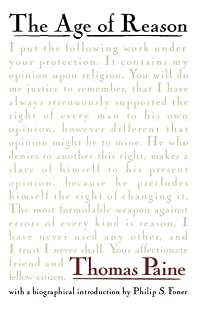
The Age of Reason
by Thomas Paine
On This Page
Description
Thomas Paine's The Age of Reason; Being an Investigation of True and Fabulous Theology, published in three parts from 1794, was a bestseller in America, where it caused a short-lived deistic revival. Promoting a creator-God while advocating reason in the place of revelation, Paine's controversial pamphlet caused his native British audience, fearing the results of the French Revolution, to receive it with more hostility than their American counterparts. This passionate and engaging recording show more of Paine's classic is as certain to provoke modern readers to thought as it did with his original audience. show lessTags
Recommendations


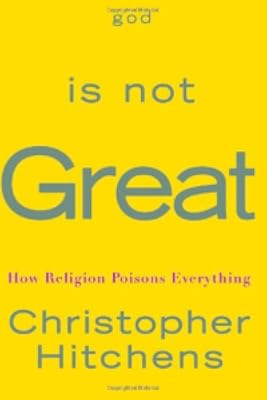
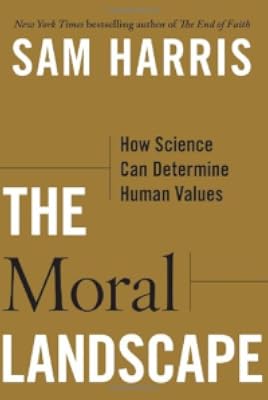
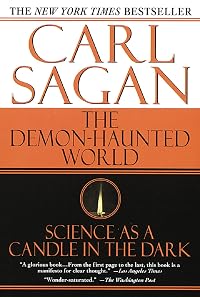
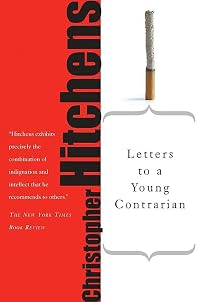
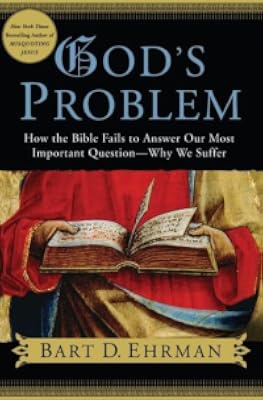
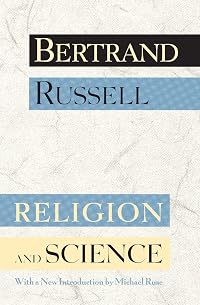
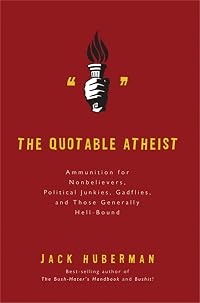
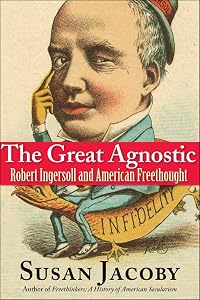



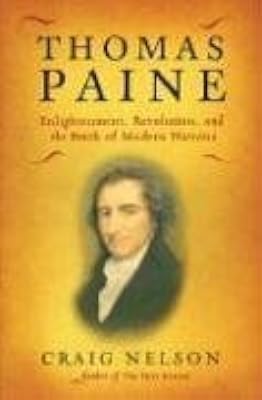
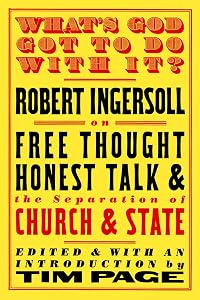
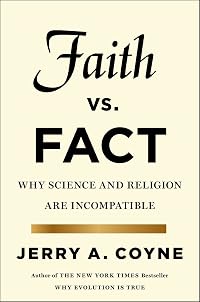




Member Recommendations

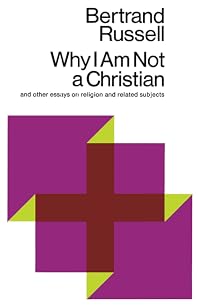
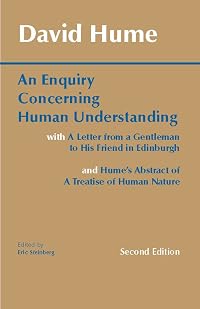
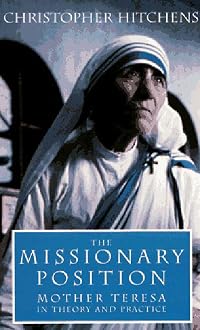
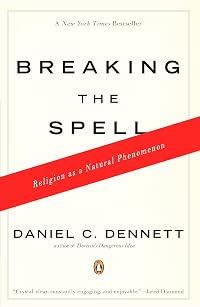
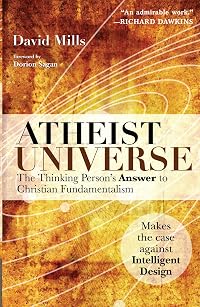
Waldheri Similar because: both are easy to read and have similar anti-religious goals.
paradoxosalpha Paine soundly trashes the idea that Jesus was a god; Price puts paid to the notion that he was a man.
Member Reviews
This is one of those master texts from one of the United States' founding fathers, but one that I'd only ever heard about and didn't know much about. I picked it up after a recommendation from a memoir I'd read about Hasidic Jewish sects.
A quite explosive text, certainly for its time, but equally for today. Paine takes on all religions, most especially Christianity. He fact-checks the Bible, highlighting some pretty basic logical inconsistencies but also some clear factual inconsistencies. Then, he takes on the morality of the Bible, particularly the brutal and bloody Old Testament. His ultimate point is that God, in whom he believes, could not possibly be behind such a bloody and unkind and poorly rendered book such as the Bible.
Now, show more taking Paine's well-landed arguments, I'd say that there's been a fair bit of research and textual examination on the Biblical manuscripts - I think that it's well settled that, initially inspired or not, the Bible is just as much a product of human tinkering and guiding as anything. That doesn't completely diminish the Bible for me, but Paine is right to look at how it's been misused and molded to be a weapon. Ultimately, a quite thought-provoking book. I dare any believer, especially any member of any denomination of any Christian church, to read this. I double dare ya'. show less
A quite explosive text, certainly for its time, but equally for today. Paine takes on all religions, most especially Christianity. He fact-checks the Bible, highlighting some pretty basic logical inconsistencies but also some clear factual inconsistencies. Then, he takes on the morality of the Bible, particularly the brutal and bloody Old Testament. His ultimate point is that God, in whom he believes, could not possibly be behind such a bloody and unkind and poorly rendered book such as the Bible.
Now, show more taking Paine's well-landed arguments, I'd say that there's been a fair bit of research and textual examination on the Biblical manuscripts - I think that it's well settled that, initially inspired or not, the Bible is just as much a product of human tinkering and guiding as anything. That doesn't completely diminish the Bible for me, but Paine is right to look at how it's been misused and molded to be a weapon. Ultimately, a quite thought-provoking book. I dare any believer, especially any member of any denomination of any Christian church, to read this. I double dare ya'. show less
Thomas Paine was a leading public intellectual of the 18th-century American Revolution, with his pamphlets Common Sense and The American Crisis as chief texts of the "spirit of 1776." He followed these publications with his Rights of Man to defend the French and American revolutionary efforts against reactionary political sentiment in England. His final major work The Age of Reason was written as an expatriate in France. The first and shorter part he composed under the shadow of imminent arrest and possible execution, without recourse to a copy of the Bible that it criticizes. The second part includes a more detailed evaluation of Christian scripture, on grounds of both its provenance and internal features.
"Of all the systems of show more religion that ever were invented, there is none more derogatory to the Almighty, more unedifying to man, more repugnant to reason, and more contradictory in itself than this thing called Christianity" (189-90). Raised by Quakers, Paine was an exemplary Deist of his period and staunchly anti-Christian. His distaste for Christianity is entirely consistent with and often justified by his Deist piety, refusing to attribute to the godhead sentiments and behaviors offensive to human conscience.
Paine's dismantling of claims that the Bible should be regarded as the "Word of God" remain effective today, performed entirely around the evident sense of the texts themselves, without recourse to the "higher criticism" already being developed in Paine's time, which was to prove so damning to the historical pretenses of Bible reception. He does verge on source criticism at a couple of points in discussing the evident "Gentile" origins of certain component texts of the Bible, but simply refers to the judgments of Jewish authorities (Abenezra and Spinoza) and the texts' inconsistency with ancient Hebrew culture and religious sentiment (124-5), rather than any putative source texts. Paine's attacks on the moral features of the supposed heroes of the Bible have not lost any of their force or relevance.
While Aleister Crowley was later to take up as a rallying cry Paine's maxim that "Mystery is the antagonist of truth" (76), I would not say the Beast intended it in just the same unsubtle sense as the venerable Revolutionary, although mystery's envelopment of truth in Paine's argument foreshadows Crowley's incantation. Paine classes mystery with miracle and prophecy as the three invidious organs of revealed or "fabulous" religion (75, 80-2), which he opposes to the "true" religion grounded in scientific admiration for nature and individual conformity to reasoned ethics.
Miracle is faulty for "degrading the Almighty into the character of a show-man, playing tricks to amuse and make the people stare and wonder" (79). The enlightened man of reason (dare I say "magician") will stare and wonder at unadorned reality, of course. As regards prophecy, Paine makes an important distinction between the archaic sense that he finds for the word in the Hebrew Bible, where it evidently means musical performance and/or poetry (35-7), and the "modern" sense in which "prophet" takes the place of "seer" indicating a claimant to divinely-guided psychic foreknowledge (81-2, 111 citing 1 Samuel 9:9). "Prophet" thus ultimately descends to a mere synonym for "liar," particularly in such cases as Isaiah, whose prognostication was contradicted by the subsequent course of events (133-4).
A full chapter of the first part of The Age of Reason is dedicated to "The Effects of Christianism on Education," sadly relevant to the US of the 21st century. The Christian institutions of education substitute indoctrination for learning, in order to profit by the resulting ignorance and cognitive dissonance. Today, we can see the further turn of the wheel in which Christians accuse sincere secular efforts to foster learning with the psychologically projected charge of "indoctrination," since that is the only function they can see in schooling. Current attacks on public libraries and new laws to put schoolteachers in ideological straight-jackets manifest such perspectives in policy, although the recurring phenomenon is as old as the US nation-state, a polity distinctive for its historical adoption of anti-literacy laws.
My Dover paperback copy of The Age of Reason reproduces the 1896 Putnam's edition by Moncure Daniel Conway, which reconciled the first-published French text with the later unauthorized English edition, noting the variances in footnotes. Conway also appended some correspondence by Paine regarding the work: one letter to "a friend" clarifying the book's thesis, and another in response to his Revolutionary comrade Sam Adams. The latter clearly shows the Deist anti-Christian Paine to have a greater magnanimity of spirit than his Puritan interlocutor Adams. show less
"Of all the systems of show more religion that ever were invented, there is none more derogatory to the Almighty, more unedifying to man, more repugnant to reason, and more contradictory in itself than this thing called Christianity" (189-90). Raised by Quakers, Paine was an exemplary Deist of his period and staunchly anti-Christian. His distaste for Christianity is entirely consistent with and often justified by his Deist piety, refusing to attribute to the godhead sentiments and behaviors offensive to human conscience.
Paine's dismantling of claims that the Bible should be regarded as the "Word of God" remain effective today, performed entirely around the evident sense of the texts themselves, without recourse to the "higher criticism" already being developed in Paine's time, which was to prove so damning to the historical pretenses of Bible reception. He does verge on source criticism at a couple of points in discussing the evident "Gentile" origins of certain component texts of the Bible, but simply refers to the judgments of Jewish authorities (Abenezra and Spinoza) and the texts' inconsistency with ancient Hebrew culture and religious sentiment (124-5), rather than any putative source texts. Paine's attacks on the moral features of the supposed heroes of the Bible have not lost any of their force or relevance.
While Aleister Crowley was later to take up as a rallying cry Paine's maxim that "Mystery is the antagonist of truth" (76), I would not say the Beast intended it in just the same unsubtle sense as the venerable Revolutionary, although mystery's envelopment of truth in Paine's argument foreshadows Crowley's incantation. Paine classes mystery with miracle and prophecy as the three invidious organs of revealed or "fabulous" religion (75, 80-2), which he opposes to the "true" religion grounded in scientific admiration for nature and individual conformity to reasoned ethics.
Miracle is faulty for "degrading the Almighty into the character of a show-man, playing tricks to amuse and make the people stare and wonder" (79). The enlightened man of reason (dare I say "magician") will stare and wonder at unadorned reality, of course. As regards prophecy, Paine makes an important distinction between the archaic sense that he finds for the word in the Hebrew Bible, where it evidently means musical performance and/or poetry (35-7), and the "modern" sense in which "prophet" takes the place of "seer" indicating a claimant to divinely-guided psychic foreknowledge (81-2, 111 citing 1 Samuel 9:9). "Prophet" thus ultimately descends to a mere synonym for "liar," particularly in such cases as Isaiah, whose prognostication was contradicted by the subsequent course of events (133-4).
A full chapter of the first part of The Age of Reason is dedicated to "The Effects of Christianism on Education," sadly relevant to the US of the 21st century. The Christian institutions of education substitute indoctrination for learning, in order to profit by the resulting ignorance and cognitive dissonance. Today, we can see the further turn of the wheel in which Christians accuse sincere secular efforts to foster learning with the psychologically projected charge of "indoctrination," since that is the only function they can see in schooling. Current attacks on public libraries and new laws to put schoolteachers in ideological straight-jackets manifest such perspectives in policy, although the recurring phenomenon is as old as the US nation-state, a polity distinctive for its historical adoption of anti-literacy laws.
My Dover paperback copy of The Age of Reason reproduces the 1896 Putnam's edition by Moncure Daniel Conway, which reconciled the first-published French text with the later unauthorized English edition, noting the variances in footnotes. Conway also appended some correspondence by Paine regarding the work: one letter to "a friend" clarifying the book's thesis, and another in response to his Revolutionary comrade Sam Adams. The latter clearly shows the Deist anti-Christian Paine to have a greater magnanimity of spirit than his Puritan interlocutor Adams. show less
Back in grade school, we were taught that the American founding fathers were uniformly Christian and established the nation on that basis. But as it turns out, that's not entirely true. Only some of them were genuinely Christian, while others were Deists or somewhere in-between. Thomas Paine, perhaps the most outspoken among them, went against the grain of his time and wrote The Age of Reason, a damning and witty multi-part takedown of organized religion and the King James Bible. The general reception was far from favorable, and Benjamin Franklin himself even advised Paine against publishing the second part of the book, concluding that "If men are so wicked with religion, what would they be if without it?"
But Franklin's implication show more here is condescending and foolish. People don't go turning into amoral monsters if they stop believing in religion or a higher power. Morals and ethics shouldn't be reliant on spirituality and allegiance to a church, and certainly aren't exclusive to them. Franklin makes it sound like religion is a benevolent force holding back humanity's "evil," and that testing it with the power of inquiry is tantamount to loosing anarchy upon the world. And it's not as though Paine was advocating for atheism—he was advocating for Deism.
Having gone through a phase of Deism myself a couple years ago, it's neat to read about Paine's views on spirituality and the idea of "Nature's God" as seen through the lens of environmental studies and mathematics. However, Paine's Deistic views and explanations fall apart here and there while under some scrutiny. Paine never really stops to probe or take his own views further, never once questioning if "God" being a singular entity makes sense, or if such an omnipotent being would actually operate in accordance to the physics of our universe or not. But at the core of their beliefs, Paine and his fellow Deists valued critical thought and were against things like superstitions and miracles. Despite my many disagreements with Deism now, Paine is a convincing writer and his unwavering support for "God" makes this an interesting read in its own right (and it was before Darwin's time, so I'll cut Paine some slack).
The bulk of this book is Paine's critique of organized religion. His reasoning is sound and his writing style is both snappy and direct. The book itself becomes somewhat lengthy, but it's entertaining thanks to Paine's acerbic tongue. As for the jist of Paine's worldview, in one of the early chapters he boldly writes:
Well, there you have it. For the Bible, Paine's argument against it is: Since the accounts within it are so muddled, contradictory and rely primarily on blind belief in "divine revelation," it follows that the Bible is simply the managed writings of men, and nothing more. Paine lampoons the Testaments' major events, comparing them to preceding Grecian myths (i.e., Giants vs. Jupiter being a parallel to Lucifer and 1/3 of the angels vs. God), and then against the irrefutable principles of astronomy and geometry; that which can be proven. The natural, primordial world, says Paine, is the word of God, not at all to be compared with what is written and altered in a collection of books deemed holy by men. To Paine, any claims of having the word of God in writing is a laughable farce.
Speaking of laughter, Paine loves to crack wise. For instance, he calls the story of Jonah a satire because "it strikes against the character of all the Bible-prophets, and against all the indiscriminate judgements upon men, women and children...." He also calls into question whether or not the people of Nineveh would've viewed Jonah as some kind of demon. Wouldn't you, if you saw a leviathan spit out a doomsayer who claimed to have been in the creature's stomach for three days and three nights?
Well, if that happened then I might actually start believing in God again.
There are also many digs at Jesus. This part in particular made me crack up:
The latter half of the book reiterates the points made about the New and Old Testament in the first half, and though it can get a bit stale, it's a more in-depth critique that Paine felt was a necessary add-on in response to the religious arguments that the first part of the book raised. I found the first part of Paine's book complete enough, although it could be because I'm already well-acquainted with the characters and stories of the Bible.
Paine only loses me when it comes to his brand of Deism. It's a decent worldview for the time period, certainly a kind of proto-atheism insofar as its rejection of scripture-bound religion, but there parts of it that don't make sense. And then, why not Polytheism instead, or other "Natural God" theisms? Paine doesn't say. But, really, that's not quite the point of the book. Paine's other arguments make sense, and are sometimes quite funny, so for that alone this is a satisfying read. While much of this book only reaffirmed my own view of organized religion, it was still an impressive and thorough dismantling of Christianity. Certainly the most thorough one I've read to date. show less
But Franklin's implication show more here is condescending and foolish. People don't go turning into amoral monsters if they stop believing in religion or a higher power. Morals and ethics shouldn't be reliant on spirituality and allegiance to a church, and certainly aren't exclusive to them. Franklin makes it sound like religion is a benevolent force holding back humanity's "evil," and that testing it with the power of inquiry is tantamount to loosing anarchy upon the world. And it's not as though Paine was advocating for atheism—he was advocating for Deism.
Having gone through a phase of Deism myself a couple years ago, it's neat to read about Paine's views on spirituality and the idea of "Nature's God" as seen through the lens of environmental studies and mathematics. However, Paine's Deistic views and explanations fall apart here and there while under some scrutiny. Paine never really stops to probe or take his own views further, never once questioning if "God" being a singular entity makes sense, or if such an omnipotent being would actually operate in accordance to the physics of our universe or not. But at the core of their beliefs, Paine and his fellow Deists valued critical thought and were against things like superstitions and miracles. Despite my many disagreements with Deism now, Paine is a convincing writer and his unwavering support for "God" makes this an interesting read in its own right (and it was before Darwin's time, so I'll cut Paine some slack).
The bulk of this book is Paine's critique of organized religion. His reasoning is sound and his writing style is both snappy and direct. The book itself becomes somewhat lengthy, but it's entertaining thanks to Paine's acerbic tongue. As for the jist of Paine's worldview, in one of the early chapters he boldly writes:
“I do not believe in the creed professed by the Jewish church, by the Roman church, by the Greek church, by the Turkish church, by the Protestant church, nor by any church that I know of. My own mind is my own church.
All national institutions of churches, whether Jewish, Christian, or Turkish, appear to me no other than human inventions set up to terrify and enslave mankind, and monopolize power and profit.”
Well, there you have it. For the Bible, Paine's argument against it is: Since the accounts within it are so muddled, contradictory and rely primarily on blind belief in "divine revelation," it follows that the Bible is simply the managed writings of men, and nothing more. Paine lampoons the Testaments' major events, comparing them to preceding Grecian myths (i.e., Giants vs. Jupiter being a parallel to Lucifer and 1/3 of the angels vs. God), and then against the irrefutable principles of astronomy and geometry; that which can be proven. The natural, primordial world, says Paine, is the word of God, not at all to be compared with what is written and altered in a collection of books deemed holy by men. To Paine, any claims of having the word of God in writing is a laughable farce.
Speaking of laughter, Paine loves to crack wise. For instance, he calls the story of Jonah a satire because "it strikes against the character of all the Bible-prophets, and against all the indiscriminate judgements upon men, women and children...." He also calls into question whether or not the people of Nineveh would've viewed Jonah as some kind of demon. Wouldn't you, if you saw a leviathan spit out a doomsayer who claimed to have been in the creature's stomach for three days and three nights?
Well, if that happened then I might actually start believing in God again.
There are also many digs at Jesus. This part in particular made me crack up:
"The Christian mythologists tell us that Christ died for the sins of the world, and that he came on Purpose to die. Would it not then have been the same if he had died of a fever or of the small pox, of old age, or of anything else?....
If Jesus Christ was the being which those mythologists tell us he was, and that he came into this world to suffer, which is a word they sometimes use instead of ‘to die,’ the only real suffering he could have endured would have been ‘to live.’ His existence here was a state of exilement or transportation from heaven, and the way back to his original country was to die.—In fine, everything in this strange system is the reverse of what it pretends to be. It is the reverse of truth, and I become so tired of examining into its inconsistencies and absurdities, that I hasten to the conclusion of it, in order to proceed to something better."
The latter half of the book reiterates the points made about the New and Old Testament in the first half, and though it can get a bit stale, it's a more in-depth critique that Paine felt was a necessary add-on in response to the religious arguments that the first part of the book raised. I found the first part of Paine's book complete enough, although it could be because I'm already well-acquainted with the characters and stories of the Bible.
Paine only loses me when it comes to his brand of Deism. It's a decent worldview for the time period, certainly a kind of proto-atheism insofar as its rejection of scripture-bound religion, but there parts of it that don't make sense. And then, why not Polytheism instead, or other "Natural God" theisms? Paine doesn't say. But, really, that's not quite the point of the book. Paine's other arguments make sense, and are sometimes quite funny, so for that alone this is a satisfying read. While much of this book only reaffirmed my own view of organized religion, it was still an impressive and thorough dismantling of Christianity. Certainly the most thorough one I've read to date. show less
One of the best books I've EVER read, and to think it was written in the eighteenth century, because rarely has a book so easily dismantled orthodox Christianity as this one does, and Paine is quite convincing while relying solely on the Bible itself, largely in Part 2 especially, to see to its own undoing. Paine actually DID believe in a theistic god; he was a Deist, popular at the time, especially with our Founding Fathers, but he thought the Christian god with its Christian holy book was utter crap, with so many inconsistencies, discrepancies, and total outrages against humanity, all in the name of "God," that I can still feel his moral outrage days after finishing it. If you're a believer, read this so it'll give you some food for show more thought. If you're a doubter, reading this will likely deconvert you. If you're an unbeliever, this book will only confirm what you already think about the Christian god and its followers. I can't recommend this book highly enough! 10 stars! show less
Paine does a quite convincing job in debunking the Bible (as he calls only the Old Testament) and New Testament as any revelation or word of god, let alone a contemporaneous historical account of the times, by underscoring inconsistencies within the texts themselves to contest their authenticity of authorship, and thereby their reliability. He attributes many of the biblical stories to being merely old fables recast to suit the purposes of the authors. However, his treatment of this matter is overly simplistic and fails to appreciate (albeit understandably) the important role of these underlying mythologies in the evolution of our culture and, especially, psychology; although, to be fair, that's admittedly beyond the scope of what he show more set out to achieve, which has more to do with authenticity than utility. Finally, it is ironic that Paine strongly affirms his Deist faith in a Creator and a life hereafter, yet on the slimmest of premises: he cannot otherwise rationally explain how the universe may have come to be. One wonders whether he would still profess this faith were he alive today, given advances in scientific understanding in the more than two centuries since he wrote his treatise. show less
This is a book to stimulate your thoughts. The introductory letter by Paine himself, written at a time when he believed he was soon to be executed is a masterpiece in itself, combining clarity of reason with immensely powerful rhetorical skill. The book definitely has two parts and the second has not aged as well as the first, but that only means that I had to give the author a little leeway in the second half. I found the book difficult to buy on open sale in a bookshop, which might suggest that its anti-religious sentiments are not well received, mirroring Paine's concerns that reason was being compromised by the self same forces. A classic book.
Thomas Paine, the author of the famed Common Sense in 1776, extends his critique of Western culture from government to religion in this treatise. In it, he appeals for Deism based upon Nature instead of a religion based upon revelation. Like his contention that originally humans were free without a monarchy, he contends that humans originally had no Word of God and thus relied upon nature to teach us about God.
Thus far, as a Christian, I agree. The Book of Nature is often neglected by theologians who rely too strongly upon the revealed Book of Scripture. Furthermore, the Book of Scripture can have contradictions (which Paine is apt to point out) and gory stories. The history of Israel is one based upon rebellion against Yahweh (and mass show more killing in the name of Yahweh) instead of obedience to God. There is not a whole lot special about Scripture, especially the Old Testament. Even the stories of God the Father killing God the Son willingly seems a bit strange at times, I agree.
Nonetheless, I am more than a deist and a theist. I am a Trinitarian. Although I am not one to argue for the veracity of each miracle attested by Scripture, I (most of the time) believe in the story of Christ's defeat of death and the impending life in a new body.
Paine points out the audaciousness of this story. St. Paul would agree as do I. But the weight of the matter for me lies in the fact that many have died for this story, especially early on. Ten apostles died for this story, and the other one suffered greatly, at least according to tradition.
Paine's impending "Age of Reason" where religion was overturned never happened in its fullness. Sure, reason does rule our current society in the form of discourse, but parties and denominations are still with us. Indeed, Christianity is still practiced in much of the West, albeit in a form consistent with reason. The wholesale overturning of religion, even in a place like France with its violent French Revolution, never occurred.
Before Paine can win the argument that religion is the source of many of humanity's ills, he has to grapple with the radicalness of the French Revolution. Over 10,000 people died a death at the guillotine for what? For the betrayal of reason. Even Paine was put into French jails for not being radical enough. Such is human nature. Such is the reason why humans have government and religion.
I still buy a lot of Paine's naturalism in his critique of government and religion. I would betray my education in the sciences if I did not. Nonetheless, there is a time to suspend individualistic reason and to submit to each other. We must work together on this planet instead of opine. America's current administration should remember this lesson instead of going it alone. Learning to hold hands with each other and be led requires a social and community work that Paine neglects. Such is the essence of religion and government. Ex pluribus unum. show less
Thus far, as a Christian, I agree. The Book of Nature is often neglected by theologians who rely too strongly upon the revealed Book of Scripture. Furthermore, the Book of Scripture can have contradictions (which Paine is apt to point out) and gory stories. The history of Israel is one based upon rebellion against Yahweh (and mass show more killing in the name of Yahweh) instead of obedience to God. There is not a whole lot special about Scripture, especially the Old Testament. Even the stories of God the Father killing God the Son willingly seems a bit strange at times, I agree.
Nonetheless, I am more than a deist and a theist. I am a Trinitarian. Although I am not one to argue for the veracity of each miracle attested by Scripture, I (most of the time) believe in the story of Christ's defeat of death and the impending life in a new body.
Paine points out the audaciousness of this story. St. Paul would agree as do I. But the weight of the matter for me lies in the fact that many have died for this story, especially early on. Ten apostles died for this story, and the other one suffered greatly, at least according to tradition.
Paine's impending "Age of Reason" where religion was overturned never happened in its fullness. Sure, reason does rule our current society in the form of discourse, but parties and denominations are still with us. Indeed, Christianity is still practiced in much of the West, albeit in a form consistent with reason. The wholesale overturning of religion, even in a place like France with its violent French Revolution, never occurred.
Before Paine can win the argument that religion is the source of many of humanity's ills, he has to grapple with the radicalness of the French Revolution. Over 10,000 people died a death at the guillotine for what? For the betrayal of reason. Even Paine was put into French jails for not being radical enough. Such is human nature. Such is the reason why humans have government and religion.
I still buy a lot of Paine's naturalism in his critique of government and religion. I would betray my education in the sciences if I did not. Nonetheless, there is a time to suspend individualistic reason and to submit to each other. We must work together on this planet instead of opine. America's current administration should remember this lesson instead of going it alone. Learning to hold hands with each other and be led requires a social and community work that Paine neglects. Such is the essence of religion and government. Ex pluribus unum. show less
Members
- Recently Added By
Lists

Alan Kay's Reading List
103 works; 3 members

Atheism, humanism, freethought, &c. — Best nonfiction books in favour of
167 works; 14 members

Books by Cancelled People
40 works; 2 members

Book Titles Mentioned In Newberry Medal And Honor Books
884 works; 3 members

Our Favorite Banned Books
138 works; 122 members

Books Read in 2025
4,128 works; 98 members
Author Information

208+ Works 17,405 Members
Born to parents with Quaker leanings, Thomas Paine grew up amid modest circumstances in the rural environs of Thetford, England. As the recipient of what he termed "a good moral education and a tolerable stock of useful learning," little in Paine's early years seemed to suggest that he would one day rise to a stunning defense of American show more independence in such passionate and compelling works as Common Sense (1776) and The American Crisis essays (1776-83). Paine's early years were characterized by a constant struggle to remain financially solvent while pursuing a number of nonintellectual activities. Nevertheless, the young Paine read such Enlightenment theorists as Isaac Newton and John Locke and remained dedicated to the idea that education was a lifelong commitment. From 1753 to 1759, Paine worked alternately as a sailor, a staymaker, and a customs officer. Between 1759 and 1772, he married twice. His first wife died within a year of their marriage, and Paine separated amicably from his second wife after a shop they operated together went bankrupt. While these circumstances seemed gloomy, Paine fortuitously made the acquaintance of Benjamin Franklin in London in 1773. Impressed by Paine's self-education, Franklin encouraged the young man to venture to America where he might prosper. Arriving in Philadelphia in 1774, Paine quickly found himself energized by the volatile nature of Revolutionary politics. Working as an editor of Pennsylvania Magazine, Paine found a forum for his passionate radical views. In the years that followed, Paine became increasingly committed to American independence, and to his conviction that the elitist and corrupt government that had ruled over him in England had little business extending its corrosive colonial power to the States. Moved by these beliefs, Paine published Common Sense (1776), a test that proved invaluable in unifying American sentiment against British rule. Later, after joining the fray as a soldier, Paine penned the familiar lines in "The American Crisis": "These are the times that try men's souls." Fifteen years later, Paine wrote his other famous work, Rights of Man (1791). Drawing on his eclectic experiences as a laborer, an international radical politician, and a revolutionary soldier, Paine asserted his Lockeian belief that since God created humans in "one degree only," then rights should be equal for every individual. (Bowker Author Biography) show less
Series
Belongs to Publisher Series
Little Blue Books (4.5)
Thinker's Library (69)
Work Relationships
Common Knowledge
- Canonical title
- The Age of Reason
- Original title
- The Age of Reason
- Original publication date
- 1794 (Part I.) (Part I.); 1796 (Parts I and II.) (Parts I and II.); 1807 (complete) (complete)
- First words
- It has been my intention, for several years past, to publish my thoughts upon religion.
- Quotations
- Mystery is the antagonist of truth.
- Last words
- (Click to show. Warning: May contain spoilers.)I have shown in all the foregoing parts of this work that the Bible and the Testament are impositions and forgeries; and I leave the evidence I have produced in proof of it to be refuted, if any one can do it; and I leave the ideas that are suggested in the conclusion of the work to rest on the mind of the reader; certain, as I am, that when opinions are free, either in matters of government or religion, truth will finally and powerfully prevail.
- Original language
- English
Classifications
Statistics
- Members
- 1,744
- Popularity
- 12,668
- Reviews
- 33
- Rating
- (4.22)
- Languages
- 7 — Armenian, Czech, English, Italian, Spanish, Turkish, Portuguese (Portugal)
- Media
- Paper, Audiobook, Ebook
- ISBNs
- 133
- UPCs
- 1
- ASINs
- 49