
The Antichrist
by Friedrich Nietzsche 
On This Page
Description
Tangle with one of the most astoundingly vexing minds that the Western philosophical canon has ever produced. In The Anti-Christ, Nietzsche first defined his concept of the will to power, the animating force that he sees as the motivation behind most human behavior. Whether you are a non-believer or a committed Christian, Nietzsche's detailed critique of the Christian ethos is a masterwork of rigorous discourse..
Tags
Recommendations


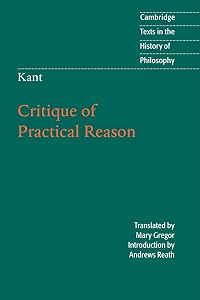

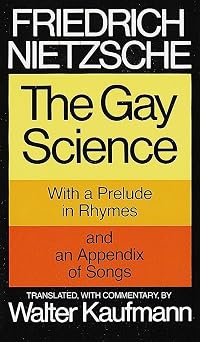

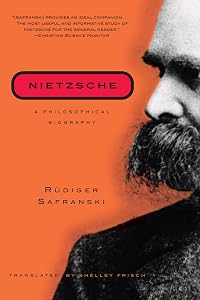
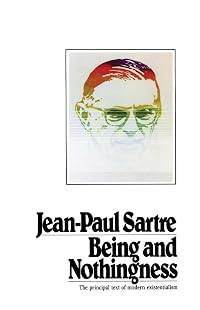













Member Recommendations

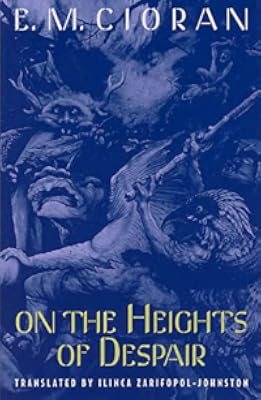
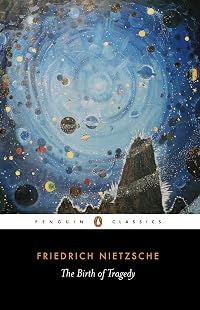
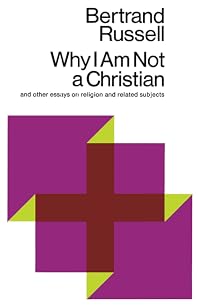
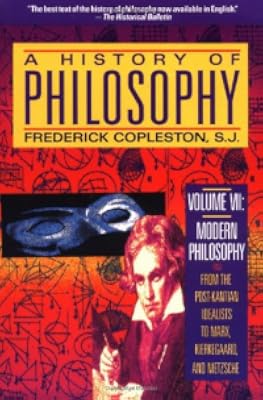
Waldheri Similar because: both anti-religious writings, concentrating on Christianity, of which both contend their unnatural doctrines. Both have humour and readable in one sitting.
Member Reviews
An intense and damning work - one not to be caught reading in public where I live.
A fearsome, angry, snarl against Christianity, as it was at the time. Rails and rambles against the decadence and nihilism of Christianity, of weakness, of parasitism, of the promise of eternal life, the corruption of the Church and priesthood, and of the evils justified by religion. It is a means for which the weak can resent and dominate or refuse the strong, or the ways of the world, as he says.
As for Jesus? A misguided redeemer, who promised "The kingdom of god is within you", and perhaps the only true Christian.
This is not exactly a book one can read, and put aside, and say, "That was interesting. On to the next one." It stays with you - as madness or show more as a spark of genius.
As a side note, my copy was translated by H. L. Mencken, also famous for his acidic style and critique of American religion. A funny historical coincidence.
Recommended for Hyperboreans. show less
A fearsome, angry, snarl against Christianity, as it was at the time. Rails and rambles against the decadence and nihilism of Christianity, of weakness, of parasitism, of the promise of eternal life, the corruption of the Church and priesthood, and of the evils justified by religion. It is a means for which the weak can resent and dominate or refuse the strong, or the ways of the world, as he says.
As for Jesus? A misguided redeemer, who promised "The kingdom of god is within you", and perhaps the only true Christian.
This is not exactly a book one can read, and put aside, and say, "That was interesting. On to the next one." It stays with you - as madness or show more as a spark of genius.
As a side note, my copy was translated by H. L. Mencken, also famous for his acidic style and critique of American religion. A funny historical coincidence.
Recommended for Hyperboreans. show less
It is possible to see this as too aristocratic. After all, 'Or can any teach God knowledge? Seeing as he judges those which are high.'
But for all that, here is hot fury and cold steel, and it cuts deep...
And, of course, it would be easy to draw facile comparisons between him and the 'New Atheists'--Hitchens, Dawkins, Harris--and it's been done; but that's just comparing children with a grown-up.
Each one of them is--Smart Like A Moron! Though I suppose they're sure clever, since stupid people say so.
After all, it's not like the Pharisees and the dictionary freaks (of monkish habit) are going to find the answer. They're as lost as Hitler!
And, if anyone's wondering, Was Nietzsche German? I doubt it. ("These Germans are my enemies" he show more says! And he also sings the praises of Imperial Rome for almost the *sole* reason of wanting to shame his smart-like-a-moron countrymen.) Indeed, it was his cross to be so surrounded by the plague of Victorian Germanic-Teutonic introverted losers which had so infected and deformed the Europe of his day. Far more real of an infection than whatever dream of "Eastern Jews" that the Nazis used to fret of...like wrestlers with the sensibilities of snobs: "Eastern Jews! (Uneducated)!" Yet those old German military-academic scientists were the real 'life unworthy of life', as the Nazis used to say.
God! useless weak people, always trying to bully everyone. Like one of those two-and-a-half pound dogs that always wants to fight...
Although I like the ones that are too grand to fight even better. They go through life with their eyes safely shut, and if they provoke you, they'll never admit it, because their eyes are too weak to see you or your concerns, their eyes are too weak to even see their feet, although at least they have their conceit, even if they are too fat to reach their feet. And too grand, of course, to even want to.
But whatever fools say, there is never anything wrong with wanting to be a little noble, no matter how low-born you are.
So let them say of thee, that he, 'adventured his life far'.
Or else is she, 'wild for to hold, though I seem tame'.
But what do they know of life, who live as the dead? So rest in your conceit, Christians, for your sin rests on you.
For, after all, they have no sense of correctness, only of conceit, and the privilege of little lords who are too lazy to do any work: so what is more weak than that? And jealousy of anything capable of real kindness and generosity: did they think that this too would go unnoticed? But, come, let us not disturb the moral invalids--the ethically feeble, more vexed by slights to their cloistered names and parochial words, than to the sorrows of the people and catastrophes of the others--let them rest in their sins, for their sins rest in them.
(9/10) show less
But for all that, here is hot fury and cold steel, and it cuts deep...
And, of course, it would be easy to draw facile comparisons between him and the 'New Atheists'--Hitchens, Dawkins, Harris--and it's been done; but that's just comparing children with a grown-up.
Each one of them is--Smart Like A Moron! Though I suppose they're sure clever, since stupid people say so.
After all, it's not like the Pharisees and the dictionary freaks (of monkish habit) are going to find the answer. They're as lost as Hitler!
And, if anyone's wondering, Was Nietzsche German? I doubt it. ("These Germans are my enemies" he show more says! And he also sings the praises of Imperial Rome for almost the *sole* reason of wanting to shame his smart-like-a-moron countrymen.) Indeed, it was his cross to be so surrounded by the plague of Victorian Germanic-Teutonic introverted losers which had so infected and deformed the Europe of his day. Far more real of an infection than whatever dream of "Eastern Jews" that the Nazis used to fret of...like wrestlers with the sensibilities of snobs: "Eastern Jews! (Uneducated)!" Yet those old German military-academic scientists were the real 'life unworthy of life', as the Nazis used to say.
God! useless weak people, always trying to bully everyone. Like one of those two-and-a-half pound dogs that always wants to fight...
Although I like the ones that are too grand to fight even better. They go through life with their eyes safely shut, and if they provoke you, they'll never admit it, because their eyes are too weak to see you or your concerns, their eyes are too weak to even see their feet, although at least they have their conceit, even if they are too fat to reach their feet. And too grand, of course, to even want to.
But whatever fools say, there is never anything wrong with wanting to be a little noble, no matter how low-born you are.
So let them say of thee, that he, 'adventured his life far'.
Or else is she, 'wild for to hold, though I seem tame'.
But what do they know of life, who live as the dead? So rest in your conceit, Christians, for your sin rests on you.
For, after all, they have no sense of correctness, only of conceit, and the privilege of little lords who are too lazy to do any work: so what is more weak than that? And jealousy of anything capable of real kindness and generosity: did they think that this too would go unnoticed? But, come, let us not disturb the moral invalids--the ethically feeble, more vexed by slights to their cloistered names and parochial words, than to the sorrows of the people and catastrophes of the others--let them rest in their sins, for their sins rest in them.
(9/10) show less
It’s a sustained and bitter attack at Christianity's inherent contradictions and, for Nietzsche, its poisoning and stultification of Western civilization. While there were some sections in this work that I appreciated, his discussion of Buddhism and Islam, there were also some that I didn't appreciate, and still more that just made me scratch my head. Undeniably, it's an informative read, that, despite it's page count, is also a deceptively dense read. As a historical curiosity, the book is also indicative of the emergent fascination of German intellectuals for India and the Orient.
Reading Twilight of the Idols and The Antichrist, I feel like I'm feeling Nietzsche's abilities fading. The points he makes are very similar to those made in his other books, but here, there's a deep anger that's seeped into the prose. With the guy's migraine problems, I can hardly blame him, but the books end up coming out so much more bitter, so much more full of gravity and ressentiment than his earlier works. I'd recommend The Gay Science, On the Genealogy of Morals, and Beyond Good and Evil way above these.
Probably the most accessible Nietzsche I have read. A scathing critique of Christianity, mostly for the way in which it denies reality and makes truth/morality claims that are not true because they are removed from reality.
A well thought out, harsh criticism of Christianity.
"Man himself had been his(God's)greatest blunder; he had created a rival to himself; science makes men godlike -- it is all up with priests and gods when man becomes scientific!"
"Man himself had been his(God's)greatest blunder; he had created a rival to himself; science makes men godlike -- it is all up with priests and gods when man becomes scientific!"
Nietzsche's Antichrist, or more correctly Antichristian, is a sharp, well thought out attack on Christianity and organized religion. Nietzsche believed that all men were not created equal and that the equality created by Christianity made man weak. Nietzsche believed in the will to power or the individual acting to gain power and strength. Christianity, on the other hand, is a slave morality according to Nietzsche. Good and evil are judged by intentions. Nietzsche does say this book is for a small audience. The reader is one who must be entirely intellectually honest and willing to reject tradition.
This Dover edition presents a short biography on Nietzsche followed by an introduction to this work. The detailed introduction and show more translation from Germany are provided by H.L. Mencken. Mencken who was a scholar, social critic, journalist, and satirist. He spoke German growing up and became a great admirer of Nietzsche's philosophy. This makes for an interesting read as the philosopher, and the translator were of the same beliefs. This edition is an excellent value from Dover Thrift Books for those who have an interest in Nietzsche. The Kindle edition is $0.99 and excellently formatted. The paperback edition is of the same quality and $3.00
Available 12/19/18 show less
This Dover edition presents a short biography on Nietzsche followed by an introduction to this work. The detailed introduction and show more translation from Germany are provided by H.L. Mencken. Mencken who was a scholar, social critic, journalist, and satirist. He spoke German growing up and became a great admirer of Nietzsche's philosophy. This makes for an interesting read as the philosopher, and the translator were of the same beliefs. This edition is an excellent value from Dover Thrift Books for those who have an interest in Nietzsche. The Kindle edition is $0.99 and excellently formatted. The paperback edition is of the same quality and $3.00
Available 12/19/18 show less
Members
- Recently Added By
Lists

German Literature
518 works; 55 members

Jordan B. Peterson's Recommended Books
104 works; 5 members

Atheism, humanism, freethought, &c. — Best nonfiction books in favour of
167 works; 14 members

Books Referenced by Izetbegovic's Islam Between East and West
233 works; 2 members

el
1,139 works; 1 member
Author Information

1,378+ Works 78,253 Members
The son of a Lutheran pastor, Friedrich Wilhelm Nietzsche was born in 1844 in Roecken, Prussia, and studied classical philology at the Universities of Bonn and Leipzig. While at Leipzig he read the works of Schopenhauer, which greatly impressed him. He also became a disciple of the composer Richard Wagner. At the very early age of 25, Nietzsche show more was appointed professor at the University of Basel in Switzerland. In 1870, during the Franco-Prussian War, Nietzsche served in the medical corps of the Prussian army. While treating soldiers he contracted diphtheria and dysentery; he was never physically healthy afterward. Nietzsche's first book, The Birth of Tragedy Out of the Spirit of Music (1872), was a radical reinterpretation of Greek art and culture from a Schopenhaurian and Wagnerian standpoint. By 1874 Nietzsche had to retire from his university post for reasons of health. He was diagnosed at this time with a serious nervous disorder. He lived the next 15 years on his small university pension, dividing his time between Italy and Switzerland and writing constantly. He is best known for the works he produced after 1880, especially The Gay Science (1882), Thus Spake Zarathustra (1883-85), Beyond Good and Evil (1886), On the Genealogy of Morals (1887), The Antichrist (1888), and Twilight of the Idols (1888). In January 1889, Nietzsche suffered a sudden mental collapse; he lived the last 10 years of his life in a condition of insanity. After his death, his sister published many of his papers under the title The Will to Power. Nietzsche was a radical questioner who often wrote polemically with deliberate obscurity, intending to perplex, shock, and offend his readers. He attacked the entire metaphysical tradition in Western philosophy, especially Christianity and Christian morality, which he thought had reached its final and most decadent form in modern scientific humanism, with its ideals of liberalism and democracy. It has become increasingly clear that his writings are among the deepest and most prescient sources we have for acquiring a philosophical understanding of the roots of 20th-century culture. (Bowker Author Biography) show less
Friedrich Nietzsche has a Legacy Library. Legacy libraries are the personal libraries of famous readers, entered by LibraryThing members from the Legacy Libraries group.
Some Editions
Series
Belongs to Publisher Series
Work Relationships
Is contained in
Sämtliche Werke. Bd 6, Der Fall Wagner ; Götzen-Dämmerung ; Der Antichrist ; Ecce homo ; Dionysos-Dithyramben ; Nietzsche contra Wagner by Friedrich Nietzsche
Has as a student's study guide
Common Knowledge
- Canonical title
- The Antichrist
- Original title
- Der Antichrist, Fluch auf das Christenthum
- Original publication date
- 1888
- First words
- This book belongs to the very few.
- Quotations
- In Christianity neither morality nor religion come into contact with reality at any point.
What is good? All that heightens the feeling of power in man, the will to power, power itself. What is bad? All that is born of weakness. What is happiness? The feeling that power is growing, that resistance is overcome.
Christianity is called the religion of pity. - Last words
- (Click to show. Warning: May contain spoilers.)And time is reckoned from the dies nefastus upon which this fatality came into being - from the first day of Christianity! - why not rather from its last day? - From to-day?
- Original language
- German
Classifications
Statistics
- Members
- 2,777
- Popularity
- 6,605
- Reviews
- 35
- Rating
- (3.81)
- Languages
- 21 — Catalan, Chinese, Czech, Danish, Dutch, English, Estonian, Finnish, French, German, Greek, Hungarian, Italian, Japanese, Latvian, Norwegian (Bokmål), Polish, Romanian, Spanish, Turkish, Portuguese (Portugal)
- Media
- Paper, Audiobook, Ebook
- ISBNs
- 280
- UPCs
- 1
- ASINs
- 55