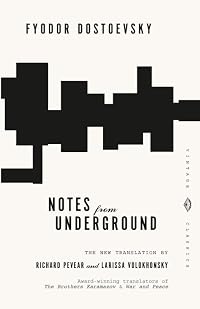
Notes from Underground
by Fyodor Dostoyevsky
On This Page
Description
Notes from the Underground is Fyodor Dostoevsky's 1864 masterpiece following the ranting, slightly unhinged memoir of an isolated, anonymous civil servant. A dramatic monologue in which the narrator leaves himself open to ridicule and reveals more of his weaknesses than he intends, this influential short novel lays the ground work for the political, religious, moral and political ideas that are explored in Dostoevsky's later works..
Tags
Recommendations


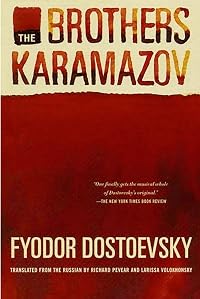
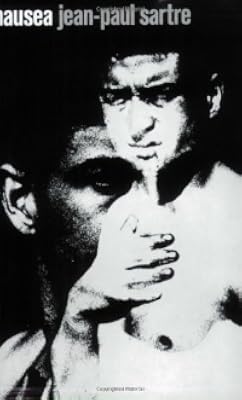
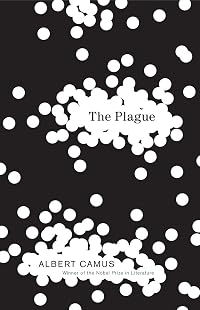

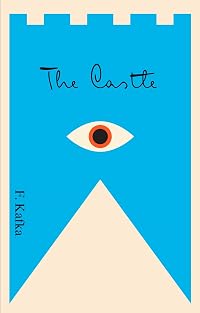
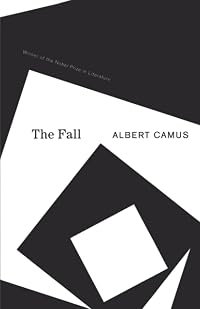
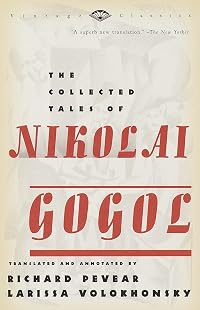
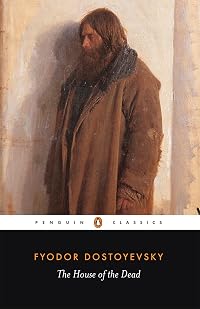
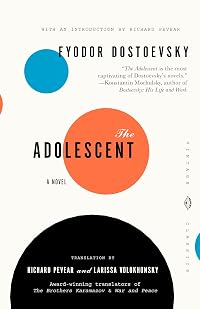




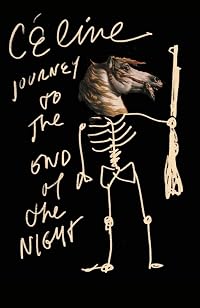
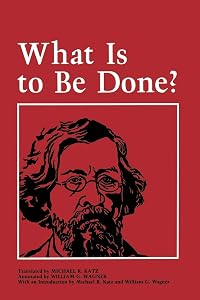


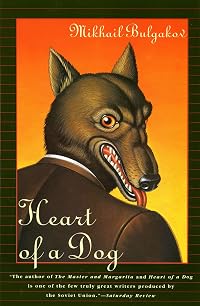


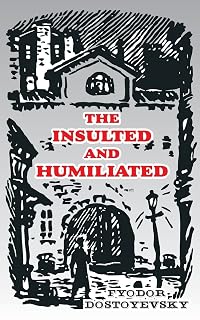


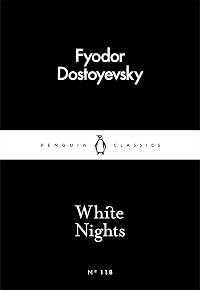


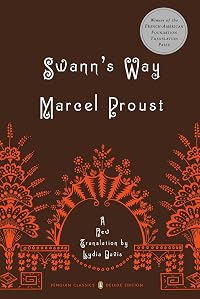

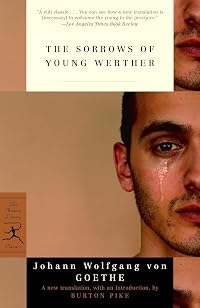

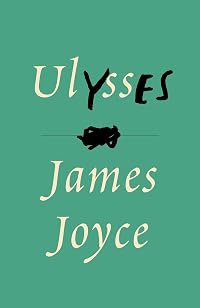

Member Recommendations


Member Reviews
I’m not sure if this novel is timeless or ahead of its time, but either way, it’s one of the most profound and yet relatable works I’ve ever read. I saw a Youtube video that updated the setting of the novel by portraying the main character as a blogger, and I’m convinced that if the Underground Man were alive today, the first forty pages of his book would indeed have taken the form of a blog. He shares his philosophical and existential ramblings, pretending he has an audience, but admitting that no one is really listening.
In the second part of the novel, he transitions from philosophizing to recounting the actual events that drove him to isolation and despair. The humor is (sometimes painfully) relatable as the protagonist’s show more rich inner life is contrasted with his bathetic social interactions. For example, the section in which he tries to impress the popular kids from his former school—several years too late to improve their opinion of him—reminds me of the song “High School Never Ends.” The Underground Man’s disastrous attempts to gain the recognition he believes he deserves are as darkly hilarious as anything in contemporary entertainment, but with an added depth. Like the clues at the start of a well-written mystery novel, the narrator’s existential ramblings at the beginning of the book take on an ironic quality upon rereading. Although the underground man’s claims that humans will always choose freedom over happiness and individuality over rationality may be controversial as generalizations, they are certainly true of his own life. show less
In the second part of the novel, he transitions from philosophizing to recounting the actual events that drove him to isolation and despair. The humor is (sometimes painfully) relatable as the protagonist’s show more rich inner life is contrasted with his bathetic social interactions. For example, the section in which he tries to impress the popular kids from his former school—several years too late to improve their opinion of him—reminds me of the song “High School Never Ends.” The Underground Man’s disastrous attempts to gain the recognition he believes he deserves are as darkly hilarious as anything in contemporary entertainment, but with an added depth. Like the clues at the start of a well-written mystery novel, the narrator’s existential ramblings at the beginning of the book take on an ironic quality upon rereading. Although the underground man’s claims that humans will always choose freedom over happiness and individuality over rationality may be controversial as generalizations, they are certainly true of his own life. show less
I'm sick of feeling like Dostoevsky took all my thoughts, made them 1000 times better, and then wrote them down 150 years ago in a way nobody else ever could. It's getting old.
The Underground man is a complicated figure, at times sympathetic, almost always frustrating, and even occasionally hilarious. His biggest problem (he has quite a few problems) seems to be that he's way too deep in his own head. It's easy to make a connection between the Underground man and Raskolnikov from Crime and Punishment, which came just two years after Notes from Underground, but I think the idea of taking one's personal philosophy to its extremes is even more evident in The Brothers Karamazov, especially in the middle brother, Ivan. One trait of all three show more characters is their over-reliance on their own minds and (to varying degrees) an abandonment of all else. The consequences of this are far more dire for Raskolnikov and Ivan Karamazov, but the story of the Underground man is tragic enough in its own way.
Part 1, "Underground," is a real grind. It's very raw and intentionally lacks any literary polish. Dostoevsky could never be accused of brevity, but some of the sentences in "Underground" go on for nearly 20 lines, all of it clearly important but hard to immediately understand. I had to read it twice before I was ready to move on. However, there's a lot of brilliance here. It's a 40-page rant that covers the potential for pleasure in hopelessness, how human consciousness is the root of inertia, the stupidity of a man able to enact revenge, and the incalculable nature of free will. Even his throwaway points, like how civilization breeds versatility rather than civilized behavior and how much sophistication and nuance go in to the moans of a man with a toothache, are fascinating and fantastic.
The key point among these, at least for the Underground man, was on free will. Based on the notes from Pevear and Volokhonsky (who once again knock it out of the park with their translation), the Underground man frequently references the utopian socialism and the rational egoism of Nikolai Chernyshevsky, who was a major influence on figures like Vladimir Lenin and Emma Goldman. He is critiquing Chernyshevsky's idea that a society can be built based around providing people with exactly what they want and formulaically predicting all of human action. The Underground man argues that no matter what system is put in place to tell people exactly what they want and what they should do in order to get what they want, there will always be someone who purposefully breaks from the template just to prove that he is in control of his own life and has free will. While this is a fair point, I think an even stronger indictment of Chernyshevsky's work comes from the life of the Underground man himself as described in Part 2: "Apropos of the Wet Snow."
The Underground man is suffering from an internal war between his thoughts and his impulses (he uses the word 'caprice'). Not only does he make decisions that lead him to suffer, but he also makes decisions that he doesn't even want to make. He requests to go to a dinner party with people he doesn't like to celebrate the success of a man he despises. He immediately regrets his decision and then continues to make things worse in the hours leading up to the dinner and at the dinner itself. There's no logic to any of it. It hurts him. Nobody benefits, especially not the other people involved. So why does he do it? He's able to come up with reasons afterwards, but in the moment, it's just an impulse for him. So the question must be posed to Chernyshevsky (and Lenin and Goldman): How do you predict that kind of behavior? How do you legislate and control decisions that are barely even up to the man making those decisions? Dostoevsky makes this point over and over again throughout his works: Predicting human behavior is impossible, and controlling it even more so.
The second half of Part 2 is painful. You know how it's going to turn out before you read it because the Underground man tells you that his story comes many years before he is writing Part 1, but it's really hard not to hope, at least just a little, that things will turn out better than how they obviously will. The moment the Underground man breaks down into tears and is forced to admit how pitiful his life is just kills me.
Dostoevsky is the best ever. Period. He perfectly rips into social planning 80 years before Hayek did it. He understands human behavior better than Tolstoy. And in an era of Victorian fluff, he was willing to roll around with the filth of the world. The guy did it all. Notes from Underground is the story of a loser, how he came to be that way, and how he cannot help but stay that way. It hurts, and I love it. show less
The Underground man is a complicated figure, at times sympathetic, almost always frustrating, and even occasionally hilarious. His biggest problem (he has quite a few problems) seems to be that he's way too deep in his own head. It's easy to make a connection between the Underground man and Raskolnikov from Crime and Punishment, which came just two years after Notes from Underground, but I think the idea of taking one's personal philosophy to its extremes is even more evident in The Brothers Karamazov, especially in the middle brother, Ivan. One trait of all three show more characters is their over-reliance on their own minds and (to varying degrees) an abandonment of all else. The consequences of this are far more dire for Raskolnikov and Ivan Karamazov, but the story of the Underground man is tragic enough in its own way.
Part 1, "Underground," is a real grind. It's very raw and intentionally lacks any literary polish. Dostoevsky could never be accused of brevity, but some of the sentences in "Underground" go on for nearly 20 lines, all of it clearly important but hard to immediately understand. I had to read it twice before I was ready to move on. However, there's a lot of brilliance here. It's a 40-page rant that covers the potential for pleasure in hopelessness, how human consciousness is the root of inertia, the stupidity of a man able to enact revenge, and the incalculable nature of free will. Even his throwaway points, like how civilization breeds versatility rather than civilized behavior and how much sophistication and nuance go in to the moans of a man with a toothache, are fascinating and fantastic.
The key point among these, at least for the Underground man, was on free will. Based on the notes from Pevear and Volokhonsky (who once again knock it out of the park with their translation), the Underground man frequently references the utopian socialism and the rational egoism of Nikolai Chernyshevsky, who was a major influence on figures like Vladimir Lenin and Emma Goldman. He is critiquing Chernyshevsky's idea that a society can be built based around providing people with exactly what they want and formulaically predicting all of human action. The Underground man argues that no matter what system is put in place to tell people exactly what they want and what they should do in order to get what they want, there will always be someone who purposefully breaks from the template just to prove that he is in control of his own life and has free will. While this is a fair point, I think an even stronger indictment of Chernyshevsky's work comes from the life of the Underground man himself as described in Part 2: "Apropos of the Wet Snow."
The Underground man is suffering from an internal war between his thoughts and his impulses (he uses the word 'caprice'). Not only does he make decisions that lead him to suffer, but he also makes decisions that he doesn't even want to make. He requests to go to a dinner party with people he doesn't like to celebrate the success of a man he despises. He immediately regrets his decision and then continues to make things worse in the hours leading up to the dinner and at the dinner itself. There's no logic to any of it. It hurts him. Nobody benefits, especially not the other people involved. So why does he do it? He's able to come up with reasons afterwards, but in the moment, it's just an impulse for him. So the question must be posed to Chernyshevsky (and Lenin and Goldman): How do you predict that kind of behavior? How do you legislate and control decisions that are barely even up to the man making those decisions? Dostoevsky makes this point over and over again throughout his works: Predicting human behavior is impossible, and controlling it even more so.
The second half of Part 2 is painful. You know how it's going to turn out before you read it because the Underground man tells you that his story comes many years before he is writing Part 1, but it's really hard not to hope, at least just a little, that things will turn out better than how they obviously will. The moment the Underground man breaks down into tears and is forced to admit how pitiful his life is just kills me.
Dostoevsky is the best ever. Period. He perfectly rips into social planning 80 years before Hayek did it. He understands human behavior better than Tolstoy. And in an era of Victorian fluff, he was willing to roll around with the filth of the world. The guy did it all. Notes from Underground is the story of a loser, how he came to be that way, and how he cannot help but stay that way. It hurts, and I love it. show less
One of my largest concerns when I decided to tackle the 1,001 Books to Read Before You Die List was the Russian authors. I wasn’t sure that I was up to the task of reading these literary giants so I was pleasantly surprised to find that I actually liked everything by Gogol that I have read, and that I really enjoyed Anna Karenina. I decided it was time to try Dostoyevsky and chose Notes From Underground to read by installment. Bad choice as all my fears about Russian authors came true with this book.
For the first half of the book, the author appears to be on one long rant using the irritable, abrasive, and antisocial main character who rambles on about his philosophy and thoughts on life. Although this unnamed character is an educated show more and supposedly intelligent man, he comes across as a paranoid loner who despises Russian society.
The second half of the book is composed of the narrator sharing various stories from his life that illustrate how alienated he is from the world. The narrator is quite dislikeable, and I found his bitter and vengeful stories exhausting. I was very happy to reach the end of this book.
Luckily this was a short book of less than 200 pages, although its’ density and unpleasant subject matter made it seem much longer. I made the mistake of choosing a short book in the hopes that this would mean an easier read and I have since read that Notes From Underground is considered one of his most difficult reads. I’m not sure I would have been able to complete the read if it had been in a different format rather than the short installments that I read much as one would take a twice weekly dose of medicine. I’m not here to judge whether this is a great literary achievement, I rather suspect it is, but it is also a difficult read that I had trouble understanding, and I am glad to be done with it and happy to be able to check this one off my list. show less
For the first half of the book, the author appears to be on one long rant using the irritable, abrasive, and antisocial main character who rambles on about his philosophy and thoughts on life. Although this unnamed character is an educated show more and supposedly intelligent man, he comes across as a paranoid loner who despises Russian society.
The second half of the book is composed of the narrator sharing various stories from his life that illustrate how alienated he is from the world. The narrator is quite dislikeable, and I found his bitter and vengeful stories exhausting. I was very happy to reach the end of this book.
Luckily this was a short book of less than 200 pages, although its’ density and unpleasant subject matter made it seem much longer. I made the mistake of choosing a short book in the hopes that this would mean an easier read and I have since read that Notes From Underground is considered one of his most difficult reads. I’m not sure I would have been able to complete the read if it had been in a different format rather than the short installments that I read much as one would take a twice weekly dose of medicine. I’m not here to judge whether this is a great literary achievement, I rather suspect it is, but it is also a difficult read that I had trouble understanding, and I am glad to be done with it and happy to be able to check this one off my list. show less
Let us imagine a person who has attained inner calm. Let us make one more small assumption and place this person by a body of water. What I personally see is an immeasurable, smooth expanse: perhaps the person is sitting in a boat, perhaps the person is resting directly on the water, or perhaps there is no person there at all — it is not so important. But if you imagine yourself in this position, it quickly becomes clear that the surface does not remain smooth forever. We are disturbed by anxiety, resentment, shame, envy, fear — and ripples appear on the water. Sometimes ripples turn into waves. Sometimes into a storm. But how do we calm down? Speaking for myself, it most often happens through reasoning. When the “picture of the show more world” comes together again, the feel ings remain, but the tormenting question disappears. It is as if I tell myself: now it is clear; the rest can be endured. At that point, my surface settles.
And this is where Notes from Underground begins. Dostoevsky takes this familiar strategy of the rational person — finding calm through understanding — and pushes it to the point where it breaks. What if thought does not calm, but accelerates? What if behind every reason another immediately arises, even more “primary,” and so on into infinity? Then the water no longer levels out. Every answer gives birth to a new wave. And then it is not a storm, but a whirlpool: consciousness pulls itself inward.
“Why, how am I, for example, to set my mind at rest? Where are the primary causes on which I am to build? Where are my foundations? Where am I to get them from? I exercise myself in reflection, and consequently with me every primary cause at once draws after itself another still more primary, and so on to infinity.”
This is an important emphasis: the underground man is not “bad” in any banal sense. He starts out as someone who sees his own lies too clearly, hears the falseness of motives too sharply, and cannot tolerate final formulas — precisely that “twice two makes four,” which for him is not truth but the beginning of dead calm. His rationality is driven to absurdity: it exposes everything, including himself, but gives no footing, no right to simple action. And the more he strives for truth and purity of reasoning, the more his reason turns into a mechanism of self-destruction.
Dostoevsky states this directly: heightened consciousness becomes a disease. Because thought ceases to be an instrument of life and becomes an independent force that devours life. The underground man seems to be made out of the intelligentsia’s habit of “fighting the low within oneself,” but he loses that fight — and this is crucial. The writer shows that very sordid part of the developed person that is usually fought against, and demonstrates what happens when the war ends in capitulation.
What is most unpleasant about the hero is not the filth, but the fact that he sees it through and through. He can call his actions vile, expose his own pose, explain how he deceives himself — and still continue doing the same thing. Hence the feeling of fragmentation: he exposes his own falseness and immediately hides in it again, because without a pose, he cannot endure reality. He is capable of canceling himself in two neighboring sentences, because inside him there is no stable “yes”: only a struggle of images he tries on, and instant self-hatred for trying them on.
As a result, he is left with two extremes, between which he is constantly thrown.
The first is icy rationality. It is merciless: it exposes self-justifications, reveals true motives, lays bare pettiness. But at the same time, it paralyzes. He cannot begin, because any “primary foundation” immediately decomposes under the next question. He envies “men of action” not for their morality, but for their ability to accept the nearest cause as the main one and calm down — because without calm, action does not start. Hence his “conscious inertia”: the mind as an engine that does not transmit rotation to the wheels.
The second extreme is bookishness. This is not just erudition, but life “by script”: the hero constantly holds literary poses and lines in his head. He dreams of the “beautiful and sublime,” plays the role of the “poet against society,” constructs theatrical plans (duels, dramatic entrances, humiliations “by the rules of the genre”). A clear example is his desire to take revenge on his comrade Zverkov, who publicly humiliated him.
“And so I am bound to slap Zverkov’s face! It is my duty to. And so it is settled; I am flying to give him a slap in the face. [...] As soon as I go in I’ll give it him. Ought I before giving him the slap to say a few words by way of preface? No. I’ll simply go in and give it him. They will all be sitting in the drawing-room, and he with Olympia on the sofa. That damned Olympia! She laughed at my looks on one occasion and refused me.”
And unlike Don Quixote, whose books pushed him toward naive goodness, the underground man’s books more often push him toward self-assertion through suffering and contempt—not “help the weak,” but prove one’s own exclusivity, be recognized. He can be either a hero or filth; he cannot endure the middle. And this bookish extreme does not heal his reason—it merely supplies him with new masks.
And these two extremes coexist quite well.
“Either to be a hero or to grovel in the mud—there was nothing between. That was my ruin, for when I was in the mud I comforted myself with the thought that at other times I was a hero, and the hero was a cloak for the mud: for an ordinary man it was shameful to defile himself, but a hero was too lofty to be utterly defiled, and so he might defile himself.”
The hero simultaneously longs for a clear formula and hates it. He is irritated by the idea that human life can be reduced to “twice two makes four”: a final answer, a crystal palace, a system where everything is calculated and correct in advance. In such a formula he feels not truth, but death—“after that there is nothing to desire.” And so he defends the right to caprice, to “twice two makes five,” to absurd self-will that destroys any scheme.
“And who knows (there is no saying with certainty), perhaps the only goal on earth to which mankind is striving lies in this incessant process of attaining, in other words, in life itself, and not in the thing to be attained, which must always be expressed as a formula, as positive as twice two makes four, and such positiveness is not life, gentlemen, but is the beginning of death. Anyway, man has always been afraid of this mathematical certainty, and I am afraid of it now. Granted that man does nothing but seek that mathematical certainty, he traverses oceans, sacrifices his life in the quest, but to succeed, really to find it, dreads, I assure you. He feels that when he has found it there will be nothing for him to look for. When workmen have finished their work they do at least receive their pay, they go to the tavern, then they are taken to the police-station — and there is occupation for a week. But where can man go? Anyway, one can observe a certain awkwardness about him when he has attained such objects. He loves the process of attaining, but does not quite like to have attained, and that, of course, is very absurd.”
This passage recalls Camus: the absurd as the collision between the human demand for meaning and the silence of the world; rebellion as the refusal to reconcile oneself with the “stone wall.” Man does not want to be a piano key, does not want to be a correctly arranged mechanism. He is ready to choose even harm to himself just to confirm: I am not a function, I am will. In this sense, the underground man almost proclaims existential freedom — but in his case, freedom does not create; it rots.
And here is the most difficult question: if the hero is so rational and sees everything so subtly, why does he commit vile acts — especially toward those who could be dear to him? The most obvious answer is power: to humiliate another in order to feel superior for at least a second. This works in many episodes: the childhood friend, the officer, colleagues, Liza. But this explanation seems too thin. There is indeed a striving for power in him — but it is not primary. What is more primary is something else: a painful need to be recognized as a human being, as an equal, as someone who exists. Not “to be above,” but “not to be nothing.” And when the world does not grant this — when he is unnoticed, pushed aside, forgotten, looked through — rage rises in him. This is not the rage of a victor, but of the humiliated. And then a compensatory mechanism arises: in order to restore a sense of reality, he tries to place another person in the position he himself fears most. Hence his meanness toward those who are close to him or could become close. With strangers it is easier: one can keep distance, play a role, preserve the illusion of dignity. Intimacy, however, is dangerous because it makes you visible without a mask. There you can no longer fully hide behind a literary pose. There someone may see your wretchedness, your need, your dependence — and for the underground man this is unbearable. He fears not so much another’s strength as another’s ability to see him as he really is. And so he chooses vileness as protection: better to humiliate, or even be humiliated; better to destroy the possibility of closeness. For closeness is dangerous to the underground man not because it makes him “weak,” but because it makes him dependent and thus deprives him of control over the situation. As we have distinguished, what matters to him is not “power over others,” but the ability not to end up in a position where another person can “give or withhold” recognition, love, forgiveness — and thereby define him. To accept Liza’s compassion would mean acknowledging his need for another and taking on the obligation to be alive, grateful, to reciprocate; this would destroy the underground as the only space where he sets the rules and preserves distance. That is why he chooses vileness as protection: to humiliate, push away, sabotage the contact in advance — so that the outcome is decided by him, not by her.
Hence one of the most precise ideas of the novella: pleasure in humiliation. The underground man knows how to carry self-abasement to the point of sweetness. He does not merely suffer — he extracts from suffering a confirmation of his “specialness,” of his refined inner structure. He savors his own baseness not because he loves it, but because it is the only thing he feels to be absolutely his own: “this is what I am like; I have reached the final wall.” This is the absurd extreme of a mechanism that usually restrains a rational person from evil: reflection is supposed to brake wrongdoing, but here reflection becomes a sauce for evil and a justification of evil (“I understand everything”), and even a stimulus for it (“since I am like this, I will be like this to the end”).
Liza is the key element. Her strength is not in morality, but in the simplicity of living feeling. She sees through his bookish monologue what he himself cannot endure: his misery. She offers not a “solution,” but contact — human closeness. And this knocks the ground from under him: for a second he becomes real, and that is precisely why he then necessarily pushes her away. Because if he accepts her compassion, the underground collapses. And without the underground, he does not know who he is.
From this follows my main question — and my personal interest in the book. Why will I not repeat his trajectory? After all, the starting point is similar: a thirst for an ephemeral “truth,” revulsion toward self-deception, a desire to live “honestly.” The difference, as I see it, lies in what a person serves. The underground man formally worships reason, but in fact does not live reasonably. Rationality is the ability to maintain a connection between understanding and action, between thought and responsibility. With the hero, all his outbursts occur either in defiance of clear understanding (“I do something vile out of spite”), or in a mode of suspended reason (“I live by the book,” “I play a role”), or for the sake of painful self-sensation (“let it be worse, but it will be me”). Therefore, it seems to me that although the hero fell into the whirlpool because of his reason, and although he actively analyzes himself, he nevertheless does not serve his reason. More precisely, he is not a rational person, even though books have shown him what rationality is supposed to mean. show less
And this is where Notes from Underground begins. Dostoevsky takes this familiar strategy of the rational person — finding calm through understanding — and pushes it to the point where it breaks. What if thought does not calm, but accelerates? What if behind every reason another immediately arises, even more “primary,” and so on into infinity? Then the water no longer levels out. Every answer gives birth to a new wave. And then it is not a storm, but a whirlpool: consciousness pulls itself inward.
“Why, how am I, for example, to set my mind at rest? Where are the primary causes on which I am to build? Where are my foundations? Where am I to get them from? I exercise myself in reflection, and consequently with me every primary cause at once draws after itself another still more primary, and so on to infinity.”
This is an important emphasis: the underground man is not “bad” in any banal sense. He starts out as someone who sees his own lies too clearly, hears the falseness of motives too sharply, and cannot tolerate final formulas — precisely that “twice two makes four,” which for him is not truth but the beginning of dead calm. His rationality is driven to absurdity: it exposes everything, including himself, but gives no footing, no right to simple action. And the more he strives for truth and purity of reasoning, the more his reason turns into a mechanism of self-destruction.
Dostoevsky states this directly: heightened consciousness becomes a disease. Because thought ceases to be an instrument of life and becomes an independent force that devours life. The underground man seems to be made out of the intelligentsia’s habit of “fighting the low within oneself,” but he loses that fight — and this is crucial. The writer shows that very sordid part of the developed person that is usually fought against, and demonstrates what happens when the war ends in capitulation.
What is most unpleasant about the hero is not the filth, but the fact that he sees it through and through. He can call his actions vile, expose his own pose, explain how he deceives himself — and still continue doing the same thing. Hence the feeling of fragmentation: he exposes his own falseness and immediately hides in it again, because without a pose, he cannot endure reality. He is capable of canceling himself in two neighboring sentences, because inside him there is no stable “yes”: only a struggle of images he tries on, and instant self-hatred for trying them on.
As a result, he is left with two extremes, between which he is constantly thrown.
The first is icy rationality. It is merciless: it exposes self-justifications, reveals true motives, lays bare pettiness. But at the same time, it paralyzes. He cannot begin, because any “primary foundation” immediately decomposes under the next question. He envies “men of action” not for their morality, but for their ability to accept the nearest cause as the main one and calm down — because without calm, action does not start. Hence his “conscious inertia”: the mind as an engine that does not transmit rotation to the wheels.
The second extreme is bookishness. This is not just erudition, but life “by script”: the hero constantly holds literary poses and lines in his head. He dreams of the “beautiful and sublime,” plays the role of the “poet against society,” constructs theatrical plans (duels, dramatic entrances, humiliations “by the rules of the genre”). A clear example is his desire to take revenge on his comrade Zverkov, who publicly humiliated him.
“And so I am bound to slap Zverkov’s face! It is my duty to. And so it is settled; I am flying to give him a slap in the face. [...] As soon as I go in I’ll give it him. Ought I before giving him the slap to say a few words by way of preface? No. I’ll simply go in and give it him. They will all be sitting in the drawing-room, and he with Olympia on the sofa. That damned Olympia! She laughed at my looks on one occasion and refused me.”
And unlike Don Quixote, whose books pushed him toward naive goodness, the underground man’s books more often push him toward self-assertion through suffering and contempt—not “help the weak,” but prove one’s own exclusivity, be recognized. He can be either a hero or filth; he cannot endure the middle. And this bookish extreme does not heal his reason—it merely supplies him with new masks.
And these two extremes coexist quite well.
“Either to be a hero or to grovel in the mud—there was nothing between. That was my ruin, for when I was in the mud I comforted myself with the thought that at other times I was a hero, and the hero was a cloak for the mud: for an ordinary man it was shameful to defile himself, but a hero was too lofty to be utterly defiled, and so he might defile himself.”
The hero simultaneously longs for a clear formula and hates it. He is irritated by the idea that human life can be reduced to “twice two makes four”: a final answer, a crystal palace, a system where everything is calculated and correct in advance. In such a formula he feels not truth, but death—“after that there is nothing to desire.” And so he defends the right to caprice, to “twice two makes five,” to absurd self-will that destroys any scheme.
“And who knows (there is no saying with certainty), perhaps the only goal on earth to which mankind is striving lies in this incessant process of attaining, in other words, in life itself, and not in the thing to be attained, which must always be expressed as a formula, as positive as twice two makes four, and such positiveness is not life, gentlemen, but is the beginning of death. Anyway, man has always been afraid of this mathematical certainty, and I am afraid of it now. Granted that man does nothing but seek that mathematical certainty, he traverses oceans, sacrifices his life in the quest, but to succeed, really to find it, dreads, I assure you. He feels that when he has found it there will be nothing for him to look for. When workmen have finished their work they do at least receive their pay, they go to the tavern, then they are taken to the police-station — and there is occupation for a week. But where can man go? Anyway, one can observe a certain awkwardness about him when he has attained such objects. He loves the process of attaining, but does not quite like to have attained, and that, of course, is very absurd.”
This passage recalls Camus: the absurd as the collision between the human demand for meaning and the silence of the world; rebellion as the refusal to reconcile oneself with the “stone wall.” Man does not want to be a piano key, does not want to be a correctly arranged mechanism. He is ready to choose even harm to himself just to confirm: I am not a function, I am will. In this sense, the underground man almost proclaims existential freedom — but in his case, freedom does not create; it rots.
And here is the most difficult question: if the hero is so rational and sees everything so subtly, why does he commit vile acts — especially toward those who could be dear to him? The most obvious answer is power: to humiliate another in order to feel superior for at least a second. This works in many episodes: the childhood friend, the officer, colleagues, Liza. But this explanation seems too thin. There is indeed a striving for power in him — but it is not primary. What is more primary is something else: a painful need to be recognized as a human being, as an equal, as someone who exists. Not “to be above,” but “not to be nothing.” And when the world does not grant this — when he is unnoticed, pushed aside, forgotten, looked through — rage rises in him. This is not the rage of a victor, but of the humiliated. And then a compensatory mechanism arises: in order to restore a sense of reality, he tries to place another person in the position he himself fears most. Hence his meanness toward those who are close to him or could become close. With strangers it is easier: one can keep distance, play a role, preserve the illusion of dignity. Intimacy, however, is dangerous because it makes you visible without a mask. There you can no longer fully hide behind a literary pose. There someone may see your wretchedness, your need, your dependence — and for the underground man this is unbearable. He fears not so much another’s strength as another’s ability to see him as he really is. And so he chooses vileness as protection: better to humiliate, or even be humiliated; better to destroy the possibility of closeness. For closeness is dangerous to the underground man not because it makes him “weak,” but because it makes him dependent and thus deprives him of control over the situation. As we have distinguished, what matters to him is not “power over others,” but the ability not to end up in a position where another person can “give or withhold” recognition, love, forgiveness — and thereby define him. To accept Liza’s compassion would mean acknowledging his need for another and taking on the obligation to be alive, grateful, to reciprocate; this would destroy the underground as the only space where he sets the rules and preserves distance. That is why he chooses vileness as protection: to humiliate, push away, sabotage the contact in advance — so that the outcome is decided by him, not by her.
Hence one of the most precise ideas of the novella: pleasure in humiliation. The underground man knows how to carry self-abasement to the point of sweetness. He does not merely suffer — he extracts from suffering a confirmation of his “specialness,” of his refined inner structure. He savors his own baseness not because he loves it, but because it is the only thing he feels to be absolutely his own: “this is what I am like; I have reached the final wall.” This is the absurd extreme of a mechanism that usually restrains a rational person from evil: reflection is supposed to brake wrongdoing, but here reflection becomes a sauce for evil and a justification of evil (“I understand everything”), and even a stimulus for it (“since I am like this, I will be like this to the end”).
Liza is the key element. Her strength is not in morality, but in the simplicity of living feeling. She sees through his bookish monologue what he himself cannot endure: his misery. She offers not a “solution,” but contact — human closeness. And this knocks the ground from under him: for a second he becomes real, and that is precisely why he then necessarily pushes her away. Because if he accepts her compassion, the underground collapses. And without the underground, he does not know who he is.
From this follows my main question — and my personal interest in the book. Why will I not repeat his trajectory? After all, the starting point is similar: a thirst for an ephemeral “truth,” revulsion toward self-deception, a desire to live “honestly.” The difference, as I see it, lies in what a person serves. The underground man formally worships reason, but in fact does not live reasonably. Rationality is the ability to maintain a connection between understanding and action, between thought and responsibility. With the hero, all his outbursts occur either in defiance of clear understanding (“I do something vile out of spite”), or in a mode of suspended reason (“I live by the book,” “I play a role”), or for the sake of painful self-sensation (“let it be worse, but it will be me”). Therefore, it seems to me that although the hero fell into the whirlpool because of his reason, and although he actively analyzes himself, he nevertheless does not serve his reason. More precisely, he is not a rational person, even though books have shown him what rationality is supposed to mean. show less
There is, of course, nothing to like in this novel. The narrator's ramblings in the first part ("Underground") can be difficult to follow, and meaninglessness seems to be the result of everything. I read the translator's foreword last, not wanting spoilers or influence on my own reading, and I'm glad I read it as this illuminated for me the elements of parody in the story's climax.
Four stars for challenging my brain and managing to poke the "wicked" parts of my own self and forcing me to examine them while reading. Not an enjoyable read but an artistically and psychologically astute one.
Four stars for challenging my brain and managing to poke the "wicked" parts of my own self and forcing me to examine them while reading. Not an enjoyable read but an artistically and psychologically astute one.
I do not know enough Russian to fully appreciate it, but I know enough. I can feel 'the space under the floor' of the translation. I can see the absence of something there, that I know the Russian would fully explain.
My first Dostoyevsky and I am pleased it was this one. The nauseating, twisting anxiety and self loathing. The violent and unrepentant revulsion, bitterness, cruelty and nastiness, and the thrilling, shuddering language of it all. In it I can hear echoes of everything I love now -- Ladies and Gentlemen of the jury! -- And I see the angels and auroachs and the power of my perversion.
Staggering. Helpful to read certain phrases out loud. Despite being "Notes", it is obviously a piece written to be spoken.
My first Dostoyevsky and I am pleased it was this one. The nauseating, twisting anxiety and self loathing. The violent and unrepentant revulsion, bitterness, cruelty and nastiness, and the thrilling, shuddering language of it all. In it I can hear echoes of everything I love now -- Ladies and Gentlemen of the jury! -- And I see the angels and auroachs and the power of my perversion.
Staggering. Helpful to read certain phrases out loud. Despite being "Notes", it is obviously a piece written to be spoken.
Who would have imagined that the thoughts of such a loathsome and miserable person could make for such entertaining reading? In Fyodor Dostoevsky’s classic Notes from Underground, we meet Underground Man, a menial Russian bureaucrat living a squalid existence in St. Petersburg “that most abstract and pre-meditated city.” The novel is divided into two sections. The first part comprises Underground Man’s philosophical musings—sometimes thoughtful, sometimes wildly contradictory—arguing that people are neither enlightened nor rational, and only too willing to deny the simple fact that “twice two is four” merely for the perversity of doing so. The second part of the book then details three specific episodes from his past in show more which he was either offended by someone else’s actions or behaved very badly—almost hysterically foolish, in fact—to a variety of his acquaintances and colleagues.
Some critics have labeled Notes from Underground as the first Modernist novel while others have called it the first Existentialist novel. Whatever the truth of those lofty claims, it is easy to see the influence that this book has had on the development of literature over the subsequent 150 years, including the work of Kafka, Camus, and Sartre right up through that of Joyce, Woolf, Hemingway, and Faulkner. In Underground Man, the author has created one of the most compelling and frustrating characters I have ever come across; he is at once intelligent and hopelessly naïve, arrogant and frightened, lucid and self-delusional, as well as someone who desperately craves love but is incredibly cruel to a decent young woman who might provide it. He is someone who, through his actions and words, has much to teach us about ourselves, although that is likely the last thing he would ever want to do. Nevertheless, Underground Man is not a person you would want to have as a friend or even be forced to sit next to at a dinner party. show less
Some critics have labeled Notes from Underground as the first Modernist novel while others have called it the first Existentialist novel. Whatever the truth of those lofty claims, it is easy to see the influence that this book has had on the development of literature over the subsequent 150 years, including the work of Kafka, Camus, and Sartre right up through that of Joyce, Woolf, Hemingway, and Faulkner. In Underground Man, the author has created one of the most compelling and frustrating characters I have ever come across; he is at once intelligent and hopelessly naïve, arrogant and frightened, lucid and self-delusional, as well as someone who desperately craves love but is incredibly cruel to a decent young woman who might provide it. He is someone who, through his actions and words, has much to teach us about ourselves, although that is likely the last thing he would ever want to do. Nevertheless, Underground Man is not a person you would want to have as a friend or even be forced to sit next to at a dinner party. show less
Members
- Recently Added By
Lists

The Guardian's 1000 Novels Everyone Must Read
1,005 works; 552 members

1001 Books You Must Read Before You Die
1,448 works; 1,136 members

Russian Literature
184 works; 35 members

Favourite 19th century fiction
257 works; 62 members

Philosophical Fiction
97 works; 26 members

The Top Ten: Writers Pick Their Favorite Books
240 works; 33 members

Favourite Books
1,820 works; 311 members

Mental health fiction
55 works; 18 members

Best Psychological Fiction
81 works; 16 members
Best Political Fiction
92 works; 12 members

Recommend the 20 best books you've read in the last five years
2,168 works; 608 members
Blue Pyramid 1,276 Best Books of All Time
1,248 works; 32 members
Harold Bloom - The Western Canon: C. The Democratic Age
336 works; 15 members

19th Century
190 works; 16 members

Short and Sweet
246 works; 24 members

Western World's Greatest Books - Project Gutenberg
295 works; 15 members
LibraryThingers' 1001 Books You Must Read Before You Die
442 works; 30 members

Top Five Books of 2017
757 works; 231 members
Out of Copyright
244 works; 14 members

Best Antiheroes and Antiheroines
119 works; 7 members
Lithub: 50 Great Classic Novels Under 200 pages
50 works; 10 members

Books about Russia and the former USSR
67 works; 12 members
Best First Lines
133 works; 8 members

Most Disturbing Books
124 works; 27 members

A Novel Cure
742 works; 23 members
Existentialism
90 works; 11 members

1,001 BYMRBYD Concensus
723 works; 27 members
Jordan B. Peterson's Recommended Books
104 works; 5 members

Most Depressing Books
69 works; 16 members

Authors from Russia
8 works; 1 member
Five star books
1,767 works; 110 members

1860s
25 works; 4 members

Books Read in 2023
5,638 works; 147 members

Books set in Saint Petersburg
16 works; 1 member

Russian Literature Sequence
28 works; 1 member

Books Read in 2015
3,299 works; 126 members
Literature in Translation
113 works; 5 members
Books Read in 2016
4,666 works; 199 members

Books Read in 2022
5,226 works; 112 members

Books I Own But Haven't Read
144 works; 2 members

Recommended Reading : 600 Classics Reviewed, Editors of Salem Press, 2015
634 works; 6 members
My Favorite Russian Novels
37 works; 2 members
In Our Time books
4,934 works; 2 members
.
396 works; 1 member

Physical TBR List
68 works; 1 member

DigitalDreamDoor top 300
300 works; 4 members

el
1,139 works; 1 member
School Made Us Read It
380 works; 197 members

Personal 2025 reads
18 works; 1 member

living room bookshelf
150 works; 1 member

Fyodor Dostoevsky books
17 works; 1 member
Mustich's 1000 Books to Read Before You Die: A Life Changing List
1,001 works; 20 members

Recommended Literary Books
111 works; 1 member

Greatest Books, allegedly
484 works; 9 members

Biggest Disappointments
606 works; 168 members
Hulk's Essential Reading List
38 works; 1 member

Further Russian Reading
19 works; 3 members

My TBR
371 works; 3 members

thinking of reading in 2016
99 works; 1 member

All Things Russia
459 works; 11 members

Favourite Short Stories
157 works; 9 members

Antiheroes
17 works; 3 members
Read These Too
458 works; 9 members

Unread books
1,063 works; 83 members
Talk Discussions
Past Discussions
150. Notes from Under the Floorboards by Fyodor Dostoyevsky in Backlisted Book Club (March 2022)
Group Read, July 2014: Notes from the Underground in 1001 Books to read before you die (July 2014)
Dostoevsky: Notes from Underground in Author Theme Reads (December 2013)
Author Information

1,524+ Works 181,461 Members
One of the most powerful and significant authors in all modern fiction, Fyodor Dostoevsky was the son of a harsh and domineering army surgeon who was murdered by his own serfs (slaves), an event that was extremely important in shaping Dostoevsky's view of social and economic issues. He studied to be an engineer and began work as a draftsman. show more However, his first novel, Poor Folk (1846), was so well received that he abandoned engineering for writing. In 1849, Dostoevsky was arrested for being a part of a revolutionary group that owned an illegal printing press. He was sentenced to be executed, but the sentence was changed at the last minute, and he was sent to a prison camp in Siberia instead. By the time he was released in 1854, he had become a devout believer in both Christianity and Russia - although not in its ruler, the Czar. During the 1860's, Dostoevsky's personal life was in constant turmoil as the result of financial problems, a gambling addiction, and the deaths of his wife and brother. His second marriage in 1887 provided him with a stable home life and personal contentment, and during the years that followed he produced his great novels: Crime and Punishment (1886), the story of Rodya Raskolnikov, who kills two old women in the belief that he is beyond the bounds of good and evil; The Idiots (1868), the story of an epileptic who tragically affects the lives of those around him; The Possessed (1872), the story of the effect of revolutionary thought on the members of one Russian community; A Raw Youth (1875), which focuses on the disintegration and decay of family relationships and life; and The Brothers Karamazov (1880), which centers on the murder of Fyodor Karamazov and the effect the murder has on each of his four sons. These works have placed Dostoevsky in the front rank of the world's great novelists. Dostoevsky was an innovator, bringing new depth and meaning to the psychological novel and combining realism and philosophical speculation in his complex studies of the human condition. (Bowker Author Biography) show less

Fyodor Dostoyevsky has a Legacy Library. Legacy libraries are the personal libraries of famous readers, entered by LibraryThing members from the Legacy Libraries group.
Some Editions
Awards and Honors
Awards
Notable Lists
Series
Belongs to Publisher Series
En bok för alla (1989)
El far (44)
Work Relationships
Is contained in
Notes from Underground; White Nights; The Dream of a Ridiculous Man; and: White Nights Dream Ridiculous Man and selections from The House of the Dead (Signet classics) by Fyodor Dostoyevsky
Three Short Novels of Dostoevsky: The Double, Notes From the Underground, The Eternal Husband by Fyodor Dostoyevsky
Is abridged in
Has as a reference guide/companion
Has as a study
Has as a student's study guide
Common Knowledge
- Canonical title
- Notes from Underground
- Original title
- Записки из подполья; Записки из подполья; Zapiski iz podpol'ja
- Alternate titles
- Letters from the Underworld
- Original publication date
- 1864
- People/Characters
- Underground Man; Liza; Apollon; Simonov; Zverkov; Trudolyubov (show all 8); Ferfichkin; Anton Antonych Setochkin
- Important places
- St. Petersburg, Russia; Russia
- Related movies*
- Notes from Underground (1995 | IMDb); J'irai cracher sur vos tongs (2005 | IMDb); Aikalainen (1984 | IMDb); El hombre del subsuelo (1981 | IMDb)
- Epigraph*
- Wokół mrok, choć wykol oczy;
Co tu robić? Będzie źle!
Bies nas widać w polu toczy
I kołuje nami we mgle.
Biesy kręcą się szalone,
Jako liście w słotny dzień.
Skąd ich tyle? Dokąd pędzą,... (show all)
Zawodzące straszną pieśń?
Czy to czart się żeni z jędzą?
(A.Puszkin)
A była tam duża trzoda świń, pasących się na górze. Prosiły go więc (złe duchy) żeby im pozwolił wejść w nie. I pozwolił im. Wtedy złe duchy wyszły z człowieka i weszły w świnie, a trzoda ruszyła pędem p... (show all)o urwistym zboczu do jeziora i utonęła. Na widok tego, co zaszło, pasterze uciekli i rozpowiedzieli to po mieście i po zagrodach. Ludzie wyszli zobaczyć, co się stało. Przyszli do Jezusa i zastali człowieka, z którego wyszły złe duchy, ubranego i przy zdrowych zmysłach, siedzącego u nóg Jezusa. Strach ich ogarnął. A ci, którzy widzieli, opowiedzieli im, w jaki sposób opętany został uzdrowiony.
(Łuk. VIII, 32-36) - First words
- I am a sick man. ... I am a spiteful man.
I am a sick man... I am a wicked man. - Quotations
- "I wished to stifle with external sensations all that was ceaselessly boiling up inside me."
"...because for a woman it is in love that all resurrection, all salvation from ruin of whatever sort, and all regenerations consists, nor can it reveal itself in anything but this."
"Leave us to ourselves without a book and we'll immediately get confused, lost -- we won't know what to join, what to hold to, what to love and what to hate, what to respect and what to despise."
At home, I merely used to read. Reading stirred, delighted, and tormented me.
It is impossible for an intelligent man seriously to become anything, and only fools become something.
To be overly conscious is a sickness, a real, thorough sickness.
But anyhow: what can a decent man speak about with the most pleasure? Answer: Himself. So then I, too, will speak about myself.
I’ve always considered myself more intelligent than everyone around me, and, would you believe, have even felt slightly ashamed of it. At least I’ve somehow averted my eyes all my life, and never could look people straigh... (show all)t in the face.
Curses on that school, on those terrible years of penal servitude! In short, I parted ways with my fellows as soon as I was set free.
With love one can live even without happiness. Life is good even in sorrow, it’s good to live in the world, no matter how.
Man only likes counting his grief, he doesn’t count his happiness. But if he were to count properly, he’d see that there’s enough of both lots for him.
For a woman it is in love that all resurrection, all salvation from ruin of whatever sort, and all regeneration consists, nor can it reveal itself in anything else but this.
"For if a desire should come into conflict with reason we shall then reason and not desire, because it will be impossible retaining our reason to be SENSELESS in our desires, and in that way knowingly act against reason and d... (show all)esire to injure ourselves"
We have come almost to looking upon real life as an effort, almost as hard work, and we are all privately agreed that it is better in books. - Last words
- (Click to show. Warning: May contain spoilers.)But it seems to us, too, that we may well stop here.
(Click to show. Warning: May contain spoilers.)But it also seems to us that this may be a good place to stop. - Original language
- Russian
- Disambiguation notice
- This is the novella only. Do not combine with works that collect the novella with other works.
*Some information comes from Common Knowledge in other languages. Click "Edit" for more information.
Classifications
- Genres
- General Fiction, Fiction and Literature
- DDC/MDS
- 891.733 — Literature & rhetoric Literatures of other languages East Indo-European and Celtic literatures Russian and East Slavic languages Russian fiction 1800–1917
- LCC
- PG3326 .Z4 — Language and Literature Slavic languages and literatures. Baltic languages. Albanian language Slavic. Baltic. Albanian Russian literature Individual authors and works 1800-1870 Dostoyevsky
- BISAC
Statistics
- Members
- 14,990
- Popularity
- 484
- Reviews
- 190
- Rating
- (4.06)
- Languages
- 28 — Arabic, Catalan, Chinese, Czech, Danish, Dutch, English, Estonian, Finnish, French, German, Greek, Hungarian, Indonesian, Italian, Japanese, Lithuanian, Norwegian (Bokmål), Romanian, Russian, Serbian, Slovenian, Spanish, Swedish, Thai, Turkish, Portuguese (Portugal), Portuguese (Brazil)
- Media
- Paper, Audiobook, Ebook
- ISBNs
- 589
- UPCs
- 2
- ASINs
- 171