
The Fall
by Albert Camus
On This Page
Description
Elegantly styled, Camus' profoundly disturbing novel of a Parisian lawyer's confessions is a searing study of modern amorality. Born in Algeria in 1913, Albert Camus published The Stranger-- now one of the most widely read novels of this century-- in 1942. Celebrated in intellectual circles, Camus was awarded the Nobel Prize for Literature in 1957.Tags
Recommendations















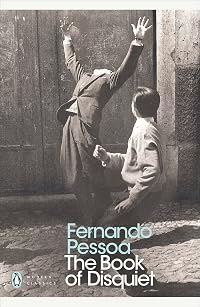






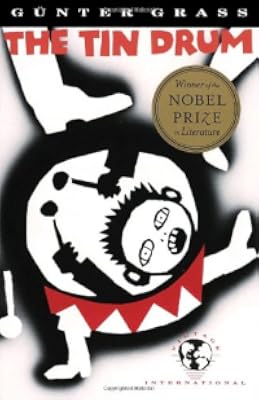
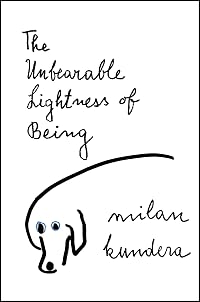
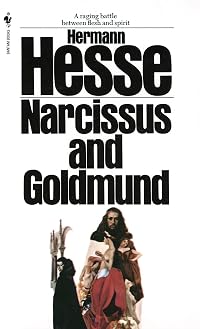





Member Recommendations

by chrisharpe

Queenofcups A similar treatment of the evolution of a consciousness, in a different time and place.
11
Member Reviews
The Book Report: Told as a long monologue stretched over several days, Jean-Baptiste Clamence reviews the very great highs of his life as a respected criminal attorney, and the very great lows of his life as a libertine without a discernible conscience or moral compass. He narrates his life to an unseen and unheard Other, a tourist from France in Clamence's adopted home of Amsterdam who runs into Clamence at a seedy bar. At each major turning point in Clamence's life, the narrative adds another level of self-serving horribleness, and the reader recognizes the commonality of all people with each other in Clamence's descent...fall...from the peaks of public acclaim and well-wishing into the pits of a personal hell, made up of the deeds show more done and undone that bend us into new internal shapes with our regrets.
My Review: I read La Peste when I was seventeen, and I ***HATED*** it. I was angry at the waste of so much as a single tree to print it, in any and all languages and countries around the world. I despised each and every syllable. I vowed never, ever, ever to read another word by Camus. From that cold winter's night in 1976 to the point I was forced by the Book Circle to pick this book up, I kept to that promise.
Well. I sit corrected. La Chute is a fascinating moral tale told by a story-teller of great power and flawless control of his material and his language. (I am reliably informed that the original French is superb; this translation is sterling.) I am so glad that I didn't make the mistake of letting my teenaged judgment stand unchallenged. I would have missed out on a life high point in reading. I am accused, with Clamence, of leading a life grounded in the illusions of one's own superiority, one's own infallible rightness. HA! Wisdom comes, when it does, at a high price...the life of an innocent, the decision to be silent, the power of life and death over a virtual stranger are all things that happen to many, even most, of us; they're not always instantly obvious, of course, so we let them slide away unmarked. But how do *you* know that your call to complain about the service you received didn't result in someone losing a last-chance job, spiraling into depression, and ending her life? You don't. Clamence does. (That didn't happen in the book, by the bye.)
This book did what only the very best books written by the very best writers can do: It reoriented my internal compass. Permanently. Read it! Soon! show less
My Review: I read La Peste when I was seventeen, and I ***HATED*** it. I was angry at the waste of so much as a single tree to print it, in any and all languages and countries around the world. I despised each and every syllable. I vowed never, ever, ever to read another word by Camus. From that cold winter's night in 1976 to the point I was forced by the Book Circle to pick this book up, I kept to that promise.
Well. I sit corrected. La Chute is a fascinating moral tale told by a story-teller of great power and flawless control of his material and his language. (I am reliably informed that the original French is superb; this translation is sterling.) I am so glad that I didn't make the mistake of letting my teenaged judgment stand unchallenged. I would have missed out on a life high point in reading. I am accused, with Clamence, of leading a life grounded in the illusions of one's own superiority, one's own infallible rightness. HA! Wisdom comes, when it does, at a high price...the life of an innocent, the decision to be silent, the power of life and death over a virtual stranger are all things that happen to many, even most, of us; they're not always instantly obvious, of course, so we let them slide away unmarked. But how do *you* know that your call to complain about the service you received didn't result in someone losing a last-chance job, spiraling into depression, and ending her life? You don't. Clamence does. (That didn't happen in the book, by the bye.)
This book did what only the very best books written by the very best writers can do: It reoriented my internal compass. Permanently. Read it! Soon! show less
Jean-Baptiste Clamence would be your worst nightmare to happen upon if you were attempting to have a quiet drink in a bar. He commences to tell you the details from every moment of his past life and goes on for five evenings! Really, I wonder what sort of a man it was who showed up on the second night to hear more. It would take a lot of gin to make me expose myself to that.
That being said, I read through the whole thing in what amounted to about five nights! With mostly no gin. So, what made me continue to show up? It was the insight into human motivations, the mirror for examination, and the fact that Camus is an author who is a stretch for me, so I wanted to know. Having read this at the same time I was reading The Screwtape Letters show more by C.S. Lewis, I was amazed at how the two tales dovetailed to give the complete story. Reading this is like reading the success story for the demons. I just realized that both tales are written in second person, although Lewis' is in the form of correspondence so you don't get the whole "self-obsessed monologue conversation" thing. show less
That being said, I read through the whole thing in what amounted to about five nights! With mostly no gin. So, what made me continue to show up? It was the insight into human motivations, the mirror for examination, and the fact that Camus is an author who is a stretch for me, so I wanted to know. Having read this at the same time I was reading The Screwtape Letters show more by C.S. Lewis, I was amazed at how the two tales dovetailed to give the complete story. Reading this is like reading the success story for the demons. I just realized that both tales are written in second person, although Lewis' is in the form of correspondence so you don't get the whole "self-obsessed monologue conversation" thing. show less
I mean, it's Camus, so of course it's exceptional. But this might even be a cut above. The narrative style is perhaps a little odd - talking to a largely silent companion in the second person. But that adds to the very ominous air that the conclusion takes, it gives a tense build (towards something actually quite trivial, but none-the-less something that takes the feeling of a profound reveal).
But of course it's never really Camus' narrative that you come for. His insight into the human condition is both horrifically compelling and repellant all at once. The protagonist didn't quite describe me - or at least, he did in terms of underlying existential feeling, but not ways of dealing with that in the day-to-day, but it none-the-less show more resonated deeply. I sense perhaps that there is a certain degree to which particular elements of the person he describes are bound up in 'maleness', because he described a few men I know with pinpoint accuracy. That's always the thing with Camus, he articulates what we only have a murky, nebulous sense of with such off-hand clarity that it almost makes you gasp.
There was much merry highlighting of sentiments so cutting and 'true' that you want to remember them forever when reading this book. Alas, I won't, but I guess that just justifies a re-read some years down the line. show less
But of course it's never really Camus' narrative that you come for. His insight into the human condition is both horrifically compelling and repellant all at once. The protagonist didn't quite describe me - or at least, he did in terms of underlying existential feeling, but not ways of dealing with that in the day-to-day, but it none-the-less show more resonated deeply. I sense perhaps that there is a certain degree to which particular elements of the person he describes are bound up in 'maleness', because he described a few men I know with pinpoint accuracy. That's always the thing with Camus, he articulates what we only have a murky, nebulous sense of with such off-hand clarity that it almost makes you gasp.
There was much merry highlighting of sentiments so cutting and 'true' that you want to remember them forever when reading this book. Alas, I won't, but I guess that just justifies a re-read some years down the line. show less
Each of the fundamental pieces of this novel could, on their own, function as separate individual works of towering brilliance, individual light houses casting their luminescence into dark skies. And each of these possible works could easily be stretched into tome sized volumes.
But Camus consolidates all of the pieces into a sum far greater than its parts, at a page count barely over a hundred pages. This is to me, an accomplishment so rarely even approached that it's borderline inconceivable.
Jean Bapiste-Clamence is a self described 'judge-penitent' who after his own fall from grace, resides in an amerstdam bar called 'mexico city' lecturing, preaching, philosophizing, and even just basically conversing with each and every strata of show more society that comes to him drunk or otherwise.
Told in first person present tense, Clamence speaks to the readers directly along with the nameless and mostly silent secondary character. another successful parisian like clamence who starts off amused and curious towards clamence's ideas, then, along with the readers, is quickly absorbed into the war of ideas that clamence is forming, and advancing, until, finally, he is the witness to this remarkable character's (now one of my favorites of all the literature I've read up until this point) final lamentation as to simultaneously the inherent limits of his own espoused philosophy coupled with its actual potential for bringing about a deep and true, profound and nearly totally curative redemption for human kind.
Camus is to me one of the truest and purest writers who has ever put pen to paper. The individual visions of each of his works all function separately and together, as heartbreaking and breathtakingly living and breathing portraits of the dire rot of mankind's depravity and suffering which, of course, is mostly if not completely self-inflicted. The works are also somehow (beyond paradoxical) able to run a thin string through the muck of humanity's collectively shattered hearts and minds, psyche's and silences to connect us all from the message of the lone artistic genius (Camus, truly apart from not only his own time and people but even from mostly all others everywhere). This string is delicate as gossamer but tough as titanium cord.
It's not hope or the promise of salvation, I'm not sure I can adequately describe it (actually I know I can't) but if pressed I guess I'd wager a weak idea and label this string 'potential'. But the potential given us by Camus, and in The Fall it is no different, is something to be earned and suffered for and towards, but given the repetition of paradoxical equals (faith and non belief, high and low class and what that entails, intellect and base bestial behavior, etc) presented in the text, this necessary suffering is equal in weight and importance to all of humanity's suffering that has come before it, no more or less.
It's a suffering that we as a species need, deserve, and create for ourselves. It is at once what damns us and what can save us. Our faith and our intellect, the rise and the fall of what could be great versus what we kill in each other every moment with every breath in all our waking days.
Necessary literature for everyone, please read. show less
But Camus consolidates all of the pieces into a sum far greater than its parts, at a page count barely over a hundred pages. This is to me, an accomplishment so rarely even approached that it's borderline inconceivable.
Jean Bapiste-Clamence is a self described 'judge-penitent' who after his own fall from grace, resides in an amerstdam bar called 'mexico city' lecturing, preaching, philosophizing, and even just basically conversing with each and every strata of show more society that comes to him drunk or otherwise.
Told in first person present tense, Clamence speaks to the readers directly along with the nameless and mostly silent secondary character. another successful parisian like clamence who starts off amused and curious towards clamence's ideas, then, along with the readers, is quickly absorbed into the war of ideas that clamence is forming, and advancing, until, finally, he is the witness to this remarkable character's (now one of my favorites of all the literature I've read up until this point) final lamentation as to simultaneously the inherent limits of his own espoused philosophy coupled with its actual potential for bringing about a deep and true, profound and nearly totally curative redemption for human kind.
Camus is to me one of the truest and purest writers who has ever put pen to paper. The individual visions of each of his works all function separately and together, as heartbreaking and breathtakingly living and breathing portraits of the dire rot of mankind's depravity and suffering which, of course, is mostly if not completely self-inflicted. The works are also somehow (beyond paradoxical) able to run a thin string through the muck of humanity's collectively shattered hearts and minds, psyche's and silences to connect us all from the message of the lone artistic genius (Camus, truly apart from not only his own time and people but even from mostly all others everywhere). This string is delicate as gossamer but tough as titanium cord.
It's not hope or the promise of salvation, I'm not sure I can adequately describe it (actually I know I can't) but if pressed I guess I'd wager a weak idea and label this string 'potential'. But the potential given us by Camus, and in The Fall it is no different, is something to be earned and suffered for and towards, but given the repetition of paradoxical equals (faith and non belief, high and low class and what that entails, intellect and base bestial behavior, etc) presented in the text, this necessary suffering is equal in weight and importance to all of humanity's suffering that has come before it, no more or less.
It's a suffering that we as a species need, deserve, and create for ourselves. It is at once what damns us and what can save us. Our faith and our intellect, the rise and the fall of what could be great versus what we kill in each other every moment with every breath in all our waking days.
Necessary literature for everyone, please read. show less
You are in a crowded subterranean bar in Amsterdam, trying unsuccessfully to attract the attention of the barman, when a stranger comes to your assistance. Confident and friendly, he introduces himself as Jean-Baptiste Clamence, and proceeds to tell you his life story. Because you are the ‘you’ who is addressed throughout The Fall, a silent witness to Clamence’s confession. He explains how he used to be a successful Parisian defence lawyer, a champion of the poor and oppressed, a good liberal and a happy man with many friends and admirers. But that was before the fall. Now he lives amongst criminals, in self-exile in Amsterdam with its concentric canals ‘like the circles of hell’. A self-styled ‘judge-penitent’ he spends show more his time confessing his sins to the strangers he meets in the seedy bars he frequents.
Philosophical meditation, dramatic monologue and authorial confession disguised as a novel; The Fall is all of these. It’s certainly a technical tour de force and Clamence’s monologue is sustained with great skill. Camus’ collapsing of the fourth wall produces an effect at first intimate and eventually uncomfortably claustrophobic. ‘You’ are dragged involuntarily into the novel and left hopelessly implicated in its narrator’s testimony. Clamence is the most seductive stranger ‘you’ ever encountered in a sleazy bar: elegantly epigrammatic, sardonically witty and beguilingly lyrical. He is also not so much a man who has lost his innocence as one who has made the shattering discovery that he was guilty all along. He is at once confessor of his own sins and accuser of all humanity. Is he unusually candid or unutterably manipulative? Truth-teller or sophist? ‘You’ be the judge.
Clamence ‘is the talking voice that runs on’ (as Stevie Smith said of her alter-ego Pompey Casmilus in Novel on Yellow Paper). He rattles around your brain for ninety-odd pages raising endless questions about our old friend the human condition. Are altruism and egotism the same thing? Do we like to judge others to avoid being judged ourselves? Are we all guilty? Camus leaves any possible answers to ‘you’, the reader. show less
Philosophical meditation, dramatic monologue and authorial confession disguised as a novel; The Fall is all of these. It’s certainly a technical tour de force and Clamence’s monologue is sustained with great skill. Camus’ collapsing of the fourth wall produces an effect at first intimate and eventually uncomfortably claustrophobic. ‘You’ are dragged involuntarily into the novel and left hopelessly implicated in its narrator’s testimony. Clamence is the most seductive stranger ‘you’ ever encountered in a sleazy bar: elegantly epigrammatic, sardonically witty and beguilingly lyrical. He is also not so much a man who has lost his innocence as one who has made the shattering discovery that he was guilty all along. He is at once confessor of his own sins and accuser of all humanity. Is he unusually candid or unutterably manipulative? Truth-teller or sophist? ‘You’ be the judge.
Clamence ‘is the talking voice that runs on’ (as Stevie Smith said of her alter-ego Pompey Casmilus in Novel on Yellow Paper). He rattles around your brain for ninety-odd pages raising endless questions about our old friend the human condition. Are altruism and egotism the same thing? Do we like to judge others to avoid being judged ourselves? Are we all guilty? Camus leaves any possible answers to ‘you’, the reader. show less
A self-titled “Judge Penitent” living in Amsterdam tells his life story, over several days, to a man he meets in a bar, bizarrely called Mexico City. It is written as a first person monologue, with occasional asides and replies to the other man, which gives the narrative a very distinctive voice.
Although a very short book, it is not one to rush as so much philosophy, law and theology is explored. (It is certainly much heavier than The Outsider or The Plague.)
You discover how an apparently altruistic and upstanding citizen comes to live a very different sort of life, with no single turning point – which perhaps makes his subsequent depravity and duplicity more alarming.
The conclusion (for me) was that only fallen people can judge show more others – but that we are all fallen. Pretty pessimistic, really. show less
Although a very short book, it is not one to rush as so much philosophy, law and theology is explored. (It is certainly much heavier than The Outsider or The Plague.)
You discover how an apparently altruistic and upstanding citizen comes to live a very different sort of life, with no single turning point – which perhaps makes his subsequent depravity and duplicity more alarming.
The conclusion (for me) was that only fallen people can judge show more others – but that we are all fallen. Pretty pessimistic, really. show less
Jean-Baptiste Clamence was a highly successful lawyer in Paris. While behaving with a veneer of virtue and modesty, he felt himself to be above those around him and in a position where he could judge them as human beings. He would engage in minor acts of charity but always to satisfy his own self-regard rather than out of the spirit of true generosity. He felt like a Nietzschean superman, and that success in life was his destiny. This feeling of being above everything suffered a shock when, crossing the Pont des Arts over the Seine, he heard a splash in the water and a woman’s voice, but did nothing to investigate or raise an alarm. This experience came back to haunt him as years passed, and often when crossing the river (and once on show more a transatlantic trip) he would hear a woman’s laughter.
His sense of superiority and self-confidence began to break down. For the first time in his life he became aware that others were judging him. Clamence asserts that people judge others so as to avoid being judged themselves. He tried to escape from his new feelings by strategies such as showing his true contempt for others, pursuing true love with women and finally settling for debauchery to give him a feeling of immortality. None of these succeeded. He had become aware that his judgments of others were wrong and that he must judge his own guilt.
He left Paris and settled in Amsterdam, a dark city of concentric canals, possibly an allusion to Dante’s Inferno, and far from the sun of the Mediterranean. (Because of guilt, he cannot settle in Greece to live in the sun, a Camusian paradise, and remarks that Parisians must wash themselves before going to Greece). The book consists of his dialogue with a new friend he meets in an Amsterdam bar. We only have Clamence’s side of the conversation. He says he became a “judge penitent” in response to the laughter. Judgment by others is worse than judgment by God. Christ was crucified because he realized he was not innocent (as a result of the news of his birth leading to the massacre by Herod of the innocent newborns). We humans crucify each other. As a judge penitent, his purpose is to end the laughter and avoid the judgment of others, even though there appears to be no escape from this. But the technique is to spread the condemnation to everyone by persuading others to judge themselves as critically as he judges himself. “I am for any theory that refuses to grant man innocence, for any practice that treats him as guilty . . . . When everyone is guilty, we will have democracy.” Consistent with this belief in everyone’s guilt, he also denounces liberty and freedom, which might suggest one could take steps to free oneself from guilt. He also claims that all people desire to be slaves because of fear of freedom.
At the end of the book, we learn that his friend is also a Parisian lawyer. Clamence confesses that the goal of his conversation has been to encourage his acquaintances to judge themselves as he has been doing and in this way he can assert his superiority over them as they begin to blubber in facing the truth about themselves. However, he is not succeeding with his new friend. He makes further confessions, including that he stole the painting above the bar in the Amsterdam pub Mexico City. At the end of the book he has caught a fever and is weak. He is unable to make his new friend suffer. One wonders if his weakening state is linked to this failure and if his death is imminent.
The book is full of Clamence’s cynical witticisms that remind one of Dostoevsky’s Notes from Underground. “A single sentence will suffice for modern man: he fornicated and read the papers.” On friendship he writes: “Friendship . . . Is long and hard to obtain, but when one has it there’s no getting rid of it, one simply has to cope with it.” On the death of friends and relatives: “Have you noticed that death alone awakens our feelings? How we love the friends who have just left us? How we admire those of our teachers who have ceased to speak, their mouths filled with dirt!” “But do you know why we are always more just and more generous toward the dead? The reason is simple. With them there is no obligation. They leave us free and we can take our time, fit the testimonial in between a cocktail party and a nice little mistress, in our spare time, in short. If they force us to do anything, it would be to remember them, and we have a short memory.” “[D]on’t believe your friends when they ask you to be sincere with them. They merely hope you will encourage them in the good opinion they have of themselves by providing them with the additional assurance they will find in your promise of sincerity. How could sincerity be a condition of friendship? … [I]f you are in that situation, don’t hesitate: promise to tell the truth and then lie as best you can. You will satisfy their hidden desire and doubly prove your affection.” On intelligent men: “The truth is that every intelligent man, as you know, dreams of being a gangster and of ruling over society by force alone.” These quotations just touch the surface.
Clamence may represent Camus himself. The quote from Lermontov’s A Hero of our Time at the beginning of the Vintage English edition suggests he may be a composite of the vices of the current Parisian generation. Or maybe Camus is Clamence’s friend, who withstands Clamence’s efforts to make him judge himself guilty. Or most likely both characters reflect different aspects of Camus’s character. show less
His sense of superiority and self-confidence began to break down. For the first time in his life he became aware that others were judging him. Clamence asserts that people judge others so as to avoid being judged themselves. He tried to escape from his new feelings by strategies such as showing his true contempt for others, pursuing true love with women and finally settling for debauchery to give him a feeling of immortality. None of these succeeded. He had become aware that his judgments of others were wrong and that he must judge his own guilt.
He left Paris and settled in Amsterdam, a dark city of concentric canals, possibly an allusion to Dante’s Inferno, and far from the sun of the Mediterranean. (Because of guilt, he cannot settle in Greece to live in the sun, a Camusian paradise, and remarks that Parisians must wash themselves before going to Greece). The book consists of his dialogue with a new friend he meets in an Amsterdam bar. We only have Clamence’s side of the conversation. He says he became a “judge penitent” in response to the laughter. Judgment by others is worse than judgment by God. Christ was crucified because he realized he was not innocent (as a result of the news of his birth leading to the massacre by Herod of the innocent newborns). We humans crucify each other. As a judge penitent, his purpose is to end the laughter and avoid the judgment of others, even though there appears to be no escape from this. But the technique is to spread the condemnation to everyone by persuading others to judge themselves as critically as he judges himself. “I am for any theory that refuses to grant man innocence, for any practice that treats him as guilty . . . . When everyone is guilty, we will have democracy.” Consistent with this belief in everyone’s guilt, he also denounces liberty and freedom, which might suggest one could take steps to free oneself from guilt. He also claims that all people desire to be slaves because of fear of freedom.
At the end of the book, we learn that his friend is also a Parisian lawyer. Clamence confesses that the goal of his conversation has been to encourage his acquaintances to judge themselves as he has been doing and in this way he can assert his superiority over them as they begin to blubber in facing the truth about themselves. However, he is not succeeding with his new friend. He makes further confessions, including that he stole the painting above the bar in the Amsterdam pub Mexico City. At the end of the book he has caught a fever and is weak. He is unable to make his new friend suffer. One wonders if his weakening state is linked to this failure and if his death is imminent.
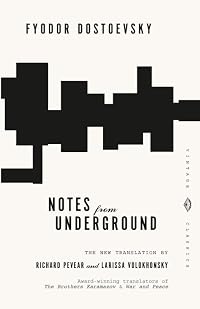
The book is full of Clamence’s cynical witticisms that remind one of Dostoevsky’s Notes from Underground. “A single sentence will suffice for modern man: he fornicated and read the papers.” On friendship he writes: “Friendship . . . Is long and hard to obtain, but when one has it there’s no getting rid of it, one simply has to cope with it.” On the death of friends and relatives: “Have you noticed that death alone awakens our feelings? How we love the friends who have just left us? How we admire those of our teachers who have ceased to speak, their mouths filled with dirt!” “But do you know why we are always more just and more generous toward the dead? The reason is simple. With them there is no obligation. They leave us free and we can take our time, fit the testimonial in between a cocktail party and a nice little mistress, in our spare time, in short. If they force us to do anything, it would be to remember them, and we have a short memory.” “[D]on’t believe your friends when they ask you to be sincere with them. They merely hope you will encourage them in the good opinion they have of themselves by providing them with the additional assurance they will find in your promise of sincerity. How could sincerity be a condition of friendship? … [I]f you are in that situation, don’t hesitate: promise to tell the truth and then lie as best you can. You will satisfy their hidden desire and doubly prove your affection.” On intelligent men: “The truth is that every intelligent man, as you know, dreams of being a gangster and of ruling over society by force alone.” These quotations just touch the surface.
Clamence may represent Camus himself. The quote from Lermontov’s A Hero of our Time at the beginning of the Vintage English edition suggests he may be a composite of the vices of the current Parisian generation. Or maybe Camus is Clamence’s friend, who withstands Clamence’s efforts to make him judge himself guilty. Or most likely both characters reflect different aspects of Camus’s character. show less
Members
- Recently Added By
Published Reviews
ThingScore 75
"La caída" de Albert Camus es una novela filosófica en forma de monólogo dramático. El protagonista, Jean-Baptiste Clamence, es un antiguo abogado parisino que confiesa la historia de su vida y su caída moral a un oyente anónimo en un sórdido bar de Ámsterdam.
Clamence comienza como un abogado de éxito y moralmente recto, pero sufre una profunda transformación tras una crisis show more personal. Se convierte en una figura distante y cínica que ve la vida a través de la lente del existencialismo. La novela explora temas como la culpa, la responsabilidad y la condición humana.
Clamence reflexiona sobre sus propios fallos morales y la hipocresía de la sociedad. Se presenta a sí mismo como un juez-penitente, alguien que reconoce sus propios pecados y busca el reconocimiento de los demás. La narración sirve de crítica al vacío moral de la sociedad moderna y a la evasión de la responsabilidad personal por parte de los individuos.
"La caída" es una obra compleja e introspectiva que ahonda en los fundamentos filosóficos del existencialismo, abordando cuestiones como la autenticidad, las relaciones humanas y la naturaleza de la culpa. La novela invita a los lectores a contemplar los retos de vivir una vida auténtica y con sentido en un mundo aparentemente indiferente. show less
Clamence comienza como un abogado de éxito y moralmente recto, pero sufre una profunda transformación tras una crisis show more personal. Se convierte en una figura distante y cínica que ve la vida a través de la lente del existencialismo. La novela explora temas como la culpa, la responsabilidad y la condición humana.
Clamence reflexiona sobre sus propios fallos morales y la hipocresía de la sociedad. Se presenta a sí mismo como un juez-penitente, alguien que reconoce sus propios pecados y busca el reconocimiento de los demás. La narración sirve de crítica al vacío moral de la sociedad moderna y a la evasión de la responsabilidad personal por parte de los individuos.
"La caída" es una obra compleja e introspectiva que ahonda en los fundamentos filosóficos del existencialismo, abordando cuestiones como la autenticidad, las relaciones humanas y la naturaleza de la culpa. La novela invita a los lectores a contemplar los retos de vivir una vida auténtica y con sentido en un mundo aparentemente indiferente. show less
added by Peter_MacTroy
Lists

1001 Books You Must Read Before You Die
1,448 works; 1,134 members

Best of French Literature
138 works; 27 members

20th Century Literature
1,161 works; 55 members

1950s
340 works; 22 members

Unread books
1,063 works; 86 members

Top Five Books of 2015
811 works; 241 members

Authors from France
23 works; 2 members

Maybe This Year? Books to Look Forward To
412 works; 9 members

Harold Bloom - The Western Canon: D. The Chaotic Age
833 works; 24 members

Allie's Wishlist
217 works; 2 members

Filosofía - Clásicos
217 works; 1 member

Allie's List of Books I Want To Read
93 works; 1 member

Books Read in 2019
4,052 works; 108 members

Philip Ward's Lifetime Reading Plan
592 works; 22 members

Recommended Reading : 600 Classics Reviewed, Editors of Salem Press, 2015
634 works; 6 members
Canon de la narrativa universal del s. XX (cicutadry)
499 works; 3 members
Reading LIst
648 works; 1 member
Talk Discussions
Past Discussions
Camus - The Fall - discussion in Literary Centennials (January 2014)
Author Information

361+ Works 108,570 Members
Born in 1913 in Algeria, Albert Camus was a French novelist, dramatist, and essayist. He was deeply affected by the plight of the French during the Nazi occupation of World War II, who were subject to the military's arbitrary whims. He explored the existential human condition in such works as L'Etranger (The Outsider, 1942) and Le Mythe de Sisyphe show more (The Myth of Sisyphus, 1942), which propagated the philosophical notion of the "absurd" that was being given dramatic expression by other Theatre of the Absurd dramatists of the 1950s and 1960s. Camus also wrote a number of plays, including Caligula (1944). Much of his work was translated into English. He was awarded the Nobel Prize for Literature in 1957. Camus died in an automobile accident in 1960. (Bowker Author Biography) show less
All Editions
Some Editions
Awards and Honors
Distinctions
Series
Belongs to Publisher Series
Work Relationships
Is contained in
Has as a student's study guide
Common Knowledge
- Canonical title*
- De val
- Original title
- La Chute
- Original publication date
- 1956
- People/Characters
- Jean-Baptiste Clamence
- Important places
- Amsterdam, North Holland, Netherlands; France; The Netherlands; North Holland, Netherlands; Paris, France
- Epigraph
- Some were dreadfully insulted, and quite seriously, to have held up as a model such an immoral character as A Hero of Our Time; others shrewdly noticed that the author had portrayed himself and his acquaintances...A Hero of O... (show all)ur Time, gentlemen, is in fact a portrait but not of an individual; it is the aggregate of the vices of our whole generation intheir fullest expression. LERMONTOV
- First words
- May I, monsieur, offer my services without running the risk of intruding? I fear you may not be able to make yourself understood by the worthy ape who presides over the fate of this establishment.
- Quotations
- Don't wait for the Last Judgement. It takes place every day.
- Last words
- (Click to show. Warning: May contain spoilers.)Fortunately!
- Blurbers
- O'Brien, Conor Cruise
- Original language
- French
- Canonical DDC/MDS
- 843.914
- Canonical LCC
- PQ2605.A3734 C513
*Some information comes from Common Knowledge in other languages. Click "Edit" for more information.
Classifications
Statistics
- Members
- 9,110
- Popularity
- 1,170
- Reviews
- 102
- Rating
- (3.88)
- Languages
- 23 — Catalan, Chinese, Czech, Danish, Dutch, English, Finnish, French, German, Galician, Greek, Hungarian, Italian, Korean, Norwegian (Bokmål), Farsi/Persian, Polish, Portuguese, Russian, Spanish, Swedish, Thai, Turkish
- Media
- Paper, Audiobook, Ebook
- ISBNs
- 157
- ASINs
- 105