
Bernard DeVoto (1897–1955)
Author of Letters from the Earth
About the Author
A Harvard University graduate and impassioned student and teacher of American history and literature, Utah-born Bernard de Voto held faculty positions at Northwestern University and Harvard University. He was also the second editor of the Saturday Review of Literature and for many years wrote "The show more Editor's Easy Chair" column in Harper's magazine. At Harvard, de Voto was the editor of the Mark Twain manuscripts and produced several works about Twain and his time. He is best known for his trilogy-The Year of Decision: 1846 (1943), Across the Wide Missouri (1947), and The Course of Empire (1952). For Across the Wide Missouri, he personally traced the western trails first blazed by Lewis and Clark. Although recent scholarship has changed many perceptions about the West, de Voto's splendid accounts continue to have wide appeal. (Bowker Author Biography) show less
Image credit: Bernard Augustine DeVoto (January 11, 1897 – November 13, 1955), American historian and author By Source, Fair use, https://en.wikipedia.org/w/index.php?curid=36707547
Works by Bernard DeVoto
The House of Sun-Goes-Down 2 copies
The Crooked Mile 2 copies
We Accept with Pleasure 2 copies
Across the Wild West 1 copy
Portrait of America 1 copy
Associated Works
The Adventures of Huckleberry Finn (1884) — Introduction, some editions — 49,627 copies, 588 reviews
Beyond the Hundredth Meridian: John Wesley Powell and the Second Opening of the West (1954) — Introduction — 919 copies, 14 reviews
Adventures of Huckleberry Finn [Norton Critical Edition, 2nd ed.] (1977) — Contributor — 333 copies, 4 reviews
The Best of the West: An Anthology of Classic Writing from the American West (1991) — Contributor — 290 copies, 1 review
An American Album: One Hundred and Fifty Years of Harper's Magazine (2000) — Contributor — 146 copies, 1 review
Gentlemen, Scholars and Scoundrels: A Treasury of the Best of Harper's Magazine from 1850 to the Present (1972) — Contributor — 62 copies
Mark Twain in eruption : hitherto unpublished pages about men and events (1940) — Editor — 43 copies
The Word from Weber County. A Centennial Anthology of our Best Writers (1996) — Contributor — 6 copies
Tagged
Common Knowledge
- Canonical name
- DeVoto, Bernard
- Legal name
- DeVoto, Bernard Augustine
- Other names
- August, John
Hewes, Cady - Birthdate
- 1897-01-11
- Date of death
- 1955-11-13
- Gender
- male
- Education
- Harvard College (AB|1920)
- Occupations
- historian
curator
editor
critic
novelist
essayist - Organizations
- Northwestern University
Harper's Magazine
The Saturday Review
Bread Loaf School of English
Bread Loaf Writers' Conference
United States Army (WWI) - Awards and honors
- American Academy of Arts and Letters (1948)
Pulitzer Prize for History (1948)
Bancroft Prize (1948)
Phi Beta Kappa (1920)
American Antiquarian Society (1945) - Relationships
- Devoto, Avis (wife)
Devoto, Mark (son) - Short biography
- Born in Ogden, Utah to a Catholic mother and a Mormon father, Bernard De Voto became a historian, critic, novelist, educator, conservationist, and an authority on the life and works of Mark Twain.
- Cause of death
- heart attack
- Nationality
- USA
- Birthplace
- Ogden, Utah, USA
- Places of residence
- Cambridge, Massachusetts, USA
- Place of death
- New York, New York, USA
- Associated Place (for map)
- USA
Members
Reviews
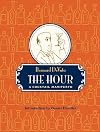
Sharp wit and unassailable truths about the civilized practice of observing the cocktail hour with a perfect martini, or a "slug of whiskey". No other so-called cocktail can be considered, in his opinion, and boyhowdy, does he tell you why. Lots of fun, and a bit of nostalgia for this household where the once-beloved cocktail hour has, of health-related necessity, become a sweet memory.
QUOTE: "...nothing can be done with people who put olives in martinis, presumably because in some desolate show more childhood hour someone refused them a dill pickle..." show less
QUOTE: "...nothing can be done with people who put olives in martinis, presumably because in some desolate show more childhood hour someone refused them a dill pickle..." show less

The cover of my paperback copy of Letters from the Earth boasts "new uncensored writings by Mark Twain" with a little more significance than such labels usually hold. The contents of this volume were the very first to be edited for posthumous publication by the Twain literary estate, but Twain's daughter Clara Clemens' misgivings denied publication to the book until 1962, after the editor's own death! By then, several of the individual texts included had seen individual publication in show more periodicals and a book of Twain scholarship.
Although she gave as her motive the concern that the book's contents would misrepresent Twain's actual ideas as she understood them, a reader will readily infer that Clara's fear was chiefly about offending against conventional piety. Nearly half of the book consists of satires grounded in biblical mythology: the title piece (largely in the voice of the angel Satan), the "Papers of the Adam Family" thus organized and titled by editor Bernard DeVoto, and the brief "Letter to the Earth." The first of these, and apparently the most finished in Twain's own manuscript, is clearly modeled on Montesquieu's Persian Letters, in which a traveler from a distant land reports back to his own people on the bewildering and exotic features of the culture shared by the reader and the actual author of the text.
"Letters from the Earth" at one point refers to sex as "the Supreme Art. They practiced it diligently and were filled with contentment. The Deity ordered them to practice it. They obeyed, this time. But it was just as well it was not forbidden, for they would have practiced it anyhow, if a thousand Deities had forbidden it" (25). Satan supplies a sober and accurate appraisal of the Christian revelation: "... as the meek and gentle Savior he was a thousand billion times crueler than ever he was in the Old Testament--oh, incomparably more atrocious than ever he was at the very worst in those old days!" (46)
The "Papers of the Adam Family" treat antediluvian society with attention to the premise that the long lifespans of characters in Genesis--even assuming that they waited a few extra decades before parenthood--made for a society many living generations deep, and thus strangely dense and hierarchical. Several of these "translations from the Adamic" are in the voice of Eve, "the Most Illustrious, Most Powerful, Most Gracious, Most Reverend, her Grandeur, the Acting Head of the Human Race" (91-2). There is also a focus on the early tenth century as clocked from Eden, consisting mostly of thinly-veiled satire on Twain's own time, which certainly had catastrophe imminent.
A number of short pieces include a whimsical cat-focused story (where Twain in passing vaunts his own "conscience torpid through virtuous inaction," 113), a merciless criticism of the prose style of James Fenimore Cooper, a reasonably funny parody of etiquette instructions, some travelogue from England, and a few other essays.
The book concludes with its longest and strangest item. "The Great Dark" (title furnished by the editor) is a horror story that hinges on its protagonist's efforts and failures to assign reality to his actual circumstances after being subjected to a dream-world of simulation. Latter-day readers might see this piece as a precocious Matrix sort of story. (Who needs wetware and full-body VR when you have a Victorian microscope?) But of course the central conundrum goes back to Chuang Tzu and probably to the dawn of reflective thought. show less
Although she gave as her motive the concern that the book's contents would misrepresent Twain's actual ideas as she understood them, a reader will readily infer that Clara's fear was chiefly about offending against conventional piety. Nearly half of the book consists of satires grounded in biblical mythology: the title piece (largely in the voice of the angel Satan), the "Papers of the Adam Family" thus organized and titled by editor Bernard DeVoto, and the brief "Letter to the Earth." The first of these, and apparently the most finished in Twain's own manuscript, is clearly modeled on Montesquieu's Persian Letters, in which a traveler from a distant land reports back to his own people on the bewildering and exotic features of the culture shared by the reader and the actual author of the text.
"Letters from the Earth" at one point refers to sex as "the Supreme Art. They practiced it diligently and were filled with contentment. The Deity ordered them to practice it. They obeyed, this time. But it was just as well it was not forbidden, for they would have practiced it anyhow, if a thousand Deities had forbidden it" (25). Satan supplies a sober and accurate appraisal of the Christian revelation: "... as the meek and gentle Savior he was a thousand billion times crueler than ever he was in the Old Testament--oh, incomparably more atrocious than ever he was at the very worst in those old days!" (46)
The "Papers of the Adam Family" treat antediluvian society with attention to the premise that the long lifespans of characters in Genesis--even assuming that they waited a few extra decades before parenthood--made for a society many living generations deep, and thus strangely dense and hierarchical. Several of these "translations from the Adamic" are in the voice of Eve, "the Most Illustrious, Most Powerful, Most Gracious, Most Reverend, her Grandeur, the Acting Head of the Human Race" (91-2). There is also a focus on the early tenth century as clocked from Eden, consisting mostly of thinly-veiled satire on Twain's own time, which certainly had catastrophe imminent.
A number of short pieces include a whimsical cat-focused story (where Twain in passing vaunts his own "conscience torpid through virtuous inaction," 113), a merciless criticism of the prose style of James Fenimore Cooper, a reasonably funny parody of etiquette instructions, some travelogue from England, and a few other essays.
The book concludes with its longest and strangest item. "The Great Dark" (title furnished by the editor) is a horror story that hinges on its protagonist's efforts and failures to assign reality to his actual circumstances after being subjected to a dream-world of simulation. Latter-day readers might see this piece as a precocious Matrix sort of story. (Who needs wetware and full-body VR when you have a Victorian microscope?) But of course the central conundrum goes back to Chuang Tzu and probably to the dawn of reflective thought. show less
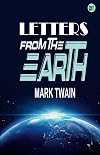
America's greatest satirist takes on the not so Holy Bible and thumps it. Imagine the hymn to constipation sung on the Ark. Brilliant, laugh out loud sarcasm unleashed. Completely understandable that he left instructions for this not to be published until after his passing. The only ding is on this particular edition - no lettering on the spine and no page numbers But it was the only edition I could find readily available (I had lost a better edition years ago) and is still required reading. show more Highly recommended. show less

This is a series of four essays by the noted historian about cocktails and the cocktail hour. For DeVoto, the Martini and whiskey (bourbon and rye) are the pinnacle of American achievement, and the Martini and whiskey slug are the only two cocktails. (He'll allow you to make an Old Fashioned for a demanding guest, but no Manhattans; and don't get him started on rum.)
It's very much a product of its time, and I don't agree with any of his assertions (I happen to enjoy Manhattans and Scotch), show more but the writing is so amusing that I can't help but love the book. I'm pretty sure I could find a great quote on just about every page. It's a slim volume that shouldn't take more than an hour or two to read. A must-have for readers of good food writing. show less
It's very much a product of its time, and I don't agree with any of his assertions (I happen to enjoy Manhattans and Scotch), show more but the writing is so amusing that I can't help but love the book. I'm pretty sure I could find a great quote on just about every page. It's a slim volume that shouldn't take more than an hour or two to read. A must-have for readers of good food writing. show less
Lists
Awards


You May Also Like


Associated Authors
Statistics
- Works
- 30
- Also by
- 16
- Members
- 5,133
- Popularity
- #4,856
- Rating
- 3.9
- Reviews
- 72
- ISBNs
- 102
- Languages
- 11
- Favorited
- 11

