Tristana
by Benito Pérez Galdós
On This Page
Description
The tale of a high-spirited, ambitious young woman or man breaking free from stifling provincial constraints to pursue a life of independence is a staple of the novel. In Tristanathe great Spanish novelist Benito Pe rez Galdo s disconcertingly reverses the formula. His beautiful and brilliant and very winning heroine breaks free from a perverse and imprisoning relationship to a womanizing older man, supposed by all to be her father. But after a terrible stroke of misfortune, she show more retreats-either out of timidity or, perhaps, simply because confinement has its own seductive power. Tristana, here in an exceptionally fine and fluent new English rendering by Margaret Jull Costa, is an unequaled exploration of the tragedy of human desire. show lessTags
Recommendations
















Member Reviews
“Young, pretty, and slender, and her skin was the almost implausible white of pure alabaster; she had the palest of cheeks and dark eyes more notable for their vivacity and brightness than for their size; her remarkable eyebrows looked as if they had been drawn with the tip of the very finest of brushes; her delicate mouth, with its rather plump, round lips, was so red it seemed to contain all the blood that her face lacked; her small teeth were like pieces of concentrated crystal; her hair, caught up in a graceful tangle on the top of her head, was brown and very fine, and had the sheen of plaited silk. This singular creature’s most marked characteristic, however, was her ermine-white purity and cleanliness.”
From the above quote, show more you would think Spanish novelist Benito Pérez Galdós was describing Parmigianino's 1525 painting Portrait of a Young Woman; but, alas, he is not writing about a wealthy sixteenth century aristocrat but a poor nineteenth century orphan by the name of Tristana, who, at age nineteen, is placed in the care (and clutches) of one Don Lope Garrido.
Make no mistake, this is a tale of fire and passion –I can vividly picture all the señoritas in the author's day relishing every page of Tristina, a romantic Spanish female heart on fire, yearning for love, for artistic expression and, above all else, yearning for freedom. True, at age nineteen Tristana comes to live with Don Lope Garrido, a seasoned Don Juan who uses all his stock repertoire of sweet words and caresses to seduce his young charge but then at age twenty-one it happens - Tristana awakens to how her womanhood has been violated and thus her rebellion against what she now regards as an evil, lecherous tyrant.
But this novel is much more than unadorned melodrama, for Benito Pérez Galdós is a true literary master, creating complex, rounded characters, as when he writes of Don Lope being a generous, noble gentleman, a throwback to the courageous knights of yore, an expert in all affairs of honor, ready to make every sacrifice in the name of duty and friendship, as when he rescued his dear friend, Don Antinio Reluz, Tristana’s father, from financial ruin, and later after Reluz’s death, making sacrifice after sacrifice, even selling his treasured weapons collection, to fund Tristana’s mother in her continuous insane moving from lodging to lodging right up until the day of her death. Is Don Lope a good, even saintly man, or is he a bad, evil man? Given the author's ample information and many examples, a sound case could be made for either or both together.
No sooner does Tristana leave the rapidly aging fifty-six-year-old Don Lope at home to join maid Saturna on afternoon walks out in the countryside and around town, then the plot thickens: Tristana meets and falls in love with Horacio, a handsome young painter. Of course, finding her beauty irresistible, Horacio, in his turn, falls in love with Tristana. The two lovers take their romantic afternoon walks together; they share both their tragic backgrounds and romantic dreams of life and art. However, there is one thing they will never share - Tristana boldly proclaims to Horacio that under not circumstance will she ever surrender her freedom and be bound to a man as his wife.
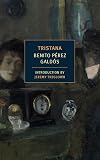
This New York Review Books (NYRB) edition features the author’s fluid prose rendered into clear, elegant English by translator Margaret Jull Costa. A real joy to read. And I must say, this novel brings to the fore two sets of pressing philosophical questions. Firstly, since Tristan’s life and dreams are so entwined with art, music and literature (as the story progresses, we discover she is exceptionally gifted in both language and music) how far can the arts go in transforming a woman in Trastana's position? Drawing, foreign languages and letter writing each serve Tristana as a catalyst in propelling and expanding her sense of freedom but, ultimately, other forces are in play.
Secondly, we have the issue of feminism. Saturna tells Tristana that in this society of ours women have but three alternatives – to be wives, to be actresses or to be something too low to be mentioned in polite society. Tristana will have none of it - by turns she envisions herself as a painter, an author, an actress, even a political leader; not to mention she argues with Horacio in a decidedly modern way how, if she has a child and lives as a single mother, she has more rights to her child than the father. One can easily imagine men - journalists, politicians, heads of households - who looked askance at Benito Pérez Galdós putting such scandalous ideas into the heads of women.
These philosophical questions move into yet again another dimension. In speaking of Don Lope’s sense of morality, Benito Pérez Galdó writes: “Despite being very much his own, was also quite widespread, the abundant fruit of the times we live in; a morality which, although it seemed to have sprung solely from him, was, in fact, an amalgamation in his mind of the ideas floating around in the metaphysical atmosphere of the age, like the invisible bacteria that inhabit the physical atmosphere.” With these words we hear echoes of the fatalism and social and cultural pressures molding men and women articulated by such as Émile Zola and his literary school of naturalism. So, it’s Tristana versus her society, culture and fate. What a riveting story. Highly recommended. show less
From the above quote, show more you would think Spanish novelist Benito Pérez Galdós was describing Parmigianino's 1525 painting Portrait of a Young Woman; but, alas, he is not writing about a wealthy sixteenth century aristocrat but a poor nineteenth century orphan by the name of Tristana, who, at age nineteen, is placed in the care (and clutches) of one Don Lope Garrido.
Make no mistake, this is a tale of fire and passion –I can vividly picture all the señoritas in the author's day relishing every page of Tristina, a romantic Spanish female heart on fire, yearning for love, for artistic expression and, above all else, yearning for freedom. True, at age nineteen Tristana comes to live with Don Lope Garrido, a seasoned Don Juan who uses all his stock repertoire of sweet words and caresses to seduce his young charge but then at age twenty-one it happens - Tristana awakens to how her womanhood has been violated and thus her rebellion against what she now regards as an evil, lecherous tyrant.
But this novel is much more than unadorned melodrama, for Benito Pérez Galdós is a true literary master, creating complex, rounded characters, as when he writes of Don Lope being a generous, noble gentleman, a throwback to the courageous knights of yore, an expert in all affairs of honor, ready to make every sacrifice in the name of duty and friendship, as when he rescued his dear friend, Don Antinio Reluz, Tristana’s father, from financial ruin, and later after Reluz’s death, making sacrifice after sacrifice, even selling his treasured weapons collection, to fund Tristana’s mother in her continuous insane moving from lodging to lodging right up until the day of her death. Is Don Lope a good, even saintly man, or is he a bad, evil man? Given the author's ample information and many examples, a sound case could be made for either or both together.
No sooner does Tristana leave the rapidly aging fifty-six-year-old Don Lope at home to join maid Saturna on afternoon walks out in the countryside and around town, then the plot thickens: Tristana meets and falls in love with Horacio, a handsome young painter. Of course, finding her beauty irresistible, Horacio, in his turn, falls in love with Tristana. The two lovers take their romantic afternoon walks together; they share both their tragic backgrounds and romantic dreams of life and art. However, there is one thing they will never share - Tristana boldly proclaims to Horacio that under not circumstance will she ever surrender her freedom and be bound to a man as his wife.
This New York Review Books (NYRB) edition features the author’s fluid prose rendered into clear, elegant English by translator Margaret Jull Costa. A real joy to read. And I must say, this novel brings to the fore two sets of pressing philosophical questions. Firstly, since Tristan’s life and dreams are so entwined with art, music and literature (as the story progresses, we discover she is exceptionally gifted in both language and music) how far can the arts go in transforming a woman in Trastana's position? Drawing, foreign languages and letter writing each serve Tristana as a catalyst in propelling and expanding her sense of freedom but, ultimately, other forces are in play.
Secondly, we have the issue of feminism. Saturna tells Tristana that in this society of ours women have but three alternatives – to be wives, to be actresses or to be something too low to be mentioned in polite society. Tristana will have none of it - by turns she envisions herself as a painter, an author, an actress, even a political leader; not to mention she argues with Horacio in a decidedly modern way how, if she has a child and lives as a single mother, she has more rights to her child than the father. One can easily imagine men - journalists, politicians, heads of households - who looked askance at Benito Pérez Galdós putting such scandalous ideas into the heads of women.
These philosophical questions move into yet again another dimension. In speaking of Don Lope’s sense of morality, Benito Pérez Galdó writes: “Despite being very much his own, was also quite widespread, the abundant fruit of the times we live in; a morality which, although it seemed to have sprung solely from him, was, in fact, an amalgamation in his mind of the ideas floating around in the metaphysical atmosphere of the age, like the invisible bacteria that inhabit the physical atmosphere.” With these words we hear echoes of the fatalism and social and cultural pressures molding men and women articulated by such as Émile Zola and his literary school of naturalism. So, it’s Tristana versus her society, culture and fate. What a riveting story. Highly recommended. show less
“Young, pretty, and slender, and her skin was the almost implausible white of pure alabaster; she had the palest of cheeks and dark eyes more notable for their vivacity and brightness than for their size; her remarkable eyebrows looked as if they had been drawn with the tip of the very finest of brushes; her delicate mouth, with its rather plump, round lips, was so red it seemed to contain all the blood that her face lacked; her small teeth were like pieces of concentrated crystal; her hair, caught up in a graceful tangle on the top of her head, was brown and very fine, and had the sheen of plaited silk. This singular creature’s most marked characteristic, however, was her ermine-white purity and cleanliness.”
From the above show more quote, you would think Spanish novelist Benito Pérez Galdós was describing Parmigianino's 1525 painting Portrait of a Young Woman; but, alas, he is not writing about a wealthy sixteenth century aristocrat but a poor nineteenth century orphan by the name of Tristana, who, at age nineteen, is placed in the care (and clutches) of one Don Lope Garrido.
Make no mistake, this is a tale of fire and passion –I can vividly picture all the señoritas in the author's day relishing every page of Tristana, a romantic Spanish female heart on fire, yearning for love, for artistic expression and, above all else, yearning for freedom. True, at age nineteen Tristana comes to live with Don Lope Garrido, a seasoned Don Juan who uses all his stock repertoire of sweet words and caresses to seduce his young charge but then at age twenty-one it happens - Tristana awakens to how her womanhood has been violated and thus her rebellion against what she now regards as an evil, lecherous tyrant.
But this novel is much more than unadorned melodrama, for Benito Pérez Galdós is a true literary master, creating complex, rounded characters, as when he writes of Don Lope being a generous, noble gentleman, a throwback to the courageous knights of yore, an expert in all affairs of honor, ready to make every sacrifice in the name of duty and friendship, as when he rescued his dear friend, Don Antinio Reluz, Tristana’s father, from financial ruin, and later after Reluz’s death, making sacrifice after sacrifice, even selling his treasured weapons collection, to fund Tristana’s mother in her continuous insane moving from lodging to lodging right up until the day of her death. Is Don Lope a good, even saintly man, or is he a bad, evil man? Given the author's ample information and many examples, a sound case could be made for either or both together.
No sooner does Tristana leave the rapidly aging fifty-six-year-old Don Lope at home to join maid Saturna on afternoon walks out in the countryside and around town, then the plot thickens: Tristana meets and falls in love with Horacio, a handsome young painter. Of course, finding her beauty irresistible, Horacio, in his turn, falls in love with Tristana. The two lovers take their romantic afternoon walks together; they share both their tragic backgrounds and romantic dreams of life and art. However, there is one thing they will never share - Tristana boldly proclaims to Horacio that under not circumstance will she ever surrender her freedom and be bound to a man as his wife.
This New York Review Books (NYRB) edition features the author’s fluid prose rendered into clear, elegant English by translator Margaret Jull Costa. A real joy to read. And I must say, this novel brings to the fore two sets of pressing philosophical questions. Firstly, since Tristan’s life and dreams are so entwined with art, music and literature (as the story progresses, we discover she is exceptionally gifted in both language and music) how far can the arts go in transforming a woman in Trastana's position? Drawing, foreign languages and letter writing each serve Tristana as a catalyst in propelling and expanding her sense of freedom but, ultimately, other forces are in play.
Secondly, we have the issue of feminism. Saturna tells Tristana that in this society of ours women have but three alternatives – to be wives, to be actresses or to be something too low to be mentioned in polite society. Tristana will have none of it - by turns she envisions herself as a painter, an author, an actress, even a political leader; not to mention she argues with Horacio in a decidedly modern way how, if she has a child and lives as a single mother, she has more rights to her child than the father. One can easily imagine men - journalists, politicians, heads of households - who looked askance at Benito Pérez Galdós putting such scandalous ideas into the heads of women.
These philosophical questions move into yet again another dimension. In speaking of Don Lope’s sense of morality, Benito Pérez Galdós writes: “Despite being very much his own, was also quite widespread, the abundant fruit of the times we live in; a morality which, although it seemed to have sprung solely from him, was, in fact, an amalgamation in his mind of the ideas floating around in the metaphysical atmosphere of the age, like the invisible bacteria that inhabit the physical atmosphere.” With these words we hear echoes of the fatalism and social and cultural pressures molding men and women articulated by such as Émile Zola and his literary school of naturalism. So, it’s Tristana versus her society, culture and fate. What a riveting story. Highly recommended.
Benito Pérez Galdós (1843-1920) - Leading literary voice of nineteenth century Spain, author of dozens and dozens of novels and many plays and short stories, frequently compared to Dickens, Balzac and Zola. Tristana was published in 1892. show less
This book is a curious mixture - a classic novel in style with some rather modern attitudes, especially for a book written in the nineteenth century.
There are three main characters. Don Lope is an ageing seducer with a diminishing fortune. Tristana is the orphaned daughter of his best friend who he is supposedly caring for and Horacio is her charismatic and apparently altruistic lover. The story concerns the awakening of Tristana's consciousness, her affair with Horacio and its aftermath. Much of it centres on the lack of choices faced by women of the time who are not interested in marriage, and much of the book is written from Tristana's perspective. There is also quite a lot of gentle humour, and some linguistic invention which must show more have presented a challenge to the translator. This edition has a modern translation by the estimable Margaret Jull Costa.
An intriguing book, and a very readable one. show less
There are three main characters. Don Lope is an ageing seducer with a diminishing fortune. Tristana is the orphaned daughter of his best friend who he is supposedly caring for and Horacio is her charismatic and apparently altruistic lover. The story concerns the awakening of Tristana's consciousness, her affair with Horacio and its aftermath. Much of it centres on the lack of choices faced by women of the time who are not interested in marriage, and much of the book is written from Tristana's perspective. There is also quite a lot of gentle humour, and some linguistic invention which must show more have presented a challenge to the translator. This edition has a modern translation by the estimable Margaret Jull Costa.
An intriguing book, and a very readable one. show less
With a title like Tristana, it´s not surprising that this book was sad. It is the story of the title character, a young lady who lives in a strange state of concubinage with her protector, Don Lope, after the death of her parents. She is a thoughtful and passionate young woman, and has faith that she will find success and fame in the world due to her talent and aptitude for learning new things, such as foreign languages, painting and music. Her ideas, most notably her resolute stance against marriage as an institution that imprisons both parties in an unhappy relationship, are quite progressive, and her strength of character contrasts with her imprisonment under the roof of her benefactor. She eventually falls in love with an artist show more from her neighborhood, engages in an extended written correspondence with him, and has a really unfortunate event befall her that changes her relationships with the people close to her and alters her view on life. The story was an interesting illustration of 19th century Madrid and the life of a woman who is exceptional and aspires to be more than society will allow her to be. The introduction to my edition of this book says that Tristana often gets overlooked in studies of Pérez Galdós, perhaps due to the fact that it is a relatively simple character study and because it lacks greater and overarching thematic statements. I liked its simplicity and straightforward nature, and am glad to have experienced a minor, but excellent, work of an author that I find very readable and likeable.
I enjoyed the style of narration, which was intellectual and sophisticated but at the same time quite colloquial. It made me feel that the narrator was enjoying his chronicle of Tristana, and its lightness complemented the underlying sadness of her life well. Her story is a sad one, but in a strange way, it´s told happily. This contrast was very compelling. Another aspect of the narration that I enjoyed was the alternation between third person narration and direct communication between Tristana and her lover in the form of the series of letters that they send each other when they are separated. I thought it broke up the narration at the right time, ceding the perspective from that of the narrator to the actual voices of the characters as they write back and forth from Madrid to the countryside. It fit the emotions and the love that the characters were experiencing, and flowed in and out fluidly with the narrator´s chronicle of Tristana´s life. I doubt that a straight third-person narrative of the events in this story would have worked nearly as well, because I think the middle section that deals with the two lovers´ correspondence was such an interesting break.
I have one more Pérez Galdós book, Doña Perfecta, that I plan to read soon. I´ve really enjoyed my first two experiences with him, this book and Nazarín. They were both straightforward character studies, and the author´s style and ability to transmit human emotions through writing have made me into a fan. I often try to compare new authors to old favorites, and the author that came to mind with Pérez Galdós is one of my childhood heroes, Kurt Vonnegut (I´m from Indiana, after all). I realize it´s a strange comparison to make, and I´m not quite sure why the one made me think of the other. I think it´s the style of narration: both authors speak to the reader in very familiar and friendly tones, and foster a sort of friendship between narrator, protagonist and reader. Obviously they´re different men of very different times and places, but I also think that, based on what I´ve read so far, I see a similarity between the two. The narrator really made me like and root for Tristana, the same as I ´ve felt about Vonnegut´s protagonists. I feel that with both authors, I have a pretty good chance of enjoying whatever book of theirs I pick up, and while the reading often feels light, it is also intelligent and thought-provoking. I doubt that Vonnegut read or was inspired by Pérez Galdós, but they seem to be cut from a similar literary cloth, and a fun one at that.
Finally, I´m a big fan of short, well-chosen final sentences, and I enjoyed the last sentence of this book as a synthesis of what had happened over the course of the previous 200-plus pages. show less
I enjoyed the style of narration, which was intellectual and sophisticated but at the same time quite colloquial. It made me feel that the narrator was enjoying his chronicle of Tristana, and its lightness complemented the underlying sadness of her life well. Her story is a sad one, but in a strange way, it´s told happily. This contrast was very compelling. Another aspect of the narration that I enjoyed was the alternation between third person narration and direct communication between Tristana and her lover in the form of the series of letters that they send each other when they are separated. I thought it broke up the narration at the right time, ceding the perspective from that of the narrator to the actual voices of the characters as they write back and forth from Madrid to the countryside. It fit the emotions and the love that the characters were experiencing, and flowed in and out fluidly with the narrator´s chronicle of Tristana´s life. I doubt that a straight third-person narrative of the events in this story would have worked nearly as well, because I think the middle section that deals with the two lovers´ correspondence was such an interesting break.
I have one more Pérez Galdós book, Doña Perfecta, that I plan to read soon. I´ve really enjoyed my first two experiences with him, this book and Nazarín. They were both straightforward character studies, and the author´s style and ability to transmit human emotions through writing have made me into a fan. I often try to compare new authors to old favorites, and the author that came to mind with Pérez Galdós is one of my childhood heroes, Kurt Vonnegut (I´m from Indiana, after all). I realize it´s a strange comparison to make, and I´m not quite sure why the one made me think of the other. I think it´s the style of narration: both authors speak to the reader in very familiar and friendly tones, and foster a sort of friendship between narrator, protagonist and reader. Obviously they´re different men of very different times and places, but I also think that, based on what I´ve read so far, I see a similarity between the two. The narrator really made me like and root for Tristana, the same as I ´ve felt about Vonnegut´s protagonists. I feel that with both authors, I have a pretty good chance of enjoying whatever book of theirs I pick up, and while the reading often feels light, it is also intelligent and thought-provoking. I doubt that Vonnegut read or was inspired by Pérez Galdós, but they seem to be cut from a similar literary cloth, and a fun one at that.
Finally, I´m a big fan of short, well-chosen final sentences, and I enjoyed the last sentence of this book as a synthesis of what had happened over the course of the previous 200-plus pages. show less
This is a strange and depressing book, relieved by the portrait of a budding feminist young woman. Tristana is an orphaned 19-year-old, entrusted to and taken in by an old family friend who tried to help her parents when they fell on hard times. But this family friend, Don Lope Garrido, is an unrepentant Don Juan: he "was a skilled strategist in the war of love and prided himself on having stormed more bastions of virtue and captured more strongholds of chastity than he had hairs on his head." Soon, of course, he adds Tristana to his "very long list of victories over innocence."
Needless to say, Tristana is depressed by her life with Don Lope, especially because most of the day she helps the servant, Saturna, and is confined to the show more house. But she is able to go out with Saturna when she goes shopping or visits her son, who she had to place in an institution when her husband died and she had to go to work, and in the course of one of these excursions she meets a young artist, Horacio. Of course, they fall in love, and talk talk talk about their love, his art, and his unhappy childhood. But Tristana is enlivened not only by love but also by her innate imagination and ability to think, as we would now say, outside the box. She develops a love for and skill at painting and drawing, once they progress to Horacio's studio; reads literature; and declares she never wants to marry but wants to have her own work which will support her. And this in 19th century Spain! She turns out to be enormously talented at languages, and eventually music, too.
But things do not go well. Don Lope, of course, has his suspicions. Horacio has to take his elderly aunt to a house he owns near the Mediterranean, and the lovers correspond daily. I found this section, with their endless epistolary expressions of love, tedious. And then, Tristana has a very serious health crisis, which in turn provokes Don Lope to discover he truly cares about her "as a daughter" and to realize that the relationship with Horatio will come to naught because of both changes in Tristana and Horacio's reaction to the aftermath of her health problem. The changes in Tristana because of this crisis and its aftermath are not entirely hard to believe, but they also seem to be very dependent on a a time and a place. I found the conclusion of the novel depressing, but the last lines of it are brilliant.
All in all, I'm glad I read this book. Parts of it were, as I said, tedious, and overall I found it hard to read, but it was a fascinating portrait of two people, Tristana and Don Lope. The introduction to my NYRB edition notes that Pérez Galdós wrote other books with the names of women as titles and women as protagonists. show less
Needless to say, Tristana is depressed by her life with Don Lope, especially because most of the day she helps the servant, Saturna, and is confined to the show more house. But she is able to go out with Saturna when she goes shopping or visits her son, who she had to place in an institution when her husband died and she had to go to work, and in the course of one of these excursions she meets a young artist, Horacio. Of course, they fall in love, and talk talk talk about their love, his art, and his unhappy childhood. But Tristana is enlivened not only by love but also by her innate imagination and ability to think, as we would now say, outside the box. She develops a love for and skill at painting and drawing, once they progress to Horacio's studio; reads literature; and declares she never wants to marry but wants to have her own work which will support her. And this in 19th century Spain! She turns out to be enormously talented at languages, and eventually music, too.
But things do not go well. Don Lope, of course, has his suspicions. Horacio has to take his elderly aunt to a house he owns near the Mediterranean, and the lovers correspond daily. I found this section, with their endless epistolary expressions of love, tedious. And then, Tristana has a very serious health crisis, which in turn provokes Don Lope to discover he truly cares about her "as a daughter" and to realize that the relationship with Horatio will come to naught because of both changes in Tristana and Horacio's reaction to the aftermath of her health problem. The changes in Tristana because of this crisis and its aftermath are not entirely hard to believe, but they also seem to be very dependent on a a time and a place. I found the conclusion of the novel depressing, but the last lines of it are brilliant.
All in all, I'm glad I read this book. Parts of it were, as I said, tedious, and overall I found it hard to read, but it was a fascinating portrait of two people, Tristana and Don Lope. The introduction to my NYRB edition notes that Pérez Galdós wrote other books with the names of women as titles and women as protagonists. show less
Honestly amazing book. I don't recommend reading it in translation, it seems like it would lose a lot. It's very well written. I want to read it again right now, but I'll let it simmer for a year or so. I understand Buñuel made a movie about it, but I don't see how such a thing can be successful when most of the value in this book is in the prose and the letters. It's also very rich, Tristana is a very well-filled character. This was described to me as dickensian, which I thought wasnt a flattering description, but if there's a way to do that right this is it. The epistolary chapters seem to drag on at first but then when you realize what's actually happening there it's much more interesting.
I also can't tell if the book is sad or not. show more In any case I'll be picking up a lot more Galdos in the future. He seems pretty good at this. show less
I also can't tell if the book is sad or not. show more In any case I'll be picking up a lot more Galdos in the future. He seems pretty good at this. show less
I’ve read Pérez Galdós before and enjoyed him. This time, not so much. In the words of the NYRB (whose edition I read, translated by the inimitable Margaret Jull Costa): “Don Lope is…charming and generous, unhesitatingly contributing the better part of his fortune to pay off a friend’s debts, kindly assuming responsibility for the friend’s orphaned daughter, lovely Tristana. Don Lope takes her into his house and before long he takes her to bed. It’s an arrangement that Tristana accepts more or less unquestioningly— that is, until she meets the handsome young painter Horacio. Then she actively rebels, sets out to educate herself, reveals tremendous talents, and soon surpasses her lover in her open defiance of show more convention….” That’s the story. It’s well-told with sufficient local color (Madrid in the 1880s). It just left me cold; the characters well well-drawn and believable, the writing good… I just didn’t care for it. I guess I need to carve out enough time to read his most well-regarded Fortunata and Jacinta. show less
Members
- Recently Added By
Author Information

608+ Works 9,571 Members
Perez Galdos was Spain's outstanding nineteenth-century novelist. At a time when most Spanish novelists were limited by their regional backgrounds, Galdos possessed the intellect and vision to embrace the Spanish people as a nation. In 1873 he began the Episodios nacionales (National Episodes), a 46--volume series of historical novels in which he show more was concerned less with details and facts of history than with their impact on the lives of ordinary people. His works are sometimes divided into two periods: novels of the first period and contemporary Spanish novels. His early novels, Dona Perfecta (1876), Gloria (1877), Marianela (1878), and The Family of Leon Roch (1879), may be characterized as realistic with touches of romanticism. The novels are united by common characters and themes in the manner of Balzac's Human Comedy. Dona Perfecta is a denunciation of intolerance. Marianela explores the irony and tragedy of the destruction of love by scientific progress. Fortunata and Jacinta (1886-87), a four-volume masterpiece of the second period, contrasts two women - Jacinta, wife of the wealthy middle-class Juanito Santa Cruz, and Fortunata, his mistress. Both are admirable characters, but it is Fortunata who bears a son, demonstrating the vitality of the lower classes. The character of Maxi reveals Galdos's interest in mental illness and his naturalistic strain. Born and educated in the Canary Islands, Perez Galdos studied law briefly and spent most of his adult life in Madrid. His study of lower-class Spanish life and his attempts to improve it led him to the advocacy of more equal distribution of wealth and outspoken opposition to the Catholic church. While always popular with the people, he fared less well in literary circles. In 1889 he sought admission to the Royal Academy, an honor he was refused until 1897, and the Nobel Prize went to a contemporary, Jose Echegaray, a writer of considerably less talent. Galdos died poor and blind. Although the government refused him a state funeral, the entire Spanish nation mourned him. English translations of his novels now out of print are The Disinherited Lady (1881), Miau (1888), Compassion (1897), and Tristana. (Bowker Author Biography) show less
Some Editions
Awards and Honors
Awards
Notable Lists
Series
Belongs to Publisher Series
Work Relationships
Is contained in
Has the adaptation
Common Knowledge
- Canonical title*
- Tristana
- Original title
- Tristana
- Original publication date
- 1892
- People/Characters*
- Don Lope Garrido; Tristana; Saturna; Don Horacio Diaz
- Important places*
- Madrid, Spagna
- Related movies
- Tristana (1970 | IMDb)
- First words*
- Nel popoloso quartiere di Chamberì, più vicino al deposito de Aguas che a Cuatro Caminos, viveva or non è molto un gentiluomo di bell'aspetto e dal nome inconsueto.
- Quotations*
- Nei rapporti tra uomo e donna non c'è altra legge che l'anarchia.
- Last words*
- (Click to show. Warning: May contain spoilers.)Un'abile maestra le insegnò due o tre tipi di paste, e lei le faceva così bene, che don Lope, dopo averle assaggiate, si leccava le dita, e non la smetteva più di rendere grazia a Dio. Erano felici i due...? Forse.
- Original language*
- Español
*Some information comes from Common Knowledge in other languages. Click "Edit" for more information.
Classifications
Statistics
- Members
- 492
- Popularity
- 61,378
- Reviews
- 15
- Rating
- (3.79)
- Languages
- 8 — Dutch, English, French, German, Italian, Russian, Spanish, Turkish
- Media
- Paper, Ebook
- ISBNs
- 54
- ASINs
- 9