Evening in the Palace of Reason : Bach meets Frederick the Great in the Age of Enlightment
by James R. Gaines
On This Page
Description
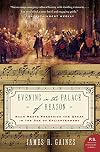
In one corner, a godless young warrior, Voltaire's heralded 'philosopher-king', the It Boy of the Enlightenment. In the other, a devout if bad-tempered old composer of 'outdated' music, a scorned genius in his last years. The sparks from their brief conflict illuminate a turbulent age. Behind the pomp and flash, Prussia's Frederick the Great was a tormented man, son of an abusive king who forced him to watch as his best friend (probably his lover) was beheaded. In what may have been one of show more history's crueler practical jokes, Frederick challenged 'old Bach' to a musical duel, asking him to improvise a six-part fugue based on an impossibly intricate theme (possibly devised for him by Bach's own son). Bach left the court fuming, but in a fever of composition, he used the coded, alchemical language of counterpoint to write 'A Musical Offering' in response. It is also one of the great works of art in the history of music. Set at the tipping point between the ancient and the modern world, the triumphant story of Bach's victory expands to take in the tumult of the eighteenth century: the legacy of the Reformation, wars and conquest, the birth of the Enlightenment. Brimming with originality and wit, 'Evening in the Palace of Reason' is history of the best kind - intimate in scale and broad in its vision. show lessTags
Recommendations










Member Reviews
Evening in the Palace of Reason is a joint biography of J. S. Bach and Frederick the Great-two prominent, and very different, historical figures. Gaines begins his tale with their first and only meeting. Frederick, the Enlightenment's poster child, scorns Bach and his music as old fashioned, unsightly and-worst of all- religious. He presents Bach with two musical challenges, which Bach responds to in his typical fashion.
After this initial introduction, Gaines begins the biographies of these two great men, recording their extreme dissimilarities and showing how these would culminate into Fredrick's difficult test, and Bach's equally difficult rejoinder. Into their stories, Gaines weaves many different threads-musical history, musical show more theory, theology, religious history, philosophy and the basic history of their time and place-to create a complex background on which to place the two, making for a detailed and fascinating story.
There were few "dull" places, though I did find some of the music theory hard-going, due to my lack of pre-knowledge. However, I came away from reading Evening in the Palace of Reason with a firmer grasp of not only Bach and Frederick, but counterpoint, Lutheranism, the 18th century, Prussian history and many more things I knew nothing about before I picked up the book!Though this is a scholarly work, Gaines did not target a purely scholarly audience, and as a result it can be enjoyed by layperson or historian alike.
I did find a few faults with this work, the most aggrieving being the lack of dates. Though I am a history enthusiast myself, I still need solid, concrete dates to place an incident within the framework of what was occurring in other parts of the world. Despite knowing when the Enlightenment "occurred", I would have preferred dates on the essential issues, such as the year of their births, the year in which they met, the year in which anything occurred. I found this lack of dates to be a continual frustration.
Otherwise, except for a few passages that were simply not well written, Gaines has done an admirable job with Evening in the Palace of Reason. This is a great read for amateur social or music historians, or biography aficionados. I thoroughly enjoyed it and rate it a solid four out of five. show less
After this initial introduction, Gaines begins the biographies of these two great men, recording their extreme dissimilarities and showing how these would culminate into Fredrick's difficult test, and Bach's equally difficult rejoinder. Into their stories, Gaines weaves many different threads-musical history, musical show more theory, theology, religious history, philosophy and the basic history of their time and place-to create a complex background on which to place the two, making for a detailed and fascinating story.
There were few "dull" places, though I did find some of the music theory hard-going, due to my lack of pre-knowledge. However, I came away from reading Evening in the Palace of Reason with a firmer grasp of not only Bach and Frederick, but counterpoint, Lutheranism, the 18th century, Prussian history and many more things I knew nothing about before I picked up the book!Though this is a scholarly work, Gaines did not target a purely scholarly audience, and as a result it can be enjoyed by layperson or historian alike.
I did find a few faults with this work, the most aggrieving being the lack of dates. Though I am a history enthusiast myself, I still need solid, concrete dates to place an incident within the framework of what was occurring in other parts of the world. Despite knowing when the Enlightenment "occurred", I would have preferred dates on the essential issues, such as the year of their births, the year in which they met, the year in which anything occurred. I found this lack of dates to be a continual frustration.
Otherwise, except for a few passages that were simply not well written, Gaines has done an admirable job with Evening in the Palace of Reason. This is a great read for amateur social or music historians, or biography aficionados. I thoroughly enjoyed it and rate it a solid four out of five. show less
I'm a pretty big fan of this book. It does sortof amount to the grown-up equivalent of doodling "I Ricercar is a total success, man. Six voices was too many even for Bach.)
The history is solid and the story is good, but what really elevates this for me is Gaines' descriptions of some of Bach's work. It's very difficult to write about music, which makes it surprising that so many people try to. Gaines really nails it; he makes you desperate to hear the pieces he's raving about (I spent several hours on the couch reading this book and listening to each piece as he got to it), and once you hear them, crucially, you think, "Yes: he's totally right about that, whatever, catabasis there." (Except in the case of his defense of the Ricercar. A show more for effort, bud.)
For what it's worth, the best writing about music I've ever seen is the treatment of the Trout Sonata in Vikram Seth's [b:An Equal Music.|50366|An Equal Music|Vikram Seth|http://photo.goodreads.com/books/1170368734s/50366.jpg|2307024] I'm sure you were wondering. I don't remember anything about that book except that now I'm a huge fan of the Trout. (Incidentally, one of the many times I fell in love with my wife was while watching her play that piece.)
The essential question in Gaines' book is the difference between music as mathematics and music as free expression, and that's one that's fascinated me ever since Music Comp II when we learned all sorts of arcane rules for how to modulate between keys. It was extremely scientific; that might sound awful, but it's not...necessarily. In my hands it was pretty awful. Bach, on the other hand, was obsessively mindful of all this, but you don't notice it at all. Some think these rules - the dissonance in a tritone, the consonance in a fifth - are the secrets to the universe, no different than Einstein's E=MC2. That's bullshit, but it's really interesting bullshit, isn't it?
Added and weird bonus: this book also started one of my very rare and much-wished-for literary conversations on the T, from a New England Conservatory student of indeterminate gender. The bad news is that it reminded me: the sort of person who comes rushing over to talk about your history book with you is also the sort of person who insists on pronouncing "Bach" all pretentious-like. Just say it Bock, dude(tte?). You sound like the kind of douche who pretends to like the Ricercar. show less
The history is solid and the story is good, but what really elevates this for me is Gaines' descriptions of some of Bach's work. It's very difficult to write about music, which makes it surprising that so many people try to. Gaines really nails it; he makes you desperate to hear the pieces he's raving about (I spent several hours on the couch reading this book and listening to each piece as he got to it), and once you hear them, crucially, you think, "Yes: he's totally right about that, whatever, catabasis there." (Except in the case of his defense of the Ricercar. A show more for effort, bud.)
For what it's worth, the best writing about music I've ever seen is the treatment of the Trout Sonata in Vikram Seth's [b:An Equal Music.|50366|An Equal Music|Vikram Seth|http://photo.goodreads.com/books/1170368734s/50366.jpg|2307024] I'm sure you were wondering. I don't remember anything about that book except that now I'm a huge fan of the Trout. (Incidentally, one of the many times I fell in love with my wife was while watching her play that piece.)
The essential question in Gaines' book is the difference between music as mathematics and music as free expression, and that's one that's fascinated me ever since Music Comp II when we learned all sorts of arcane rules for how to modulate between keys. It was extremely scientific; that might sound awful, but it's not...necessarily. In my hands it was pretty awful. Bach, on the other hand, was obsessively mindful of all this, but you don't notice it at all. Some think these rules - the dissonance in a tritone, the consonance in a fifth - are the secrets to the universe, no different than Einstein's E=MC2. That's bullshit, but it's really interesting bullshit, isn't it?
Added and weird bonus: this book also started one of my very rare and much-wished-for literary conversations on the T, from a New England Conservatory student of indeterminate gender. The bad news is that it reminded me: the sort of person who comes rushing over to talk about your history book with you is also the sort of person who insists on pronouncing "Bach" all pretentious-like. Just say it Bock, dude(tte?). You sound like the kind of douche who pretends to like the Ricercar. show less
This book needs to get an award just for the length of the subtitle!
Entertaining, excellent, and approachable history. Not a biography, but an examination of the lives of J.S. Bach and Frederick the Great inspired by their famous meeting. Late in Bach’s life, he journeyed to the court of Frederick (where his son, C.P.E. Bach, was a court musician). Summoned by Frederick, he was presented with a theme and asked to compose a fugue on it in three parts. Back improvised the fugue, to the astonishment of everyone. Later, when Bach returned to Leipzig, he composed and had printed the “Musical Offering” on Frederic’s theme and sent it to the court.
The author does a lot of creative reading between the lines to fill out the historical show more record. That is what makes the book so enjoyable, presenting the facts and giving an entertaining interpretation. He fills in the history of Bach and Frederick, and casts their meeting as a collision of the serious baroque music of Bach with the lighter music favored by Frederick, and uses that as a metaphor for the change from the religious reformation to the birth of the Enlightenment. show less
Entertaining, excellent, and approachable history. Not a biography, but an examination of the lives of J.S. Bach and Frederick the Great inspired by their famous meeting. Late in Bach’s life, he journeyed to the court of Frederick (where his son, C.P.E. Bach, was a court musician). Summoned by Frederick, he was presented with a theme and asked to compose a fugue on it in three parts. Back improvised the fugue, to the astonishment of everyone. Later, when Bach returned to Leipzig, he composed and had printed the “Musical Offering” on Frederic’s theme and sent it to the court.
The author does a lot of creative reading between the lines to fill out the historical show more record. That is what makes the book so enjoyable, presenting the facts and giving an entertaining interpretation. He fills in the history of Bach and Frederick, and casts their meeting as a collision of the serious baroque music of Bach with the lighter music favored by Frederick, and uses that as a metaphor for the change from the religious reformation to the birth of the Enlightenment. show less
Solid and enjoyable book. Gaines has his subject and its presentation in an iron grip, and his wit is actually pretty witty (though the abundant parenthetical asides got to be a bit much). His presentation of his theme, woven together like counterpoint, is very clever. The epilogue too was an insightful (and parenthesis-less) sweep through the epochs of ideas post-Bach-and-Frederick. If the whole book were more like the finale it would add another star, but still overall a very enjoyable essay.
Starting from the remarkable and historical meeting of "old Bach" and Frederick the Great of Prussia, Gaines builds an interesting double biography of a musical and a military genius. The book is a quick, "almost chatty" read, focusing primarily on Bach and his music, but giving Frederick his due as well.
Despite the frame Gaines attempts to place on his protagonists I am unpersuaded that using these two as emblematic of faith (Bach) and reason (Frederick) works. First, Bach, as even Gaines admits, was as much a revolutionary in music as post-Enlightenment figures like Beethoven. Second, Frederick's pose as the "philosopher king" is pretty much that - a pose. The theoretical "enlightened monarch," while far more liberal than many of his show more contemporaries, was still a militaristic despot at heart.
The book has other flaws. Switching back and forth between Bach and Frederick can cause whiplash if one does not keep in mind they were barely contemporaries. Gaines' breezy style is amusing, but I can't help feeling he'd sacrifice accuracy for style. And his explanation of musical theory can cause the non-technical reader's eyes to glaze over. But Gaines keeps the focus on Bach's music, and more than once he directs his reader to set aside the book and listen to Bach's work, an exhortation that does more to make his argument than whole chapters on counterpoint could do. show less
Despite the frame Gaines attempts to place on his protagonists I am unpersuaded that using these two as emblematic of faith (Bach) and reason (Frederick) works. First, Bach, as even Gaines admits, was as much a revolutionary in music as post-Enlightenment figures like Beethoven. Second, Frederick's pose as the "philosopher king" is pretty much that - a pose. The theoretical "enlightened monarch," while far more liberal than many of his show more contemporaries, was still a militaristic despot at heart.
The book has other flaws. Switching back and forth between Bach and Frederick can cause whiplash if one does not keep in mind they were barely contemporaries. Gaines' breezy style is amusing, but I can't help feeling he'd sacrifice accuracy for style. And his explanation of musical theory can cause the non-technical reader's eyes to glaze over. But Gaines keeps the focus on Bach's music, and more than once he directs his reader to set aside the book and listen to Bach's work, an exhortation that does more to make his argument than whole chapters on counterpoint could do. show less
May 1747. A 62-year-old German musician from Leipzig comes to visit his second son in Potsdam, where he is a member of the royal orchestra, and is immediately summoned to meet the 35-year-old monarch. The King -- known to history as Frederick the Great -- gives the older man -- the renowned Johann Sebastian Bach -- walks over to the keyboard and plays a sequence of 21 notes, which he then invites Bach to improve into a three-voice fugue. Once this task has been successfully completed, the King then demands a SIX-voice fugue, which the composer suggests is impossible on such short notice. But, upon his return to Leipzig, Bach not only writes out the requested six-voice fugue but sends the King a series of canons and other works (some 13 show more pieces in all) based on the theme, sending them back to Potsdam within two months. -- Such is the basis of James R. Gaines's excellent book "Evening in the Palace of Reason." Although there are elements of dual biography here (in alternating chapters, Gaines shares the lives of King and composer), the book is more a meditation on two contrasting world-views -- one based on the tenants of deeply-held Christian faith, the other on the strict rationality of the developing Enlightenment -- at something of a crossroads of the history of human thought and belief. The final pages of Gaines's analysis of Bach's achievement, adhering to his faith in the face of Frederick's power-politics, are deeply moving and rousing. -- The author writes, for the most part, with clarity and wit. (I found some of the more technical explanations of musical structure a bit difficult at times.) I recommend the book to anyone who might find these subjects of interest. -- I must confess, however, somewhat to my dismay, that I found two historical errors: (1) The throne of England did -not- pass to the descendants of Sophia, Electress of Hanover, "after the last Stuart king, James II, died without a successor" (p. 37), but after the end of the -Protestant- Stuart line. (2) Charles Albert (Charles VII), the Holy Roman Emperor, was -not- "formerly elector of Bohemia," but was, in fact, the Elector of Bavaria (p. 207). (I always worry about finding such errors -- I want to be able to trust the authors of the books I read for complete accuracy, and, when I find mistakes of this kind, I begin to wonder about the reliability of everything else in the book! :-( show less
The book is principally a meditation on the respective claims of feeling--the senses (including religious faith)--and reason, to fulfill humanity's deepest needs. J. S. Bach represents the former, Frederick the Great of Prussia, the latter. I think the volume promises more than it delivers. Why? Because Gaines' principal metaphor (the encounter of Bach and Frederick in the latter's palace) is inadequate to convey Gaines' thesis. His statement of that thesis is, "[A] world without a sense of the transcendent and mysterious, a universe ultimately discoverable through reason alone, can only be a barren place; and that the music sounding forth from such a world might be very pretty, but it can never be beautiful" [p 12].
The author's show more extensive forays into music theory and the biographies of his principal characters (and others, C. P. E. Bach, for example), although not superficial, do not, ultimately, enlighten us as he apparently expects that they will.
This book is a prose hymn of praise to J. S. Bach and his heavenly music, set to a counterpoint of Enlightenment empirically-based reason. show less
The author's show more extensive forays into music theory and the biographies of his principal characters (and others, C. P. E. Bach, for example), although not superficial, do not, ultimately, enlighten us as he apparently expects that they will.
This book is a prose hymn of praise to J. S. Bach and his heavenly music, set to a counterpoint of Enlightenment empirically-based reason. show less
Members
- Recently Added By
Lists

Books Read in 2019
4,052 works; 108 members

Books Read in 2023
5,547 works; 145 members
Author Information

A native of Dayton, Ohio, James R. Gaines is the former managing editor of Time, Life, and People magazines and the author of several books, including Wit's End: Days and Nights of the Algonquin Round Table and, most recently, Evening in the Palace of Reason, a book that explains the clash of the Baroque and the Enlightenment and the conflict show more between faith and reason through the music of Johann Sebastian Bach show less
Some Editions
Series
Belongs to Publisher Series
Die Andere Bibliothek (285)
Work Relationships
Is retold in
Common Knowledge
- Canonical title
- Evening in the Palace of Reason : Bach meets Frederick the Great in the Age of Enlightment
- Original publication date
- 2005
- People/Characters
- Bach, Johann Sebastian, 1685-1750; Frederick the Great, King of Prussia
- Important places
- Germany
- Important events
- 1747 meeting of Frederick the Great and Johann Sebastian Bach
- Original language
- English US
Classifications
Statistics
- Members
- 576
- Popularity
- 50,926
- Reviews
- 8
- Rating
- (3.95)
- Languages
- Dutch, English, German, Portuguese (Portugal)
- Media
- Paper, Ebook
- ISBNs
- 9
- UPCs
- 1
- ASINs
- 6