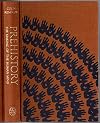
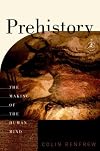
Prehistory: The Making of the Human Mind
by Colin Renfrew
On This Page
Description
In this invaluable, brief account of human development prior to the last four millennia, Colin Renfrew delivers a meticulously researched and passionately argued chronicle about our life on earth, and our ongoing quest to understand it.Tags
Recommendations
























Member Reviews
Yes, cognitive archaeology exists - and it's a fascinating field. Homo sapiens is a couple hundred thousand years old, but for much of that time there was little change. Then, about 12 thousand years ago, things began changing more rapidly, and often in ways we take completely for granted. When is the last time you thought about the origin of the notion of weighing things? Or the conceptual basis for coinage? Or the incredibly varied trajectories different human cultures have taken? This book discusses all these and made me think about our development in ways I never had before.
Colin Renfrew (° 1937) is a well-respected British archaeologist with a long career among others at Cambridge University. I have the impression that this book somewhat is his spiritual testament (written when he was 70), in which he has collected different considerations about his field of expertise. In that sense, the subtitle "The Making of the Human Mind" is a bit misleading. Only the middle part of this book delves deeper into the cognitive evolution of humanity. Renfrew certainly offers interesting considerations, but you can see in many things that he belongs to the type of classically trained archeologists, so not at all that energetic in his use of other social sciences, like Steven Mithen or Clive Gamble do. For example, he show more adheres to the classic distinction between prehistory and real history that starts as soon as there are written sources, and he also continues to use the concept of Neolithic Revolution (coined by Vere Clive Gordon in the 1930s). This book also shows a fairly Eurocentric orientation (only Mesoamerica also comes into the picture). The book contains several interesting views, and certainly is meritorious, but in my opinion it is somewhat dated. More about that in my History account on Goodreads https://www.goodreads.com/review/show/2479575123 show less
This book was more a book on the history of prehistory (that is, a look at how modern scholars' research into prehistory has developed since the discipline began in the 19th century) than a book focused specially on prehistory itself. Although that was not what I expected when I picked the book up and initially began reading, it was exactly what I needed and I'm very grateful for that now. I'm very widely read in history, especially in intellectual history (that is, the history of the human mind and its ideas), but this is the first book that I've read focused specifically on prehistory. I was not, however, in any way overwhelming or confused. Dr. Renfrew is quite clearly writing for the non-expert and does a great job in introducing show more new subjects and defining specialist terminology. His look at the origins of the human mind and what it is that makes us uniquely human was a very interesting and enjoyable look. My only complaint is that I wish there would have been more! show less
There is no doubt Colin Renfrew has written an easily read account of prehistory. He is a distinguished professor of archaeology and this is his field of specialization. Hence he is very knowledgeable about research into prehistoric times. Yet the narrative generates a general unease. Perhaps he just tries too hard to bolster a sense of mystery. Certainly his emphasis of concrete aspects is unsettling. Indeed at times he sounds too much like a logical positivist of the early 20th century. Consequently one commonly gets the impression that the author is probably missing important considerations.
Thus he is often quite unconvincing eg when he criticizes memes, or when he assigns pre-eminence to just one of many factors. Furthermore he does show more not clearly distinguish speculation and reasoned opinion. Nevertheless in spite of these concerns, the book eventually ends well. show less
Thus he is often quite unconvincing eg when he criticizes memes, or when he assigns pre-eminence to just one of many factors. Furthermore he does show more not clearly distinguish speculation and reasoned opinion. Nevertheless in spite of these concerns, the book eventually ends well. show less
A survey of pre-historic archeology, advancing the argument for a period of human speciation followed by a period of culture change, termed the tectonic phase of human development. The speciation mainly took place in Africa. About 60,000 years ago, a relatively small number of homo sapiens, already possessing the same basic anatomy and genome of modern humans, spread across Asia and Europe, and beyond. The Neanderthals were mainly in Europe, and might have been an indigenous speciation from an earlier group. There are regional differences in development, with cave art being more prominent in Europe, only one site known in Africa. Finds of artifacts interpreted as evidence for use of symbolism, like decoration, occur very early, and are show more evidence for mind. The ability to learn tool making and transmit culture probably existed prior to language, enabled by human abilities to imitate others. The transition from wandering as hunter-gatherers to sedentary life and agriculture, marked in the archeological record by the finds of houses and pottery about 9000 years ago, allowed development of writing, social structures and civilization.
The history of recent academic controversies dominated the first part of the book, and I found myself reading the same sentence several times as the author addressed different aspects of prior topics, but a recent (copyright 2007) overview with interesting pictures was welcome show less
The history of recent academic controversies dominated the first part of the book, and I found myself reading the same sentence several times as the author addressed different aspects of prior topics, but a recent (copyright 2007) overview with interesting pictures was welcome show less
Colin Renfrew’s particular interest in this book is revealed by the subtitle: the making of the human mind. The first third of the book is a prelude that offers an overview of how humans became aware of the long stretches of time before history kicks in. Until the mid-nineteenth century, the dominant picture — at least in the west — had been centered on the Bible and dates extracted from its narrative. Everyone “knew” that the first humans came into existence in 4004 BC. All other evidence was subordinated to that framework.
Since then, archaeology, supplemented by radiocarbon and tree-ring dating, has made enormous strides in constructing a worldwide picture of the preliterate past. The story of how repeated disconfirmations show more led to the concept of prehistory is a fascinating one, competently recounted here. But knowing what happened when hasn’t yet explained how or why. These questions occupy the second part of the book.
Renfrew begins part two by addressing what he calls the sapient paradox. To compare the results of dating artifacts with DNA analysis reveals a surprising dissonance. On the one hand, “speciation,” the appearance of Homo sapiens in Africa, seems to have occurred as much as 150,000 years ago. On the other, characteristically “human” advances, such as the agricultural revolution, seem no older than 10,000 years. A model based solely on biological evolution can’t explain the lag. Clearly, new inherent genetic capacity doesn’t make itself immediately evident in technological progress.
So how did our species, which apparently dispersed out of Africa roughly 60,000 years ago, come to use symbols, develop writing, and introduce agriculture? Renfrew stresses that the earliest symbols have material referents. This is evident in cave paintings, but Renfrew argues that this is true of other notions as well. The discovery of a set of artifacts, of ascending size, all made from the same material and having the same shape, tells a story -- particularly since their relationship to each other is based on a standard unit. This demonstrates the notion of weight used not only to measure these objects but as a standard against which to measure quantities of other objects. The notion didn’t arise in the abstract but in physical experience.
Further, this type of development did not have to originate in one locality and spread from there; it could have arisen separately in various locations (and probably did). The notion of the alphabet is a case in point. The early Semitic alphabet, which became the basis for Hebrew, Arabic, Greek, and Latin scripts, arose roughly at the same time as the ideographic system developed in China and adapted in Japan and Korea. One concept, at least two origins.
Continuing in the search for how and why, Renfrew identifies sedentism, the practice of a group remaining for an extended time in one place, as “the decisive turn in prehistory” (p. 135). This preceded the invention of agriculture, which was just one way in which staying put led to generations of interaction with the material world. Pottery, as a particular application of the domestication of fire, was a related development. Metallurgy, in turn, grew out of that skill.
As I set these ideas down, I feel afresh how exciting investigations such as prehistoric cognition and archaeogenetics are — the same excitement I felt when I first opened this book. That no doubt explains my frustration as I read it. This book is simply not well-written. In structure, it resembles the same author’s earlier Before Civilization (1973). Whereas the earlier book seemed clearly aimed at an imagined reader (an undergraduate embarking on archaeology as a possible career field), this book can’t seem to make up its mind. It appears to be written for the interested layman. Still, in some passages, the speed of his overview is overwhelming (case in point, the section “Toward a comparative archaeology?”, which closes chapter four). At other times, Renfrew repeats himself. For example, he writes: “Chinese writing, which is mainly ideographic in character (although some signs have phonetic values). . . .” (Pp. 209-10), then “These Chinese texts were all, of course, written using the Chinese script with its thousands of signs. This was an ideographic script, with each sign representing an idea as well as a word, although, as with most ideographic scripts, some signs could also be used phonetically” (p. 213).
Renfrew not only assumes that his imagined reader doesn’t know that Chinese is an ideographic script, but is so inattentive that he or she forgets that in the course of three pages. Such a reader, I imagine, wouldn’t have made it this far in the book. Nor, I fear, some better informed, attentive readers.
Sadly, this is not an isolated lapse, but typical for the book, particularly in part two. Another indication of Renfrew’s difficulty marshaling his material is the frequent use of the phrases “as we shall see” and “as we have seen.” Comparing this book to Before Civilization could lead one to conclude that Renfrew has decayed as a writer. Of course, the fault may not be solely his. In 1973, publishers still employed book editors who worked closely with authors. Thirty-five years later, authors were on their own. show less
Since then, archaeology, supplemented by radiocarbon and tree-ring dating, has made enormous strides in constructing a worldwide picture of the preliterate past. The story of how repeated disconfirmations show more led to the concept of prehistory is a fascinating one, competently recounted here. But knowing what happened when hasn’t yet explained how or why. These questions occupy the second part of the book.
Renfrew begins part two by addressing what he calls the sapient paradox. To compare the results of dating artifacts with DNA analysis reveals a surprising dissonance. On the one hand, “speciation,” the appearance of Homo sapiens in Africa, seems to have occurred as much as 150,000 years ago. On the other, characteristically “human” advances, such as the agricultural revolution, seem no older than 10,000 years. A model based solely on biological evolution can’t explain the lag. Clearly, new inherent genetic capacity doesn’t make itself immediately evident in technological progress.
So how did our species, which apparently dispersed out of Africa roughly 60,000 years ago, come to use symbols, develop writing, and introduce agriculture? Renfrew stresses that the earliest symbols have material referents. This is evident in cave paintings, but Renfrew argues that this is true of other notions as well. The discovery of a set of artifacts, of ascending size, all made from the same material and having the same shape, tells a story -- particularly since their relationship to each other is based on a standard unit. This demonstrates the notion of weight used not only to measure these objects but as a standard against which to measure quantities of other objects. The notion didn’t arise in the abstract but in physical experience.
Further, this type of development did not have to originate in one locality and spread from there; it could have arisen separately in various locations (and probably did). The notion of the alphabet is a case in point. The early Semitic alphabet, which became the basis for Hebrew, Arabic, Greek, and Latin scripts, arose roughly at the same time as the ideographic system developed in China and adapted in Japan and Korea. One concept, at least two origins.
Continuing in the search for how and why, Renfrew identifies sedentism, the practice of a group remaining for an extended time in one place, as “the decisive turn in prehistory” (p. 135). This preceded the invention of agriculture, which was just one way in which staying put led to generations of interaction with the material world. Pottery, as a particular application of the domestication of fire, was a related development. Metallurgy, in turn, grew out of that skill.
As I set these ideas down, I feel afresh how exciting investigations such as prehistoric cognition and archaeogenetics are — the same excitement I felt when I first opened this book. That no doubt explains my frustration as I read it. This book is simply not well-written. In structure, it resembles the same author’s earlier Before Civilization (1973). Whereas the earlier book seemed clearly aimed at an imagined reader (an undergraduate embarking on archaeology as a possible career field), this book can’t seem to make up its mind. It appears to be written for the interested layman. Still, in some passages, the speed of his overview is overwhelming (case in point, the section “Toward a comparative archaeology?”, which closes chapter four). At other times, Renfrew repeats himself. For example, he writes: “Chinese writing, which is mainly ideographic in character (although some signs have phonetic values). . . .” (Pp. 209-10), then “These Chinese texts were all, of course, written using the Chinese script with its thousands of signs. This was an ideographic script, with each sign representing an idea as well as a word, although, as with most ideographic scripts, some signs could also be used phonetically” (p. 213).
Renfrew not only assumes that his imagined reader doesn’t know that Chinese is an ideographic script, but is so inattentive that he or she forgets that in the course of three pages. Such a reader, I imagine, wouldn’t have made it this far in the book. Nor, I fear, some better informed, attentive readers.
Sadly, this is not an isolated lapse, but typical for the book, particularly in part two. Another indication of Renfrew’s difficulty marshaling his material is the frequent use of the phrases “as we shall see” and “as we have seen.” Comparing this book to Before Civilization could lead one to conclude that Renfrew has decayed as a writer. Of course, the fault may not be solely his. In 1973, publishers still employed book editors who worked closely with authors. Thirty-five years later, authors were on their own. show less
This is a nice introduction to how humans evolved their life and culture before the time of written records. Part 1, the Discovery of Prehistory is very well written and an engrossing read. Following mankind as they evolve from the paleolithic through neolithic stage and into the bronze age is fascinating. Looking at how human groups evolved in the Indus Valley, Mespotamia, the Yucutan Peninsula, and various sites in China and Europe shows how a lot happened and we have only some sparse data to track it properly.
The second part of the book, the Prehisotry of the Mind, was not quite as fulfilling, as the author has to speculate a bit more as to how the mind really functioned thousands of years ago, how economies worked, how tools were show more used, what the function of rituals were. I sometimes wish we could time travel back and observe our ancestors.
All in all, this was a good summing up. show less
The second part of the book, the Prehisotry of the Mind, was not quite as fulfilling, as the author has to speculate a bit more as to how the mind really functioned thousands of years ago, how economies worked, how tools were show more used, what the function of rituals were. I sometimes wish we could time travel back and observe our ancestors.
All in all, this was a good summing up. show less
Members
- Recently Added By
Lists

Cognitive Archaeology (Michelle's TBR)
5 works; 1 member

Folio Society
831 works; 48 members

Books in the Bibliography of The Dawn of Everything by Graeber & Wengrow
478 works; 2 members
Author Information

73+ Works 2,780 Members
Colin Renfrew is Disney Professor of Archaeology and Director of the McDonald Institute for Archaeological Research at the University of Cambridge.
Series
Belongs to Publisher Series
Common Knowledge
- Canonical title
- Prehistory: The Making of the Human Mind
Classifications
- Genres
- Anthropology, History, Nonfiction, Science & Nature, General Nonfiction
- DDC/MDS
- 930.1 — History & geography History of ancient world (to ca. 499) Ancient History: China, Egypt, Rome, Greece Archaeology
- LCC
- GN740 .R46 — Geography, Anthropology and Recreation Anthropology Anthropology Prehistoric archaeology
- BISAC
Statistics
- Members
- 332
- Popularity
- 95,905
- Reviews
- 9
- Rating
- (3.48)
- Languages
- Chinese, English, Italian
- Media
- Paper, Audiobook, Ebook
- ISBNs
- 12
- ASINs
- 7