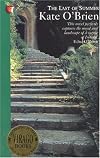
The Last of Summer
by Kate O'Brien
On This Page
Description
It is 1939, the last summer before the outbreak of war. French actress Angele Maury abandons a group of friends travelling through Ireland and takes herself to picturesque Drumaninch, birthplace of her dead father. She has come to make sense of her past. Self-conscious with her pale, exotic beauty, Angele braves the idiosyncratic world of the Kernahans: her enigmatic aunt Hannah, her ridiculous but loveable uncle Corney and her three cousins - Martin, charming, intense; Tom, devoted to his show more mother, and their bright sister Jo, who combines religious faith with a penchant for gambling. But is there some mystery surrounding the past? History threatens to repeat itself as Angele finds herself seduced by the beauty of Ireland, and by the love of two men...First published in 1943, The Last of the Summer is a perfectly structured psychological love story. show lessTags
Recommendations












Member Reviews
In the summer of 1939, Angèle Maury, a young French actress, is traveling through Ireland and makes a spontaneous decision to visit the house where her father grew up, now occupied by relatives she has never met. Little does she know the impact her visit will have. As stated in Eavan Boland’s introduction:
She will remind them, for good and ill, that the past is inescapable. She will bring into their consciousness the names of threatened cities and wasted loves. She will change everything before she leaves.
Angèle’s appearance on the doorstep is a complete surprise to her Aunt Hannah and adult cousins Tom, Martin, and Jo. Hannah is distant and brusque at first; the cousins are more welcoming. As Kate O’Brien slowly teases out the show more details, it becomes clear Hannah has kept a number of secrets over the years, including the existence of a brother-in-law who left home, married a French woman, and never returned. Angèle is a fly in Hannah’s ointment to say the least, but she will never show it, remaining at all times the gracious hostess. That is, until Angèle’s relationships with her children pose a real threat to Hannah’s carefully crafted existence. Here, once again, O’Brien is master of the slow reveal. Not surprisingly, I was on Angèle’s side all the way, and sympathetic to the three cousins whose lives had been so craftily manipulated for their mother’s benefit.
The onset of World War II brings this brilliant character study to a close, leaving many unanswered questions about the family’s future. show less
She will remind them, for good and ill, that the past is inescapable. She will bring into their consciousness the names of threatened cities and wasted loves. She will change everything before she leaves.
Angèle’s appearance on the doorstep is a complete surprise to her Aunt Hannah and adult cousins Tom, Martin, and Jo. Hannah is distant and brusque at first; the cousins are more welcoming. As Kate O’Brien slowly teases out the show more details, it becomes clear Hannah has kept a number of secrets over the years, including the existence of a brother-in-law who left home, married a French woman, and never returned. Angèle is a fly in Hannah’s ointment to say the least, but she will never show it, remaining at all times the gracious hostess. That is, until Angèle’s relationships with her children pose a real threat to Hannah’s carefully crafted existence. Here, once again, O’Brien is master of the slow reveal. Not surprisingly, I was on Angèle’s side all the way, and sympathetic to the three cousins whose lives had been so craftily manipulated for their mother’s benefit.
The onset of World War II brings this brilliant character study to a close, leaving many unanswered questions about the family’s future. show less
Angele Maury, a French actress traveling with friends through Ireland, decides to take a side trip to the town of Drumaninch and meet her dead father’s family, the Kernahans. The year is 1939, and the world is feeling the tensions of Europe on the fringe of war. There was obviously a rift in the family when her father left Ireland, and the past seems to loom over the present with secrets and resentments that Angele is completely unaware of.
Among those Angele meets in Ireland are her two male cousins, Martin and Tom, her female cousin, Jo, and the very bitchy and cruel Aunt Hannah. Both of the men are drawn to their new cousin and we know almost immediately that there is going to be trouble in paradise. That Hannah rules her family is show more obvious, and that she despises the presence of her niece just as apparent to the reader, if not to the other characters involved.
I found the rapidity of the relationships formed to be a bit disconcerting, but this is a different time than now, and in the context of life of the time and the looming threat of war that hovers over the world, perhaps love is easier to fall into, if no easier to comprehend. At least O’Brien resisted making the relationships easy or uncomplicated and left the characters with the same doubts the reader entertained.
Love can survive, a little or a long time, this lesson of its insufficiency--because it must, because self-love and self-respect insist; because pleasure is strong, and compromise is an understood necessity, and because lovers learn to understand love cynically and yet value it.
How much do these individual lives, personal problems, torn hearts and hurts matter against the backdrop of the war that is coming? Will any of these people survive to see the end of the war? Will they look back on this summer of angst and wonder if they had not given it more meaning than it should have carried, or perhaps wishing that they had been a bit kinder and more accepting of one another and embraced the simple lives they enjoyed? All questions I was left with at the end of the novel and ones that I think would have been in the minds of many people at the time this novel was written. show less
Among those Angele meets in Ireland are her two male cousins, Martin and Tom, her female cousin, Jo, and the very bitchy and cruel Aunt Hannah. Both of the men are drawn to their new cousin and we know almost immediately that there is going to be trouble in paradise. That Hannah rules her family is show more obvious, and that she despises the presence of her niece just as apparent to the reader, if not to the other characters involved.
I found the rapidity of the relationships formed to be a bit disconcerting, but this is a different time than now, and in the context of life of the time and the looming threat of war that hovers over the world, perhaps love is easier to fall into, if no easier to comprehend. At least O’Brien resisted making the relationships easy or uncomplicated and left the characters with the same doubts the reader entertained.
Love can survive, a little or a long time, this lesson of its insufficiency--because it must, because self-love and self-respect insist; because pleasure is strong, and compromise is an understood necessity, and because lovers learn to understand love cynically and yet value it.
How much do these individual lives, personal problems, torn hearts and hurts matter against the backdrop of the war that is coming? Will any of these people survive to see the end of the war? Will they look back on this summer of angst and wonder if they had not given it more meaning than it should have carried, or perhaps wishing that they had been a bit kinder and more accepting of one another and embraced the simple lives they enjoyed? All questions I was left with at the end of the novel and ones that I think would have been in the minds of many people at the time this novel was written. show less
Ratings
Members
- Recently Added By
Author Information

16+ Works 1,716 Members
Series
Belongs to Publisher Series
Zephyr Books (102)
Virago Modern Classics (349)
Common Knowledge
- Original publication date
- 1944
- People/Characters
- Angele Maury
- Important places
- Drumaninch, Ireland (fictional)
- Related movies
- Last of Summer (1977 | TV | IMDb)
- First words
- The porter said he'd mind her bag.
- Last words
- (Click to show. Warning: May contain spoilers.)Angèle tipped hers with Tom's, and saw that tears were pouring down his cheeks.
(Click to show. Warning: May contain spoilers.)Angele tipped hers with Tom's, and they saw that tears were pouring down his cheeks. - Blurbers
- Brophy, John; Pryce-Jones, Alan
Classifications
Statistics
- Members
- 125
- Popularity
- 260,822
- Reviews
- 2
- Rating
- (4.06)
- Languages
- English
- Media
- Paper, Ebook
- ISBNs
- 5
- ASINs
- 9