The Nero Prediction
by Humphry Knipe
On This Page
Description
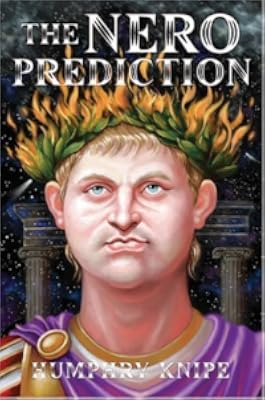
Agrippina, the emperor Claudius's niece, reads in the stars that Epaphroditus, a slave, is destined to help raise her son, the future emperor Nero, to the throne of the Caesars. Epaphroditus soon becomes Nero's confidant. Revolutionary unrest strikes Rome, a fiery comet makes a foreboding appearance and the young emperor makes a concert tour of Greece as enemies sprout like hydra's heads. Epaphroditus, fortified by the return of his faith in astrology, discovers that he, Nero's protector, is show more fated to kill his Caesar. show lessTags
Member Reviews
http://nhw.livejournal.com/929385.html
Knipe has done the technical research well; by use of the astrological techniques of the day he has worked out what precisely Nero and his contemporaries would have been concerned about, while making it clear (through Epaphroditus, the narrator) that he doesn't believe a word of it himself. I'm particularly interested, because of my own long-ago researches around Eleanor of Aquitaine, that Knipe believes two horoscopes provided by the second-century astrologer Vettius Valens are in fact those cast for the times of Nero's birth and death.
My knowledge of classical times, other than astrology, is sufficiently sketchy that I did not notice any errors of detail, and the scene-setting (starting in show more Alexandria, then mostly in and around Rome) is convincing. The characterisation of Nero and his mother Agrippina is pretty vivid. Though I was left a bit unsure about the role in events played by early Christians (Saints Peter and Mark make several personal appearances).
Anyway, if you want a bit more ancient science with your Roman fiction than you get from Lindsey Davis, Robert Graves or Suetonius, you'll find it here. show less
Knipe has done the technical research well; by use of the astrological techniques of the day he has worked out what precisely Nero and his contemporaries would have been concerned about, while making it clear (through Epaphroditus, the narrator) that he doesn't believe a word of it himself. I'm particularly interested, because of my own long-ago researches around Eleanor of Aquitaine, that Knipe believes two horoscopes provided by the second-century astrologer Vettius Valens are in fact those cast for the times of Nero's birth and death.
My knowledge of classical times, other than astrology, is sufficiently sketchy that I did not notice any errors of detail, and the scene-setting (starting in show more Alexandria, then mostly in and around Rome) is convincing. The characterisation of Nero and his mother Agrippina is pretty vivid. Though I was left a bit unsure about the role in events played by early Christians (Saints Peter and Mark make several personal appearances).
Anyway, if you want a bit more ancient science with your Roman fiction than you get from Lindsey Davis, Robert Graves or Suetonius, you'll find it here. show less
Members
- Recently Added By
Author Information

8 Works 47 Members
Awards and Honors
Common Knowledge
- Important places
- Ancient Rome
Classifications
Statistics
- Members
- 12
- Popularity
- 1,877,992
- Reviews
- 1
- Rating
- (3.50)
- Languages
- English
- Media
- Paper, Ebook
- ISBNs
- 2
- ASINs
- 1