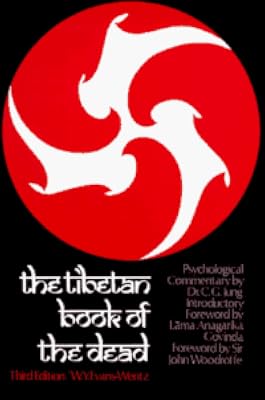
Tibetan Book of the Dead: Or, The After-Death Experiences on the Bardo Plane, according to Lama Kazi Dawa-Samdup's English Rendering
by W. Y. Evans-Wentz, Lama Kazi Dawa-Samdup (Translator)
On This Page
Description
The Tibetan Book of the Dead is one of the texts that, according to legend, Padma-Sambhava was compelled to hide during his visit to Tibet in the late 8th century. The guru hid his books in stones, lakes, and pillars because the Tibetans of that day and age were somehow unprepared for their teachings. Now, in the form of the ever-popular Tibetan Book of the Dead, these teachings are constantly being discovered and rediscovered by Western readers of many different backgrounds--a phenomenon show more which began in 1927 with Oxford's first edition of Dr. Evans-Wentz's landmark volume. While it is traditio show lessTags
Recommendations











Member Reviews
The Tibetan Book of the Dead as translated by W.Y. Evans-Wentz is a less than complete and less than faithful translation but is the only version known in the West for a long time. As such, it is, at the least, an important historical document even when it might not be a particularly useful one for those interested in Buddhism.
My case is one example. I became familiar with the book when I first picked up a copy of The Psychedelic Experience back in the late 60s. It is the version that not only influenced those experiments but served as an introduction to Eastern thought for me. It is also the version that Jung referenced in his work. So having this copy for these purposes make perfect sense.
If you want to sidestep Evans-Wentz' theosophy show more influence and get a better, more comprehensive translation as part of studying Buddhism, I would recommend a different translation. This Ixia Press edition is a wonderful copy of Evans-Wentz version and I would highly recommend it for those who want or need this version.
Reviewed from a copy made available by the publisher via NetGalley. show less
My case is one example. I became familiar with the book when I first picked up a copy of The Psychedelic Experience back in the late 60s. It is the version that not only influenced those experiments but served as an introduction to Eastern thought for me. It is also the version that Jung referenced in his work. So having this copy for these purposes make perfect sense.
If you want to sidestep Evans-Wentz' theosophy show more influence and get a better, more comprehensive translation as part of studying Buddhism, I would recommend a different translation. This Ixia Press edition is a wonderful copy of Evans-Wentz version and I would highly recommend it for those who want or need this version.
Reviewed from a copy made available by the publisher via NetGalley. show less
The Tibetan Book of the Dead is one of the texts that, according to legend, Padma-Sambhava was compelled to hide during his visit to Tibet in the late 8th century. The guru hid his books in stones, lakes, and pillars because the Tibetans of that day and age were somehow unprepared for their teachings. Now, in the form of the ever-popular Tibetan Book of the Dead, these teachings are constantly being discovered and rediscovered by Western readers of many different backgrounds--a phenomenon which began in 1927 with Oxford's first edition of Dr. Evans-Wentz's landmark volume. While it is traditionally used as a mortuary text, to be read or recited in the presence of a dead or dying person, this book--which relates the whole experience of show more death and rebirth in three intermediate states of being--was originally understood as a guide not only for the dead but also for the living. As a contribution to the science of death and dying--not to mention the belief in life after death, or the belief in rebirth--The Tibetan Book of the Dead is unique among the sacred texts of the world, for its socio-cultural influence in this regard is without comparison. show less
Tedious. I felt like I had to mine the information out with a chisel and brush. The information is the treasure, the clumsy writing and unfortunate selection of vocabulary is the sand and clay.
The first complete translation of a classic Buddhist text on the journey through living and dying Graced with opening words by His Holiness The Dalai Lama, the Penguin Deluxe Edition of The Tibetan Book of the Dead is "immaculately rendered in an English both graceful and precise." Translated with the close support of leading contemporary masters and hailed as "a tremendous accomplishment," this book faithfully presents the insights and intentions of the original work. It includes one of the most detailed and compelling descriptions of the after-death state in world literature, practices that can transform our experience of daily life, guidance on helping those who are dying, and an inspirational perspective on coping with bereavement. show more For more than seventy years, Penguin has been the leading publisher of classic literature in the English-speaking world. With more than 1,700 titles, Penguin Classics represents a global bookshelf of the best works throughout history and across genres and disciplines. Readers trust the series to provide authoritative texts enhanced by introductions and notes by distinguished scholars and contemporary authors, as well as up-to-date translations by award-winning translators. show less
A must read, I like the Evans-Wentz interpretation best of the 3 or 4 I've read
Não lido
> Le Livre des Morts tibétain ou Bardo Thôdol est une excroissance singulière du bouddhisme Mahayana et l'un des livres les plus extraordinaires qui soit, depuis qu'il y a des livres et des gens pour les lire ou les réciter. Sans équivalent dans aucune école bouddhique, ni dans aucune autre civilisation (à l'exception peut-être du Livre des morts égyptiens), il développe l'enseignement du Bouddha sur un point suprêmement intéressant, puisqu'il décrit, en détail, la destinée post mortem de l'âme humaine. Selon ce texte, sans doute aussi ancien que le bouddhisme au Tibet, un seul et même courant, de nature fondamentalement onirique, nous tient captifs dans cette vie et dans l'autre, laquelle est nommée bardo – état show more intermédiaire entre la mort et une nouvelle naissance.
Des apparitions – déités radieuses ou courroucées, bodhisattva ou rakshasa (démons) mangeurs de chair – surgissent dans le bardo, accompagnées, pour ces dernières, d'éclairs, tonnerre, précipices effroyables, vents mugissants, pluies torrentielles. Conformément à la doctrine de l'anatta, toutes ces apparitions sont de la nature du rêve, elles sont dépourvues de noyau, de moi, de substance, et c'est ainsi qu'elles doivent être considérées. Ce ne sont, enseigne le Livre des Morts, que des projections de nos «formes-pensées». L'esprit, chose extrêmement collante dans la vie, continue à nous coller aux basques dans la mort. Si le défunt parvient à comprendre qu'il n'est confronté à rien de substantiel dans le bardo mais seulement aux productions de son propre esprit, il connaîtra la vérité. Il réalisera sa véritable nature, qui est «l'intelligence nue et sans tache, vide, transparente, sans circonférence ni centre », pareille au ciel illimité. le processus onirique prendra fin. Ce sera l'Éveil.
Mais si le défunt, emporté irrésistiblement par le tourbillon karmique, ne parvient pas à se reconnaître lui-même dans le clair miroir que lui tend la mort, il devra poursuivre son périple, descendant par étapes dans les sphères toujours plus obscures et emberlificotées du bardo, avant de retomber, en bout de chaîne, dans l'une de ces chausse-trapes que nous nommons matrice, de formes et couleurs diverses, où le phénomène de la vie se cristallisera à nouveau, selon des conditions produites par ses actes passés. Il aura raté l'occasion.
Entre la vie d'ici et celle du bardo, telle que nous la présente le texte tibétain, il n'existe aucune différence de nature, tout au plus une différence de degré comme si la mort, donnant libre cours au rêve, lui permettait enfin de s'épancher librement, sans se déchirer aux arêtes tranchantes de la vie.
Dans la mythologie grecque, Hypnos, personnification du sommeil, qui tient à la main des fleurs de pavot, est le frère jumeau de Thanatos, la mort. Hypnos et Thanatos, rêve et mort, sont l'un et l'autre enfants de Nyx, la nuit. Ils se tiennent par la main comme deux bons amis.
La mort est un rêve au large, désamarré, qui s'enfonce de plus en plus profondément dans les replis de l'inconscient, qui va voir plus loin que nos rêves nocturnes, dans des lieux dont la conscience de veille ne peut avoir la moindre idée.
En résumé, le vivant et le défunt sont fondamentalement à même enseigne : ni les uns ni les autres ne voient les choses comme elles sont. Ils les rêvent. --Hervé Clerc
____________________
Source : Hervé Clerc, Les choses comme elles sont: Une initiation au bouddhisme ordinaire, Gallimard (pp. 134-6) show less
Des apparitions – déités radieuses ou courroucées, bodhisattva ou rakshasa (démons) mangeurs de chair – surgissent dans le bardo, accompagnées, pour ces dernières, d'éclairs, tonnerre, précipices effroyables, vents mugissants, pluies torrentielles. Conformément à la doctrine de l'anatta, toutes ces apparitions sont de la nature du rêve, elles sont dépourvues de noyau, de moi, de substance, et c'est ainsi qu'elles doivent être considérées. Ce ne sont, enseigne le Livre des Morts, que des projections de nos «formes-pensées». L'esprit, chose extrêmement collante dans la vie, continue à nous coller aux basques dans la mort. Si le défunt parvient à comprendre qu'il n'est confronté à rien de substantiel dans le bardo mais seulement aux productions de son propre esprit, il connaîtra la vérité. Il réalisera sa véritable nature, qui est «l'intelligence nue et sans tache, vide, transparente, sans circonférence ni centre », pareille au ciel illimité. le processus onirique prendra fin. Ce sera l'Éveil.
Mais si le défunt, emporté irrésistiblement par le tourbillon karmique, ne parvient pas à se reconnaître lui-même dans le clair miroir que lui tend la mort, il devra poursuivre son périple, descendant par étapes dans les sphères toujours plus obscures et emberlificotées du bardo, avant de retomber, en bout de chaîne, dans l'une de ces chausse-trapes que nous nommons matrice, de formes et couleurs diverses, où le phénomène de la vie se cristallisera à nouveau, selon des conditions produites par ses actes passés. Il aura raté l'occasion.
Entre la vie d'ici et celle du bardo, telle que nous la présente le texte tibétain, il n'existe aucune différence de nature, tout au plus une différence de degré comme si la mort, donnant libre cours au rêve, lui permettait enfin de s'épancher librement, sans se déchirer aux arêtes tranchantes de la vie.
Dans la mythologie grecque, Hypnos, personnification du sommeil, qui tient à la main des fleurs de pavot, est le frère jumeau de Thanatos, la mort. Hypnos et Thanatos, rêve et mort, sont l'un et l'autre enfants de Nyx, la nuit. Ils se tiennent par la main comme deux bons amis.
La mort est un rêve au large, désamarré, qui s'enfonce de plus en plus profondément dans les replis de l'inconscient, qui va voir plus loin que nos rêves nocturnes, dans des lieux dont la conscience de veille ne peut avoir la moindre idée.
En résumé, le vivant et le défunt sont fondamentalement à même enseigne : ni les uns ni les autres ne voient les choses comme elles sont. Ils les rêvent. --Hervé Clerc
____________________
Source : Hervé Clerc, Les choses comme elles sont: Une initiation au bouddhisme ordinaire, Gallimard (pp. 134-6) show less
Jan 22, 2018 (Edited)French
Members
- Recently Added By
Lists

100 Books to Read in a Lifetime (That Are Older Than 200 Years)
415 works; 176 members
Author Information

13+ Works 3,151 Members
W.Y. Evans-Wentz (1878-1965) was best known as the translator of The Tibetan Book of the Dead and the author of several other books on eastern mysticism
Some Editions
Series
Belongs to Publisher Series
Common Knowledge
- Canonical title
- Tibetan Book of the Dead: Or, The After-Death Experiences on the Bardo Plane, according to Lama Kazi Dawa-Samdup's English Rendering
- Original title
- Bardo Thodol
- Original publication date
- 1927
- Epigraph
- 'Thou shall understand that it is a science most profitable, and
passing all other sciences, for to learn to die. Fora man to know
that he shall die, that is common to all men ; as much as there is
no man that may ev... (show all)er live or he hath hope or trust thereof; but
thou shall find full few that have Ihis cunning to learn to die. . . .
1 shall give tlicc the mystery of this doctrine; the which shall
profit Ihec greatly to the beginning of ghostly health, and to
a stable fundament of all virtues.'— Orologium Safientiae.
' Against his will he dieth that hath not learned to die. Learn
to die and thou shall learn to live, for there shall none learn to
live that hath not learned to die.'—Tour* of ail Tonics: and
Ttachtth a Man for to ... (show all)Die.
The Book o/ifie Craft of Dying (Comper's Edition).
' Whatever is here, that is there ; what is there, the same is
here. He who seeth licrc as different, mectcth death after death.
' By mind alone this is to be realized, and [then] there is no
difference here. From de... (show all)ath to death he goeth, who seeth as if
there is difference here.'—Kalha Upanishad, iv. lo-n (Swami
Sliarvananda's Translation).
The phenomena of life may be likened unto a dream, a phantasm, a bubble, a shadow, the glistening dew, or lightning flash; and thus they ought to be contemplated -- The Buddha, in "The Immutable Sutra" - Dedication
- IN MEMORY OF
MY DECEASED FATHER AND MOTHER
I DEDICATE
THIS BOOK TO MY TEACHERS
BOTH SECULAR AND RELIGIOUS
IN EUROPE AND AMERICA
AND THROUGHOUT
THE ORIENT - First words
- Introduction: This is one of the half-dozen really great books of all time.
Preface: In this book I am seeking--so far as possible--to suppress my own views and to act simply as the mouthpiece of a Tibetan sage, of whom I was a recognized disciple.
Foreword: The thought of death suggests two questions. - Disambiguation notice
- This (abridged) edition of "The Tibetan Book of the Dead" edited by Evans-Wentz, contains different source material and very different editorial content from the abridged edition by Thurman. Neither is it the same as the firs... (show all)t complete English translation, issued much later by Penguin Classics and other publishers. It is also a totally different work from "The Tibetan Book of the Great Liberation: Or the Method of Realizing Nirvana through Knowing the Mind". Please do NOT combine with any of these other books, unless you are willing to separate and re-combine them properly again. There are well over a thousand copies.
Classifications
- Genres
- Religion & Spirituality, Nonfiction, General Nonfiction, Philosophy
- DDC/MDS
- 294.32 — Religion Other religions Dharmic religions Buddhism Buddhism of the north
- LCC
- BL1411 .B3 .E6 — Philosophy, Psychology and Religion Religions. Mythology. Rationalism Religions. Mythology. Rationalism History and principles of religions Asian. Oriental By religion
- BISAC
Statistics
- Members
- 1,325
- Popularity
- 18,227
- Reviews
- 9
- Rating
- (3.74)
- Languages
- 10 — Danish, Dutch, English, French, German, Hungarian, Portuguese, Slovenian, Spanish, Swedish
- Media
- Paper, Ebook
- ISBNs
- 40
- ASINs
- 30
