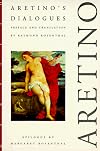
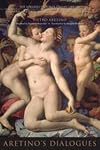
The Ragionamenti: The Lives of Nuns, The Lives of Married Women, The Lives of Courtesans
by Pietro Aretino, Giovanni Aquilecchia (Editor)
On This Page
Description
"Pietro Aretino (1492-1556) was one of the most important figures in Italian Renaissance literature, and certainly the most controversial. Condemned by some as a pornographer, his infamy was due largely to the sexual explicitness and the vulgar language that characterized much of his work." "The Dialogues begins with a conversation between two frank, experienced, and sharp-tongued women on the topic of women's occupational choices in Renaissance Italy: namely those of wife, whore, and nun. show more Their discussion expands into a rollicking account of the advantages, perils, and pleasures each profession offers." "Not only was this the first erotic book in the Christian world to be written in everyday language, it was one of the few to describe the earthier aspects of love and sex, and is thus a cornerstone of both Italian literature and Counter-Renaissance vigour. This edition features Raymond Rosenthal's acclaimed 1971 English translation and original preface as well as a new introduction by Margaret Rosethal. Also included is Alberto Moravia's review of the 1971 edition that appeared in the New York Times Book Review."--BOOK JACKET. show lessTags
Recommendations























Member Reviews
[Aretino's dialogues] or The Ragionamenti: The lives of Nuns; The Lives of married Women; The Lives of Courtesans by Pietro Aretino.
Pornography is defined as "Printed or visual material, containing explicit description or display of sexual organs or activity to stimulate sexual excitement, however it was originally defined as "Writing about Prostitutes" and in many ways the original definition more aptly describes Aretino's dialogues, although to be sure there are plenty of graphic passages describing sexual activity. Published in 1536 it can claim to be the first erotic book to be written in the vulgar tongue of ordinary speech, but there is more to it than just an early example of titillation.
[[John Addington Symonds]] a Victorian show more critic and translator could barely bring himself to write about Aretino describing the dialogues as indescribably nasty, but he had to admit that Aretino was an independent and original man of genius who had elements of strength and freedom that allowed him to stand outside and above the society of his time. The picture he paints is one of lust and greed with the men coming off far worse than the women. Money ambition and cynical power rule and the conversations between the women are all about how they can survive in such a world. The world view on offer here reminded me of [[Rabelais]] and it could be argued that the crudeness and bestiality on show here rivals that of the French Doctor, however Aretino is much more down to earth and provides us in the end with a more satisfying portrait of the corruption in 16th century society.
The first three dialogues in the book are between Nanna a successful prostitute and her friend Antonia and they settle themselves under a fig tree while Nanna does most of the talking. Her daughter Pippa is coming up to sixteen and she must decide on the best career path for her to follow and clearly her options are limited to becoming a nun, a wife, or a whore: Nanna has been all three and she ruminates about her life, with plenty of encouragement from Antonia who is all ears. She describes her first night in the Convent when the Bishop pays it a visit; alone in her room with a glass phial as a comforter she soon hears merriment and laughter and she takes to the corridor and peers into the various rooms and describes what she sees. It is a catalogue of debauchery which Aretino takes delight in telling us about in much detail and the first part of the book is little more than a succession of who did what to whom. Nanna soon has a lover of her own, but after a particularly brutal beating from her lover she begs her mother to take her out of the convent. The second conversation on the following day, takes on a different tone from the straight forward eroticism of the first and Aretino introduces it with some style:
Nanna and Antoniia got out of bed just as Tithonus, the silly cockold, was trying to hide his Lady Aurora's petticoat so that the pimp Day should not hand her over to the Sun, her paramour; but she getting wind of what was up, tore it out of the old fools hands, left him to croak and complain, and went off more powdered and painted than ever, determined to be screwed at least twelve times just to spite him, and to have the deed witnessed by Messer Clockface, the public notary.
This second conversation is more like stories from the tales of Boccaccio, which can be witty and amusing. The third days conversation is taken over with Nanna's tales of her life as a whore and the stories become particularly cruel and vindictive. Nanna has no respect for the men who are her customers, she lives in a dog eat dog world and only survives because she can outwit the fools who want to be her lovers. Nanna says "a whore without brains is the first to suffer from it; you have got to know how to handle yourself in this world" and Nanna certainly knows how to do that as she tells of the thieving, conniving and murderous tricks she pulled on her clients. She has no soft spots and Antonia becomes shocked, even horrified by what she hears; expostulating at one point that Nanna was a monster a she-Nero. Nanna counteracts by telling her about the beatings, disfigurements and the rapes that whores suffer; for example she tells of the notorious trial of the thirty ones where women are lured into a trap and serially raped by 31 men.
It is day two and the first conversation is between Nanna and Pippa, whose career has been chosen as Nanna teaches her the art of being a whore. There are graphic descriptions of how to handle men in bed and then more stories from Nanna's own life as a prostitute. Men are depicted again and again as foolish creatures goaded to love making by gross and vulgar lust. They are there to be taken advantage of, but they can be dangerous. Curiously though as the conversation develops Nanna softens her stance and her advice becomes almost humanitarian; it is a case of don't do as I did but do as I tell you. The second conversation between Nanna and Pippa is dire warnings about the viscous betrayals that men can wreak on women. Finally Nanna and Pippa are joined by the midwife and the wet nurse for more stories. The midwife is in fact a procuress and she provides a wealth of stories on how she can bring lovers together, tricking both men and innocent women. These stories are some of the best in the dialogue, being inventive and full of local colour, we have strayed beyond the eroticism of the earlier part of the book, as the Midwife keeps digressing and at one point celebrates the joys of love making in songs and verse. The book ends with the women enjoying the pleasures of the garden, the wine and the peaches, but Aretino leaves us with a bit of a cliff hanger by saying that Nanna had forgotten to tell Pippa "how to handle men who had failed to do it either because of her or because of their own shortcomings." Perhaps he was having some fun teasing his male readership.
So, how are we to read this book today, perhaps for its undoubted eroticism, perhaps for its welter of stories, or perhaps to gain a feel for the prevailing attitudes of early 16th century Italian states. Aretino's introduction made it clear that he wanted to expose the filth and muck at the heart of society to his contemporaries. He says:
Therefore I hope that my book will be like the scalpel, at once cruel and merciful, with which the good doctor cuts off the sick limb so that the others will remain healthy"
Do I detect irony here; Aretino was one of the most corrupt men in a time noted for its corruption, or is his book largely satirical in its attempt to expose the ills of society? The book is open to both readings. The overall impression I take away from the dialogues is that it is an assault on male sexuality, men are venal, they are nasty and deserve all the tricks that wives and whores can pull on them. The translation by Raymond Rosenthal keeps in mind that Aretino was careful to write in the vernacular and so uses modern terms to give the book a down to earth, easy readability. It worked for me and I have discovered many a new phrase for the sexual act, perhaps my favourite is "placing his paintbrush in her tiny colour cup" oooooo 5 stars. show less
Pornography is defined as "Printed or visual material, containing explicit description or display of sexual organs or activity to stimulate sexual excitement, however it was originally defined as "Writing about Prostitutes" and in many ways the original definition more aptly describes Aretino's dialogues, although to be sure there are plenty of graphic passages describing sexual activity. Published in 1536 it can claim to be the first erotic book to be written in the vulgar tongue of ordinary speech, but there is more to it than just an early example of titillation.
[[John Addington Symonds]] a Victorian show more critic and translator could barely bring himself to write about Aretino describing the dialogues as indescribably nasty, but he had to admit that Aretino was an independent and original man of genius who had elements of strength and freedom that allowed him to stand outside and above the society of his time. The picture he paints is one of lust and greed with the men coming off far worse than the women. Money ambition and cynical power rule and the conversations between the women are all about how they can survive in such a world. The world view on offer here reminded me of [[Rabelais]] and it could be argued that the crudeness and bestiality on show here rivals that of the French Doctor, however Aretino is much more down to earth and provides us in the end with a more satisfying portrait of the corruption in 16th century society.
The first three dialogues in the book are between Nanna a successful prostitute and her friend Antonia and they settle themselves under a fig tree while Nanna does most of the talking. Her daughter Pippa is coming up to sixteen and she must decide on the best career path for her to follow and clearly her options are limited to becoming a nun, a wife, or a whore: Nanna has been all three and she ruminates about her life, with plenty of encouragement from Antonia who is all ears. She describes her first night in the Convent when the Bishop pays it a visit; alone in her room with a glass phial as a comforter she soon hears merriment and laughter and she takes to the corridor and peers into the various rooms and describes what she sees. It is a catalogue of debauchery which Aretino takes delight in telling us about in much detail and the first part of the book is little more than a succession of who did what to whom. Nanna soon has a lover of her own, but after a particularly brutal beating from her lover she begs her mother to take her out of the convent. The second conversation on the following day, takes on a different tone from the straight forward eroticism of the first and Aretino introduces it with some style:
Nanna and Antoniia got out of bed just as Tithonus, the silly cockold, was trying to hide his Lady Aurora's petticoat so that the pimp Day should not hand her over to the Sun, her paramour; but she getting wind of what was up, tore it out of the old fools hands, left him to croak and complain, and went off more powdered and painted than ever, determined to be screwed at least twelve times just to spite him, and to have the deed witnessed by Messer Clockface, the public notary.
This second conversation is more like stories from the tales of Boccaccio, which can be witty and amusing. The third days conversation is taken over with Nanna's tales of her life as a whore and the stories become particularly cruel and vindictive. Nanna has no respect for the men who are her customers, she lives in a dog eat dog world and only survives because she can outwit the fools who want to be her lovers. Nanna says "a whore without brains is the first to suffer from it; you have got to know how to handle yourself in this world" and Nanna certainly knows how to do that as she tells of the thieving, conniving and murderous tricks she pulled on her clients. She has no soft spots and Antonia becomes shocked, even horrified by what she hears; expostulating at one point that Nanna was a monster a she-Nero. Nanna counteracts by telling her about the beatings, disfigurements and the rapes that whores suffer; for example she tells of the notorious trial of the thirty ones where women are lured into a trap and serially raped by 31 men.
It is day two and the first conversation is between Nanna and Pippa, whose career has been chosen as Nanna teaches her the art of being a whore. There are graphic descriptions of how to handle men in bed and then more stories from Nanna's own life as a prostitute. Men are depicted again and again as foolish creatures goaded to love making by gross and vulgar lust. They are there to be taken advantage of, but they can be dangerous. Curiously though as the conversation develops Nanna softens her stance and her advice becomes almost humanitarian; it is a case of don't do as I did but do as I tell you. The second conversation between Nanna and Pippa is dire warnings about the viscous betrayals that men can wreak on women. Finally Nanna and Pippa are joined by the midwife and the wet nurse for more stories. The midwife is in fact a procuress and she provides a wealth of stories on how she can bring lovers together, tricking both men and innocent women. These stories are some of the best in the dialogue, being inventive and full of local colour, we have strayed beyond the eroticism of the earlier part of the book, as the Midwife keeps digressing and at one point celebrates the joys of love making in songs and verse. The book ends with the women enjoying the pleasures of the garden, the wine and the peaches, but Aretino leaves us with a bit of a cliff hanger by saying that Nanna had forgotten to tell Pippa "how to handle men who had failed to do it either because of her or because of their own shortcomings." Perhaps he was having some fun teasing his male readership.
So, how are we to read this book today, perhaps for its undoubted eroticism, perhaps for its welter of stories, or perhaps to gain a feel for the prevailing attitudes of early 16th century Italian states. Aretino's introduction made it clear that he wanted to expose the filth and muck at the heart of society to his contemporaries. He says:
Therefore I hope that my book will be like the scalpel, at once cruel and merciful, with which the good doctor cuts off the sick limb so that the others will remain healthy"
Do I detect irony here; Aretino was one of the most corrupt men in a time noted for its corruption, or is his book largely satirical in its attempt to expose the ills of society? The book is open to both readings. The overall impression I take away from the dialogues is that it is an assault on male sexuality, men are venal, they are nasty and deserve all the tricks that wives and whores can pull on them. The translation by Raymond Rosenthal keeps in mind that Aretino was careful to write in the vernacular and so uses modern terms to give the book a down to earth, easy readability. It worked for me and I have discovered many a new phrase for the sexual act, perhaps my favourite is "placing his paintbrush in her tiny colour cup" oooooo 5 stars. show less
facs. dell'ed. di bari del 1969
Temido y adulado, favorito de papas y emperadores, desprejuiciado hasta el cinismo, Pietro Bacci, llamado el Aretino, llenó con su genio chispeante el tardío Renacimiento romano. En sus "Diálogos amenos" (1536) describe, con desbordado caudal de gracejo y crudeza, las licenciosas costumbres de clérigos y monjas, damas y señores, siervos y rameras. Su libertad verbal, pocas veces igualada, hizo de él un maestro de maledicencia: entusiasmó al vulgo por la risueña desenvoltura con que maltrataba a reyes y aristócratas, y a éstos --cuando no eran los afectados-- por el descrédito de sus enemigos. Así, "divino" para unos e "infame" para otros, este secretario del mundo reflejó en su vida y en su obra el licencioso hedonismo de show more una época tan refinada y sutil como brutal y corrompida. show less
Oct 10, 2020Spanish
Avec les Sonnets luxurieux, les Ragionamenti sont considérés comme l'un des chefs-d'œuvre de la littérature pornographique. Mais dans la matière uniformément et ostensiblement scandaleuse de ces écrits, il serait abusif de toujours s’obstiner à ne voir que le fruit d’un passe-temps de viveur. Outre qu’affleurent explicitement ça et là, dans certains d’entre eux, des échos moqueurs des « pétrarqueries » et autres pédantismes déjà copieusement tournés en dérision dans la Cortigiana, ces textes constituent aussi, implicitement mais clairement, une condamnation de la culture abstraite, livresque, en même temps qu’un vigoureux plaidoyer pour un retour à la réalité, si triviale soit-elle. L’ouvrage, dans son show more intégralité, est une parodie systématique des dialogues platonico-pétrarquisants sur l’amour, dont il constitue à bien des égards une profanation délibérée. Quant à la prouesse goguenarde que l’Arétin réalise, qui consiste à masquer « la matière lascive et impudique » de son récit sous des mots « irrépréhensibles et chastes » (bannissement des mots indécents que pourchassaient les senseurs : foutre, bite, con, cul), elle révèle l’immense écrivain qu’il fut incontestablement. show less
Aug 14, 2010 (Edited)French
Ratings
Members
- Recently Added By
Lists

Italian Literature
558 works; 42 members
Author Information

119+ Works 899 Members
Born in the province of Arezzo, hence "the Aretine," Aretino wrote several comedies, tragedies, and satires. He acquired an international reputation, especially in England, being variously appraised in different periods. Thomas Nashe considered him "one of the wittiest knaves God ever made," and John Milton spoke of him as "that notorious ribald show more of Arezzo." Titian was his friend and painted his portrait. He was called the "Scourge of Princes." (Bowker Author Biography) show less
Some Editions
Awards and Honors
Notable Lists
Series
Belongs to Publisher Series
Work Relationships
Common Knowledge
- Canonical title
- The Ragionamenti: The Lives of Nuns, The Lives of Married Women, The Lives of Courtesans
- Original title
- Sei giornate
- Alternate titles
- Ragionamenti
- Original publication date
- 1534
- First words
- HAIL, dear monkey!
- Last words
- (Click to show. Warning: May contain spoilers.)And so ends the third and last day.
- Original language
- Italian
Classifications
Statistics
- Members
- 278
- Popularity
- 116,256
- Reviews
- 4
- Rating
- (3.82)
- Languages
- 10 — Dutch, English, French, German, Hungarian, Italian, Norwegian (Bokmål), Russian, Slovak, Spanish
- Media
- Paper, Audiobook, Ebook
- ISBNs
- 36
- ASINs
- 11