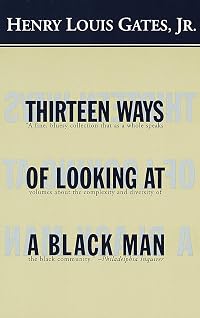
Thirteen Ways of Looking at a Black Man
by Henry Louis Jr Gates
161 Members (4.41)
On This Page
Description
"This is a book of stories," writes Henry Louis Gates, "and all might be described as 'narratives of ascent.'" As some remarkable men talk about their lives, many perspectives on race and gender emerge. For the notion of the unitary black man, Gates argues, is as imaginary as the creature that the poet Wallace Stevens conjured in his poem "Thirteen Ways of Looking at a Blackbird." James Baldwin, Colin Powell, Harry Belafonte, Bill T. Jones, Louis Farrakhan, Anatole Broyard, Albert Murray -- show more all these men came from modest circumstances and all achieved preeminence. They are people, Gates writes, "who have shaped the world as much as they were shaped by it, who gave as good as they got." Three are writers -- James Baldwin, who was once regarded as the intellectual spokesman for the black community; Anatole Broyard, who chose to hide his black heritage so as to be seen as a writer on his own terms; and Albert Murray, who rose to the pinnacle of literary criticism. There is the general-turned-political-figure Colin Powell, who discusses his interactions with three United States presidents; there is Harry Belafonte, the entertainer whose career has been distinct from his fervent activism; there is Bill T. Jones, dancer and choreographer, whose fierce courage and creativity have continued in the shadow of AIDS; and there is Louis Farrakhan, the controversial religious leader. These men and others speak of their lives with candor and intimacy, and what emerges from this portfolio of influential men is a strikingly varied and profound set of ideas about what it means to be a black man in America today. show lessTags
Recommendations



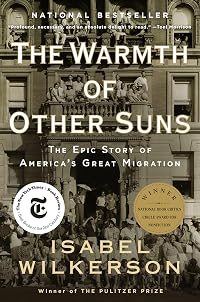
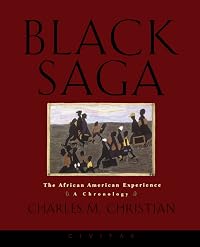
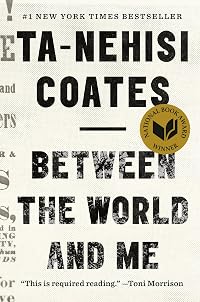
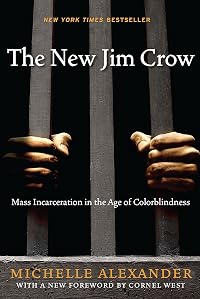










Member Reviews
Members
- Recently Added By
Lists

Top Five Books of 2024
795 works; 264 members
Author Information

121+ Works 10,743 Members
Henry Louis Gates, Jr. was born on September 16, 1950, in Keyser, West Virginia. He received a degree in history from Yale University in 1973 and a Ph.D. from Clare College, which is part of the University of Cambridge in 1979. He is a leading scholar of African-American literature, history, and culture. He began working on the Black Periodical show more Literature Project, which uncovered lost literary works published in 1800s. He rediscovered what is believed to be the first novel published by an African-American in the United States. He republished the 1859 work by Harriet E. Wilson, entitled Our Nig, in 1983. He has written numerous books including Colored People: A Memoir, A Chronology of African-American History, The Future of the Race, Black Literature and Literary Theory, and The Signifying Monkey: Towards a Theory of Afro-American Literary Criticism. In 1991, he became the head of the African-American studies department at Harvard University. He is now the director of the W.E.B. Du Bois Institute for African and African-American Research at the university. He wrote and produced several documentaries including Wonders of the African World, America Beyond the Color Line, and African American Lives. He has also hosted PBS programs such as Wonders of the African World, Black in Latin America, and Finding Your Roots. (Bowker Author Biography) show less
Classifications
- Genres
- Nonfiction, Biography & Memoir, General Nonfiction, History
- DDC/MDS
- 920.71 — History & geography Biographies, Genealogy, Healdry Biographies Famous People of Native Nations Men
- LCC
- E185.86 .G374 — History of the United States United States Elements in the population Afro-Americans Status and development since emancipation
- BISAC
Statistics
- Members
- 161
- Popularity
- 202,875
- Rating
- (4.41)
- Languages
- English
- Media
- Paper, Ebook
- ISBNs
- 5
- ASINs
- 1