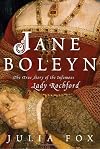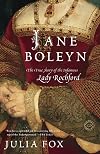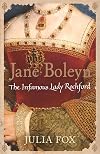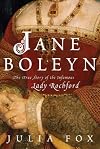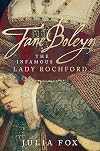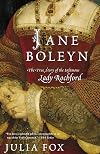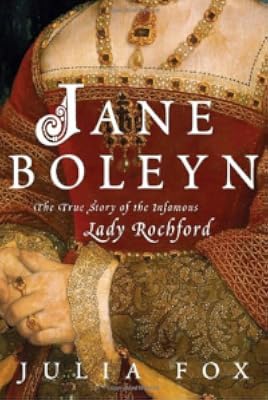
Jane Boleyn: The True Story of the Infamous Lady Rochford
by Julia Fox
On This Page
Description
Exposes the inner sanctum of court life during the reign of Henry VIII through the eyes and ears of Jane Boleyn, wife of George Boleyn and sister-in-law to Queen Anne Boleyn. Jane emerges as a courageous spirit, a modern woman forced by circumstances to fend for herself in a privileged but vicious world.--From source other than Library of Congress.Tags
Recommendations







Member Reviews
I enjoyed this work, the first in-depth study of Jane Boleyn, sister-in-law to the infamous Anne. Like so many women of this time, her actions and thoughts weren't recorded or kept, but we do know a lot about her whereabouts. Julia Fox builds up Jane's story as a woman between the lines of history, a sort of Rosencrantz and Guildenstern Are Dead for the court of Henry VIII. I especially appreciated the author's explanation of why and how Jane became known as "The Infamous Lady Rochford," known to have betrayed her husband and sister-in-law... when she basically, probably, did not. The chapters about her role in the downfall of Catherine Howard (and her own downfall) were gut-wrenching. An interesting book to view some well-known events show more from a new perspective. Recommended. show less
You've heard of Anne Boleyn, you've heard of Mary Boleyn The Other Boleyn Girl, but have you heard of Jane Boleyn? (Maybe--if you're a fan of 'The Tudors.') Jane Parker was the wife and widow of George Boleyn, who was beheaded for treason, accused of having slept with his sister Anne. Part of her "infamy" is that she gave evidence that helped to convict her husband and four other men, saying that he had told her that the king was unable to perform sexually. But the greater part comes later. With Cromwell's help, Jane was able to spring back from financial ruin and public shame. She retained a portion of her jointure lands and remained a member of the ladies-in-waiting for the next three queens (Jane Seymour, Anne of Cleves, and show more Katherine Howard). But as lady of the bedchamber to Katherine, she obviously knew of the young queen's adultery and was even perhaps an accomplice. Like her husband, the "infamous Lady Rocheford" ended up with her head on the block.
This biography is relatively sympathetic to Jane, who seems to have been caught in a double bind in the case of Katherine Howard. She could say nothing or deny everything, but if she confessed what she knew, she would be guilty of not revealing the information sooner. While not the exciting read that it promised to be (or maybe I've just read too much about the Tudors), Fox does create a sense of what the court must have been like for noblewomen trying to please fathers, uncles, husbands, counselors, kings, and queens. I have to agree, however, with other LT readers who complain about Fox's admittedly unfounded speculations and that much of the filler is rehashed material. show less
This biography is relatively sympathetic to Jane, who seems to have been caught in a double bind in the case of Katherine Howard. She could say nothing or deny everything, but if she confessed what she knew, she would be guilty of not revealing the information sooner. While not the exciting read that it promised to be (or maybe I've just read too much about the Tudors), Fox does create a sense of what the court must have been like for noblewomen trying to please fathers, uncles, husbands, counselors, kings, and queens. I have to agree, however, with other LT readers who complain about Fox's admittedly unfounded speculations and that much of the filler is rehashed material. show less
This attractively written book tells the story of Jane Boleyn, the wife of Queen Anne Boleyn's brother George. Not a great deal is known about her life other than her involvement in the fall of her brother and sister in law, and her own demise together with that of Queen Catherine Howard six years later, but a fair amount can be divined from property transactions and other documentation. The thrust of the author's argument is that Jane cannot have betrayed her husband and Anne as is traditionally thought as this would have been economic suicide for a woman in her position (she did suffer comparative poverty after their executions until she was able to persuade her father in law Thomas Boleyn to provide for her more liberally). I can see show more the author's point, but am not sure that I am really persuaded that she has been quite as grossly maligned as the author believes; I suspect that Jane was caught up in events that spiralled beyond the control of a woman who seems to have been seduced by the glitz and glamour of court life and unwilling to relinquish being at the centre of events - so naive rather than malign perhaps, though having been at the heart of events for some years, she arguably should have known better. She was fortunate to have restored her position as a lady of the bedchamber to Jane Seymour, Anne of Cleves and finally, fatally, to Catherine Howard. Again, she got caught up in the latter's affair with Thomas Culpepper, and this time there was no escape; by the standards of the time, she was justly condemned for abetting the Queen's treasonous affair. A Tudor tragedy, to be sure, but not, in my view, on a par with that of Anne and George and many others wrongly brought down by King Henry VIII. show less
The Gist: In a life of extraordinary drama, Jane Boleyn was catapulted from relative obscurity to the inner circle of King Henry VIII. As powerful men and women around her became victims of Henry's ruthless and absolute power, including her own husband and sister-in-law, Queen Anne Boleyn, Jane's allegiance to the volatile monarchy was sustained and rewarded. But the price for her loyalty would eventually be her undoing and the ruination of her name. For centuries, little beyond rumor and scandal has been associated with "the infamous Lady Rochford." But now historian Julia Fox sets the record straight and restores dignity to this much-maligned figure whose life and reputation were taken from her.
Julia Fox's Jane Boleyn: The True Story show more Of The Infamous Lady Rochford, changed my opinion about Jane Boleyn, wife of George Boleyn and sister-in-law to Queen Anne Boleyn (the second wife of Henry VIII.) In every fiction and nonfiction book about Henry VIII and Anne Boleyn, the authors always portray Jane Boleyn as a gossipy, shallow, traitorous person. In reality, Jane Boleyn was smart, tough, and silent about her thoughts concerning Henry VIII's court and his politics. She also kept her own counsel about the Boleyn's play for power on the throne -- a smart strategy for keeping your head attached to your shoulders (just my opinion.)
Writers also portray Jane and George Boleyn's marriage in an extremely negative light. Usually, authors have George complaining about Jane and her snooping. In Jane Boleyn, Fox does not find any historical documents that their marriage was a distasteful situation for either spouse. Quite the opposite in fact. Fragments of letters and notes written by Jane Boleyn to George Boleyn during his incarceration in the Tower Of London reveals her genuine concern for his welfare. His response to Jane illustrates his relief that his wife had not abandoned him in the Tower as everyone else had, including his father, Thomas Boleyn.
Since I have read a lot of material about Henry VIII and Anne Boleyn, I was at first a little dismayed that a good portion of the book covers the rise and demise of not only Anne Boleyn, but the entire Boleyn family. However, my dismay disappeared as I continued to read the book and I learned that some of what I have read and understand about that particular episode in British history has been distorted to suit the needs of those in power at the time of Jane Boleyn's execution (and beyond.)
Here's a bit about some of the eye-opening facts that I learned while reading Jane Boleyn: The True Story Of The Infamous Lady Rochford:
1. The nature of marriage in Tudor England at the level of royalty/nobility: the spousal selection process, the negotiations involved to make the marriage a reality, and the obligations expected to be met by the couple involved.
2. That Jane Boleyn was a confidante of her sister Anne Boleyn, the second wife of Henry VIII and that Jane Boleyn enjoyed much privilege as a result of her close friendship with Anne.
3. That Jane and George, in reality, appear to have had a comfortable, positive relationship with each other despite the negative spin placed on their marriage by later writers who sought to support Queen Elizabeth I and exonerate Henry VIII for basically murdering his wife.
In the end, I found Jane Boleyn: The True Story Of The Infamous Lady Rochford by Julia Fox to be an enjoyable read. Fox sheds light on a "minor" character of the Boleyn story. I learned that while Jane Boleyn was smart in many ways, she made an unwise decision at exactly the wrong time. Not only did this decision cost Jane her life, but it also set her up to be the perfect scapegoat for the fall of Anne and in particular her husband George Boleyn.
Fox provides us the perfect reminder that it is important to question the histories we read and what we believe about them--that the motives and machinations of others greatly colors what we know and understand about historical figures. Jane Boleyn: The True Story Of The Infamous Lady Rochford reminds us that the victors of any conflict write the history we know today--it is their view that becomes promoted through time by gossip, myth, deliberate deception, and sometimes genuine misunderstanding. show less
Julia Fox's Jane Boleyn: The True Story show more Of The Infamous Lady Rochford, changed my opinion about Jane Boleyn, wife of George Boleyn and sister-in-law to Queen Anne Boleyn (the second wife of Henry VIII.) In every fiction and nonfiction book about Henry VIII and Anne Boleyn, the authors always portray Jane Boleyn as a gossipy, shallow, traitorous person. In reality, Jane Boleyn was smart, tough, and silent about her thoughts concerning Henry VIII's court and his politics. She also kept her own counsel about the Boleyn's play for power on the throne -- a smart strategy for keeping your head attached to your shoulders (just my opinion.)
Writers also portray Jane and George Boleyn's marriage in an extremely negative light. Usually, authors have George complaining about Jane and her snooping. In Jane Boleyn, Fox does not find any historical documents that their marriage was a distasteful situation for either spouse. Quite the opposite in fact. Fragments of letters and notes written by Jane Boleyn to George Boleyn during his incarceration in the Tower Of London reveals her genuine concern for his welfare. His response to Jane illustrates his relief that his wife had not abandoned him in the Tower as everyone else had, including his father, Thomas Boleyn.
Since I have read a lot of material about Henry VIII and Anne Boleyn, I was at first a little dismayed that a good portion of the book covers the rise and demise of not only Anne Boleyn, but the entire Boleyn family. However, my dismay disappeared as I continued to read the book and I learned that some of what I have read and understand about that particular episode in British history has been distorted to suit the needs of those in power at the time of Jane Boleyn's execution (and beyond.)
Here's a bit about some of the eye-opening facts that I learned while reading Jane Boleyn: The True Story Of The Infamous Lady Rochford:
1. The nature of marriage in Tudor England at the level of royalty/nobility: the spousal selection process, the negotiations involved to make the marriage a reality, and the obligations expected to be met by the couple involved.
2. That Jane Boleyn was a confidante of her sister Anne Boleyn, the second wife of Henry VIII and that Jane Boleyn enjoyed much privilege as a result of her close friendship with Anne.
3. That Jane and George, in reality, appear to have had a comfortable, positive relationship with each other despite the negative spin placed on their marriage by later writers who sought to support Queen Elizabeth I and exonerate Henry VIII for basically murdering his wife.
In the end, I found Jane Boleyn: The True Story Of The Infamous Lady Rochford by Julia Fox to be an enjoyable read. Fox sheds light on a "minor" character of the Boleyn story. I learned that while Jane Boleyn was smart in many ways, she made an unwise decision at exactly the wrong time. Not only did this decision cost Jane her life, but it also set her up to be the perfect scapegoat for the fall of Anne and in particular her husband George Boleyn.
Fox provides us the perfect reminder that it is important to question the histories we read and what we believe about them--that the motives and machinations of others greatly colors what we know and understand about historical figures. Jane Boleyn: The True Story Of The Infamous Lady Rochford reminds us that the victors of any conflict write the history we know today--it is their view that becomes promoted through time by gossip, myth, deliberate deception, and sometimes genuine misunderstanding. show less
This is an entertaining read and an interesting perspective on the life of Lady Rochford, sister-in -law to Queen Anne Boleyn. Lady Rochford was widely believed at the time and through the centuries as having betrayed her husband to the authorities resulting in his death for incest and treason. Historical novels have typically portrayed her as spiteful and an enemy of both her husband and his sister. And yet there is little solid evidence either way. She could not have betrayed her husband since none of the charges against Anne Boleyn and her various alleged lovers were true. The Tudors were masters of propaganda and shifting the blame to someone else for a coldblooded murder was convenient.
The difficulty with writing a book about Jane show more Boleyn is that there is so little information about her. There are few records of her childhood and her early life at court. For at least the first half of the book Ms Fox is merely following historical events and speculating about whether Jane was there and then if so, how she might have felt. Nevertheless, there is clear evidence that she and Anne Boleyn were initially quite close and other than the absence of children, little to prove that Jane and her husband despised each other. So we have to think about whether Lady Rochford truly was the malicious and heartless woman described by conventional history and contemporary historical novels. show less
The difficulty with writing a book about Jane show more Boleyn is that there is so little information about her. There are few records of her childhood and her early life at court. For at least the first half of the book Ms Fox is merely following historical events and speculating about whether Jane was there and then if so, how she might have felt. Nevertheless, there is clear evidence that she and Anne Boleyn were initially quite close and other than the absence of children, little to prove that Jane and her husband despised each other. So we have to think about whether Lady Rochford truly was the malicious and heartless woman described by conventional history and contemporary historical novels. show less
To relate the story of Jane Boleyn, Anne Boleyn's sister-in-law, Fox did a great deal of research. Unfortunately, there was apparently little to unearth. In over 300 pages, Jane is quoted exactly twice: in a letter to Cromwell and a few sentences from her testimony regarding Katherine Howard. That's it. We don't know when she was born, where she was raised, how she was educated or even what she looked like. Even her last words from the scaffold (she was executed for her part in Katherine Howard's treachery) were not recorded.
Jane may or may not have been "elegant, poised, and animated," as Fox insists she was. But the fact is, we have no way of knowing. All but a few hours of her life are a complete mystery to us. The best Fox can do is show more guess--and guess she does, throughout the entire book. And for a history that encompasses the love affairs and executions of two fascinating queens, particularly one riddled with conjecture, the book is surprisingly dry. I used it as a sleep aid. show less
Jane may or may not have been "elegant, poised, and animated," as Fox insists she was. But the fact is, we have no way of knowing. All but a few hours of her life are a complete mystery to us. The best Fox can do is show more guess--and guess she does, throughout the entire book. And for a history that encompasses the love affairs and executions of two fascinating queens, particularly one riddled with conjecture, the book is surprisingly dry. I used it as a sleep aid. show less
Jane Bolyen was the much maligned sister-in-law of Anne Boleyn. History has not been kind in describing her betrayal of Anne and George Boleyn (Jane's husband and Anne's brother.) Fox tried to write what at first appeared to be a well-researched document, yet in many ways it had a novel-like quality about it.
The portrayal of Jane was sensitive and kinder than other accounts. The descriptions of court politics and the reality of a back-stabbing vipers nest attest to the fact that Jane was indeed a victim of Henry VIII's need to rid himself of Anne.
Years later as political intrigue again surfaced when foolish Catherine Howard betrayed Henry, Jane's testimony was a factor in sending pretty Catherine's head to the chopping block. Alas, this show more time, Jane's testimony led to her own demise and she paid the price with death.
I can recommend this book to those who are, like me, obsessed with the Tudors. But, I only give the book three stars, primarily because much of Fox's writing is speculation and thus I found it very frustrating when repeatedly the sentences started with..."We don't actually know if Jane"...."We can only surmise that Jane"......."Perhaps Jane"...."Most likely Jane"..."We believe that Jane"............. show less
The portrayal of Jane was sensitive and kinder than other accounts. The descriptions of court politics and the reality of a back-stabbing vipers nest attest to the fact that Jane was indeed a victim of Henry VIII's need to rid himself of Anne.
Years later as political intrigue again surfaced when foolish Catherine Howard betrayed Henry, Jane's testimony was a factor in sending pretty Catherine's head to the chopping block. Alas, this show more time, Jane's testimony led to her own demise and she paid the price with death.
I can recommend this book to those who are, like me, obsessed with the Tudors. But, I only give the book three stars, primarily because much of Fox's writing is speculation and thus I found it very frustrating when repeatedly the sentences started with..."We don't actually know if Jane"...."We can only surmise that Jane"......."Perhaps Jane"...."Most likely Jane"..."We believe that Jane"............. show less
Members
- Recently Added By
Author Information

3 Works 1,183 Members
Some Editions
Common Knowledge
- Canonical title
- Jane Boleyn: The True Story of the Infamous Lady Rochford
- Original title
- Jane Boleyn: The True Story of the Infamous Lady Rochford
- Original publication date
- 2007
- People/Characters
- Jane Boleyn (Lady Rochford); George Boleyn
- Dedication
- In Memory of My Parents
- First words
- Their way was lit by the flickering light from great wax torches and to the soothing sound of chanted prayers, the mourners walked solemnly toward the three black-draped barges ready at the river's edge.
- Original language
- English
Classifications
- Genres
- History, Nonfiction, General Nonfiction, Biography & Memoir
- DDC/MDS
- 942.052092 — History & geography History of Europe England and Wales England 1485-1603, Tudors Henry VIII 1509-47
- LCC
- DA335 .B65 .F69 — History of Europe, Asia, Africa and Oceania Great Britain History of Great Britain England History By period Modern, 1485- Tudors, 1485-1603
- BISAC
Statistics
- Members
- 585
- Popularity
- 50,152
- Reviews
- 30
- Rating
- (3.27)
- Languages
- English, Russian
- Media
- Paper, Audiobook, Ebook
- ISBNs
- 15
- ASINs
- 8