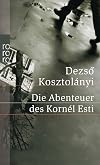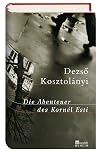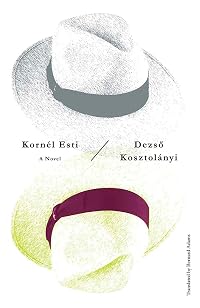
Kornél Esti
by Dezső Kosztolányi
On This Page
Description
Crazy, funny and gorgeously dark, The Adventures of Kornel Esti sets into rollicking action a series of adventures about a man and his wicked doppleganger, who breathes every forbidden idea of his childhood into his ear, and then reappears decades later. Part Gogol, part Chekhov, and all brilliance, Kosztolanyi in his final book serves up his most magical, radical, and intoxicating work. Here is a novel which inquires: What if your id (loyally keeping your name) decides to strike out on its show more own, cuts a disreputable swath through the world, and then sends home to you all its unpaid bills and ruined maidens? And then: What if you and your alter ego decide to write a book together? show lessTags
Recommendations






















Member Reviews
Two childhood friends reconnect after decades of silence; that reunion prompts the two to embark on a jointly written novel…which is essentially a biography of Esti told in chronologically arranged vignettes. Each chapter follows the prior one at some indefinite point in time and almost every single chapter could stand as an independent short story. The satire is sharp, as befits Esti’s life and attitudes. He is the epitome of the boy who has intentionally never outgrown his youth: mischievous, naive, adventurous, idealistic, fearless—and often (always) just on the edge of insanity. He spends a week at the best hotel in the world, constantly overwhelmed by attentions from the staff numbering in the hundreds, if not thousands. An show more 18-year-old Esti shares a train compartment with an odd mother and even odder teenaged daughter and gets his first kiss from the girl who it becomes clear, is about to be locked away in an asylum; the tale about tricking his schizophrenic friend into entering a psychiatric ward voluntarily, if under false pretenses; an absolutely brilliant story of traveling through Bulgaria where Esti has a lengthy conversation with a train attendant, all the while speaking only five words of Bulgarian; and the story of how Esti is haunted by the completely timid and ineffectual man who saves him from drowning. The stories are well-conceived and brilliantly executed, the writing and the wit both razor sharp. show less
Kornel Esti is a light, whimsical book with excellent writing. The narrator decides one day to contact his old childhood friend Kornel Esti, a troublemaker portrayed almost as the narrator’s alter ego/id/doppelganger. A writer, the narrator agrees to set down Kornel Esti’s numerous stories. Some of the facts in various stories contradict other stories and others fly off into the realm of the fanciful. I was hoping there would be more about Kornel Esti as the narrator’s double, but after the first chapter the focus is pretty much all on Esti. Still, this didn’t detract from this odd but enjoyable book. Many of the stories are almost surreal or magic realist and I preferred those to the more realistic ones but they were all show more vividly written.
The book opens with an irresistible line –
“I had passed the midpoint of my life, when one windy day in spring, I remembered Kornel Esti.”
then moves to the relationship between the narrator and Esti. They were childhood friends, with Esti spurring the narrator on to mischief, and were so inseparable that people had trouble telling them apart. This continued into adulthood, as the narrator was often mistaken for Esti and angry letters and torrents of abuse meant for Esti were directed at him. This sly setup continues as the narrator agrees to write Esti’s memoirs. Both are writers and there is some debate over who will be the author of the piece.
After this, there are several realistic stories of Esti’s youth. They are written with a nice attention to detail and vividly capture Esti’s feelings – his misery and alienation on first going to school as a child, the excitement and uncertainty of a train trip to Italy, his wonderful and hardscrabble life as a young bohemian artist. However, I missed the more overt and metafictional weirdness of the first story. Some odd ones start to appear though – an early one has Esti and the narrator travelling to the town where everyone tells the truth, giving a bleak portrait of people and places but never raising expectations.
The next set of stories tended to be more fanciful and I found them more to my taste. In one, Esti has come into a large inheritance but having money will interfere with his image as a proper poet. He tries to get rid of it surreptitiously which leads to all sorts of complications. Another funny story has Esti attempting to carry on a conversation with a train guard who only speaks Bulgarian while only knowing a couple phrases in the language. Fun and even a bit tense. Esti describes the world’s best hotel in another vignette bordering on the fanciful. One of the best is the long description of a respected German intellectual, the president of numerous cultural, political and scientific associations. He was notorious for sleeping through every lecture, seminar and conference and his sleep is not only familiar and expected, but even exalted. The author includes all sorts of analyses of the president’s sleep, reaching an amusing feverish defense of the nobility of his actions.
Some of the later stories are again more realistic, if absurdist, and deal with Esti’s interactions with friends and moochers. The crazy ones were definitely the best. Overall, the prose was quite good and all the stories were very readable, with some wonderful standouts. show less
The book opens with an irresistible line –
“I had passed the midpoint of my life, when one windy day in spring, I remembered Kornel Esti.”
then moves to the relationship between the narrator and Esti. They were childhood friends, with Esti spurring the narrator on to mischief, and were so inseparable that people had trouble telling them apart. This continued into adulthood, as the narrator was often mistaken for Esti and angry letters and torrents of abuse meant for Esti were directed at him. This sly setup continues as the narrator agrees to write Esti’s memoirs. Both are writers and there is some debate over who will be the author of the piece.
After this, there are several realistic stories of Esti’s youth. They are written with a nice attention to detail and vividly capture Esti’s feelings – his misery and alienation on first going to school as a child, the excitement and uncertainty of a train trip to Italy, his wonderful and hardscrabble life as a young bohemian artist. However, I missed the more overt and metafictional weirdness of the first story. Some odd ones start to appear though – an early one has Esti and the narrator travelling to the town where everyone tells the truth, giving a bleak portrait of people and places but never raising expectations.
The next set of stories tended to be more fanciful and I found them more to my taste. In one, Esti has come into a large inheritance but having money will interfere with his image as a proper poet. He tries to get rid of it surreptitiously which leads to all sorts of complications. Another funny story has Esti attempting to carry on a conversation with a train guard who only speaks Bulgarian while only knowing a couple phrases in the language. Fun and even a bit tense. Esti describes the world’s best hotel in another vignette bordering on the fanciful. One of the best is the long description of a respected German intellectual, the president of numerous cultural, political and scientific associations. He was notorious for sleeping through every lecture, seminar and conference and his sleep is not only familiar and expected, but even exalted. The author includes all sorts of analyses of the president’s sleep, reaching an amusing feverish defense of the nobility of his actions.
Some of the later stories are again more realistic, if absurdist, and deal with Esti’s interactions with friends and moochers. The crazy ones were definitely the best. Overall, the prose was quite good and all the stories were very readable, with some wonderful standouts. show less
At turns absurd, dark, and hilarious. This novel is told in excerpts from the life of the narrator's mischievous doppelganger. While some stories, like those about the town where all of the advertisements tell the terrible truth, or the one in which Esti tries at length to give away a sizable amount of money that he was left by a distant aunt, or the one in which all of the numerous overly-attentive staff of a ridiculously well-appointed hotel perfectly resemble famous historical figures, are just delicious flights of fancy, a joy to read. Others take on darker tones and try and say something about life in much the same way his book Skylark did, particularly the ones featuring mentally ill characters. There were a few that I had a hard show more time getting all of the way through (just how long can you talk about the perfect way the elderly president of a lecture club falls asleep immediately upon introducing a speaker and wakes moments before the speaker concludes...apparently a looooooooooooong time). Still, most of the book was both entertaining and thought-provoking, an excellent read. show less
This book grew on me as I read it. In the first chapter, the unnamed narrator decides to visit his estranged childhood friend Kornél Esti, a fellow writer and indeed an alter ego who looks exactly like him and who encouraged him in all his pranks and bad boy activities as a child and young man. He finds Esti somewhat down on his luck and suggests that they "stick together" from that point onwards and collaborate in writing a book about Esti's exploits. After some discussion of how this will work and whose name will be bigger on the cover, they agree that Esti will tell stories of his life to the narrator, stories that may or may not be true, and the narrator will "edit" them slightly.
The rest of the book takes off from there in a show more series of episodic chapters, more or less in chronological order. Some of Esti's stories border on the realistic, others are fantastic or metaphorical or whimsical or disturbing -- or a mixture of all of these, and Esti does not always present himself as an admirable person. Written in the early 1930s, itself a time of growing turmoil, the book takes place both before and after the first world war, the war which finally toppled the Austro-Hungarian empire and resulted in the loss of a significant portion of what had been Hungary to neighboring countries. Never alluded to directly, this is nonetheless a dividing line in Hungarian history and in Hungarian self-perception.
Many of the stories are delightful (although always thought-provoking) -- for example, there is a story about a town in which everyone always tells the truth (so that a restaurant might advertize "Inedible food, undrinkable drinks"); one about a magnificent hotel with hundreds of staff members, each of whom resembles (or is) a famous person such as Thomas Edison, Rodin, and Marie Antoinette; one in which he struggles to get rid of an inheritance; one in which a friend who says he will only stay for a few minutes ends up staying for hours; and one in which he carries on a conversation with a Bulgarian train conductor although he speaks not a word of the language. Others depict life in the literary cafes of Budapest, or the attitudes of peasants, or encounters on trains. Still others are more grim in their portrayal of people with mental illness or in dire financial straits. One of my favorite chapters is the one in which Esti describes his time as a student in Germany; his understated satire of German behavior is priceless, and perhaps a little pointed in 1933. The book ends with Esti boarding a tram that is both real and metaphorical for an unnamed destination that turns out to be the "Terminus."
All in all, I enjoyed this book a lot. Unlike the only other book by Kosztolányi which I've read, Skylark, it does not tell a straightforward story but is quite modern in its almost metafictional style. I also enjoyed Kosztolányi's (or Esti's) technique of occasionally mixing story-telling with philosophical thoughts, while providing a fanciful yet serious picture of a world which was already slipping away when he wrote. show less
The rest of the book takes off from there in a show more series of episodic chapters, more or less in chronological order. Some of Esti's stories border on the realistic, others are fantastic or metaphorical or whimsical or disturbing -- or a mixture of all of these, and Esti does not always present himself as an admirable person. Written in the early 1930s, itself a time of growing turmoil, the book takes place both before and after the first world war, the war which finally toppled the Austro-Hungarian empire and resulted in the loss of a significant portion of what had been Hungary to neighboring countries. Never alluded to directly, this is nonetheless a dividing line in Hungarian history and in Hungarian self-perception.
Many of the stories are delightful (although always thought-provoking) -- for example, there is a story about a town in which everyone always tells the truth (so that a restaurant might advertize "Inedible food, undrinkable drinks"); one about a magnificent hotel with hundreds of staff members, each of whom resembles (or is) a famous person such as Thomas Edison, Rodin, and Marie Antoinette; one in which he struggles to get rid of an inheritance; one in which a friend who says he will only stay for a few minutes ends up staying for hours; and one in which he carries on a conversation with a Bulgarian train conductor although he speaks not a word of the language. Others depict life in the literary cafes of Budapest, or the attitudes of peasants, or encounters on trains. Still others are more grim in their portrayal of people with mental illness or in dire financial straits. One of my favorite chapters is the one in which Esti describes his time as a student in Germany; his understated satire of German behavior is priceless, and perhaps a little pointed in 1933. The book ends with Esti boarding a tram that is both real and metaphorical for an unnamed destination that turns out to be the "Terminus."
All in all, I enjoyed this book a lot. Unlike the only other book by Kosztolányi which I've read, Skylark, it does not tell a straightforward story but is quite modern in its almost metafictional style. I also enjoyed Kosztolányi's (or Esti's) technique of occasionally mixing story-telling with philosophical thoughts, while providing a fanciful yet serious picture of a world which was already slipping away when he wrote. show less
Nem vagyok Kosztolányi barátja. A versei talán csak nem az én ízlésemhez passzolók, a műfordításai viszont… írtam már máshol is, és tudom én, hogy akkor más volt a szokás, még az elvárás is, sokkal inkább a saját stílusukra formálhatták az eredetiket (azért hála az égnek, volt, aki ellen tudott állni ennek), amit könnyű elnézni egy Karinthy-féle Micimackónak, de megbocsáthatatlan, amikor K. Dezső Blake elementáris erejű, vad tigriséből szelíd, szépséges, pamutgombolyaggal játszó kiscicát csinál. Vagy Évike Aliz kalandjaiból kihagyja a poénokat.
Ezután sem leszek a barátja, de azért ez nem rossz, egyáltalán. Azt hiszem, ha gimis koromban olvasom, maradéktalanul tetszett volna. show more Így, a fentiek ismeretében passzív-agresszív nekem ajándékozva vannak fenntartásaim (ugyanitt: kedves mind, ne csináljunk ebből rendszert, még ha el is ismerem, hogy mindkét esetben érdemes volt legyőzni az ellenállásom :P).
Az elején rögtön kellemes meglepetést okozott a „vastag-zöld szójáték” kifejezés, ha picit talán sok is volt előtte a plusz két hasonló. Aztán majdnem belefulladtam a lombcukrozásba, és később is azért vártam vonatútja végét, nehogy még egyszer nekiálljon leírni az éjszakát. Ugyanakkor a későbbi, rövid fejezetekben kifejezetten szórakoztató, kerek, eredeti sztorikat olvashattam, csattanóstul, mindenestül (a bolgár kalauz, a pesti éjszakában ökörködő barátok, az elegáns szálloda, a különböző módokon terhére lévő barátok, megmentők és megmentettek). Bírtam a humorát, különösen, amikor beszólt a műfordítóra, illetve a lírai költőkre… khm, khm… De tényleg, vicces fiú volt, na. Az alvó elnökös poént mondjuk túlnyújtotta szerintem, azt marhára untam egy idő után, de a könyv végén elégedetten nyugtáztam, hogy ezt is letudtam a főváros tömegközlekedési kultúrája nem sokat fejlődött az elmúlt 85 évben, a záró fejezet abszolút aktuális maradt. Jó, hát az emberek nem változtak, és azért ezeket nagyon eltalálta. Ó, és nem is tudom, mikor láttam utoljára ilyen jó befejezést. show less
Ezután sem leszek a barátja, de azért ez nem rossz, egyáltalán. Azt hiszem, ha gimis koromban olvasom, maradéktalanul tetszett volna. show more Így, a fentiek ismeretében passzív-agresszív nekem ajándékozva vannak fenntartásaim (ugyanitt: kedves mind, ne csináljunk ebből rendszert, még ha el is ismerem, hogy mindkét esetben érdemes volt legyőzni az ellenállásom :P).
Az elején rögtön kellemes meglepetést okozott a „vastag-zöld szójáték” kifejezés, ha picit talán sok is volt előtte a plusz két hasonló. Aztán majdnem belefulladtam a lombcukrozásba, és később is azért vártam vonatútja végét, nehogy még egyszer nekiálljon leírni az éjszakát. Ugyanakkor a későbbi, rövid fejezetekben kifejezetten szórakoztató, kerek, eredeti sztorikat olvashattam, csattanóstul, mindenestül (a bolgár kalauz, a pesti éjszakában ökörködő barátok, az elegáns szálloda, a különböző módokon terhére lévő barátok, megmentők és megmentettek). Bírtam a humorát, különösen, amikor beszólt a műfordítóra, illetve a lírai költőkre… khm, khm… De tényleg, vicces fiú volt, na. Az alvó elnökös poént mondjuk túlnyújtotta szerintem, azt marhára untam egy idő után, de a könyv végén elégedetten nyugtáztam, hogy ezt is letudtam a főváros tömegközlekedési kultúrája nem sokat fejlődött az elmúlt 85 évben, a záró fejezet abszolút aktuális maradt. Jó, hát az emberek nem változtak, és azért ezeket nagyon eltalálta. Ó, és nem is tudom, mikor láttam utoljára ilyen jó befejezést. show less
Originally published in 1936, this is the seminal work of a famous Hungarian writer. I was drawn to the book by its alluring description: Crazy, funny and gorgeously dark, Kornél Esti sets into rollicking action a series of adventures about a man and his wicked dopplegänger, who breathes every forbidden idea of his childhood into his ear, and then reappears decades later.
Sadly, I was disappointed. Great introduction, but the book quickly degenerated into a series of what I found to be uneven short stories. The longer they were, the less interesting they became. Were author Dezso Kosztolanyi still alive, I would suggest the sage acronym of KISS, which is ironic given more than one of the stories are about kisses.
Sadly, I was disappointed. Great introduction, but the book quickly degenerated into a series of what I found to be uneven short stories. The longer they were, the less interesting they became. Were author Dezso Kosztolanyi still alive, I would suggest the sage acronym of KISS, which is ironic given more than one of the stories are about kisses.
Kornél Esti (New Directions, 2011, trans. by Bernard Adams) by the Hungarian writer Dezsö Kosztolányi (1885-1936)
Kosztolányi is one of the greatest (alas, unknown) 20th century writers, a writer so versatile he could pen a novel in the realist, lifelike style of Flaubert (Skylark) or write in the absurdist tradition of his Viennese contemporary, Peter Altenberg (Kornél Esti). In the latter, each chapter can be read separately, like a vignette, or like a dialogue between the narrator/writer and his friend and alter ego, Kornél. In one of these dialogues, Kornél travels by train in Bulgaria, and although he only knows a few Bulgarian words, he decides to have a “real” conversation with the Bulgarian train guard, without show more betraying himself as a foreigner. What follows is one of the most hilariously absurd dialogues ever written. show less
Kosztolányi is one of the greatest (alas, unknown) 20th century writers, a writer so versatile he could pen a novel in the realist, lifelike style of Flaubert (Skylark) or write in the absurdist tradition of his Viennese contemporary, Peter Altenberg (Kornél Esti). In the latter, each chapter can be read separately, like a vignette, or like a dialogue between the narrator/writer and his friend and alter ego, Kornél. In one of these dialogues, Kornél travels by train in Bulgaria, and although he only knows a few Bulgarian words, he decides to have a “real” conversation with the Bulgarian train guard, without show more betraying himself as a foreigner. What follows is one of the most hilariously absurd dialogues ever written. show less
Members
- Recently Added By
Author Information

126+ Works 1,695 Members
Some Editions
Awards and Honors
Awards
Series
Belongs to Publisher Series
rororo (24111)
Common Knowledge
- Canonical title
- Kornél Esti
- Original title
- Esti Kornél kalandjai
- Original publication date
- 1927-1935
- First words
- I had passed the midpoint of my life, when one windy day in spring, I remembered Kornél Esti. I decided to call on him and to revive our former friendship.
- Last words*
- (Click to show. Warning: May contain spoilers.)Ik glimlachte. Langzaam stapte ik uit.
- Original language
- Hungarian
*Some information comes from Common Knowledge in other languages. Click "Edit" for more information.
Classifications
- Genres
- Fiction and Literature, General Fiction
- DDC/MDS
- 894.51133 — Literature & rhetoric Literatures of other languages Literatures of Altaic, Uralic, Hyperborean, Dravidian languages; literatures of miscellaneous languages of south Asia Finno-Ugric languages Ugric languages Hungarian Hungarian fiction 1900–2000
- LCC
- PH3281 .K85 .E6713 — Language and Literature Uralic languages. Basque language Uralic. Basque Hungarian
- BISAC
Statistics
- Members
- 311
- Popularity
- 103,029
- Reviews
- 15
- Rating
- (3.91)
- Languages
- 9 — Dutch, English, Estonian, French, German, Hungarian, Italian, Polish, Spanish
- Media
- Paper, Ebook
- ISBNs
- 35
- ASINs
- 3