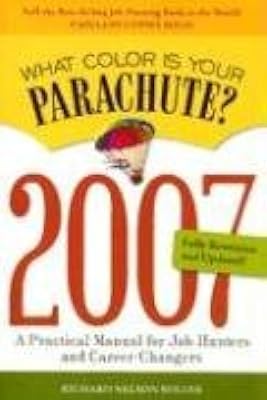
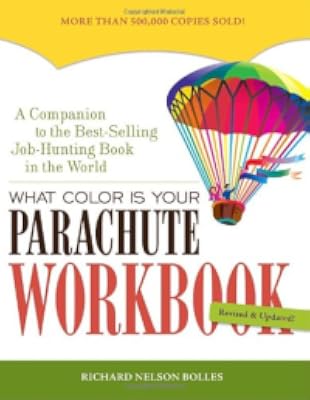
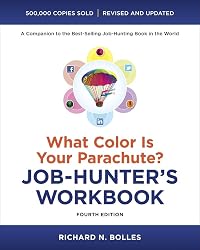
What Color Is Your Parachute?: A Practical Manual for Job-Hunters and Career-Changers
by Richard N. Bolles
On This Page
Description
In today's challenging job-market, the time-tested advice of What Color Is Your Parachute? is needed more than ever. Recent grads facing a tough economic landscape, workers laid off mid-career, and people searching for an inspiring work-life change all look to career guru Richard N. Bolles for support, encouragement, and advice on which job-hunt strategies work--and which don't. This revised edition combines classic elements like the famed Flower Exercise with updated tips on social media show more and search tactics. Bolles demystifies the entire job-search process, from writing resumes to interviewing to networking, expertly guiding job-hunters toward their dream job.-- show lessTags
Recommendations



Member Reviews
Well, what was happening in 1991 that set me to exploring this book. I think my organisation was being "Mckinseyed" and a fair few staff were leaving and I was considering my options. As I've finally come to review this book (some 30 years later), I've just discovered that i have the 1998 version sitting on my bookshelves so I might review it in more depth before I dispose of this version. To be fair, I found the book to be profoundly helpful. It gave me a whole new suite of ways of examining myself and where I wanted to go. Now I'm staring down the funnel of the end of life and a parachute is not so necessary if one has a national health scheme and superannuation. But I've used this book and subsequent versions of it. And I've used it show more effectively with some of my staff who we were undergoing yet another re-organisation...(read "forced-redundancies"). And the thing that struck me was that it really gave people a sense that they had options. This was not the end of the road. In summary, a really useful and helpful book. five stars from me. (Even if it is dated) show less
The first version of this book came out in 1970 at a time that many businesses were downsizing and people in the middle of their careers found themselves out of work. This was in an era that people expected life time employment from large companies. Bolles' book was an encouragement to consider what a job seeker wanted to do for their next season of life. I first read this book with my wife at the start of our careers trying to figure out how to move forward. This book was invaluable in helping us figure out what we wanted to do, and where we wanted to do it. Since then I have periodically picked up updated versions of this book, and repeatedly give this book to point who were working on determining they career path. As a direct result show more of doing the exercises in this book my wife selected her career, I changed workplaces, and we moved across the country. While this book can be useful to people at any stage of life, it is most helpful to someone who has had sufficient life experience to reflect on what they have done. This book encourages the reader to figure out what they are called to do (a vocation) and do that. The money (or at least enough for you survive) will follow. You might not be rich materially, but you will be rich in experience and quality of life. Sometimes people say do a job you love, but I prefer to say do a job that is meaningful, that has impact, and you you will love the job. When I first worked through the exercises in the early 1990s, I didn't change my career, but I had a deeper sense of purpose in my day to day work experience. show less
Bolles thesis was pretty much about finding the kind of career that excited you, that you would be passionate about. There were collections of excellent tools for first finding where you wanted to be, what your skills were, how you related to things, people, and ideas, and only then how to find that kind of work.
This was very helpful when I needed to find a way thru my work life. It led me to many other books, techniques, and methods of proceeding. I've had two or three different editions over time, but being retired, none now.
I soon realized I was looking for a different kind of work/career than what Bolles proposed, but that his book was still a good tool for finding what I wanted to do.
I used his techniques to make clear to myself show more what kinds of jobs I definitely did not want to do, then narrowed down the remaining ones to something that would be pleasant enough, pay well enough, and allow me as much time as possible to spend with my wife, family, friends, doing things that really interested me.
And his methods worked well for me. show less
This was very helpful when I needed to find a way thru my work life. It led me to many other books, techniques, and methods of proceeding. I've had two or three different editions over time, but being retired, none now.
I soon realized I was looking for a different kind of work/career than what Bolles proposed, but that his book was still a good tool for finding what I wanted to do.
I used his techniques to make clear to myself show more what kinds of jobs I definitely did not want to do, then narrowed down the remaining ones to something that would be pleasant enough, pay well enough, and allow me as much time as possible to spend with my wife, family, friends, doing things that really interested me.
And his methods worked well for me. show less
This book is widely recognized as the top guide to finding a job. Various editions of this book have sold MILLIONS. It is easy to see why. The author has extensive experience in the field, and backs up his ideas with impressive evidence.
► THINGS I LIKED THE MOST ◄
♦ Insight into the actual interviewing process--especially the suggested time min/max for your responses. Bolles provides "Conversation Tips" to prepare for. This section alone is worth the price of the book. They are also "Ten Commandments" for the applicant.
For example, "Conversation Tip #12" Employers don't care about your past; they just ask about it as a way to predict your FUTURE behavior.
♦ Even more, the tips on answering the usual question, "Tell me about show more yourself." Bolles notes, "How you answer that question will determine your fate during the rest of the interview."
♦ The 5 key questions that the applicant must know:
-Why are you here?
-What can yo do for us?
-What kind of person are you?
-What distinguishes you from other people?
-Can I afford you?
♦ Six Secrets of Salary Negotiation. I was already aware of some of these, such as not being too quick to mention a salary first.
♦ Suggestions on how to best use social/networking sites like LinkedIn. The author points out the importance of completely filling out your user profile, so that prospective employers (who will search these sites) can get an accurate picture of your qualifications.
♦ Also, I had no idea how important it was to have your PICTURE on these sites. Bolles notes that surveys always show that not having a picture is a turn-off.
♦ Explanation as to how the job hunt as changed in some ways, but in essence is still the same.
► QUALITY OF EDITING ◄
Excellent editing and book design. Someone has spent a lot of time getting this right! The book is well laid-out into logical sections. The Table of Contents points to each major section.
► END MATERIAL ◄
Even the appendices are impressive. The first appendix will certainly be the most controversial, because the author makes his own religious beliefs clear. This is a very meaty, thought-provoking section called, "Finding your Mission in Life."
Bolles defends his inclusion of religion in a book on job-hunting by this stat: In the U.S., about 89% of the population believes in God. So, he reasons, "Leaving out a section that 89% of my readers might be interested in, and helped by, in order to please 11% of my readers, seems to me insane."
Finding your mission in life will not be trivial, and will not be quick. The author points out that being forced to find a job can also have beneficial effects on our whole life. It offers "a chance to make some fundamental changes in our whole life. It marks a turning point in how we live our life."
► OTHER APPENDICES ◄
The other, less controversial appendices include:
"A Guide to Choosing a Career Coach."
"A Ten Minute Crash Course for Vets."
"Sampler List of Coaches"
"Recent Foreign Editions" (well, okay, this one does seem a bit self-serving.)
"Final Word from Author"
The author's "PostScript" is a very poignant missive--almost a pleas, to the reader. When faced with a job crisis, you can abandon your beliefs, or rethink the things that have been your core principles. "While we are out of work, we can reach toward a larger conception of our God and of ourselves."
√ HIGHLY RECOMMEND! This review doesn't do justice to this oustanding work. This is a COMPREHENSIVE, well-written book by perhaps the #1 expert in the field. Honestly, if you are struggling finding your next job, you would be nuts to not read this book.
♫ A Review by Chris Lawson
[Note: I do not know the author of this book, and no one requested I write this review.] show less
► THINGS I LIKED THE MOST ◄
♦ Insight into the actual interviewing process--especially the suggested time min/max for your responses. Bolles provides "Conversation Tips" to prepare for. This section alone is worth the price of the book. They are also "Ten Commandments" for the applicant.
For example, "Conversation Tip #12" Employers don't care about your past; they just ask about it as a way to predict your FUTURE behavior.
♦ Even more, the tips on answering the usual question, "Tell me about show more yourself." Bolles notes, "How you answer that question will determine your fate during the rest of the interview."
♦ The 5 key questions that the applicant must know:
-Why are you here?
-What can yo do for us?
-What kind of person are you?
-What distinguishes you from other people?
-Can I afford you?
♦ Six Secrets of Salary Negotiation. I was already aware of some of these, such as not being too quick to mention a salary first.
♦ Suggestions on how to best use social/networking sites like LinkedIn. The author points out the importance of completely filling out your user profile, so that prospective employers (who will search these sites) can get an accurate picture of your qualifications.
♦ Also, I had no idea how important it was to have your PICTURE on these sites. Bolles notes that surveys always show that not having a picture is a turn-off.
♦ Explanation as to how the job hunt as changed in some ways, but in essence is still the same.
► QUALITY OF EDITING ◄
Excellent editing and book design. Someone has spent a lot of time getting this right! The book is well laid-out into logical sections. The Table of Contents points to each major section.
► END MATERIAL ◄
Even the appendices are impressive. The first appendix will certainly be the most controversial, because the author makes his own religious beliefs clear. This is a very meaty, thought-provoking section called, "Finding your Mission in Life."
Bolles defends his inclusion of religion in a book on job-hunting by this stat: In the U.S., about 89% of the population believes in God. So, he reasons, "Leaving out a section that 89% of my readers might be interested in, and helped by, in order to please 11% of my readers, seems to me insane."
Finding your mission in life will not be trivial, and will not be quick. The author points out that being forced to find a job can also have beneficial effects on our whole life. It offers "a chance to make some fundamental changes in our whole life. It marks a turning point in how we live our life."
► OTHER APPENDICES ◄
The other, less controversial appendices include:
"A Guide to Choosing a Career Coach."
"A Ten Minute Crash Course for Vets."
"Sampler List of Coaches"
"Recent Foreign Editions" (well, okay, this one does seem a bit self-serving.)
"Final Word from Author"
The author's "PostScript" is a very poignant missive--almost a pleas, to the reader. When faced with a job crisis, you can abandon your beliefs, or rethink the things that have been your core principles. "While we are out of work, we can reach toward a larger conception of our God and of ourselves."
√ HIGHLY RECOMMEND! This review doesn't do justice to this oustanding work. This is a COMPREHENSIVE, well-written book by perhaps the #1 expert in the field. Honestly, if you are struggling finding your next job, you would be nuts to not read this book.
♫ A Review by Chris Lawson
[Note: I do not know the author of this book, and no one requested I write this review.] show less
The good thing is that this book offers a methodology and some tools to help people define what kind of job they could next go for. There also are some useful pieces of advice in there (such as: the only goal of a resume is to get you invited).
It is a very American book which assumes that job-seekers and potential employers work from an American mindset in a highly-developed and transparant capitalistic society. 'Personal re-invention' isn't a strong value in Europe, and employers might not find certain re-inventions credible, nor be willing to employ people at a much lower level than their previous salary. Research on salary levels is probably also going to be much more difficult outside of the US.
The two things that bothered me most, show more is that the book tries to be the final career re-orientation book for everyone, frequently giving examples such as "so it turns out that the career that would make you happiest is welding". Lots of respect for welders, but mid-career executives often have a much more diffuse skill set than manual labourers, and their career analysis tools might arguably need a bit more sophistication and allow for more parameters.
The other one is found in the 70 pages Appendices, where suddenly it is stated that our First Mission in Life is "to know God, and to see His hand in everything". I find that kind of surreptitious religious indoctrination by advice-givers morally dubious, not to say objectionable. show less
It is a very American book which assumes that job-seekers and potential employers work from an American mindset in a highly-developed and transparant capitalistic society. 'Personal re-invention' isn't a strong value in Europe, and employers might not find certain re-inventions credible, nor be willing to employ people at a much lower level than their previous salary. Research on salary levels is probably also going to be much more difficult outside of the US.
The two things that bothered me most, show more is that the book tries to be the final career re-orientation book for everyone, frequently giving examples such as "so it turns out that the career that would make you happiest is welding". Lots of respect for welders, but mid-career executives often have a much more diffuse skill set than manual labourers, and their career analysis tools might arguably need a bit more sophistication and allow for more parameters.
The other one is found in the 70 pages Appendices, where suddenly it is stated that our First Mission in Life is "to know God, and to see His hand in everything". I find that kind of surreptitious religious indoctrination by advice-givers morally dubious, not to say objectionable. show less
I picked up a free copy of this book over the summer and read it more thoroughly than I have in the past. This is probably because I was about to start a new job search and needed some advice.
As always, the book provides much information to the job seeker entering a career or starting anew.
In this edition, there is much information about using the Internet and social media to find employment. I learned that 47 percent of company recruiters state that they seek applicants with social media pages. So, it's important to make a good impression with potential employers on social media.
The book suggests using LinkedIn to find "bridge-people" who can offer information about companies and suggest contacts. The book recommends using sites like show more Indeed and Glassdoor to find jobs.
Of course, the true benefit of reading What Color Is Your Parachute? is to gain access to many worksheets and job activities. I spent several hours filling them out and contemplating my ideal work environments, coworkers, and job tasks.
"The Flower" still exists--a centerfold in which job seekers may write down the results of all those hours of brainstorming and planning. The end result is the ability to create a sales pitch that is concise, yet emcompasses all the things you want in a future job or career.
Buy on Amazon: https://www.amazon.com/What-Color-Your-Parachute-2020/dp/1984856561/ show less
As always, the book provides much information to the job seeker entering a career or starting anew.
In this edition, there is much information about using the Internet and social media to find employment. I learned that 47 percent of company recruiters state that they seek applicants with social media pages. So, it's important to make a good impression with potential employers on social media.
The book suggests using LinkedIn to find "bridge-people" who can offer information about companies and suggest contacts. The book recommends using sites like show more Indeed and Glassdoor to find jobs.
Of course, the true benefit of reading What Color Is Your Parachute? is to gain access to many worksheets and job activities. I spent several hours filling them out and contemplating my ideal work environments, coworkers, and job tasks.
"The Flower" still exists--a centerfold in which job seekers may write down the results of all those hours of brainstorming and planning. The end result is the ability to create a sales pitch that is concise, yet emcompasses all the things you want in a future job or career.
Buy on Amazon: https://www.amazon.com/What-Color-Your-Parachute-2020/dp/1984856561/ show less
This book was there for me when I needed it. Wasn't surprised when I found out that the author was a former pastor. Giving no-nonsense, practical advice to the unemployed (or unhappily employed) was the ministry he was born for.
Members
- Recently Added By
Lists

Books Featured on Gilmore Girls
307 works; 21 members

The Complete Rory Gilmore Reading List
506 works; 5 members
Author Information

35+ Works 6,551 Members
Richard Nelson Bolles was born in Milwaukee, Wisconsin on March 19, 1927. During World War II, he served in the Navy. He studied chemical engineering for two years at the Massachusetts Institute of Technology, then transferred to Harvard University, where he received a bachelor's degree in physics. After graduation, he decided to become an show more Episcopal minister. He received a master's degree in New Testament studies from General Theological Seminary in New York and was ordained in 1953. He had been a clergyman for 18 years when a combination of budget problems and philosophical differences with superiors led to the elimination of his job and his dismissal in 1968 as a pastor at Grace Cathedral in San Francisco. After six months of searching, he got a job with United Ministries in Higher Education, an interdenominational church organization that recruited and supported college chaplains across the country. However, when the college chaplains were increasingly being laid off, he decided to help the chaplains find new careers. He was an ordained Episcopal minister until 2004, when he left the ministry. In 1970, he self-published What Color Is Your Parachute?: A Practical Manual for Job-Hunters and Career-Changers as a photocopied how-to booklet for unemployed ministers. In 1972, he recast it to appeal to a wider audience and found an independent publisher willing to print small batches so that it could be frequently updated. His other books included How to Find Your Mission in Life and The Three Boxes of Life and How to Get Out of Them. He died on March 31, 2017 at the age of 90. (Bowker Author Biography) show less
Awards and Honors
Common Knowledge
- Canonical title
- What Color Is Your Parachute?: A Practical Manual for Job-Hunters and Career-Changers
- Original publication date
- 1979
Classifications
- Genres
- Business, Nonfiction, General Nonfiction
- DDC/MDS
- 650.14 — Applied science & technology Management & public relations Business Skills & Management Personal success in business Success in obtaining jobs and promotions
- LCC
- HF5382.7 .B64 — Social sciences Commerce Commerce Business Vocational guidance. Career devlopment
- BISAC
Statistics
- Members
- 4,546
- Popularity
- 3,223
- Reviews
- 48
- Rating
- (3.69)
- Languages
- 13 — Chinese, Dutch, English, French, German, Italian, Japanese, Lithuanian, Polish, Portuguese, Romanian, Serbian, Spanish
- Media
- Paper, Audiobook, Ebook
- ISBNs
- 158
- UPCs
- 8
- ASINs
- 49