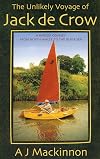
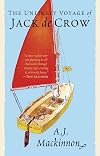
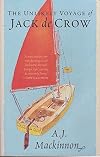
The Unlikely Voyage of Jack De Crow: A Mirror Odyssey from North Wales to the Black Sea
by A. J. Mackinnon
On This Page
Description
Beautiful hardback edition of this beloved bestseller, with a charming new afterword and illustrations. Truly hilarious books are rare. Even rarer are those based on real events. Join A.J. Mackinnon, your charming and eccentric guide, on an amazing voyage in a boat called Jack de Crow. Equipped with his cheerful optimism and a pith helmet, this Australian Odysseus in a dinghy travels from the borders of North Wales to the Black Sea - 4900 kilometres over salt and fresh water, under sail, at show more the oars, or at the end of a tow-rope - through twelve countries, 282 locks and numerous trials and adventures, including an encounter with Balkan pirates. Along the way he experiences the kindness of strangers, gets very lost, and perfects the art of slow travel. show lessTags
Recommendations
















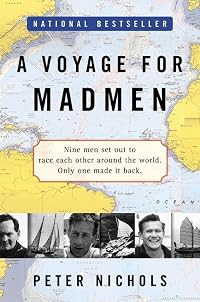
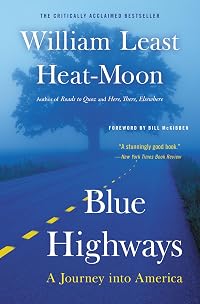


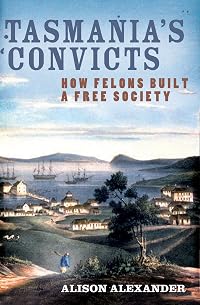
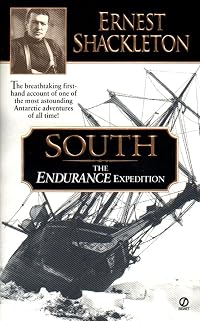








Member Recommendations

A Cruise across Europe; Notes on a Freshwater Voyage from Holland to the Black Sea by Donald Maxwell
John_Vaughan The exact same cruise but a hundred years later.

Member Reviews
An utterly delightful read. The delight comes from the snatches of poetry sprinkled at appropriate times into the landscape descriptions, from the little pencil drawings and maps scattered throughout, and from the author's whimsical descriptions of his own foibles and eccentricities (starting from the top, with his sola topi). Inspires one to hit the road, or rather the canals, and spend a year sailing and rowing the length of Europe, getting plenty of sun and exercise and subsisting entirely on salami and tomato sandwiches and the kindness of strangers.
Amazing, I thought books like this were no longer written, an odyssey in a Mirror Dinghy from Shropshire to the Black Sea, the best description would be a child of Patrick Leigh Fermor and Jermome K Jerome with CS Lewis, Arthur Ransome, Tolkien, Keats, Betjamen and Gilbert and Sullivan as the good fairies at its christening. Humour, adventure, song, and it only happened 12 years ago. Brilliant.
I've been vaguely following a thread through "up the Rhine and down the Danube" travel books lately: this is the most recent I've come across so far (1997/98), and definitely the most eccentric. Mackinnon doesn't set out with a big plan: he lets circumstances guide him and grabs opportunities when they arise. Having set out to do a little trip down the Severn, it seems self-evident once you get to Gloucester to extend it to Bristol, and then to the Thames, and once you're in London, you might as well do the Continent as well...
As it turns out, the thing that seems the oddest feature of his journey — the choice of a tiny, ancient, unpowered "Mirror" sailing dinghy as his means of transport — becomes one of the most liberating show more elements. Mackinnon is forced to travel light, he is perceived by local people as a charming and helpless eccentric, not as a wealthy yachtsman, and in practice he can go almost anywhere. When he gets into difficulties, there always seems to be someone around that he can charm into fishing him out and patching the boat up.
About half the book is taken up by the British part of his journey: down the Severn, up the Avon, through the Kennett & Avon to the Thames, up to Lechlade and back down to London, then round the Kent coast to Dover. Mackinnon's route on the Continent is a little different from the "standard approach": instead of fighting against the Rhine current (which would have been impossible for him) he heads through the French canals from Calais to the Moselle, then down to Koblenz, so that he only needs a tow from Koblenz to Frankfurt (typically, he finds a barge skipper willing to take him without the slightest difficulty). He is able to use the new RMD canal (oddly referred to as "the Kaiser's canal") to get to the Danube, and once on the Danube apparently has a far more straightforward trip than most of the other writers I've looked at: presumably in part due to travelling with a shallow-draught boat in summer, and in part due to improvements in the navigation. Of course, there are other problems, mostly in Serbia, which was at that time under a UN embargo and about to be bombed by NATO. Not being aware of this, Mackinnon is a bit puzzled that he can't get any bank to take his Visa card...
The real charm of the book is in Mackinnon's cheerful approach to travel, which seems to have been inspired chiefly by the classics of English children's literature. At moments of crisis he always has a comforting quotation from The wind in the willows or a handy tip from a Swallows and Amazons story to hand; when things are going well plays his penny whistle or sings numbers from G&S operettas as he rows (a definite improvement over Tristan Jones's cassette player with bagpipe music!). I lost count of how many times he fell in, got covered in mud, or lost some vital piece of equipment overboard: he always seems to come up smiling. show less
As it turns out, the thing that seems the oddest feature of his journey — the choice of a tiny, ancient, unpowered "Mirror" sailing dinghy as his means of transport — becomes one of the most liberating show more elements. Mackinnon is forced to travel light, he is perceived by local people as a charming and helpless eccentric, not as a wealthy yachtsman, and in practice he can go almost anywhere. When he gets into difficulties, there always seems to be someone around that he can charm into fishing him out and patching the boat up.
About half the book is taken up by the British part of his journey: down the Severn, up the Avon, through the Kennett & Avon to the Thames, up to Lechlade and back down to London, then round the Kent coast to Dover. Mackinnon's route on the Continent is a little different from the "standard approach": instead of fighting against the Rhine current (which would have been impossible for him) he heads through the French canals from Calais to the Moselle, then down to Koblenz, so that he only needs a tow from Koblenz to Frankfurt (typically, he finds a barge skipper willing to take him without the slightest difficulty). He is able to use the new RMD canal (oddly referred to as "the Kaiser's canal") to get to the Danube, and once on the Danube apparently has a far more straightforward trip than most of the other writers I've looked at: presumably in part due to travelling with a shallow-draught boat in summer, and in part due to improvements in the navigation. Of course, there are other problems, mostly in Serbia, which was at that time under a UN embargo and about to be bombed by NATO. Not being aware of this, Mackinnon is a bit puzzled that he can't get any bank to take his Visa card...
The real charm of the book is in Mackinnon's cheerful approach to travel, which seems to have been inspired chiefly by the classics of English children's literature. At moments of crisis he always has a comforting quotation from The wind in the willows or a handy tip from a Swallows and Amazons story to hand; when things are going well plays his penny whistle or sings numbers from G&S operettas as he rows (a definite improvement over Tristan Jones's cassette player with bagpipe music!). I lost count of how many times he fell in, got covered in mud, or lost some vital piece of equipment overboard: he always seems to come up smiling. show less
This was good, it sounded like fun and there were multiple Swallows and Amazons references. i dont usually like nonfiction of any form and have trouble actually reading it, even when i want to, but i really enjoyed this. i think it technically is nonfiction since its travel writing or a memoir or whatever but it still reads like a novel (it still is a novel i think). i found it actually pretty interesting, with him sailing a mirror dinghy (thats what i sail sometimes), and all the places he went and the stuff that happened to him were interesting. i like the writing style, and thought it was quite funny and relatable or something like that.
This excellent book makes the efforts of others - not least Patrick Leigh Fermor - look self indulgent, turgid and dull by comparison. It sparkles, like good travel writing should. And like the best travel writing it is about a journey, not about a book the author went on a journey in order to produce. Theroux and Newby might learn more than a thing or two from Mackinnon if they weren't so convinced of the superiority of their plodding talents. I don't think there's any need to say any more than others here have already said quite well, except that I recommend this book highly to the reader.
This was good, it sounded like fun and there were multiple Swallows and Amazons references. i dont usually like nonfiction of any form and have trouble actually reading it, even when i want to, but i really enjoyed this. i think it technically is nonfiction since its travel writing or a memoir or whatever but it still reads like a novel (it still is a novel i think). i found it actually pretty interesting, with him sailing a mirror dinghy (thats what i sail sometimes), and all the places he went and the stuff that happened to him were interesting. i like the writing style, and thought it was quite funny and relatable or something like that.
Highly entertaining travel journal with poetry and drawings. Observational rather than historiographical without being superficial.
Members
- Recently Added By
Lists

Best of Travel Narratives
142 works; 28 members

Up the Rhine and down the Danube (or vice-versa)
8 works; 2 members

Adventure Travel & Exploration In Europe
18 works; 3 members

Top Five Books of 2025
954 works; 303 members
Author Information

4 Works 224 Members
Awards and Honors
Awards
Common Knowledge
- Original title
- The Unlikely Voyage of Jack de Crow
- People/Characters
- A. J. Mackinnon; Jack de Crow (Mirror dinghy)
- Important places
- Black Sea
- First words
- This is an account of a journey made from North Shopshire in England to Sulina on the Black Sea, sailing and rowing over three thousand miles in a small Mirror dinghy.
- Quotations
- And through all this runs a single thread. At times it is the brandy-brown of country brooks; elsewhere it is salt-green flecked with white. Sometimes it is a thread of softest wool, dyed blue-grey. Elsewhere it is stretched ... (show all)steel wire, scratched and harsh. In places it is a ribbon of midnight-blue, spangled with the sequins of stars; or a thread of pure gold that catches the light and runs it up and down its length like liquid in a glass. It is threaded with beads and trinkets along its length: the carved stones of cathedrals, or white quartz beads as cold as marble. There are rich gems strung on the stone: garnets red as fire-coals, sapphires flashing like kingfishers, topazes set in gold. But in all its length, it is unbroken, a single thread of water-green laid from one end of the map to the other.
- Last words
- (Click to show. Warning: May contain spoilers.)Jack de Crow is ready for her new life, and I for mine.
- Original language
- English
Classifications
- Genres
- Travel, Nonfiction, Biography & Memoir, General Nonfiction
- DDC/MDS
- 910.45 — History & geography Geography & travel modified standard subdivisions of Geography and travel Pirates & Shipwrecks Ocean voyages, pirates
- LCC
- D923 .M298 — History of Europe, Asia, Africa and Oceania History (General) Europe (General) Description and travel
- BISAC
Statistics
- Members
- 162
- Popularity
- 201,975
- Reviews
- 13
- Rating
- (4.30)
- Languages
- Dutch, English
- Media
- Paper, Audiobook, Ebook
- ISBNs
- 15
- ASINs
- 6